


The opening week of the year delivered a sharper pace of events than many expected, exposing how escalation is advancing alongside a steady weakening of the constraints meant to contain it.
The year has begun with a noticeable acceleration in events. Across multiple regions, governments moved more quickly and more assertively than in recent weeks, pushing beyond established limits while testing how much resistance – legal, institutional, or strategic - those limits still command. The result was not a single rupture, but a pattern of actions that collectively raised the baseline level of risk.
In Washington, the exercise of power was framed with fewer caveats, even as domestic institutions attempted to reassert boundaries. In Europe and the Middle East, security measures intended to stabilise fragile situations instead highlighted how close conflict management now sits to open escalation. In Asia, economic statecraft advanced in deliberate stages, extending controls from dual-use goods into materials central to advanced industry and defence.
Taken together, the week suggested that escalation is no longer episodic. It is becoming embedded in how states act, while the constraints designed to moderate it are increasingly treated as optional rather than binding.

In Washington, the week was marked not just by action but by how authority was described. The administration framed executive power with fewer caveats, treating inherited constraints as contingent rather than binding. A high-profile interview with the President underscored this posture, articulating limits less as legal boundaries than as choices to be exercised when convenient. That framing was tested almost immediately by an attempt at a senate pushback on war powers, revealing a familiar but sharpening tension between branches.

This posture extended outward. A daring raid to abduct Venezuelan President Maduro & his wife from Caracas and bring them back to New York to face trial, institutional withdrawals at the UN, and renewed territorial rhetoric all reflected a willingness to treat precedent as negotiable. Even long-standing stabilising arrangements, such as arms-control frameworks nearing expiry, appeared increasingly peripheral to decision-making.
Taken together, the message was one that fell just short of recklessness and of confidence, almost bluster, that the costs of bypassing constraint remain manageable. Whether that confidence holds is now an open question.

Europe’s response to the war in Ukraine continued to shift from support to exposure. Discussions around security guarantees and potential troop deployments signalled a deeper assumption of responsibility, while Russian warnings made clear that such moves would carry direct military implications. Large-scale strikes within Ukraine by advanced weaponry reinforced that message, narrowing the space between deterrence and escalation.
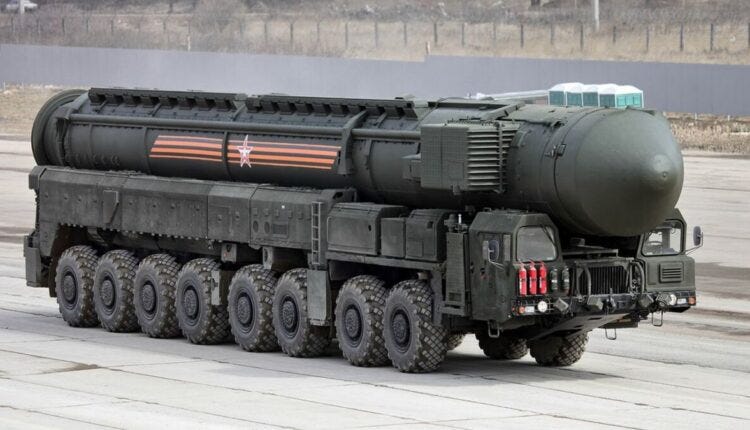
What stood out was the hardening of positioning- probably on both sides. European governments appeared increasingly resigned to the risks involved, even as debates over energy, sanctions, and defence capacity persisted. This was less about dramatic escalation than about acknowledgement: the stabilising buffer once provided by distance and ambiguity is thinning. Europe is not yet fully unified in approach, but the direction of travel is becoming harder to ignore.

In Gaza and along the Israel–Lebanon border, the limits of ceasefires were again exposed. Fighting ebbed and flowed within agreed frameworks, but without meaningful progress toward political settlement or dare we say it, actual peace. Reported deaths since the October ceasefire, restrictions on humanitarian operations, and pre-emptive strikes all illustrated how containment has replaced resolution as the operative goal.

These arrangements have reduced immediate intensity and have entrenched instability. Control is exercised tactically, accountability remains disputed, and humanitarian access is treated as leverage rather than obligation. The pattern suggests that ceasefires are increasingly used to manage optics and not to actually resolve underlying conflicts. Stability, where it exists, seems at best provisional.

In Asia, escalation took a more calibrated form. China’s export controls evolved in clear stages, beginning with restrictions on dual-use goods and expanding to include rare earths and magnets critical to advanced manufacturing and defence. The sequencing mattered. Each step raised costs incrementally, signalling intent without forcing immediate rupture.

The effects were quickly felt. Japan and others reassessed industrial exposure, while regional actors adjusted diplomatic posture. Fears of sudden, decisive action – including so-called decapitation scenarios – gained traction, sharpened by recent demonstrations of force elsewhere by the US. Economic leverage and military potential increasingly intersect, blurring the line between supply-chain policy and security planning.

Elsewhere, pressure manifested internally. In Iran, protests, shutdowns, and detentions were met with a mix of coercion (the stick) and compensation (the carrot), highlighting the regime’s reliance on control rather than consent. In Yemen, coalition strain surfaced through political fragmentation and renewed strikes, exposing the limits of externally brokered stability.
In both cases, authority held but coherence weakened. Power remained sufficient to suppress immediate threats, yet insufficient to restore durable legitimacy or unity. So far these two issues continue to be balanced on a knife edge but could erupt into something much more significant and widespread. This region as a whole remains extremely volatile and one to watch.

The week marked a clear escalation in tempo and various theatres appear to be straining at the seams. What distinguished it was the growing normalisation of overt action without traditional firm constraint. Across regions, governments appeared increasingly comfortable testing limits, whether legal, institutional, or strategic, while assuming that escalation can hopefully be managed.
We are not yet at the point of imminent collapse or unavoidable conflict but boundaries are being tested. Viewed as a whole it suggests a gradual redefinition of acceptable risk. Constraints still exist, but they are only invoked selectively. As escalation risks becoming embedded rather than exceptional, the burden on restraint grows heavier – and the margin for miscalculation narrows.