


The past week did not fundamentally alter the geopolitical trajectory that has emerged over recent months. Instead, it reinforced several patterns that are becoming increasingly characteristic of the international environment in 2026: unresolved conflicts managed rather than settled, alliances adapting to uncertainty, and governments attempting to prevent instability from spreading into wider economic systems.
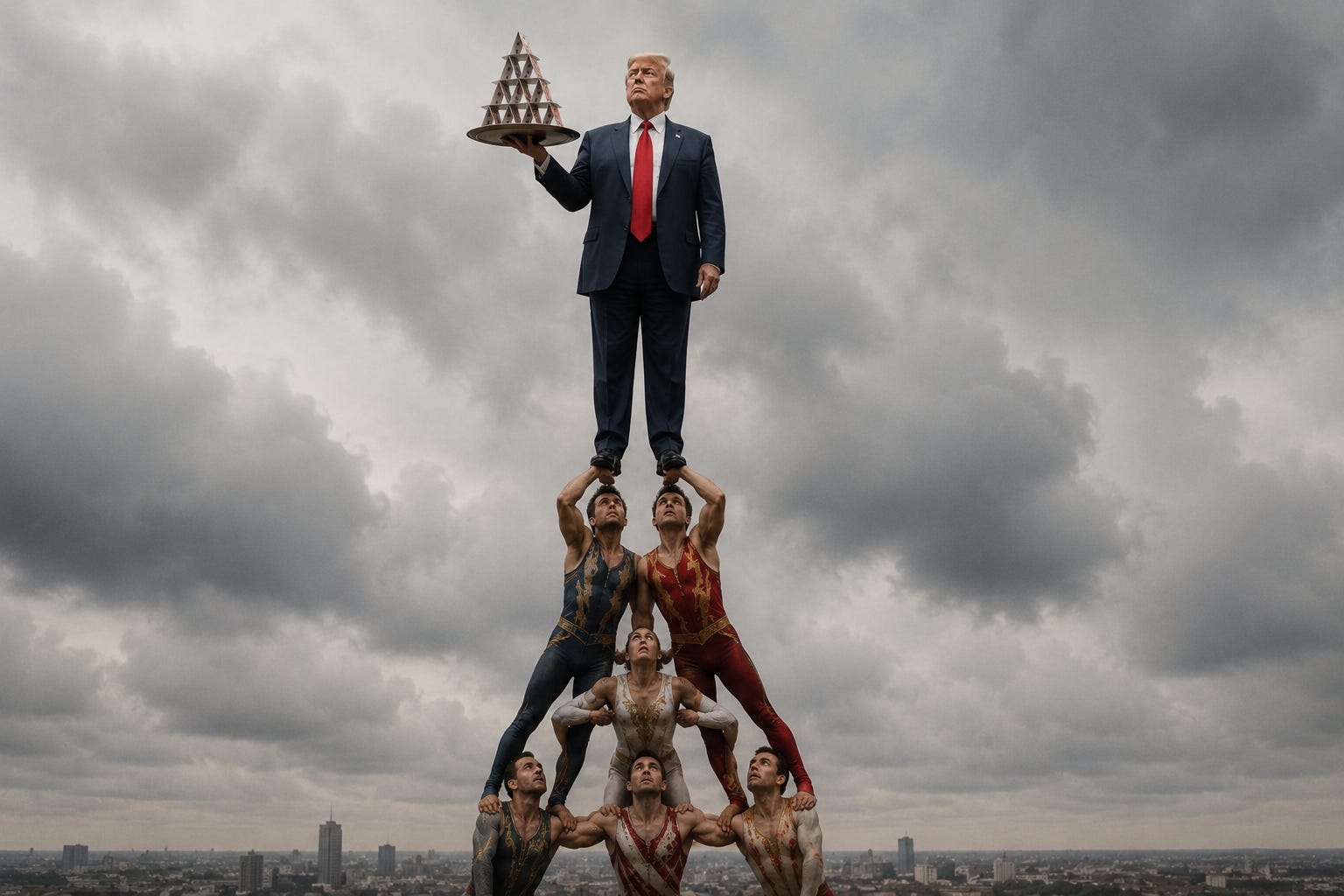
Across the Middle East, Europe and Asia, diplomacy continued alongside military confrontation rather than replacing it. Temporary ceasefires held in name while violations, retaliatory strikes and coercive manoeuvres continued underneath them. The result is not peace, but a form of managed instability in which states are attempting to contain risks without resolving the disputes driving them.
The week also showed how these tensions are no longer confined to regional security questions. Energy planning, industrial resilience, supply chains, defence policy and financial stability are increasingly shaped by the expectation that geopolitical disruption may persist for far longer than initially anticipated.

The Strait of Hormuz continued to sit at the centre of global strategic calculations this week, not because the crisis suddenly intensified, but because efforts to stabilise it again revealed how little agreement exists beneath the current pause in fighting.
Washington alternated between military signalling and attempts to preserve negotiations with Tehran. Clashes between US and Iranian forces continued around the strait, while proposed UN action faced likely resistance from China and Russia. Donald Trump repeatedly spoke of progress towards a deal even as both sides accused each other of ceasefire violations and commercial shipping remained heavily disrupted.

At the same time, governments increasingly behaved as though prolonged instability around Hormuz is becoming something to adapt to rather than a short-term emergency likely to disappear quickly. Australia announced a major expansion of fuel reserves, India’s military explored alternative energy measures, and China intensified efforts to restore shipping access ahead of next week’s Trump-Xi summit in Beijing.
The economic implications also continued spreading outward. IMF warnings over inflation and growth, concern over fertiliser supplies, and ongoing shipping disruption all reflected the same underlying reality: even limited instability around Hormuz continues to affect systems far beyond the Gulf itself.

Another pattern visible throughout the week was the continued adjustment of US allies and partners to a more uncertain security environment. This is no longer a sudden reaction to a single event, but part of a broader reassessment that has gradually accelerated across several regions.
Saudi hesitation over aspects of American naval operations in Hormuz reflected concern in Gulf capitals about becoming trapped inside a prolonged confrontation with Iran. In Europe, Washington’s decision to reduce troop numbers in Germany again exposed anxieties over the long-term reliability of American commitments, particularly as disagreements over Iran and wider strategic priorities continue surfacing more openly.

Elsewhere, governments kept expanding regional security cooperation in anticipation of a less predictable international order. Japan and the Philippines deepened defence ties and explored weapons transfers, while Armenia hosted major European summits as it cautiously attempts to loosen its historical dependence on Moscow.
These shifts remain gradual rather than revolutionary. NATO has not fractured, Gulf states still rely heavily on American security guarantees, and Asian alliances remain deeply tied to Washington. But the language surrounding these relationships is changing. Increasingly, governments appear focused not on replacing the United States, but on reducing the risks associated with overdependence on any single external guarantor.
Restacking this post will help it reach more readers interested in the world.

The week also highlighted how geopolitical instability is increasingly shaping economic and industrial planning. Governments are no longer treating energy security, supply chains and strategic reserves as separate from national defence questions.
Australia’s belated decision to build a permanent government-owned fuel reserve reflected concern over how disruptions around Hormuz affected import-dependent economies. Similar logic underpinned expanding cooperation between Japan and Australia on energy and critical minerals, as well as India’s exploration of alternative military energy systems.

Meanwhile, financial concerns increasingly reflected geopolitical rather than purely economic anxieties. The Federal Reserve warned about fragility in private credit markets, while legal challenges to Donald Trump’s tariff strategy added further uncertainty to the global trading environment. Trump’s renewed deadline for the EU trade agreement also illustrated how tariffs are becoming more tightly connected to wider geopolitical disputes rather than functioning simply as trade policy.
None of this suggests imminent economic breakdown. But governments increasingly appear to be planning for a world in which geopolitical disruption remains persistent enough to shape investment, industrial strategy and national resilience planning for years rather than months.

Perhaps the clearest theme running through the week was the continued coexistence of diplomacy and confrontation. Negotiations are continuing across several major disputes, but without removing the risk of further escalation.
Russia and Ukraine announced competing ceasefires ahead of Moscow’s Victory Day commemorations while continuing to exchange accusations and attacks. Israel struck Beirut despite the existence of a ceasefire framework with Hezbollah. Washington and Tehran continued discussing potential agreements even as military incidents persisted around Hormuz.

This pattern has become increasingly familiar over recent months. Governments appear less focused on achieving comprehensive settlements and more focused on limiting escalation while preserving strategic leverage. Ceasefires are functioning less as pathways towards resolution and more as mechanisms for managing tempo, reducing immediate risk and creating diplomatic space.
The danger is not necessarily that every confrontation immediately spirals into wider war. Rather, it is that prolonged unresolved disputes create an international environment where instability becomes normalised, and where repeated testing of boundaries gradually increases the risk of miscalculation over time.
Restacking or sharing this publication means more people can read it. Commenting extends the conversation. Liking shows your appreciation.
Thank you for sharing ✨