


The biggest story this week was not that diplomacy suddenly broke through and produced a solution. It was that the ultimate shape of the settlement now being discussed looks increasingly different, and probably quite a bit worse than, the world that existed before the fighting began.
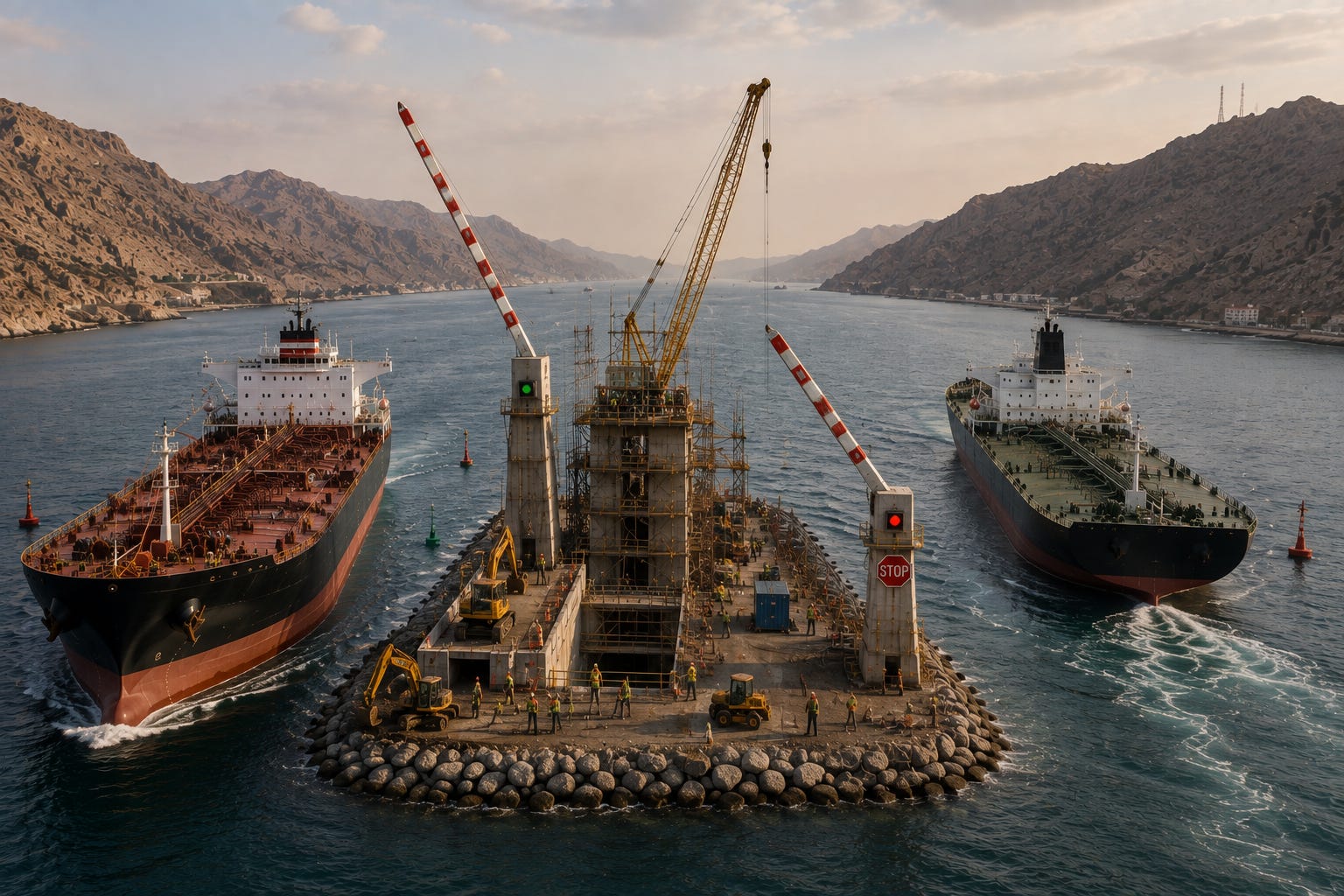
That idea cropped up repeatedly over the past five days. It was visible in the Gulf, where negotiations over shipping are no longer about simply reopening the Strait of Hormuz. It appeared in the Red Sea, in American weapons inventories and in the growing contest over technology and supply chains. Across very different stories, governments were adjusting to systems that have become harder to move through, harder to secure and harder to unwind.

At the start of the year, commercial shipping happily moved through the Strait of Hormuz as it had for decades. That world disappeared when Donald Trump ordered up the conflict earlier this year.
By the end of this week, the conversation had shifted again. Iran and Oman appeared close to an arrangement that could allow more ships to move through the strait, but what is emerging is not a return to the old system.
The proposals under discussion would route significant traffic through Iranian waters under a new coordination model, while Washington continues to publicly reject any arrangement that gives Tehran lasting authority over how the waterway operates.
The facts that are amassing might well mean that the US is left with little alternative other than to accept a very unpalatable outcome.

That is an important distinction. For months, much of the rhetoric surrounding the conflict has focused on restoring freedom of navigation to the strait.
Instead, the likely end result now points towards a very different version of maritime access, where movement depends less on the old status quo and more on the whim of the Iranian regime.

Saudi Arabia has spent much of this year trying to reduce its exposure to Hormuz specifically by shipping as much oil as they could through an overland pipeline and to market via Yanbu Port (on the other side of the country). As that effort continued, Riyadh also pursued quiet diplomacy with the Houthis in the hope of protecting Red Sea shipping.
The events of the week showed why that has become such an urgent priority.

The Houthis claimed attacks on Saudi oil tankers before launching further missile and drone strikes that inflicted heavy losses on Yemeni government forces and caused civilian casualties inside Saudi Arabia. None of that means the Red Sea is replacing Hormuz as the region’s defining strategic problem. It does suggest that the alternatives to the Gulf are becoming more uncertain just as they are becoming more important.
For energy exporters, diversification no longer guarantees security if multiple routes are contested at the same time.

One story that might have seemed technical only a few weeks ago is becoming increasingly significant.
Reports that the United States has consumed much of several important long-range missile inventories during the Iran campaign were followed almost immediately by one of Ukraine’s most difficult nights of missile defence this year. Kyiv said it was unable to intercept any of the ballistic or hypersonic missiles launched during the attack, while President Volodymyr Zelenskyy argued that deliveries of interceptor missiles had fallen sharply.

It would be too simple to draw a straight line between those developments. But they belong in the same conversation. Modern military planning increasingly depends on finite industrial capacity as much as battlefield decisions, and wars that appear geographically separate are beginning to compete for the same equipment.

Another thread running through the week was the growing importance of control itself.
China tightened restrictions on drone-related exports to the United States. Washington continued work on possible limits affecting Chinese data-centre components. Japan, meanwhile, warned about China’s expanding military reach into the western Pacific while acknowledging that its own ammunition stocks and equipment availability require strengthening.

None of these developments changes the strategic balance overnight. Collectively, however, they point in the same direction. Increasingly, governments appear less focused on maximising openness than on securing access to technologies, industrial capacity and infrastructure that they no longer assume will always remain available.

The stories this week were spread across several regions and covered very different subjects. Yet they all hinted at the same adjustment.
Before the Iran war, Hormuz was open. Before this latest phase of technological rivalry, supply chains were generally treated as commercial assets rather than strategic ones. Before missile inventories became part of the public debate, they were largely invisible outside defence circles.
None of those assumptions looks quite as secure now.
The emerging picture is not one of a world closing overnight. It is a world becoming progressively more conditional, where access, movement and capacity increasingly depend on political agreements, strategic calculations and the ability of governments to manage risk rather than remove it.