


This week highlighted a growing disconnect between what governments say, what institutions do and what events on the ground reveal. Across multiple conflicts, ceasefires remained in force while violence continued. In Washington, Congress showed signs of acting independently of the White House. Ukraine expanded the war beyond the battlefield and deeper into Russia’s economic and political space. Across Asia, governments continued preparing for a future that remains uncertain but increasingly difficult to ignore.

The most striking feature of the week was the widening gap between the language of diplomacy and the reality of conflict.
The ceasefire between the United States and Iran remained formally intact, yet both sides exchanged strikes and accusations. In Lebanon, efforts to build a more durable arrangement encountered fresh obstacles as Hezbollah rejected proposed terms and fighting continued. A United Nations peacekeeper was killed amid shelling in southern Lebanon. In Gaza, Israeli strikes continued even as negotiations over the next phase of the ceasefire remained stalled.
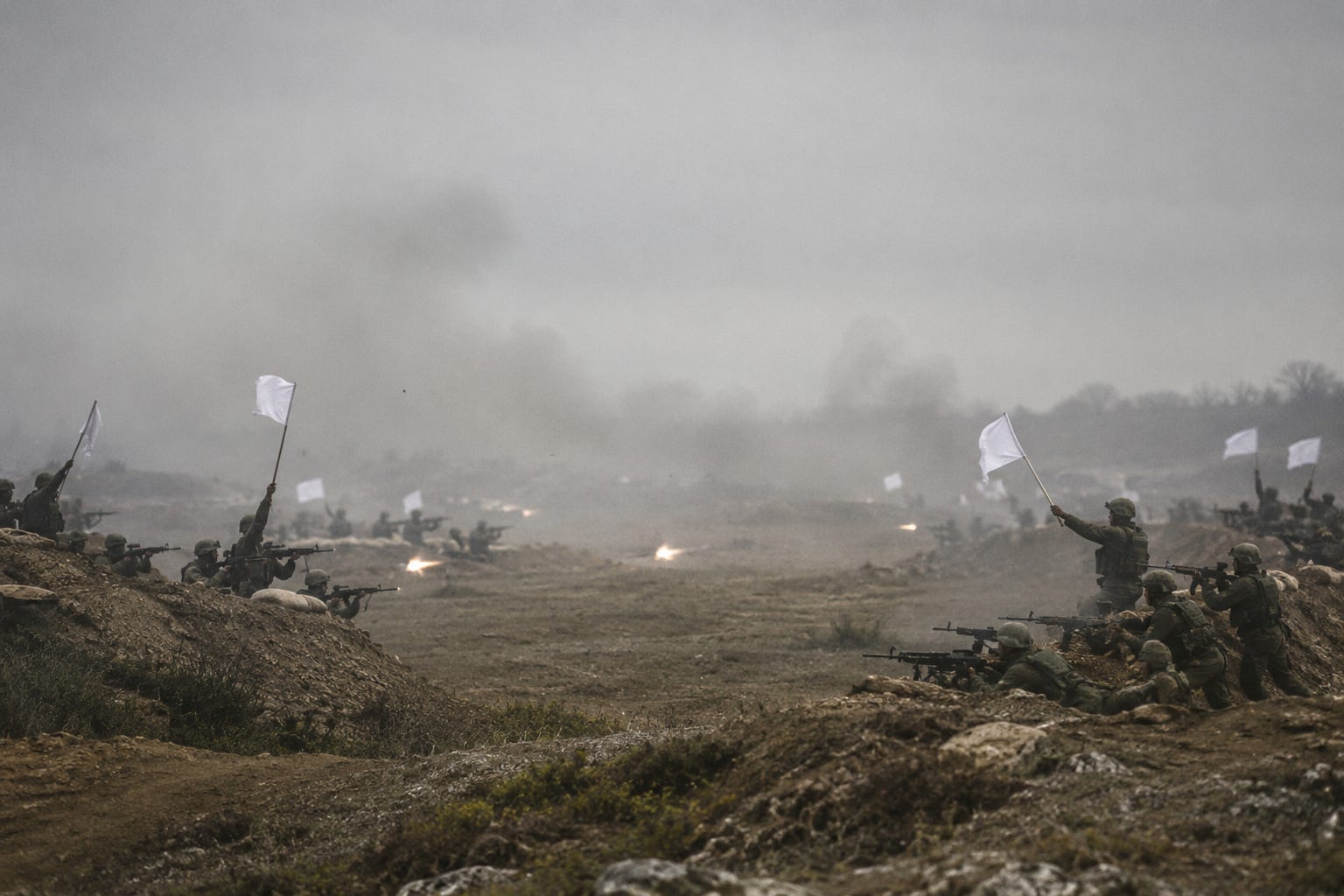
None of these developments necessarily signal the collapse of diplomacy. Negotiations continue across all three theatres. Yet they illustrate a broader trend. Increasingly, ceasefires appear to function less as endpoints and more as frameworks within which violence continues at a lower level. Agreements remain valuable because they create channels for negotiation and impose limits on escalation. This week demonstrated that the existence of a ceasefire and the existence of peace are becoming separate questions.

While foreign policy remained dominated by the Iran conflict, one of the more consequential developments occurred in Washington itself.
The House approved legislation challenging presidential war powers in relation to Iran and separately advanced support for Ukraine despite opposition from the White House. Senate Republicans removed funding for a proposed White House ballroom project, while the administration abandoned plans for a controversial anti-weaponisation compensation fund following legal and political pressure.

Taken individually, none of these moves fundamentally alters the balance of power in Washington. Together, however, they suggest something more significant. For much of Donald Trump’s presidency, Republican lawmakers largely aligned themselves with White House priorities. This week offered evidence that at least some legislators are becoming more willing to exercise independent judgement.
Whether this develops into a lasting trend remains uncertain. The week’s votes and policy reversals indicated a greater willingness among lawmakers to diverge from White House priorities on foreign policy and domestic spending alike.

Some of the most significant Ukrainian actions this week occurred far from the front lines.
Ukrainian forces struck energy and military targets deep inside Russia, including infrastructure linked to oil exports and facilities around St Petersburg. The timing of some attacks, including those coinciding with Russia’s flagship economic forum, appeared designed not only to inflict damage but also to undermine perceptions of stability and normality.

At the same time, President Volodymyr Zelensky renewed efforts to revive diplomacy through a proposal for direct talks with Vladimir Putin. Meanwhile, discussion inside Russia increasingly focused on slower growth, fiscal pressures and the long-term sustainability of wartime spending.
The combination reflects an evolving Ukrainian strategy. Unable to secure a decisive breakthrough on the battlefield, Kyiv is increasingly applying pressure across multiple fronts simultaneously. Economic costs, infrastructure disruption, political embarrassment and diplomatic positioning have become extensions of the same campaign. The objective is not necessarily immediate victory, but to steadily raise the price of continuing the war.

Events across Asia pointed to a region preparing for long-term strategic competition rather than an imminent crisis.
Taiwan announced plans to expand its anti-ship missile arsenal substantially over the coming years. China increased patrol activity east of Taiwan. Japan pushed back against Chinese accusations of militarism while continuing to deepen security partnerships across the region. The Five Eyes intelligence alliance issued a joint warning about Chinese efforts to recruit individuals with access to sensitive information through online platforms.

At the same time, questions lingered about the future shape of American engagement in the region. Statements from Washington reassured allies of continued support while also emphasising that partners would be expected to shoulder more responsibility for their own defence.
These developments suggest that regional governments are increasingly focused on resilience rather than prediction. Few expect immediate confrontation. Equally, few appear willing to assume that current conditions will persist indefinitely. The result is a steady accumulation of military capabilities, partnerships and contingency planning designed to prepare for a range of possible futures.

The common thread running through the week was not escalation or de-escalation, but divergence.
Diplomatic agreements remained in place while violence continued. Political institutions followed their own logic rather than moving in lockstep. Military campaigns expanded beyond traditional battlefields into economic, technological and symbolic domains. Governments across Asia continued preparing for scenarios that may never materialise but can no longer be dismissed.
The result is a world increasingly characterised by parallel realities. Formal structures continue to exist and, in many cases, still matter. Yet the events unfolding around them are often moving according to different timelines and different pressures. Understanding that gap may be becoming just as important as understanding the events themselves.
Great article
Thank you