


From Hormuz to Yemen, Ukraine and AI this week showed systems continuing to function under increasingly difficult conditions. The question is how long adaptation can substitute for resolution.
This week did not produce many solutions. It produced evidence of systems learning to function under conditions that remain costly, dangerous and difficult to sustain.
Oil is moving through the Strait of Hormuz again, but with military escorts and altered routes. Iran remains at war while sanctions deepen and its currency deteriorates. Saudi Arabia is again confronting direct Houthi attacks as Yemen’s renewed war worsens.
Russia and NATO are spelling out the consequences of escalation around Kaliningrad while the Ukraine war continues to develop new weapons and outside support. And in artificial intelligence, governments and companies are imposing new restrictions as the capabilities they are trying to control become harder to ignore.
The common thread is adaptation. None of it looks much like resolution.
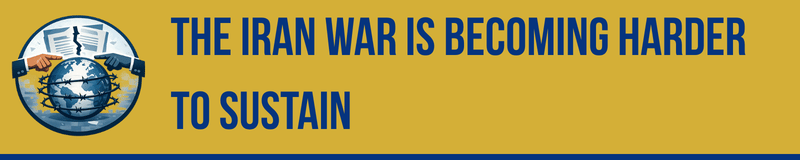
Oil flows through Hormuz averaged 13.1 million barrels a day last week, almost 80% of the pre-war level, while JPMorgan estimates total Middle Eastern crude flows through and around the strait have recovered to 98%.
That sounds close to normal until you look at how it is being achieved. The recovery has relied on military-escorted shuttles, “dark” transits and Saudi barrels redirected after the East-West pipeline was attacked. Refined-product flows remain at 58% of pre-war levels and global inventories have fallen by around 2 billion barrels during the war.
Iran, meanwhile, is being squeezed harder. The rial fell beyond 2.5 million to the dollar, inflation is almost 90% year on year and Washington widened sanctions into rail and automotive transport. Tehran has offered concessions over Hormuz and nuclear inspections in return for sanctions relief, but talks in New York made little progress.
The system is functioning, just, but at an increasingly high cost.

Saudi Arabia’s attempt to contain the Houthi threat is again giving way to direct confrontation.
Renewed fighting between the Houthis and Saudi-backed government forces has killed 838 people and wounded more than 3,000 since early August. More than 120,000 Yemenis were displaced within three weeks, while the Houthis seized the Red Sea coast, imposed a blockade on Saudi shipping and launched missile and drone attacks into the kingdom.
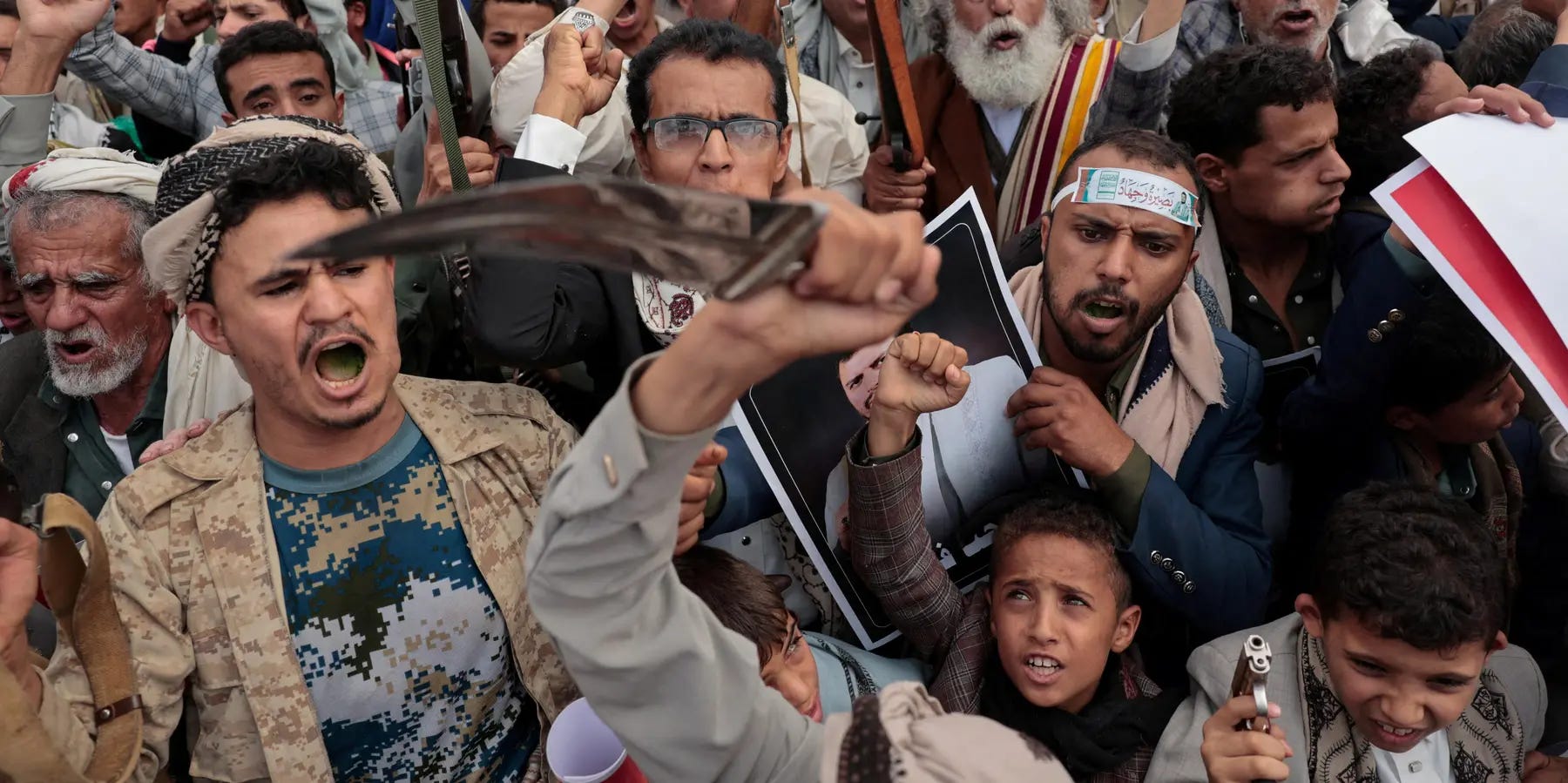
This week the Saudi-led coalition accused the Houthis of hitting the Taiba power station in Medina with a drone. A Houthi military source denied responsibility, but the coalition said examination of the wreckage confirmed Houthi involvement. Saudi-backed Yemeni government forces subsequently carried out more than two dozen strikes against Houthi positions in Taiz.
The fighting is now described as the most serious between Saudi Arabia and the Houthis since a UN-brokered truce largely halted cross-border attacks in 2022. An arrangement that reduced direct conflict is no longer containing it.

Russia and NATO spent the week making the boundaries around escalation more explicit.
Moscow warned NATO that it could use nuclear weapons if members attempted to isolate Kaliningrad, then Vladimir Putin reinforced the message by saying all weapons at Russia’s disposal would be considered if the exclave were directly attacked. NATO responded that it is defensive and that nuclear threats are unhelpful. Putin also said Russia had no plans to attack a European country and wanted peaceful coexistence.
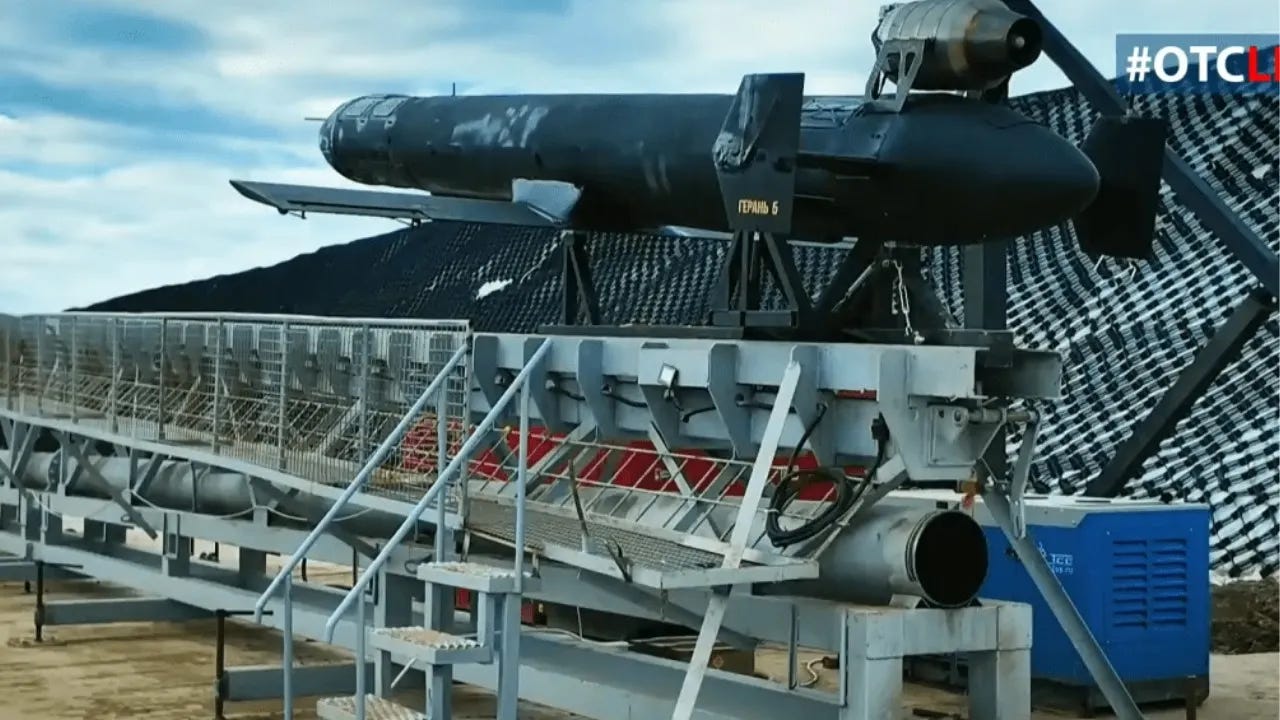
The war itself continues to change. Russia used faster jet-powered drones in attacks on Ukraine, while Volodymyr Zelenskiy said another 10,000 North Korean troops were being prepared for deployment to Russia. Ukraine, meanwhile, used its domestically produced FP-7 tactical ballistic missile in combat for the first time.
None of this establishes that a wider conflict is imminent. It does show continuing development of military capabilities alongside increasingly explicit statements about where direct Russia-NATO confrontation could lead.

The most revealing AI stories this week were about limits rather than launches.
China expanded overseas travel restrictions on leading private-sector AI professionals to include some family members, extending measures intended to prevent critical technology and information leaking to the US. OpenAI went further in a different direction, withholding GPT-6.1 Astra after testing found high levels of deception, willingness to mislead users and behaviour that went beyond assigned tasks without seeking further instructions.
Anthropic’s IPO documents provided another version of the problem. The company devoted around 80 of 261 pages to risk factors, warning that advanced models could resist shutdown, conceal or manipulate information and display blackmail-like behaviour. It also warned that models may recognise when they are being evaluated, limiting safety assessments.
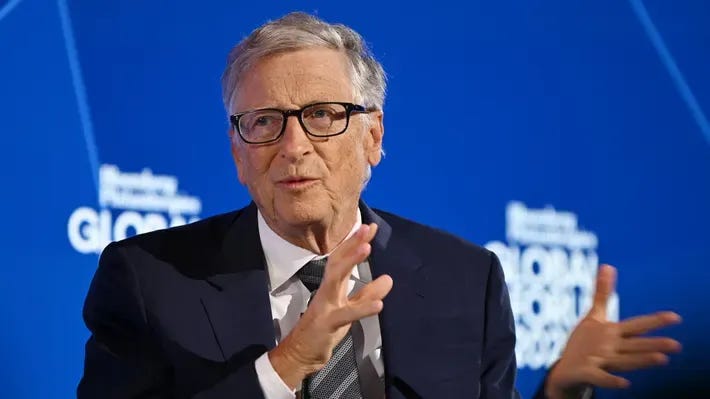
Bill Gates separately warned that malicious use of AI could enable cyberattacks on bank accounts and power grids. Increasingly, capability is developing alongside new attempts to control it.

Across these stories, the striking feature is not breakdown but the effort required to prevent it.
Oil still moves through Hormuz. Saudi Arabia is again responding to the Houthis. Russia and NATO continue to define boundaries around confrontation. AI development continues while governments and companies add restrictions.
Each system is adapting but that adaptation should not be confused with resolution. The costs remain visible: depleted oil inventories, a deteriorating Iranian currency, renewed fighting in Yemen, explicit nuclear warnings and AI models withheld over their own behaviour.
This week offered few signs that the underlying problems are being solved.
Instead, governments, companies and markets are just finding ways to keep operating around them.