


Washington is using economic leverage against both adversaries and allies while unresolved wars continue consuming military resources. This week showed both the reach of American power and the constraints on using it simultaneously across several fronts.
The most important developments this week were not decisive victories or diplomatic breakthroughs. They were signs of how the United States is increasingly using different forms of power across very different relationships.
Washington intensified its economic campaign against Iran while simultaneously entering a tariff confrontation with Canada. At the same time, the Iran war continued consuming American military resources needed elsewhere, just as Ukraine faced growing questions about its own military position.
There was movement towards reopening the Strait of Hormuz but not towards resolving the wider US-Iran confrontation.
Across these stories, the common thread was not escalation alone. It was the difficulty of translating military, economic and diplomatic leverage into positive durable outcomes.

The United States intensified its economic campaign against Iran this week, expanding sanctions against Tehran and its trading partners as Treasury Secretary Scott Bessent promised to sever Iran from the global economy. President Donald Trump subsequently raised the possibility of sanctions against Chinese banks over their commercial links with Iran.
At almost the same time, Washington’s trade negotiations with Canada collapsed. New US tariffs of 50 per cent took effect on about $20 billion of Canadian goods prompting Ottawa to announce retaliatory tariffs of up to 50 per cent from September 8.

The two confrontations are fundamentally different. Iran is an adversary engaged in an unresolved conflict with the United States. Canada is one of America’s closest economic partners, with bilateral trade approaching $900 billion a year.
What connects them is the instrument being used.
Access to American markets and the financial system is becoming a source of leverage across relationships that otherwise have very little in common.

The consequences of the Iran conflict are increasingly visible outside the Middle East.
The United States cancelled a large amphibious exercise with South Korea scheduled for September, citing constraints on the availability of US forces because of the Iran war. Washington had already scaled back another joint exercise with Seoul.
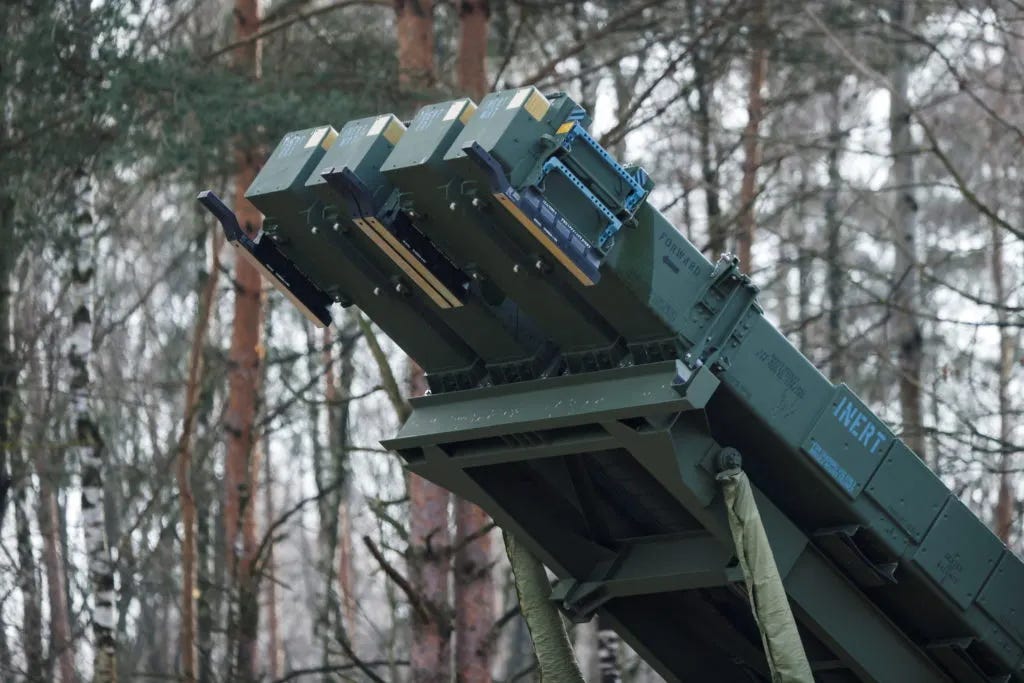
More consequentially, a US defence official said Patriot missile stocks in Europe had fallen to “beyond critical” levels after interceptors were shifted to the Middle East and heavily used against Iran. About 1,500 of 2,330 US Patriot interceptors have been used in the conflict, according to CSIS. The Pentagon and NATO dispute the assessment that European stocks are beyond critical.
Meanwhile, Washington is reviewing further reductions from the roughly 80,000 US troops still deployed in Europe while asking allies to assume greater responsibility for conventional defence.
These are different decisions but together they illustrate a basic constraint: military resources committed to one theatre cannot always remain fully available in another.

Ukraine’s problem this week was not simply that Russia continued advancing. Several of the assumptions on which Kyiv’s position depends became more difficult at the same time.
President Volodymyr Zelensky said Russia plans to draft another 300,000 troops after parliamentary elections in September. Ukraine, meanwhile, faces declining supplies of Patriot interceptors and a $27 billion defence funding gap this year.
Former defence minister Mykhailo Fedorov gave the problem a sharper edge, saying Ukraine was slowly losing the war and had only months to make decisions capable of changing its trajectory. The presidential office rejected his assessment.
Diplomacy offered little relief. Russia is reportedly preparing to intensify attacks after concluding that negotiations have reached a dead end. Europe announced additional military support, including €6.1 billion from the EU but Ukraine is confronting shortages while Russia continues its offensive.
The difficulty is increasingly one of time: whether additional support and changes in Ukrainian strategy can arrive quickly enough to alter the military trajectory.

There was genuine diplomatic movement this week in the Strait of Hormuz.
Iran and Oman moved towards an interim arrangement providing a temporary shipping corridor and joint mine-clearing project. Qatar also resumed mediation with Tehran, while fighting in the broader Iran conflict remained largely paused.
By Friday, Iran and Oman had agreed in principle to a temporary maritime route. Yet Tehran described the corridor as limited and temporary, while Mohsen Rezaei, secretary of Iran’s Supreme National Security Council, linked any broader understanding to an end to military operations in Lebanon, Gaza and Syria.
The result is an opening rather than a settlement. Hormuz remains tied to the wider confrontation over Iran, US sanctions and Washington’s blockade, even as diplomacy creates the possibility of restoring some shipping.
After six months of conflict, the week’s progress therefore illustrates the gap between reducing immediate military confrontation and resolving the disputes that produced it.

This week did not produce a decisive geopolitical shift. It exposed something more incremental: the limits that appear when several forms of power are being used at once.
The United States is using economic leverage against both Iran and Canada while the Iran war consumes military resources required elsewhere. Ukraine is confronting shortages and a continuing Russian offensive as diplomacy stalls. In Hormuz, negotiations have produced a possible route for shipping without resolving the confrontation surrounding it.
None of these developments stands alone. Together they show governments reaching repeatedly for military force, economic measures and diplomacy, sometimes simultaneously.
The question running through the week is therefore increasingly practical: not whether governments have instruments of power available, but how much those instruments can actually achieve.