


A week that did not expand the physical battlefield but instead reshaped the strategic environment around Washington as the Iran War continued to dominate the news cycle.
Energy corridor risk, alliance strain and domestic political pressure combined to narrow escalation space without producing a decisive outcome.
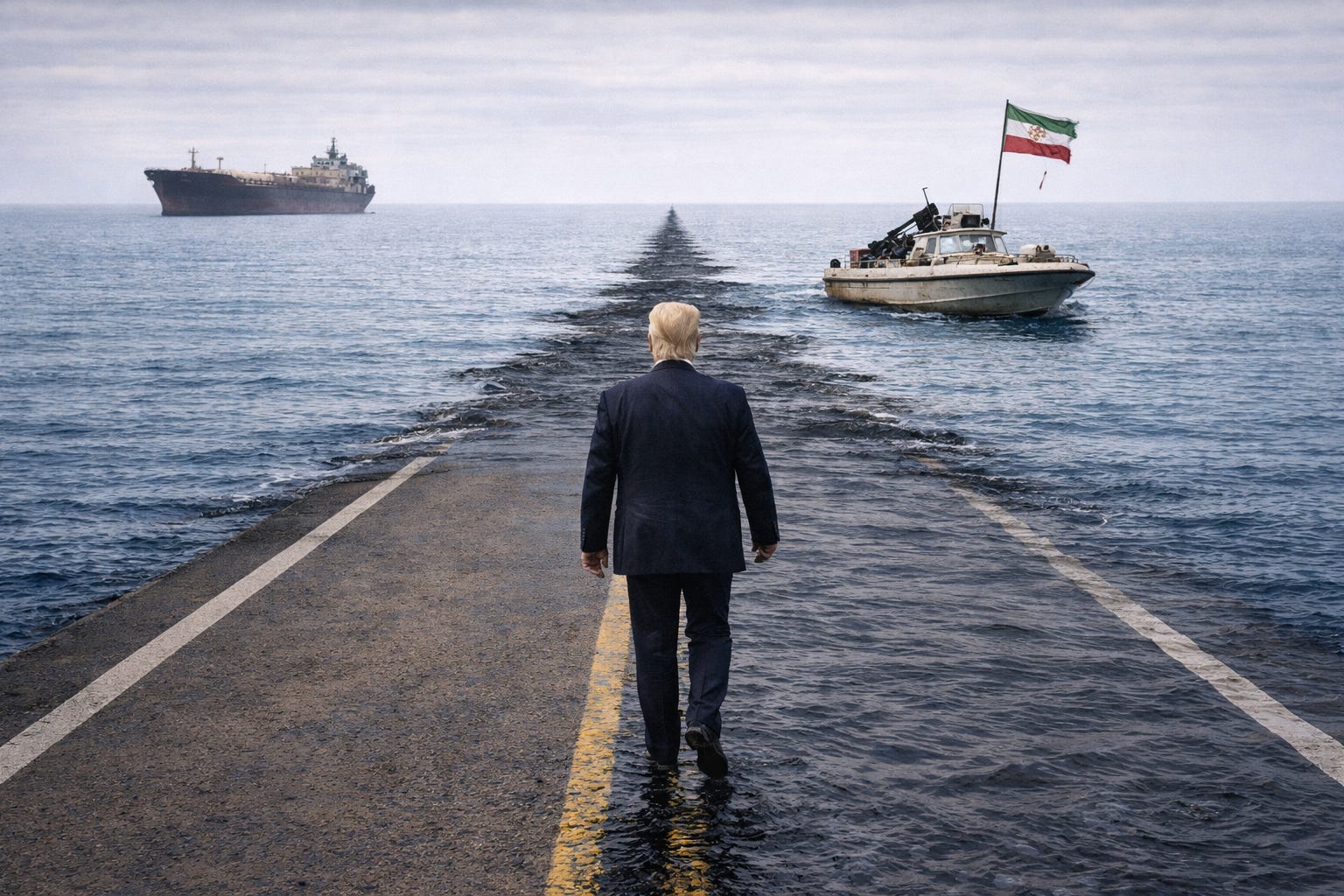
The past week did not produce a decisive military turn in the Iran conflict despite how many times it was claimed by the Americans. Instead, it showed pressure shifting markedly back toward Washington itself as the conflict’s effects spread beyond the battlefield into markets, alliances and domestic politics.
Additional troop deployments and signalling of decisive strikes continued, but ceasefire proposals circulated without confirmation from Tehran and control over shipping conditions through the Strait of Hormuz remained contested.
At the same time, rising fuel costs fed into falling domestic approval signals in the United States, while nearly all allies resisted participation in maritime security operations.
Together these developments suggested a conflict that whilst it remained geographically contained for now, it became increasingly complex politically, with escalation options narrowing rather than expanding as the search for a clear outcome continued.

The most consistent message of the week was not battlefield expansion but political constraint. Additional deployments and strike signalling suggested continued readiness to escalate, yet diplomatic proposals circulated without visible reciprocal engagement from Tehran. At the same time, several allies declined participation in securing maritime routes, while public criticism of partners highlighted growing friction rather than any sort of advancement or even consolidation.
Domestic political pressure on the US Administration also became more visible. Rising petrol prices linked to disruption risk in the Gulf fed directly into presidential approval indicators in the United States, reinforcing the connection between corridor security and domestic political space. Together these developments illustrated a leadership facing increasing pressure from multiple directions at once as the war unfolds in a manner they find unexpected.

The conflict remained contained geographically, but politically it narrowed Washington’s room for manoeuvre as it continues without producing the decisive demonstrative victory that might have supported claims of progress toward a clear outcome.

Across the week, the strategic focus of the conflict continued to move away from wider territorial considerations and toward control of transit corridors. Conditions in the Strait of Hormuz shaped energy markets, shipping confidence and inflation expectations across multiple regions simultaneously. Oil price volatility reflected uncertainty about passage conditions rather than changes on the battlefield itself.
This corridor pressure extended well beyond the Gulf. LNG exposure in Asia-Pacific markets and wider sensitivity across global supply chains illustrated how quickly maritime risk translated into broader economic consequences. A cyclone in Australia impacting LNG production became another key event in the disruption of the energy supply chain showing just how fragile it has become.
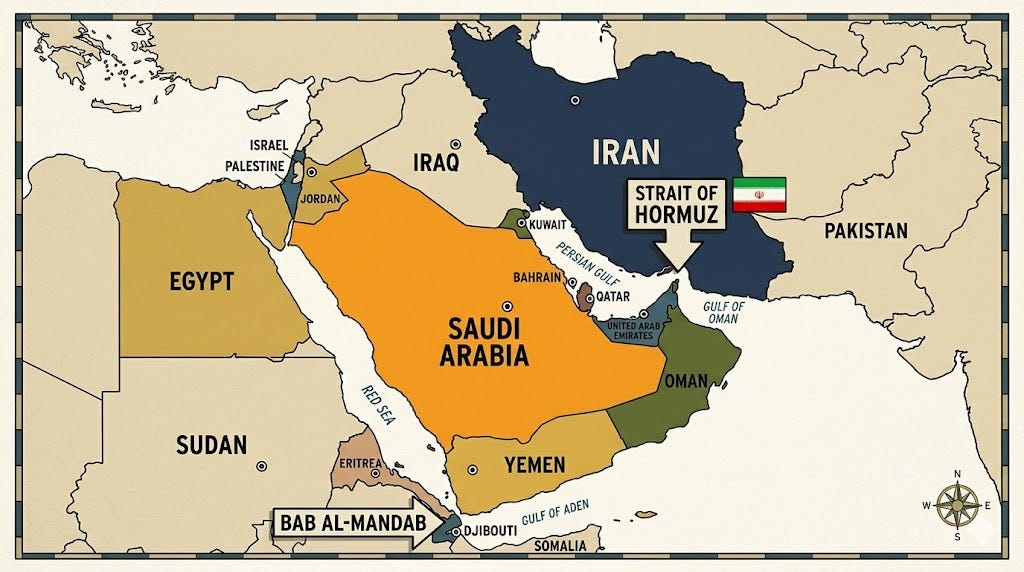
Infrastructure vulnerability across parts of the Gulf reinforced the sense that the conflict’s leverage lay less in territorial gain than in the ability to influence transit reliability. The week therefore reinforced a pattern in which corridor control, rather than battlefield advance, became the central mechanism shaping the conflict’s wider impact on the international system.
The spectre of a widening of shipping corridor control by way of Houthi interdiction of the Red Sea loomed large but this powder remains dry for now and they are yet to enter the fray.
The limited focus of the war to date has, to an extent, led to the hope that perhaps the genie could be put back into the bottle, but with the US sending airborne troops & marines into theatre and Iran responding by mobilising what they claim is 1 million troops, the contained nature of the conflict is far from assured unless an offramp can be found.

Although Western alignment remained broadly intact, the week revealed growing differences over how the conflict should be managed and who should actually even be involved. Resistance to maritime participation from several partners, alongside tensions with Australia and difficult positioning at the G7 level, suggested that involvement remained largely off the table despite browbeating from Trump and diplomatic efforts from Marco Rubio. In typical Donald Trump style he threatened to remember the snub from NATO. At the same time, mediation signals emerging through Pakistan illustrated that diplomatic channels were developing outside traditional alliance structures.
European developments during the week also reflected a broader tightening domestic political environment alongside external security pressure. Migration policy hardening, increasing concern about energy supply and electoral positioning across parts of the continent took place against the backdrop of the same energy and security uncertainty shaping alliance discussions.

Together these signals did not indicate alignment breakdown, but they did suggest a coalition that is increasingly uncomfortable, with little movement towards any sort of single coordinated strategy. The conflict therefore functioned less as a rallying point than as a test of how far coordination could stretch under sustained corridor risk, domestic political pressure and market sensitivity.

The week did not mark a decisive turning point in the Iran conflict, but it did clarify how its effects were widening. Pressure increasingly accumulated around Washington’s strategic position through limits on alliance cooperation, corridor leverage in Hormuz and rising domestic sensitivity to fuel costs.
At the same time, market reactions showed how quickly maritime risk translated into global economic exposure. Taken together, these developments suggested a conflict that remained geographically contained while becoming structurally more consequential.
Rather than producing a clear shift toward settlement or escalation, the week illustrated how pressure can build across political, economic and alliance systems even when the battlefield itself changes little.