


Four months after launching a war designed to compel Iranian surrender, Washington found itself confronting the same reality that smaller powers and insurgencies have exposed for decades. Superior military strength can destroy targets and impose costs. It cannot necessarily dictate political outcomes.
For months, the United States framed the conflict with Iran in terms of maximum pressure and unconditional surrender. By this week, the agreement that emerged bore little resemblance to those ambitions. More importantly, Washington itself appeared to acknowledge that escalation carried costs it was ultimately unwilling to bear.
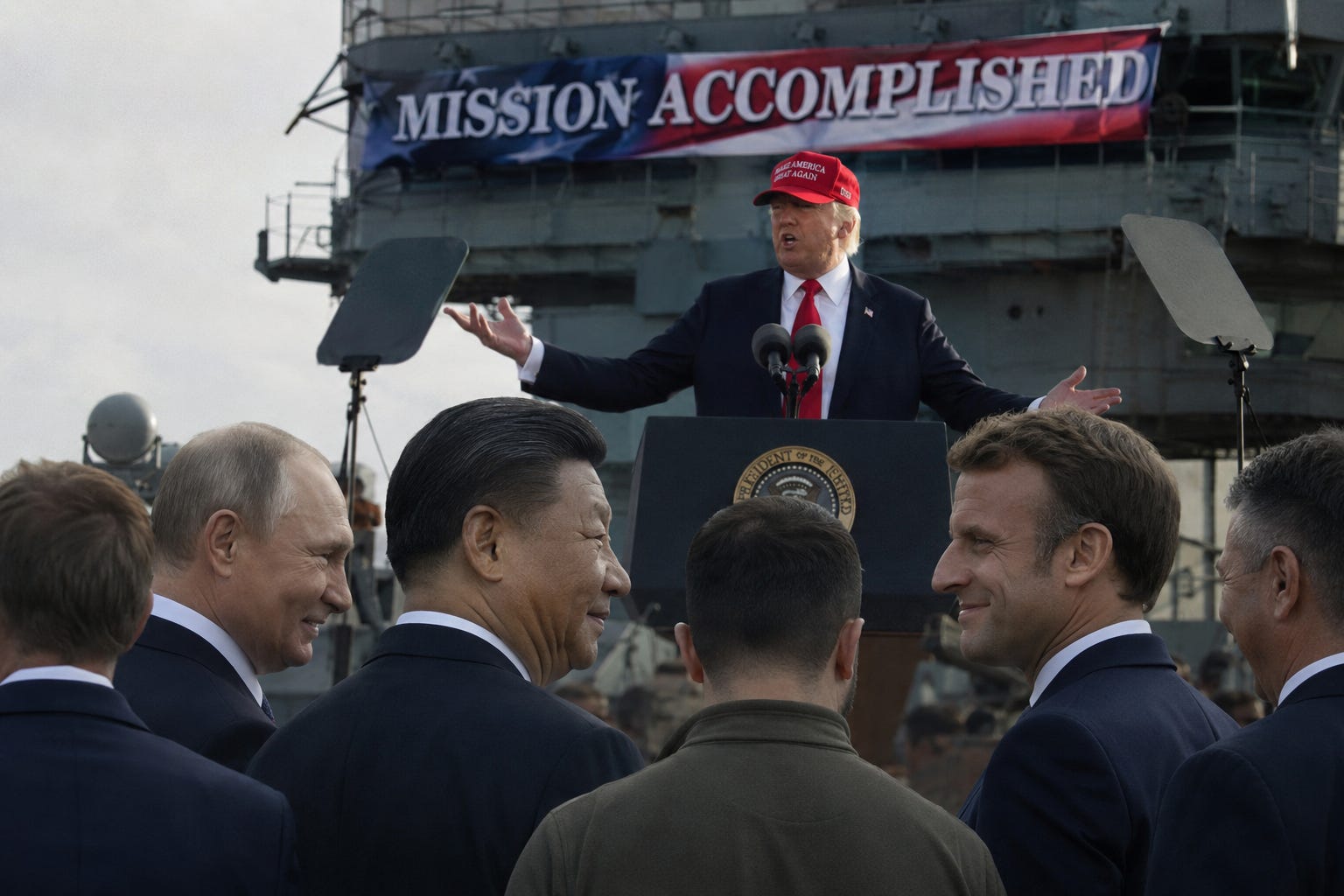
The lesson extended beyond the Middle East. Ukraine continued demonstrating that weaker powers can impose costs on stronger adversaries, while Europe accelerated its search for strategic autonomy without yet finding strategic unity.
Modern conflicts are increasingly decided not by who possesses the greatest power, but by who can make the price of victory unacceptable.

The war with Iran began with demands for unconditional surrender and promises that Tehran’s nuclear ambitions would be eliminated. By the end of this week, the gap between those objectives and the emerging settlement had become increasingly apparent.
Iran remained intact. Oil exports resumed. Frozen assets began to be released. A proposed $300 billion investment mechanism emerged. Questions surrounding the nuclear programme moved into future negotiations. Implementation talks in Switzerland were cancelled before they could begin, while fighting in southern Lebanon continued despite expectations of a broader ceasefire.

Political opposition also widened. Republican critics questioned the agreement, and Israel publicly distanced itself from parts of the framework while signalling that operations in Lebanon would continue.
None of this erased the military damage inflicted on Iran. But military superiority and strategic success proved to be different things. Iran’s ability to threaten energy markets and regional stability gave Tehran leverage that force alone could not remove.
The result was not the unconditional surrender promised at the beginning of the conflict, but a compromise that increasingly reflected the limits of coercion.

America’s alliances did not weaken this week. But they did reveal a growing adjustment to uncertainty.
Israel openly challenged elements of the Iran agreement. NATO allies again faced warnings about defence spending and future American commitments. European leaders argued over who should speak to Moscow, while India pursued closer economic ties with Washington without abandoning its own priorities.

The pattern was familiar. Allies increasingly appear to assume that American policy can shift rapidly and sometimes unpredictably. Rather than relying exclusively on Washington’s leadership, partners are preserving room for independent action and alternative options.
The United States remains the indispensable power inside the Western alliance system. Yet allies are increasingly behaving as though unpredictability itself has become a permanent feature of American leadership.
Managing around Washington is slowly becoming as important as working with it.

Ukraine spent another week demonstrating that its strategy of imposing costs deep inside Russia is becoming increasingly difficult for Moscow to ignore.
Large drone attacks disrupted Moscow airports, struck fuel infrastructure and once again brought smoke over the Russian capital. The attacks followed months of strikes against refineries, logistics hubs and energy assets.
This was not a new strategy. It was the continuation of one that has gradually evolved as Ukraine seeks to compensate for Russia’s conventional advantages.
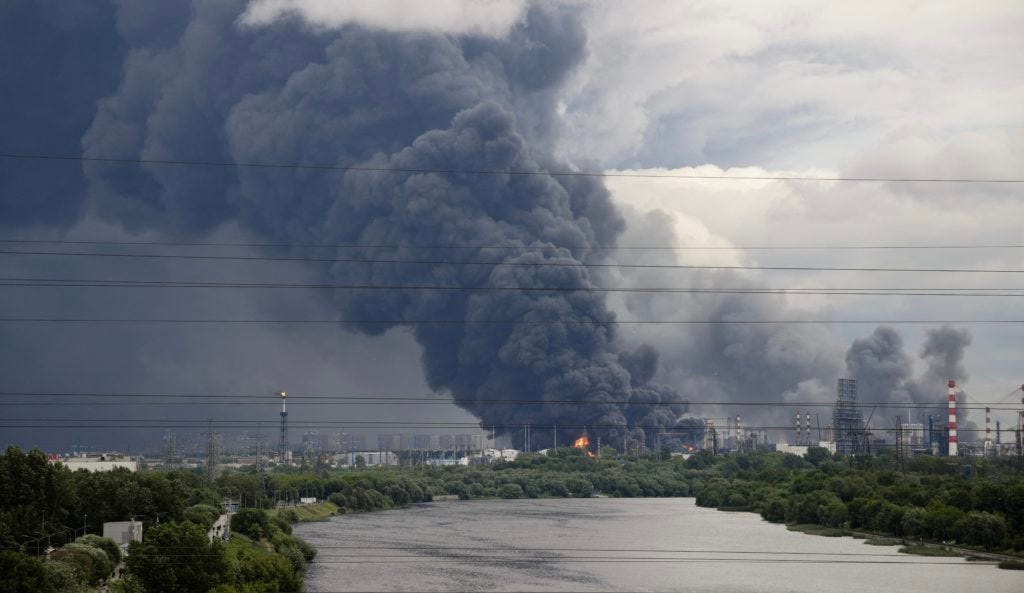
Unable to match Russian resources directly, Kyiv has focused on making the conflict visible inside Russia itself. The objective is not simply to destroy infrastructure. It is to ensure that the costs of war are increasingly shared by the Russian state and society.
So far, the strategy appears to be producing results. The war Russia launched is becoming progressively harder to isolate from everyday life inside Russia.
Ukraine is not necessarily defeating Russia militarily. It is steadily making Russia feel the consequences of continuing the conflict.

Europe’s direction of travel became clearer this week. So did its internal divisions.
The European Union formally opened accession talks with Ukraine and Moldova. New sanctions were imposed on Russia. Concerns over Chinese support for Moscow and dependence on Chinese minerals intensified. Finland moved closer to NATO nuclear planning while debate emerged over whether Europe should establish contacts with Russia.

All of these developments point towards the same conclusion. European leaders increasingly recognise that they must assume greater responsibility for security, supply chains and defence.
Yet unity remains elusive. Divisions persist over China, Russia, diplomacy and burden sharing. Strategic autonomy has become an objective shared by much of Europe. A common strategy remains a work in progress.
Europe knows where it wants to go. It still struggles to agree on how to get there.

This week offered a reminder that the relationship between military strength and political success is rarely straightforward.
The United States spent months pursuing a conflict on the assumption that overwhelming force would eventually compel Iranian surrender. By the end of the week, Washington had effectively acknowledged that the costs of escalation outweighed the benefits of pursuing absolute victory.
Ukraine, meanwhile, continued demonstrating how weaker powers can impose meaningful costs on stronger adversaries, while Europe accelerated its search for greater independence in a more uncertain world.
Perhaps that is the defining lesson of modern conflict. Military power remains essential. But power alone is no guarantee of strategic success.
Increasingly, the decisive advantage belongs to the side capable of making the costs of continuing exceed the rewards of winning.