


We will be taking a short break from publishing 10 Things Global News over the holiday period.
We will be back in your inbox early in the New Year
All the best of the season to you and your loved ones and see you in 2026
The past week was defined less by dramatic breakthroughs than by a steady tightening of positions across several fronts.
In Ukraine, diplomatic activity accelerated without resolving the underlying conflict, suggesting preparation rather than settlement.
In Washington, assertive foreign and security actions were accompanied almost immediately by legal, institutional, or political constraints.
Across advanced economies, economic security logic continued to outweigh efficiency, reinforcing a trend already well underway.
In domestic politics, acts of violence once again translated rapidly into policy change, with security concerns reshaping decisions far beyond policing alone.
Taken together, these developments point to a world in which governments are acting earlier and more defensively — locking in leverage, limiting exposure, and narrowing room for manoeuvre before events force their hand. The shifts were incremental, but the direction was consistent.

Diplomatic activity around Ukraine accelerated this week, with European governments advancing discussions on security guarantees, peacekeeping concepts, and long-term financing mechanisms. These moves were not framed as imminent peace terms, but as efforts to lock in deterrence and credibility ahead of any future negotiation window.

Crucially, this activity unfolded alongside clear Russian signalling. Mid-week, President Vladimir Putin publicly emphasised Moscow’s resolve, reinforcing its rejection of externally imposed settlement terms. By the week’s end, Russia had confirmed the movement of missiles to Belarus, underlining its willingness to adjust force posture even as diplomatic frameworks were being discussed in Europe.
The timing matters. As European capitals worked to shape the architecture of a post-war order, Moscow acted to remind counterparts that leverage remains contested. The message was not escalation for its own sake, but persistence — that military pressure and strategic signalling will continue to shape the negotiating environment.
The emerging endgame is therefore not one of parallel diplomacy and de-escalation, but of diplomacy conducted under sustained pressure, with both sides seeking to harden their position before any talks take form.

Several US actions this week illustrated how forcefully Washington is willing to act — and how quickly those actions encounter limits. Maritime strikes, tougher enforcement language around energy shipments, expanded travel restrictions, and heightened security measures all underscored a readiness to use executive power in response to perceived threats.
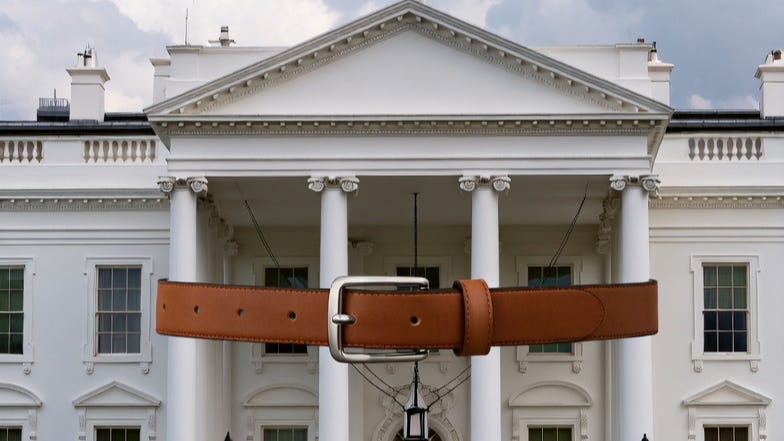
Yet each move was closely followed by scrutiny. Congressional oversight questions, legal challenges, and allied sensitivities surfaced almost immediately. Even when objectives were broadly supported, the mechanisms used to pursue them prompted debate over authority, proportionality, and durability.
This pattern reflects a deeper tension. Speed and decisiveness are prioritised in moments of risk, but legitimacy and sustainability remain contested. The result is a form of constrained assertiveness — power exercised quickly, then shaped by institutions that slow, narrow, or redirect it.

Economic policy decisions across multiple regions continued to converge around a shared logic: reducing vulnerability matters more than maximising efficiency. Trade negotiations stalled amid domestic political pressures, carbon border measures expanded, and governments backed strategic industries tied to energy, technology, and critical materials.

These choices are not isolated. Together, they reflect an acceptance that friction is now a feature, not a bug, of the global economy. Supply chains are being reshaped to prioritise resilience and control, even at higher cost. Technology restrictions and industrial subsidies are being justified less as protectionism and more as national security policy.
The significance lies in the consistency. Very different political systems are arriving at similar conclusions about exposure and dependency. Economic sovereignty has become a shared organising principle.

Acts of violence again triggered rapid policy responses, reinforcing how quickly security shocks now translate into systemic change. In Australia, the Bondi attack prompted swift movement toward tougher gun measures, hate speech laws, and national policy tools. In the United States, the suspension of the green card lottery followed a deadly shooting linked to migration status concerns.

What stands out is not only the speed, but the scope. Responses extended beyond immediate law enforcement to immigration policy, speech regulation, and administrative systems. When the threshold for action is breached then the policy net gets rapidly wider.
This reflects a broader shift in democratic governance: acute incidents increasingly reshape long-term rules. Public safety shocks no longer remain confined to their immediate context — they reverberate across legal and institutional frameworks.

This was a week of positioning rather than resolution. Governments acted as though future shocks are not hypothetical, but expected. In Ukraine, preparations continue for a contested peace. In Washington, power is applied with urgency, then negotiated through institutions. In economic policy, resilience continues to trump efficiency. And in domestic politics, violence accelerates policy hardening across domains.
None of these shifts alone marks a turning point. Together, they suggest a world adjusting its baseline — becoming more defensive, more conditional, and less willing to wait for clarity before acting.