


The world did not run out of ways to absorb geopolitical shocks this week. It did, however, get a clearer view of what those ways now require.
Oil is still moving through Hormuz but under expanded US air cover as Iranian attacks spread. Saudi Arabia is still defending its cities but interceptor stocks are running low. Ukraine is still fighting Russia but its Patriot stocks are critically depleted while relations with Washington deteriorate. The global economy is still growing but resilience increasingly depends on strategic reserves, rerouted trade and alternative supply chains.
None amounts to systemic failure. The more important question is how long systems designed as back-ups can remain the normal way of keeping things working.

Hormuz remains open but increasingly through active intervention rather than normal commercial confidence. Iran has widened the pace, type and geographical scope of attacks on shipping. Two cargo ships have sunk, while more than 14 vessels have been struck in two weeks.
US forces have expanded air & naval cover and monitoring as Washington pushes vessels through the strait. Regional oil exports had recovered to 18.2 million barrels a day before the latest attacks but the widening target set now includes container and dry-bulk ships.

The consequences extend beyond oil. Gulf fertiliser shipments remain largely halted, threatening supplies before planting seasons in parts of Asia and Africa.
Saudi Arabia faces a parallel problem. Houthi attacks have reached Riyadh airport, Aramco’s headquarters and now Yemen’s presidential palace in Aden. Riyadh is seeking outside assistance as its interceptor stocks run low.

Washington’s relationship with Kyiv moved beyond disagreement this week.
Trump announced an energy ceasefire that Moscow did not confirm, while Russia continued striking Ukrainian energy infrastructure. Washington simultaneously pressed Kyiv to stop attacking Russian refineries. Trump also temporarily eased sanctions to allow Russian diesel onto US and global markets as he sought lower fuel prices before the midterm elections.
The imbalance became harder to ignore as the week progressed. Trump said Zelenskyy was more difficult to deal with than Putin. Ukraine missed its usual advance warnings before Russian ballistic missile attacks. Restrictions on the US-controlled Starshield system then disrupted Ukrainian drone operations. By Thursday, US and Western officials said the order had come from inside the White House.
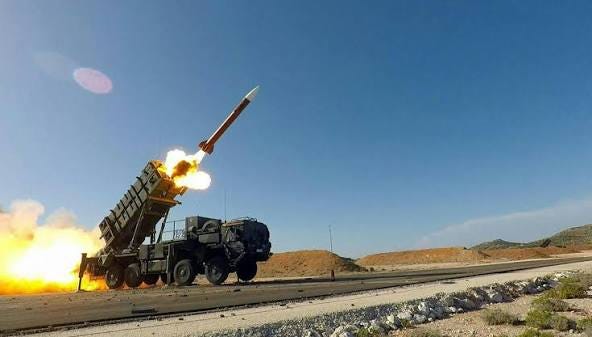
This is not US abandonment, yet. Trump says intelligence sharing continues and Patriot missiles are still flowing through a European-funded programme. However, Ukraine increasingly finds itself exposed to decisions made by the ally on which it remains heavily dependent.

The common thread is not simply military escalation. It is depletion.
Saudi Arabia is running low on interceptors needed to defend against Houthi attacks. Ukraine is critically short of Patriot missiles, with a Ukrainian official saying only a couple remained after stocks fell to 10 on 7 October and were largely used in subsequent attacks.
Those shortages connect the conflicts. The United States fired more than 1,000 Patriot and THAAD missiles during the first month of the Iran war. New Patriot interceptors can take up to 36 months to produce.
The same problem is visible in energy. More than one billion barrels have been released from commercial inventories since the Iran war began, with the G7 announcing another 100 million emergency barrels. The IMF warned that readily accessible stored oil is running low.
These reserves serve different purposes. What connects them is finite capacity. Resilience depends upon buffers and buffers can be consumed far faster than they are replenished.

The global economy has proved adaptable. The IMF says rerouted oil and strategic reserves helped contain the initial shock from the Middle East war. The WTO says businesses are diversifying supply chains and retaining alternative routes rather than returning entirely to previous trading patterns.
That adaptation has costs. The WTO forecasts Middle East exports falling 17% and imports 15%. Alternative routes can be more expensive, while repeated disruptions are strengthening contingency planning even where normal routes may eventually reopen.

The IMF’s warning points in the same direction. Public debt is heading above 100% of global GDP before 2030, borrowing costs remain elevated and fiscal cushions are limited. Another geopolitical shock could therefore arrive when governments have less room to absorb it.
Even headline trade growth carries a qualification. The WTO expects merchandise trade to grow 3.9% this year but says AI-related demand is masking weaker underlying trends from conflicts and tariffs.

This was not the week the system broke. Oil moved, Ukraine kept fighting, Saudi Arabia continued defending its infrastructure and global trade continued adapting.
The change is in what keeping those systems functioning now requires.
Hormuz increasingly needs military cover. Saudi Arabia needs outside air-defence assistance. Ukraine needs scarce interceptors and uninterrupted satellite support while becoming more vulnerable to decisions in Washington. Governments are drawing on energy reserves while businesses redesign supply chains around disruption.
Workarounds buy time. This week showed how many are now being used simultaneously, and how slowly some can be replenished.
The question is no longer simply whether the world can absorb another shock. It is how much spare capacity remains when the next one arrives.