


This week’s events were not defined by a single crisis, but by how governments chose to act.
In Iran, protests were met with force and isolation rather than compromise. In Venezuela and Greenland, sovereignty and resources were addressed through threats of seizure and military positioning. In Ukraine, negotiations advanced alongside deliberate damage to civilian energy systems. In trade and technology, access was shaped through tariffs, licensing and state-backed investment rather than market rules.
At the same time, governments expanded their authority over platforms, courts and environmental standards, tightening control in areas once left to markets or international norms.
The common thread was not escalation in the traditional sense, but a growing reliance on leverage – the use of tangible assets and regulatory power to shape outcomes directly, with fewer shared limits.

Iran’s protests continued to be treated primarily as a security problem with the regime holding fast for now.
Demonstrations that began late last year spread nationwide and were met by lethal crackdowns and a sustained communications blackout. Activist groups reported more than 2,600 deaths. Prosecutors charged detainees with capital offences, and at least one execution sentence was issued.
The United States raised the issue at the UN Security Council, where its ambassador said “all options are on the table”. President Donald Trump said he had been told the killing was easing, while also announcing 25 percent tariffs on countries trading with Iran.
Regional governments warned Washington that military action would destabilise the Middle East and damage the global economy. Iran accused the US of driving the unrest toward violence and warned of retaliation if attacked. Russia defended Tehran and urged non-intervention.
Rather than mediation, the dominant external response was to deepen Iran’s economic and diplomatic isolation as domestically the crisis continued.

In Venezuela, the United States again acted directly on physical assets.
US forces seized a sixth oil tanker linked to the country after it crossed waters covered by US sanctions. The operation involved naval personnel and was carried out without resistance. Venezuela’s interim leadership announced plans to rewrite oil-sector legislation. Trump said the US now controls Venezuela’s oil industry following the abduction of President Nicolás Maduro.
Opposition leader María Corina Machado sought political backing in Washington after giving Trump her Nobel Peace Prize medal, but received none.

In the Arctic, a similar logic appeared in territorial form. European states sent military personnel to Greenland as Denmark announced expanded NATO exercises and a larger long-term presence. Trump repeated that Greenland was vital to US security and said Denmark could not protect it. The White House said allied deployments would not affect his goal of acquiring the island. Greenland’s government rejected any such outcome.
In both cases, leverage over energy and geography replaced negotiation as the main instrument.

Ukraine illustrated how leverage is now applied even while diplomacy continues.
Earlier in the week, Russia struck Ukraine’s energy system with large-scale drone and missile attacks, damaging power plants and substations across several regions. Hundreds of thousands of households lost electricity, and civilians were killed in urban strikes.
Days later, Ukraine declared a state of emergency in its energy sector, centred on Kyiv, as temperatures fell toward minus 20°C and many residents remained without heat or water.
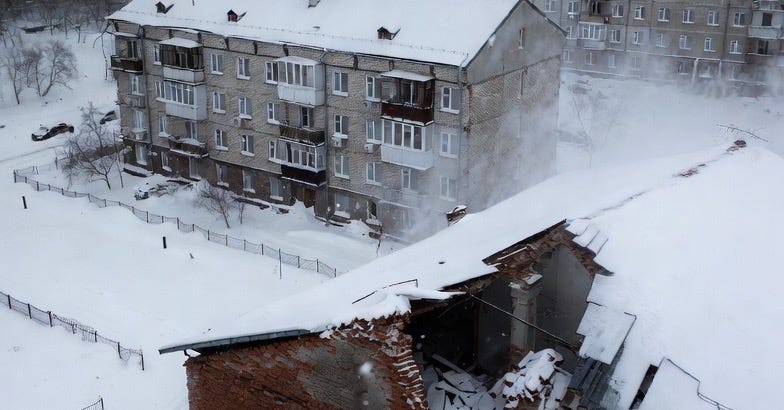
At the same time, President Trump said publicly that Ukraine was blocking a peace deal, claiming Russia was ready to end the war - a claim unsurprisingly echoed by the Kremlin. US-led talks have focused on security guarantees and included pressure for Kyiv to abandon the Donbas region. President Volodymyr Zelenskyy again rejected territorial concessions.
The message from both sides was transactional: territory and security guarantees on one side, sustained pressure on civilian systems on the other.

Economic policy increasingly mirrored geopolitical positioning.
China reported a $1.2 trillion trade surplus for 2025, with exports to the US falling sharply and growth shifting toward Africa, Southeast Asia and Europe. Officials described the outlook for 2026 as difficult.
Washington approved limited sales of Nvidia’s H200 AI processors to China under strict conditions, while keeping its most advanced chips banned.
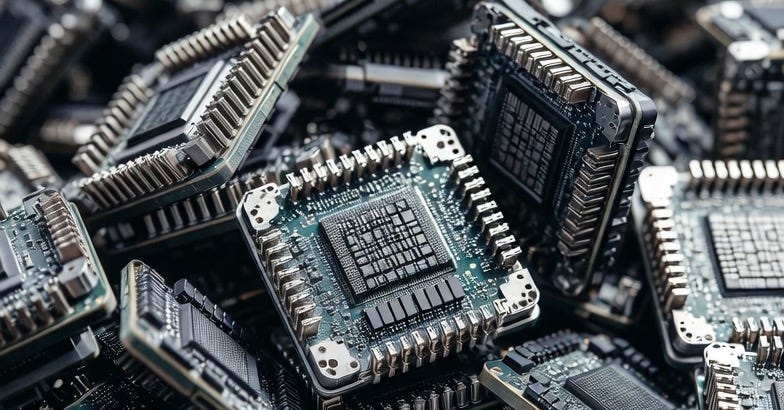
The US also reached a deal with Taiwan to cut tariffs and secure $500 billion in semiconductor investment for American facilities. Taiwan Semiconductor Manufacturing Company plans at least four new US plants.
Canada, facing US tariffs, announced a new strategic partnership with China during Prime Minister Mark Carney’s visit to Beijing.
Rather than restoring open trade, these moves formalised selective access tied to political alignment.

Governments also tightened control within their own legal and regulatory systems.
Australia’s ban on under-16s using major social-media platforms led to the removal of about 4.7 million accounts in its first month, with large fines for companies that fail to comply. France, Malaysia and Indonesia said they would adopt similar laws. Malaysia and Indonesia also blocked the AI chatbot Grok over manipulated sexual content.
International courts were active as well: the UN’s top court opened a genocide case against Myanmar, and Hong Kong heard sentencing arguments for democracy activist Jimmy Lai.
In mixed messaging the US Environmental Protection Agency said it would no longer include health impacts in some pollution cost calculations whereas a new UN treaty governing biodiversity in international waters is due to enter into force thereby increasing protection for the environment previously outside the range of legal purview.

This week pointed to a subtle but important shift in how power is exercised.
Sanctions, tanker seizures, infrastructure attacks, technology controls, platform regulation and legal action all served the same purpose: shaping outcomes through control of tangible systems rather than persuasion or shared rules.
Diplomacy has not disappeared, but it is increasingly constrained by leverage over energy, territory, data, supply chains and courts.
For now, this produces movement without resolution. Over time, it may redefine what stability itself means.