


A week in which negotiations returned across several major crises, but without materially narrowing the disputes underneath them. From the Iran war to Ukraine and US-China relations, governments increasingly appeared focused on containing instability rather than resolving it.
Trump tried talking up the relationship and the progress from the summit but Xi insisted on tempering too much enthusiasm and bringing the topics back to reality, even going so far as issuing warnings. The result was a more cautious geopolitical atmosphere than earlier in the year, though not necessarily a more secure one.
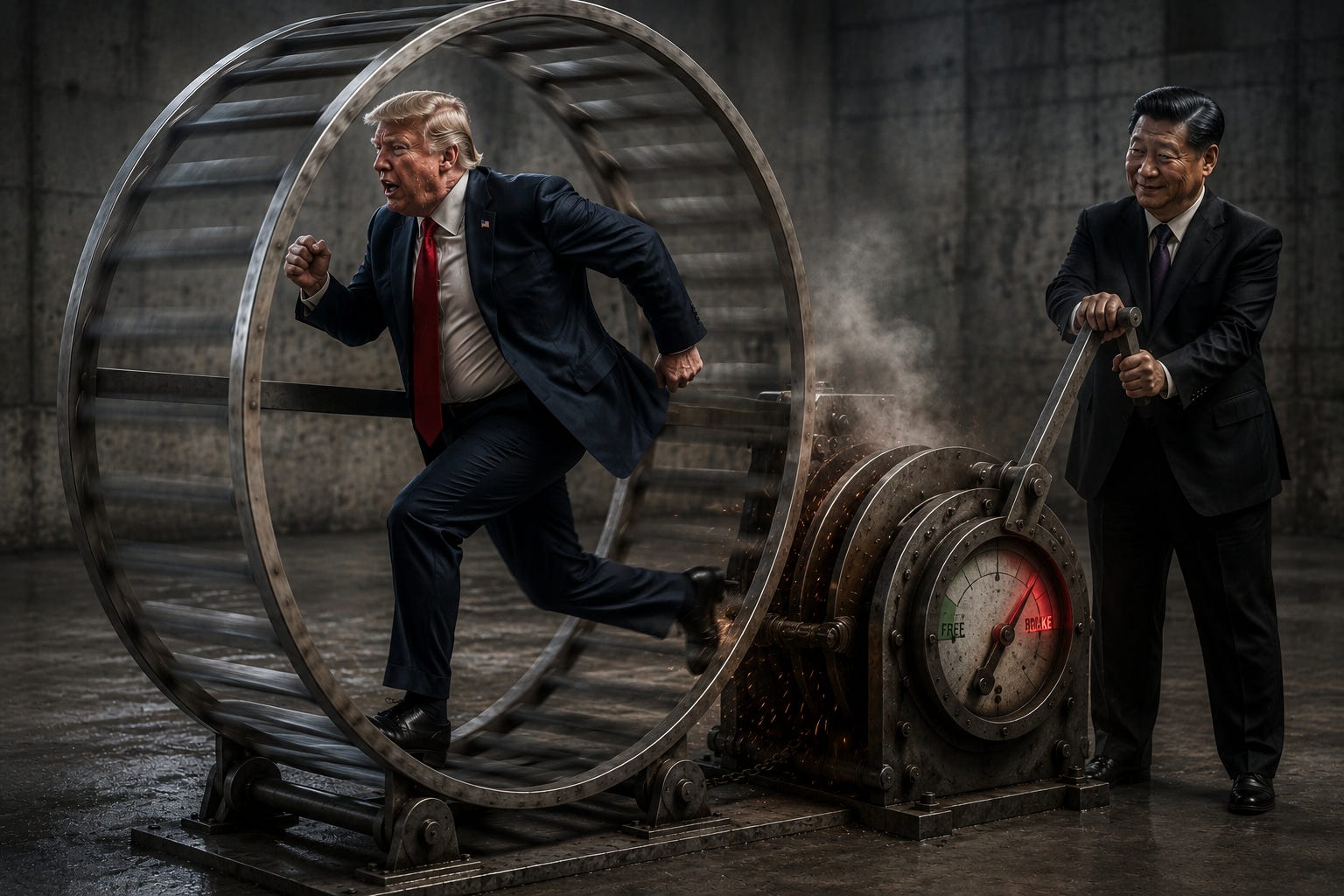
Diplomatic activity became more visible again this week, but mostly as a mechanism for managing pressure, economic disruption and escalation risk. Ceasefires remained fragile, strategic mistrust remained intact, and several governments quietly continued preparing for the possibility that negotiations may ultimately fail.
A succinct wrap on the stories of the week - what happened and what it meant.

The clearest pattern of the week was the reopening of diplomatic channels without any real corresponding movement on the underlying issues themselves.
In the Iran crisis, Washington, Tehran and regional governments all continued searching for ways to preserve a fragile ceasefire and reduce pressure on global energy markets. Yet the central disagreements barely shifted. Iran continued demanding sanctions relief, an end to the naval blockade and guarantees against renewed attacks, while the United States and Israel maintained pressure over uranium enrichment, missile capabilities and proxy networks. Benjamin Netanyahu repeatedly stressed that the war could not truly end while enriched uranium remained inside Iran, even as Donald Trump argued diplomacy still remained possible.
A similar pattern emerged in Ukraine. Discussion of ceasefires and mediation continued throughout the week, but large-scale drone and missile attacks resumed almost immediately after temporary pauses expired. Moscow and Kyiv both appeared increasingly sceptical that negotiations could currently deliver acceptable outcomes with the only area of real agreement being that the US wasn't helping on the path to peace, while battlefield calculations continued to dominate strategic thinking on both sides.
US-China relations also reflected this dual-track dynamic. Trump’s delayed visit to Beijing reopened direct engagement between Washington and Beijing after months of rising tension linked to trade, Taiwan and the Iran war. Both sides publicly emphasised stability and economic cooperation, but China continued reinforcing Taiwan as a non-negotiable issue while the United States focused heavily on commercial outcomes. The summit suggested stabilisation was possible, though within carefully managed limits rather than through any deeper strategic convergence.

Alongside the return of diplomacy, the week also exposed growing questions around the practical reliability of security guarantees and alliance structures.
The cancellation of planned US troop deployments to Poland unsettled officials across Europe, particularly coming after earlier reductions in Germany. At the same time, Latvia’s political crisis following drone incursions from Russia reinforced how quickly frontline security incidents can become domestic political tests for NATO states.

In the Gulf, newly disclosed reports that Saudi Arabia and the United Arab Emirates had previously carried out strikes on Iranian targets during the war revealed how much deeper regional military involvement had already become beneath the surface of public diplomacy. The significance was not that Gulf escalation suddenly widened this week, but that governments in the region had quietly moved further towards direct confrontation than was publicly understood at the time.
Taken together, the developments pointed less to collapsing alliances than to allies increasingly testing how security commitments function under real operational pressure.
Restacking this post will help it reach more readers interested in the world.

The Iran war’s economic effects also became increasingly difficult for governments to separate from domestic politics.
Rising fuel prices, inflation concerns and pressure on household finances intensified political scrutiny in the United States, where the administration discussed suspending the federal petrol tax as prices remained elevated. Congressional hearings meanwhile highlighted growing questions over the financial sustainability of prolonged military operations after Pentagon officials estimated the war had already cost roughly $29 billion.

Inside Iran, the economic strain also deepened. Inflation remained severe, trade disruption continued under blockade conditions and pressure on ordinary households intensified as shortages and currency weakness persisted. Even without major new escalation, the conflict increasingly imposed costs that governments could not fully contain politically or economically.
That dynamic extended beyond the Middle East. Somalia’s worsening drought crisis was also linked partly to higher food and fuel costs associated with the wider regional instability, illustrating how secondary economic effects were spreading well beyond the immediate conflict zone.

The week also suggested that several major powers are increasingly approaching stability itself as a transactional objective rather than a pathway towards deeper political settlement.
Trump’s Beijing visit heavily emphasised trade, agriculture, aircraft sales and investment ties alongside strategic discussions. China, meanwhile, repeatedly framed stability as dependent on clear respect for its red lines, particularly on Taiwan. Both governments appeared less interested in rebuilding trust than in preventing tensions from spiralling into direct confrontation.

That same logic appeared elsewhere. European governments continued balancing support for Ukraine with concern about long-term sustainability. Gulf states maintained public caution while quietly expanding their own security activities. Even ceasefires increasingly resembled temporary mechanisms for limiting immediate costs rather than genuine foundations for political resolution.
The overall effect was a geopolitical environment becoming somewhat calmer operationally, but not necessarily more settled strategically.
The week again did not produce a decisive shift in the global landscape. Instead, it illustrated a more restrained phase in which governments are trying to manage instability, contain economic pressure and avoid uncontrolled escalation while accepting that many of the underlying disputes remain unresolved. Diplomacy returned repeatedly over the past several days, but largely as a tool for limiting risk rather than ending conflict.
Restacking or sharing this publication means more people can read it. Commenting extends the conversation. Liking shows your appreciation.
Monday May 18th Tim Cook/Apple still in China.
China is 20% of Tim Cook/Apple sales.
https://onmsft.com/news/tim-cook-visits-china-calls-market-very-important-for-apple/
Where did or how did you get the visual/graphic with Trump inside ?