


The week’s events suggested that the Iran conflict is moving into a new phase. Instead of searching for a decisive military outcome the major actors increasingly appear to be adapting to a prolonged contest built around leverage, endurance and control of critical systems.
The implications extend well beyond the Gulf. Shipping routes, military inventories, energy infrastructure and even climate-related disruptions all highlighted the same underlying question: which systems can states still control and for how long?
The past week did not produce a diplomatic breakthrough in the Middle East. Instead, it reinforced a trend that has been building for months. Iran continues to exercise leverage over the Strait of Hormuz, the United States continues to maintain its naval blockade and both sides appear to be settling into positions that suggest a negotiated settlement remains difficult.
The old school question of who is winning the war is yet to be settled but the US don’t look like a good candidate to claim victory any time soon (despite the fact that they have already claimed victory on multiple occasions) and it seems like the Iranians have the patience to wait it out.
That shift matters because prolonged conflicts change political and economic calculations. States begin to focus less on short-term victories and more on sustaining operations, preserving strategic advantages and increasing the costs imposed on their opponents. Unfortunately for the US it has become increasingly apparent that Iran thought much more deeply about these issues than the US did.
Several seemingly unrelated stories this week pointed towards that same conclusion.

A feature of this week was the continued absence of movement over the Strait of Hormuz.
Iran maintained steadfastly to the conditions it established for a full reopening, including sanctions relief, an end to the US naval blockade, the release of frozen assets, compensation for war damage and other political and military concessions.
Discussions between Iran and Oman over shipping arrangements continued but Tehran continued to use access through the strait as a source of leverage rather than moving towards an immediate restoration of normal traffic.

The United States, meanwhile, signalled that it was prepared to maintain its naval blockade indefinitely. Washington still has multiple policy options available, including renewed military action, continuing the blockade, negotiation or simply waiting. Packing up their bags and going home seems also to be an option that is not completely off the table.
Yet none of those options has altered Iran’s position or restored shipping to pre-war conditions.
After five months of military operations the immediate reality is difficult to ignore. Iran increasingly appears to be setting the terms of the confrontation despite being the state subjected to sustained military attacks.
If Iran is demonstrating endurance the United States is revealing the financial and human costs associated with sustaining a prolonged campaign.
Reporting this week suggested that US forces have lost at least 45 MQ-9 Reaper drones during the conflict, equivalent to roughly one quarter of the pre-war fleet. Earlier reporting has also highlighted extensive use of Tomahawk missiles and Patriot and THAAD interceptors raising concerns about inventory depletion and replenishment.

The human cost of a sustained military deployment also became more visible. The USS Abraham Lincoln is approaching nine months at sea after spending 250 consecutive days without making land. Reports of declining morale, infrastructure problems and mental health concerns aboard the vessel drew attention to the strains created by exceptionally long deployments.
Washington insists that it can sustain the current approach for as long as necessary. The question is whether maintaining that approach produces an outcome different from the one currently unfolding.

The war’s geographical footprint also widened.
The Houthis struck Saudi Arabia’s Jazan refinery earlier in the week and later carried out a deadly attack on the cargo vessel Tihamah in the Red Sea. By the end of the week, the United Nations was warning that Yemen faced its highest risk of returning to large-scale conflict since the 2022 truce.
These developments are significant because they connect two of the world’s most important maritime corridors.
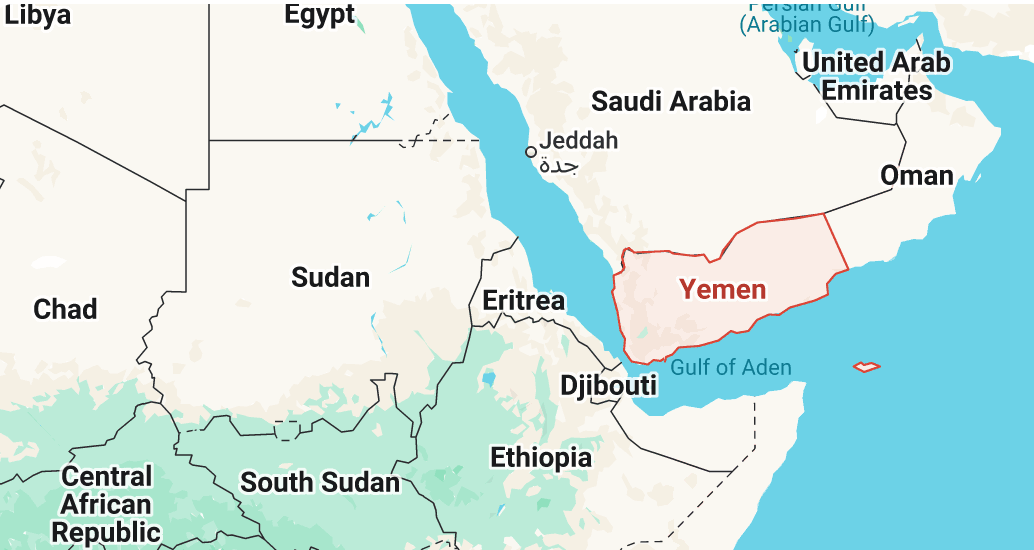
The Strait of Hormuz remains heavily restricted, while shipping in the Red Sea and Gulf of Aden is again coming under attack.
For much of the year these challenges were often discussed separately. This week suggested that they are becoming increasingly difficult to separate.

Events in Ukraine highlighted another important pattern.
Ukrainian strikes damaged grain export terminals and Russia’s principal remaining naval base on the Black Sea at Novorossiysk, prompting Moscow to redirect some cargo flows towards alternative routes.
At the same time it was revealed that Washington had asked Kyiv to avoid attacks on non-Russian tankers and infrastructure associated with the Caspian Pipeline Consortium because of the route’s importance to global energy markets.
Other developments pointed in the same direction. Russia is accelerating deployment of its Rassvet satellite communications network having been denied access to Starlink, while North Korean missiles and potentially additional troops are becoming more closely integrated into Moscow’s war effort.
Modern conflicts increasingly depend on the systems that support them. Ports, communications networks, supply chains, energy infrastructure and external military partnerships are becoming as important as battlefield manoeuvres.

Climate stories this week also moved beyond environmental reporting and into questions of economic resilience.
Western Europe is preparing for a fifth heat wave during a record-breaking summer. More than 70 per cent of mainland France is under water restrictions while drought conditions continue across large parts of England.
The consequences are already becoming visible. Romania shut its only nuclear power station after low Danube water levels affected cooling operations, while Hungary began constructing a low weir to maintain river levels near its own nuclear facility. Carmakers Ford and Dacia agreed to pause production as authorities searched for alternative electricity supplies.
Elsewhere, record rainfall disrupted transport in Japan, while China continued to deal with the consequences of Typhoon Dolphin.
Scientists also warned that an unusually powerful El Niño could make 2026 the hottest year on record and increase the probability that 2027 surpasses it.

The common thread running through this week’s stories was not simply conflict or climate.
It was the growing importance of systems that are difficult to replace once they are disrupted. Shipping lanes, ports, military inventories, energy networks, communications systems and water supplies all featured prominently in this week’s reporting.
The challenge for governments is becoming increasingly clear. Power is no longer defined solely by military capability or economic size. It also depends on the ability to sustain, protect and adapt the systems that support both.