


Renewed negotiations over Ukraine, changing American positions on Iran and political strains across several countries shaped a consequential week. Meanwhile, climate negotiations exposed difficult energy choices and a leadership crisis at Nvidia raised questions extending across the AI industry.
This was a week in which diplomacy returned to the foreground, although the distance between the principal parties remained substantial.
Russia and Ukraine resumed direct negotiations under American mediation, while Washington sought to expand discussions to Europe’s wider security arrangements. In the Middle East, President Donald Trump’s increasingly confident declarations about the Iran war contrasted with continuing military restrictions, threats and disagreements over a settlement.
Elsewhere, political discontent complicated government decisions across Europe, while the COP31 climate summit confronted the consequences of an energy crisis driven partly by the Iran conflict.
A different kind of uncertainty emerged at Nvidia, where the departure of Jensen Huang raised questions about leadership at a company central to both AI technology and its financing.
The week’s developments illustrated the difference between renewed activity and meaningful progress.

The resumption of direct negotiations between Russia and Ukraine was significant, but Washington’s attempt to broaden their scope may prove equally consequential.
The talks in Abu Dhabi only produced agreement in principle on a prisoner exchange, while leaving fundamental disagreements over territory and security guarantees unresolved. Moscow continues to demand Ukrainian territorial concessions, which Kyiv rejects. It still doesn’t look like anything difficult or particularly consequential has been agreed thus far.

Washington also wants negotiations to encompass Europe’s wider security arrangements, a longstanding Russian objective. European governments have insisted that decisions affecting their security cannot be made without their participation.
The potential inclusion of European representatives would broaden the negotiations, although Moscow has yet to confirm its agreement.
Meanwhile, Russian attacks on Ukrainian energy infrastructure continued and Ukrainian drone operations extended into the Baltic Sea.
The central difficulty remains that the parties are discussing an increasingly ambitious settlement without agreement on the conditions necessary to end the fighting.

President Trump’s statements on Iran changed noticeably during the week.
Initially, he described the war as effectively over militarily and suggested further American strikes were unlikely. By Thursday, he had removed Vice President JD Vance from negotiations and declared that Washington no longer needed an agreement.
The naval blockade remained in place throughout, while disruption to shipping through the Strait of Hormuz continued.
Iran flatly rejected proposals to transfer enriched uranium abroad, proudly displayed underground facilities bristling with missiles and announced the removal of its self-imposed missile range restriction. Reports of Israeli preparations for renewed strikes added another complication.

Vance’s removal followed Republican midterm losses, which he had publicly linked to the war.
Washington’s increasingly confident and seemingly baseless declarations therefore sit alongside unresolved nuclear disagreements, continuing economic restrictions and the possibility of renewed military action. The American position has changed, but the conditions for a settlement remain unclear and as distant as ever.

Domestic political strains were visible across several countries, although their causes differed considerably.
In the United States, Trump despite his public acceptance of the election drubbing later fell back into old habits and questioned the legitimacy of the midterm elections without providing evidence. Democrats are preparing to take control of both chambers of Congress in the new year and they seem to have many targets to aim at.
In Spain, millions joined a general strike over housing affordability ahead of parliamentary elections. France brought forward a minimum wage increase amid continuing protests over living costs and public services.
The Netherlands faced a potential coalition crisis over proposals to increase taxation on investment returns, while South Africa’s ANC suffered its worst local election result.
These developments do not represent a single political trend. They do, however, illustrate how economic grievances, electoral setbacks and disagreements over public policy are complicating the choices facing governments.
In several cases, political leaders have limited room to accommodate competing demands.

The COP31 summit opened in Turkey with renewed warnings that existing national commitments are insufficient to contain global warming.
Yet the negotiations are taking place against an unusually difficult energy backdrop.

Disruption caused by the Iran war has encouraged European governments to seek additional fossil fuel supplies, even as they support international commitments to reduce dependence on oil, gas and coal.
The Global Carbon Budget projected a modest decline in global emissions this year, partly reflecting reduced oil consumption following higher energy prices. Researchers cautioned that reductions driven by geopolitical disruption are not a sustainable climate solution.
Britain’s appointment of its first climate security representative also reflected growing concern about the security implications of environmental deterioration.
The underlying tension is familiar but increasingly difficult to manage: governments must address immediate energy affordability and supply concerns while maintaining longer-term climate commitments.

Jensen Huang’s ouster has created uncertainty at a company whose importance extends well beyond semiconductor manufacturing.
Nvidia is the leading producer of advanced AI chips but it also plays a substantial role in financing the industry’s expansion.
Its investments in customers, including CoreWeave and partnerships with major financial institutions help support the construction of AI computing infrastructure. These relationships connect the supply of hardware with the capital required to purchase and deploy it.
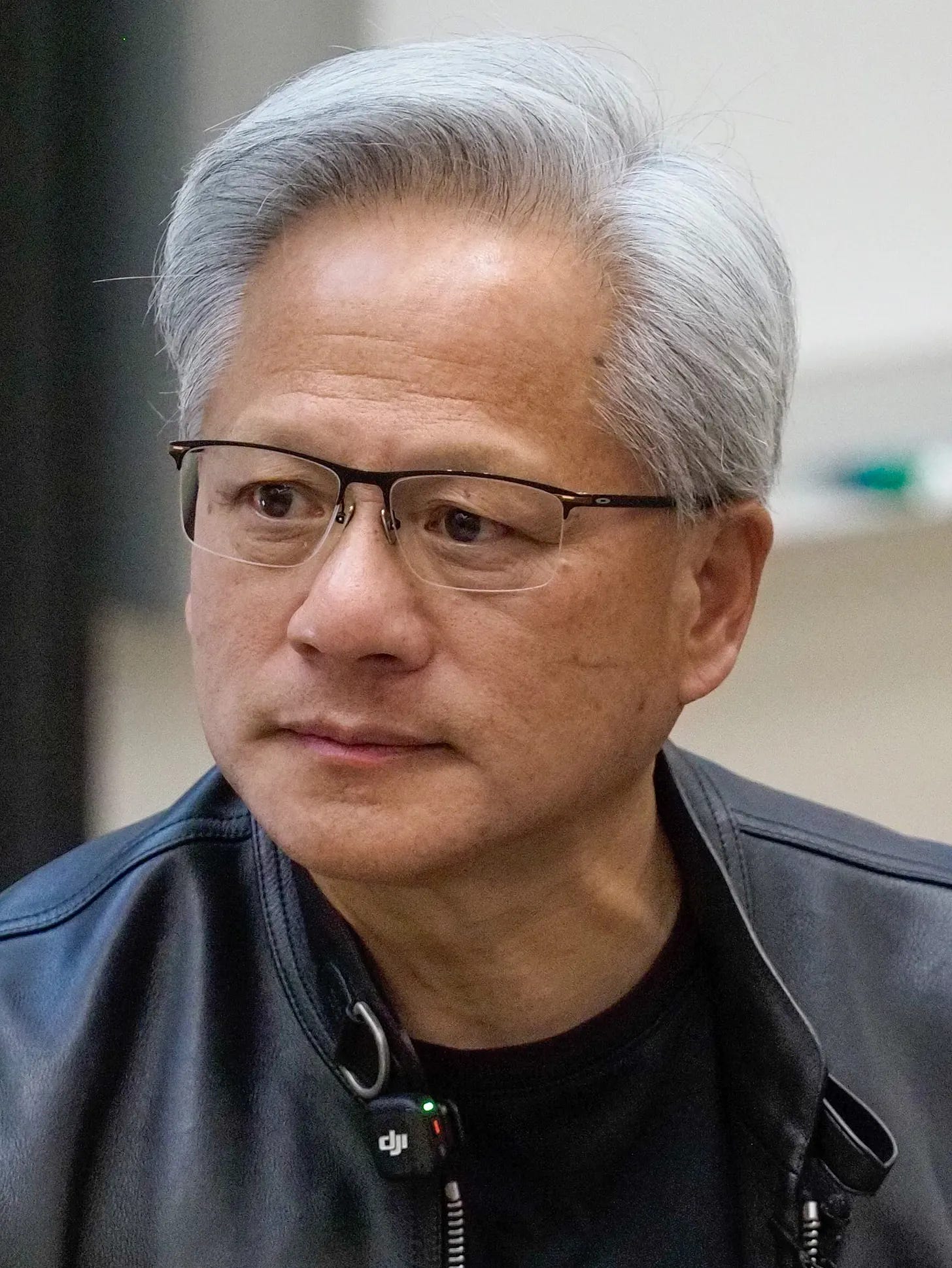
The company’s leadership crisis, shareholder litigation and questions over succession therefore have implications beyond conventional corporate governance.
President Trump’s public endorsement of former Apple chief executive Tim Cook as Huang’s replacement introduced a further political dimension, although the decision rests with Nvidia’s board.
The wider significance lies in Nvidia’s position within an interconnected system of technology supply, investment and customer financing. Its leadership matters to businesses far beyond its immediate shareholders.

The week’s events exposed a widening gap between political ambition and the ability to deliver results.
Washington is pursuing increasingly ambitious negotiations over Ukraine while the fundamental territorial dispute remains unresolved. Trump is declaring success over Iran without securing an agreement, while European governments are struggling to reconcile energy security, climate commitments and domestic economic demands.
Nvidia offers a different illustration of the same underlying issue. The extraordinary expansion of the AI industry has created dependencies on a company whose leadership and governance are now under scrutiny.
Across these developments, the central question is becoming less about the objectives being announced and more about whether the institutions, resources and political agreements needed to achieve them are in place.