

10 Things Weekly Roundup - 12th June 2026
Whack-A-Mole Diplomacy

The week’s events revealed how quickly seemingly separate crises can collide and reinforce one another. From the Middle East to Europe and Ukraine, policymakers repeatedly found themselves responding to developments rather than directing them.
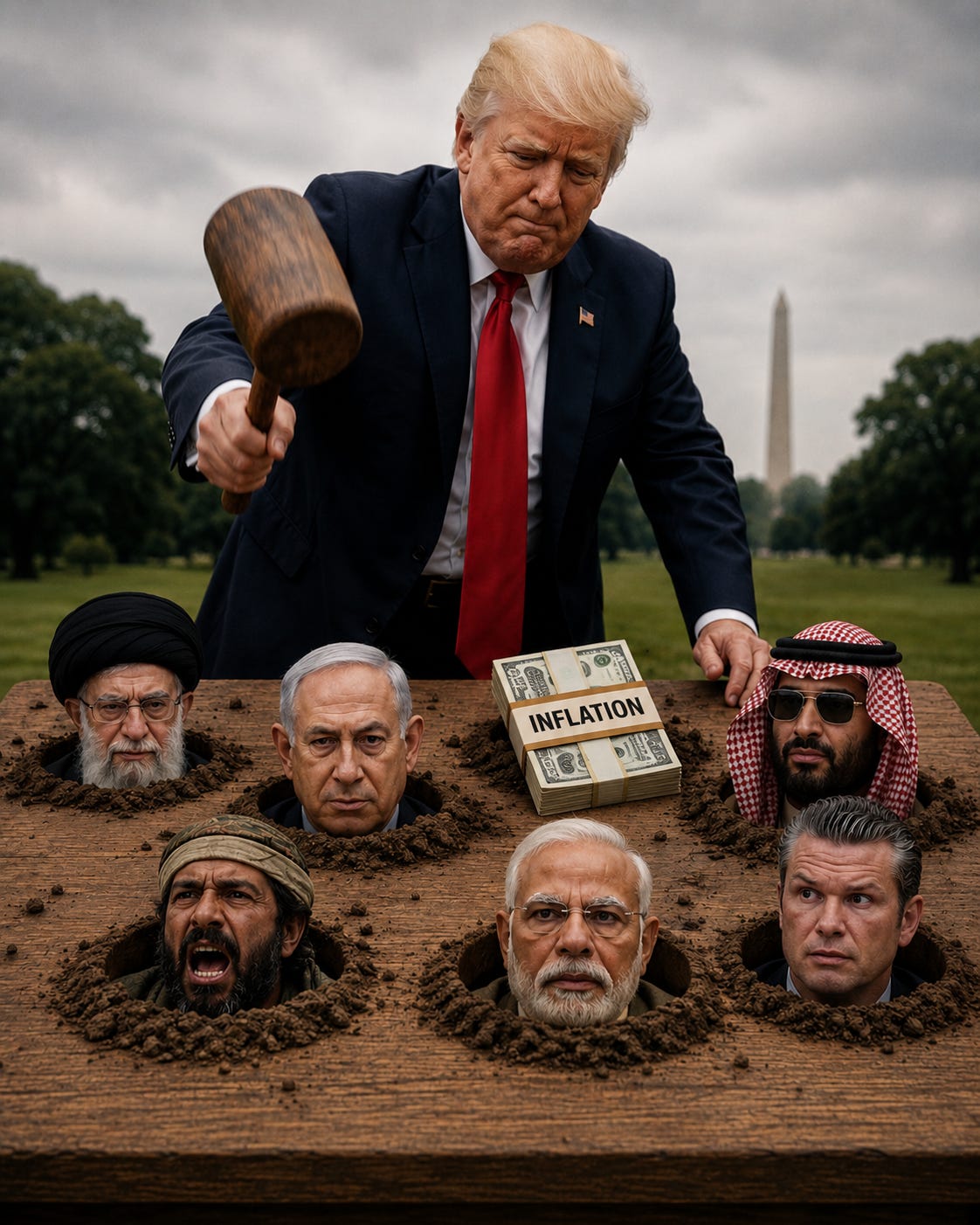
Any sense that someone was in control of events in the Middle East was shattered this week. As negotiations over Iran appeared to make progress, fresh military exchanges, shipping disruptions, diplomatic tensions and economic consequences continued to emerge from unexpected directions. The result was a week in which governments spent less time implementing plans than responding to events.
The same dynamic appeared elsewhere. Europe continued preparing for a less certain security environment while struggling to build the capabilities it wants. Ukraine demonstrated an increasingly adaptive approach to warfare. Governments across the Western world wrestled with migration, technology and social cohesion. Across very different issues, events often moved faster than policy.

The week began with growing optimism that negotiations over Iran might finally be moving towards a more durable arrangement. By the end of it, the Middle East looked as unpredictable as ever.
President Donald Trump repeatedly suggested a deal could be close. Yet almost every sign of diplomatic progress was accompanied by a fresh complication. The United States and Iran exchanged new strikes. The Strait of Hormuz remained central to both negotiations and energy markets. The Houthis threatened Israeli shipping in the Red Sea. The deaths of three Indian seafarers following a US strike created an unexpected diplomatic problem. Rising energy costs continued to feed inflation concerns inside the United States.

None of these developments existed in isolation. Military action influenced diplomacy. Diplomacy influenced energy markets. Energy markets influenced domestic politics. Progress in one area repeatedly exposed vulnerabilities in another.
The result was a week that highlighted the difficulty of bringing the conflict under control. Negotiations continued. Military operations continued. Economic consequences continued. Rather than moving towards a clear end state, the conflict increasingly resembled a series of interconnected crises, each capable of generating the next.

Across Europe, policymakers continued debating how to respond to a security environment that appears less predictable than at any point in recent decades.
Polling suggested confidence in the American security guarantee continues to weaken. Britain’s defence funding dispute exposed disagreements over the scale and speed of military investment. Italy argued that NATO must rethink how military effectiveness is measured in an era increasingly shaped by drones, satellites and data.
Yet Europe also received a reminder that greater strategic autonomy is easier to discuss than to achieve. France and Germany abandoned the fighter aircraft component of the Future Combat Air System after years of disagreements between governments and industry. The collapse of one of Europe’s most ambitious defence projects represented a significant setback for efforts to build a more independent European defence capability.
Europe increasingly agrees on the destination. The route remains far less clear.

While larger diplomatic dramas attracted most of the attention, Ukraine continued pursuing a strategy that may ultimately prove influential beyond the current conflict.
Recent Ukrainian operations have increasingly focused on disrupting the infrastructure, logistics and industrial systems that support Russian military activity. Strikes targeted refineries, fuel supplies, drone-related facilities and supply corridors linking Russia to occupied Crimea. Reports from the peninsula suggested growing fuel shortages and logistical disruption.

The significance extends beyond the immediate military impact. Ukraine appears increasingly focused on changing the economics and operating conditions of the war rather than competing directly on Russia’s preferred terms. The objective is not simply to destroy targets but to make sustaining military operations more difficult and more expensive.
As drones become more capable and widely available, the lessons being generated by this approach are likely to attract attention well beyond Eastern Europe.

Several of the week’s domestic political stories pointed towards a similar challenge confronting governments across advanced economies.
Swiss voters prepared to decide whether to cap population growth. Canada proposed legislation that could restrict social media access for children under sixteen. Britain grappled with unrest following the Belfast knife attack while ministers debated the role of online platforms in amplifying tensions. In the United States, courts continued shaping immigration policy through rulings on skilled-worker visas.

The issues differ considerably, but they all reflect growing concern about systems that operate beyond traditional political boundaries. Migration, labour markets, social media platforms and digital technologies increasingly cross borders and jurisdictions with ease. Governments are responding in different ways, yet many are confronting the same underlying question: how much control they still possess over forces that are becoming larger, faster and more interconnected.

The week’s developments exposed a common challenge across very different issues. Governments are increasingly confronting events that refuse to follow neat political or strategic plans.
In the Middle East, negotiations advanced alongside military exchanges, shipping disruptions and economic consequences. Europe continued preparing for a less predictable security environment while struggling to build the capabilities it wants. Ukraine sought to alter the dynamics of the battlefield rather than compete on existing terms. Elsewhere, governments wrestled with migration, technology and social pressures that cut across traditional boundaries.
The result was a week that illustrated how difficult it has become not simply to shape events, but to keep pace with them.