


Military production, sanctions, stockpiles and long-term partnerships increasingly reflect an expectation that today’s major conflicts will remain unresolved.
Governments spent this week making decisions that assume major conflicts may continue for considerably longer.
The US-Iran war entered its seventh month as Washington expanded its economic campaign and Tehran signalled that it was prepared for a longer fight. At the same time, renewed Saudi-Houthi fighting added another source of instability to a region already dealing with disrupted energy flows and military confrontation. Ukraine’s allies committed weapons from existing stocks while expanding the industrial capacity required for future supply. New missile and drone programmes are increasingly being built around production at scale.
Across these developments, the practical horizon is lengthening. Governments are committing resources, production capacity and partnerships that extend well beyond immediate requirements. Diplomacy continues, but military and economic policy is increasingly being organised around conflicts that may remain unresolved.

The US-Iran war entered its seventh month with both sides taking steps consistent with a longer confrontation. President Donald Trump said he expected the conflict to end after November’s midterm elections because Iran could not hold out much longer. Tehran, however, said it would escalate counterstrikes if US attacks continued and retains enough missiles for a lengthy conflict.

The regional environment is also becoming less conducive to an early end. Saudi-Houthi fighting intensified, threatening Yemen’s 2022 ceasefire as the Houthis launched missile and drone attacks on southern Saudi cities and Saudi warplanes struck targets across Yemen. Pakistan warned Iran to rein in the Houthis and said further aggression could activate its defence pact with Saudi Arabia and Turkey.
The Houthis then captured Mokha, giving the group a foothold closer to the Bab al-Mandab Strait just as Saudi Arabia has become more reliant on Red Sea oil exports because of disruption in Hormuz. Washington, meanwhile, expanded sanctions against Tehran, adding another element designed to constrain Iran’s capacity to continue the conflict but one that has thus far had little visible effect.

Ukraine’s military hardware requirements are increasingly being addressed across two time horizons. Kyiv is contracting around 1,000 Patriot air-defence missiles with allied support and an EU loan, but most will arrive only in coming years. Germany has therefore authorised urgent transfers of PAC-2 interceptors from its national inventory.
Canada’s new 100-year partnership with Ukraine extends that approach into industrial capacity. Ottawa plans to expand domestic drone production and send one-third of output to Ukraine, while the two countries will jointly produce uncrewed systems, counter-drone technologies and priority munitions. Canada plans capacity to produce millions of drones within two years.

Ukraine’s own military campaign is also continuing to develop. This week Kyiv said drones travelled more than 3,000 kilometres to strike two gas processing facilities in Russia’s Arctic, its deepest attack inside Russia.
The combination is significant. Existing allied inventories are being used to meet immediate requirements while production capacity and bilateral arrangements are being established for needs extending years into the future.

The emphasis on future supply extends beyond Ukraine. Silicon Valley-backed defence company Covenant unveiled Anthem, a long-range cruise missile designed for rapid, low-cost mass production as the US and its allies seek to replenish missile stocks depleted by the Iran war.
Covenant says its plants in Dallas and Saxony will each be capable of producing 5,000 missiles annually, with another 2,000 coming from a smaller Israeli facility. US Army deliveries are expected in 2027, while an international customer is due to receive German-built missiles by the end of this year.
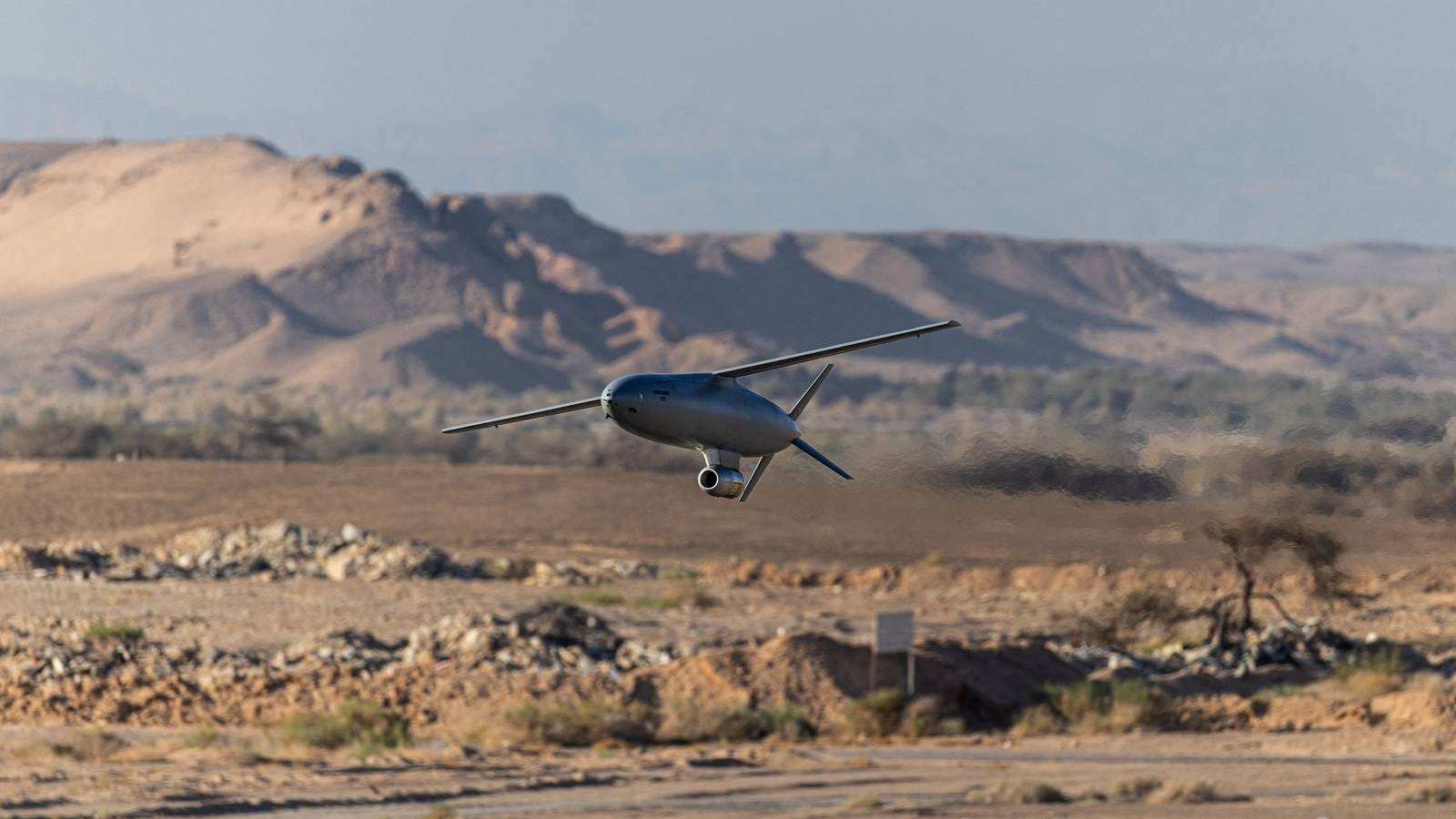
Canada’s drone programme follows a similar approach to scale. Its planned national marketplace will give the armed forces access to around 400 suppliers as the country develops capacity to produce millions of drones within two years.
Production volume is becoming an explicit requirement. Current conflicts are consuming weapons while governments and manufacturers build the capacity to replenish inventories and maintain supply over longer periods.

Institutions continue to pursue diplomatic and political responses, although this week’s developments showed substantial differences among the governments involved.
The IAEA referred Iran to the UN Security Council for the first time in 20 years, citing its failure to cooperate with an investigation into uranium traces found at undeclared sites. Twenty-three of the agency’s 35 board members supported the resolution, while Russia, China and Niger opposed it. Security Council action is considered unlikely because Russia and China hold vetoes.

Those divisions are also visible within BRICS. Leaders gathered in New Delhi with the wars in Iran and Ukraine prominent, while Iran and the United Arab Emirates remained divided over the Middle East conflict. BRICS foreign ministers had already failed to issue a joint statement in May because of their differences.
Diplomatic mechanisms therefore remain active, but agreement among the states required to make them effective remains difficult. Meanwhile, governments continue making military and economic commitments designed to operate over much longer periods.

A longer timeframe is becoming embedded in how governments respond to today’s conflicts.
Iran says it can sustain a lengthy confrontation while Washington expands the sanctions intended to constrain it. Saudi-Houthi fighting is adding another confrontation to an already unstable regional environment. Ukraine’s allies are drawing on existing inventories while establishing production and partnerships intended to operate for years. Defence manufacturers are building weapons around greater production volumes.
Diplomatic efforts continue alongside those preparations, but governments cannot base military planning on successful negotiations arriving quickly. Increasingly, they are preparing for what happens if they do not.
That shift does not tell us when or how these conflicts will end. It does show how expectations about their duration are already shaping decisions well beyond the immediate fighting.