


Hardliner Mojtaba Khamenei Takes Power In Iran
Oil Price Spike Eases As G7 Weighs Reserve Release
Israel Fuel Depot Strikes Trigger U.S. Concern
US Weighs Raid To Seize Iran Uranium
Desalination Attacks Raise Gulf Water Fears
Ukraine Sends Drone Experts To Protect US Bases
Syria’s Kurds Warn Iran’s Kurds Off US Alliance
Oslo Embassy Blast Probed As Possible Terror
Rapper Turned Politician Sweeps Nepal Election
Europe Becomes World’s Biggest Arms Importer

Iran’s clerical establishment has appointed Mojtaba Khamenei as the country’s new supreme leader following the killing of his father, Ayatollah Ali Khamenei, in recent U.S.-Israeli strikes. The decision was made by the Assembly of Experts, the body of senior Shiite clerics responsible for selecting Iran’s supreme leader. At 56, Mojtaba Khamenei assumes ultimate authority over the state, including control of foreign policy, the nuclear programme and the armed forces.
His rise signals continuity with his father’s hardline rule at a moment of war and domestic strain. Mojtaba Khamenei built influence inside the system for years, coordinating military and intelligence operations and maintaining close ties with the Islamic Revolutionary Guards Corps, which has become a dominant political and military force.
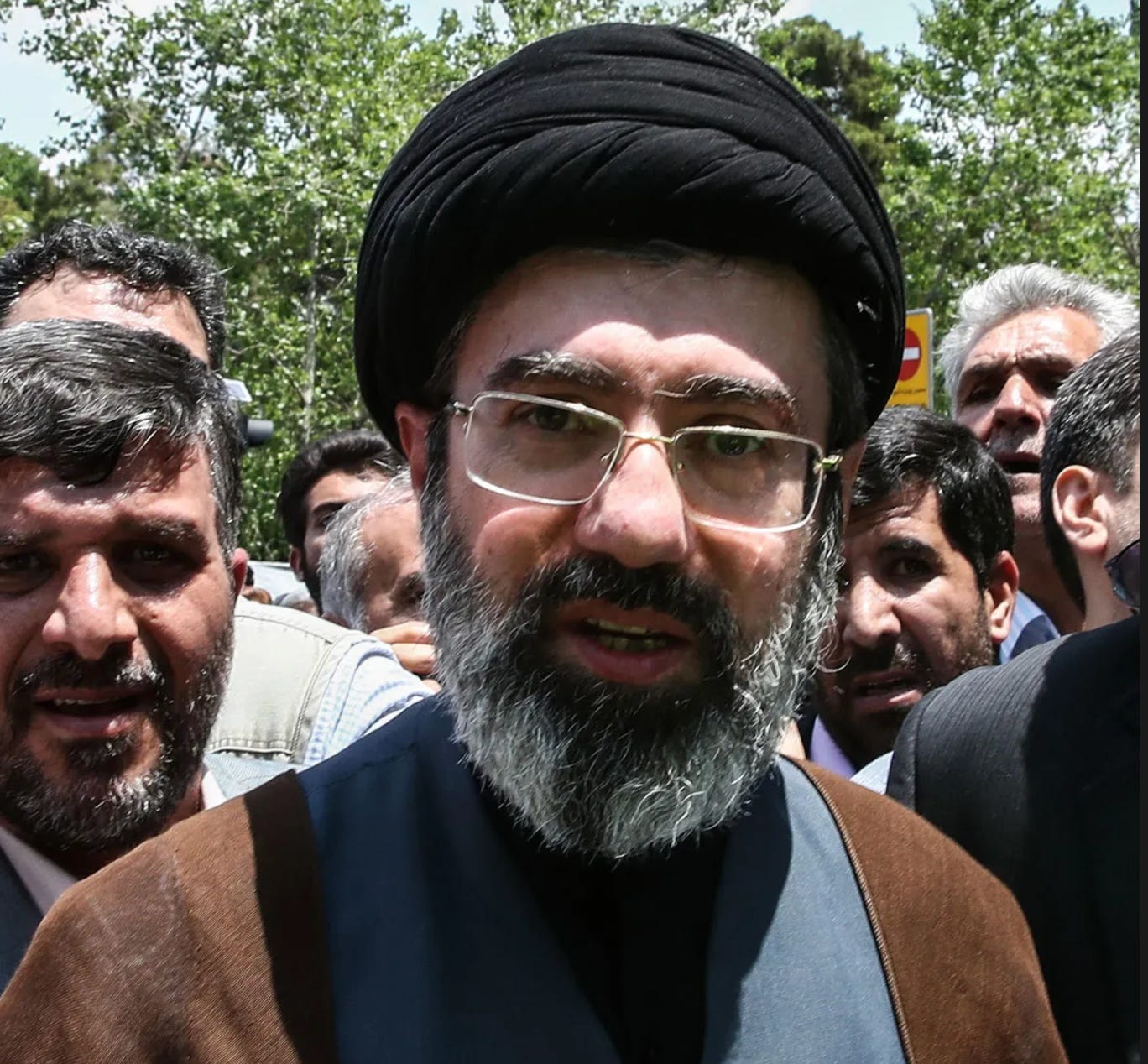
Analysts say the appointment reflects a decision by Iran’s ruling establishment to close ranks in crisis, consolidating power around trusted insiders rather than pursuing reform or compromise with the West.
Sources: New York Times, Reuters

Oil prices that had previously spiked eased somewhat back toward $100 a barrel after reports that Group of Seven finance ministers will discuss a co-ordinated release of emergency reserves to calm markets shaken by the Middle East war. Brent crude remained sharply elevated at about $103 a barrel after earlier surging as high as $119.50 during volatile trading.
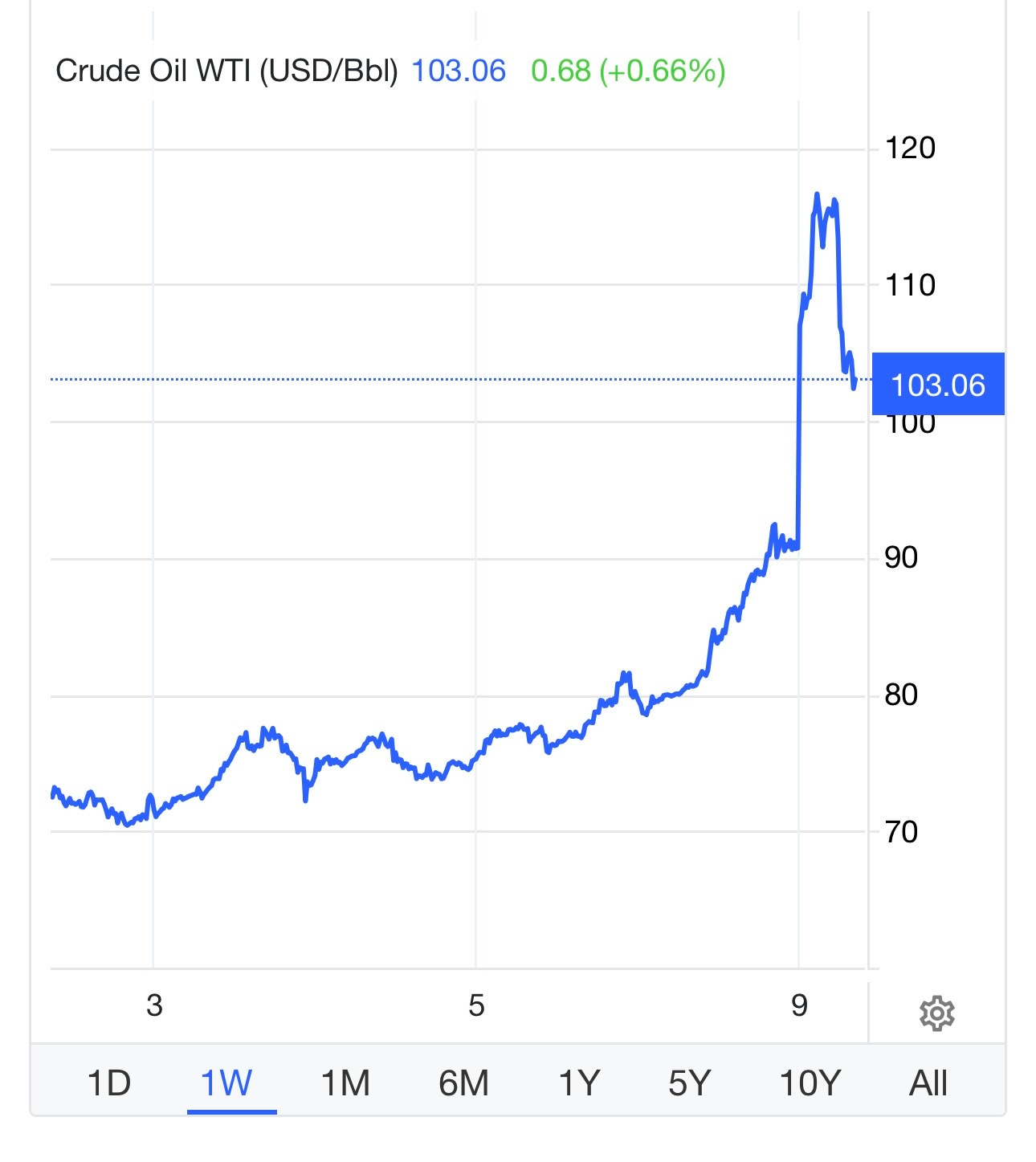
Energy markets have been rattled by supply disruptions linked to the conflict, including the halt of shipping through the Strait of Hormuz, a route that normally carries about a fifth of the world’s oil. Attacks on energy infrastructure and production cuts in parts of the Gulf have also tightened supply.
Officials are considering a potential release of 300 million to 400 million barrels from strategic reserves held by major consuming countries. The emergency meeting reflects growing concern that rising energy costs could fuel global inflation and damage economic growth if the disruption to oil flows continues.
Sources: FT, Bloomberg

Israeli airstrikes on about 30 fuel depots in Iran have triggered the first significant disagreement between Washington and Jerusalem since the war began. U.S. officials said the scale of the attack went far beyond what they expected after Israel notified them in advance.
The strikes ignited large fires across Tehran, sending thick smoke over the capital and prompting fears the attacks on fuel infrastructure could drive oil prices higher. U.S. officials worry the images of burning depots could also rally Iranian public opinion around the government at a moment when the conflict is widening.
Israeli officials said the depots were used by the Iranian regime to supply fuel to military entities and that the strikes were intended in part to deter attacks on Israeli civilian infrastructure. Iranian officials warned that further attacks on energy infrastructure could trigger retaliatory strikes across the region and push oil prices sharply higher.
Sources: Axios, Time

The United States is weighing a possible special operation to seize Iran’s highly enriched uranium as officials grow increasingly concerned that the stockpile may have been moved or is no longer fully trackable. U.S. and Israeli officials are actively searching for the material, with contingency plans that include deploying special forces if its location is confirmed.
The concern centres on Iran’s stockpile of roughly 441 to 450 kilograms of highly enriched uranium, which officials say would be enough material for 11 nuclear bombs if further refined. The strikes on nuclear facilities last June complicated efforts to track the stockpile, and international inspectors have not verified its location for almost nine months.
Officials have discussed two options if the material is found: removing it from Iran or diluting it on site. Any such mission would likely require troops on Iranian soil during an active war.
Sources: Bloomberg, Axios

Attacks on desalination plants in both Iran and Bahrain over the weekend have raised fresh concerns that the war is widening to infrastructure essential for civilian survival. Iran said a strike on Qeshm Island affected water supplies for 30 villages, while Bahrain said an Iranian drone caused material damage to one of its plants, though it reported no impact on water supplies or network capacity.
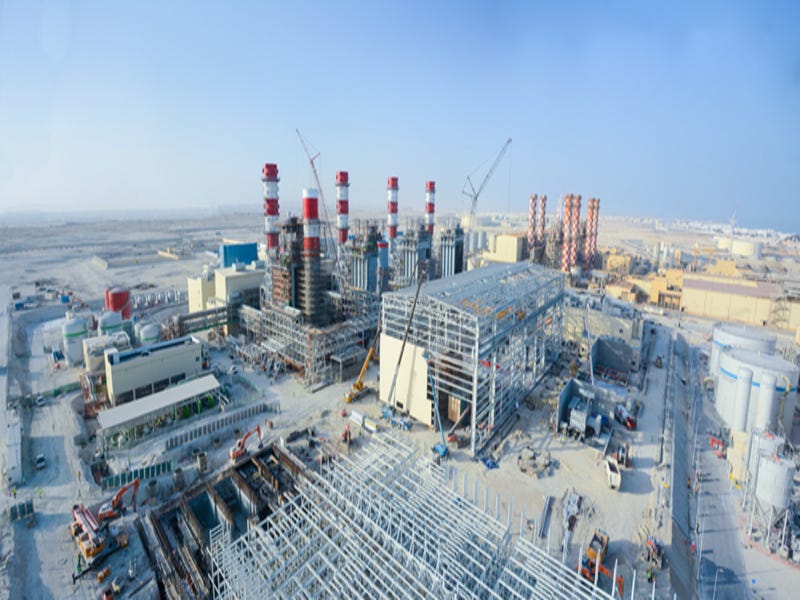
Analysts say the attacks mark a serious escalation because Gulf states depend heavily on desalination to sustain populations in arid climates. Hundreds of plants sit along the Gulf coast, and without them major cities could struggle to maintain current populations. The strikes have sharpened fears that the conflict is moving beyond military and energy targets toward systems that keep daily life functioning.
The risk is especially acute because drinking water infrastructure is both vulnerable and hard to replace quickly if damaged.
Sources: New York Times, South China Morning Post

Ukraine has sent interceptor drones and a team of drone experts to help protect US military bases in Jordan as the war in Iran spreads beyond its borders, according to President Volodymyr Zelensky. He said the United States requested assistance and that the Ukrainian team departed the following day and was expected to arrive in the Middle East soon.
Kyiv has built extensive experience countering Iranian-designed attack drones during the war with Russia. Ukrainian forces adapted their defences after early reliance on costly interceptor missiles proved unsustainable, developing cheaper countermeasures including heavy machine guns, electronic jammers and domestically built interceptor drones.
The deployment reflects Kyiv’s effort to use its battlefield expertise abroad while pursuing strategic benefits. Ukrainian officials say the country hopes cooperation in the Middle East could help secure additional air defence systems and diplomatic support as the war with Russia continues.
Sources: New York Times, The Independent

Syrian Kurds are warning their Iranian counterparts not to align with the United States against Tehran, arguing that Washington could abandon them if its priorities change. Their caution follows recent consultations between Iranian Kurdish militias based in northern Iraq and the United States over whether and how to attack security forces in western Iran.
The warning is rooted in Syria’s recent experience. Kurdish residents in northeast Syria said they felt betrayed after aligning with the United States for years, only to see Washington urge them to merge with Syria’s new army after Kurdish-held areas were captured in a January offensive. Several said Iranian Kurdish groups should not enter any conflict without firm American guarantees.
The debate comes as Iranian Kurdish leaders weigh possible action while also seeking international backing. One senior opposition figure said any ground move into Iran would depend above all on outside support, including a U.S.-enforced no-fly zone.
Sources: Reuters, Politico

An explosion at the US embassy in Oslo over the weekend has prompted a high-priority investigation, with Norwegian police saying one hypothesis is that the blast was an act of terrorism. Officers are also examining other possible causes and have not committed to a single explanation.
The explosion caused minor damage to the embassy’s public entrance and no injuries were reported. Police said they first received reports shortly after 1am local time Sunday, deployed large resources to the area and are working closely with the embassy as the inquiry continues.
No arrests have been made and authorities are searching for one or several perpetrators after conducting searches around the embassy. Norwegian officials described the incident as unacceptable and stressed the importance of protecting diplomatic missions at a time of heightened concern around the security of American sites.
Sources: NBC News, BBC

A new political party led by rapper-turned-politician Balendra Shah has swept Nepal’s first general election since youth-led protests toppled the government last year, according to preliminary results. Shah’s Rastriya Swatantra Party has won 122 of 165 directly elected seats and was leading in several others as votes continued to be counted.
The election followed a nationwide uprising last September in which 77 people were killed and former prime minister KP Sharma Oli was forced to resign. Shah, a former mayor of Kathmandu who rose to national prominence during the protests, defeated Oli in his Jhapa constituency in eastern Nepal.

The result signals a sharp break with the country’s established parties. The Rastriya Swatantra Party has unseated the Nepali Congress and the Communist Party, long dominant in Nepal’s politics, with younger voters expecting the new leadership to deliver governance reforms and tackle corruption.
Sources: FT, South China Morning Post

Europe became the world’s biggest arms importer over the past five years as governments responded to Russia’s threat and growing doubts about U.S. security commitments, according to new data from the Stockholm International Peace Research Institute. European countries more than trebled their arms imports in 2021-25 compared with 2016-2020, lifting the region’s share of global imports to 33 per cent from 12 per cent.
The increase was driven by efforts to arm Ukraine and rebuild European militaries after years of under-investment. Imports by the 29 European NATO countries rose by 143 per cent over the period, with Poland the largest importer among them. Despite efforts to expand domestic production, European governments continued to buy large volumes of American weapons, particularly combat aircraft and long-range air-defence systems.
The figures underline how Europe’s security posture is being reshaped by war on its eastern flank and uncertainty over future U.S. protection.
Sources: Reuters, DW
On this day ….
On this day in 1776, Scottish economist Adam Smith published An Inquiry into the Nature and Causes of the Wealth of Nations, a work that became one of the foundations of modern economic thought.
Smith argued that markets, when allowed to operate with limited interference, could allocate resources efficiently through what he described as an “invisible hand.”
The book challenged prevailing mercantilist policies and helped shape the intellectual framework for modern capitalism, free trade, and economic liberalism.
Nearly 250 years later, debates about globalisation, trade policy, and the role of the state in markets still revolve around ideas first articulated in its pages.
Do Smith’s arguments about markets and government still hold in today’s global economy?