


Russia Uses Nuclear Capable Hypersonic Missile in Ukraine
Russia Warns Western Troops in Ukraine Would Be Targets
Israeli Strikes Kill 13 in Gaza Despite Ceasefire
Protests Erupt in Tehran After Call by Exiled Crown Prince
US Senate Moves to Curb Trump Military Action
Last US-Russia Nuclear Treaty Nears Expiry
Trump Says Only His Morality Limits Global Power
Rio Tinto and Glencore Resume Talks on Mining Megadeal
Macron Says France Will Vote Against EU Mercosur Deal
China Restricts Rare Earth Exports to Japan Amid Taiwan Dispute

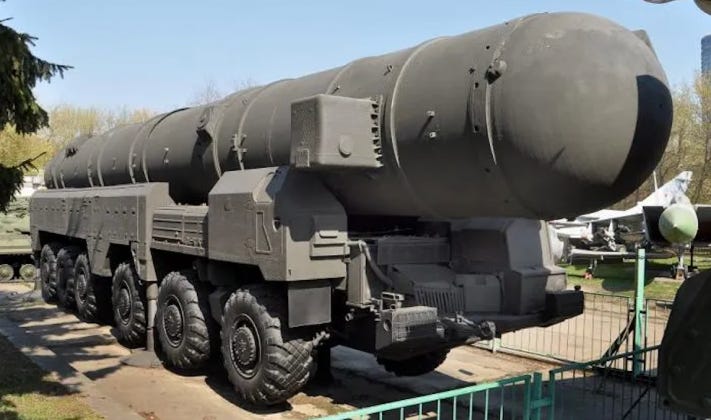
Russia launched a widespread air attack on Ukraine that included the use of an Oreshnik intermediate-range hypersonic ballistic missile, targeting energy infrastructure and residential areas. Moscow said the strike involved high-precision, long-range weapons launched from land and sea against what it described as critical targets. The Oreshnik missile is capable of carrying a nuclear payload however this strike only involved standard ordinance.
Ukraine confirmed a ballistic missile strike on infrastructure in the western city of Lviv. In Kryvyi Rih, two Russian ballistic missiles hit apartment buildings, killing at least one person and wounding 24, including six children, according to local authorities.
The strikes left almost 80,000 households without power and around 1,400 apartment buildings without heat as temperatures fell below freezing. Explosions were also reported in Kyiv, where residential buildings were damaged and critical infrastructure hit. The attacks came amid ongoing diplomatic talks on ending the war and as Russia reiterated warnings over Western involvement in Ukraine.
Sources: Bloomberg, CNN

Russia said any Western troops deployed to Ukraine after a ceasefire would be treated as legitimate military targets, responding to plans announced by Britain and France for a multinational force. Moscow said such deployments would constitute foreign intervention and pose a direct threat to Russian and European security.
The warning followed a meeting in Paris of a so-called coalition of the willing, where Britain and France signed a declaration of intent on future deployments. French President Emmanuel Macron said the plan could involve thousands of French troops, while British Prime Minister Keir Starmer said it would allow partner forces to operate on Ukrainian soil, securing skies and seas and helping rebuild Ukraine’s armed forces.
Russia said it would never accept Western forces stationed in Ukraine and described the proposals as dangerous and destructive. Ukraine and its allies say firm security guarantees are essential to deter future Russian attacks, while the United States has ruled out sending its own troops but voiced support for security protocols.
Sources: Reuters, South China Morning Post

Israeli strikes across Gaza killed at least 13 Palestinians, including five children, on Thursday, according to the territory’s civil defence agency, despite a ceasefire that has largely halted fighting since October. The agency said four people, including three children, were killed when a drone struck a tent sheltering displaced civilians in southern Gaza.
In northern Gaza, an 11 year old girl was killed near the Jabalia refugee camp and a strike on a school killed one person, while a drone near Khan Younis killed a man. Later in the day, four more people were killed when an airstrike hit a house in eastern Gaza City, with rescue teams searching for missing residents.
The Israeli military said it was checking the reports. Earlier, it said a projectile was launched from the Gaza City area toward Israel but fell inside Gaza, and that it struck the launch site shortly afterwards. Gaza authorities say at least 425 Palestinians have been killed since the ceasefire took effect.
Sources: France 24, The Guardian

Protests broke out across Tehran and other Iranian cities after exiled crown prince Reza Pahlavi called for mass demonstrations, with witnesses reporting chants from homes and crowds gathering in the streets. Internet access and telephone lines were cut shortly after the protests began, monitoring groups said, attributing the outage to government interference.
Witnesses described chants including “Death to the dictator” and slogans calling for the return of the shah. Demonstrations followed earlier protests over Iran’s struggling economy and spread nationwide, marking a new escalation. Human rights groups say at least 39 people have been killed and more than 2,260 detained during the unrest so far.
Iranian officials have not acknowledged the scale of the protests but have warned of a harsh response. The internet shutdown mirrors past tactics used during crackdowns. While Pahlavi’s call tested whether the movement could coalesce around a figurehead, analysts say the protests remain broadly leaderless, increasing uncertainty over their direction and the government’s next steps.
Sources: New York Times, Euronews

The US Senate advanced a war powers resolution that would restrict President Donald Trump from carrying out further military action against Venezuela without congressional approval. The measure passed 52 to 47, with Democrats joined by five Republicans, signalling unease after US forces seized Venezuelan leader Nicolás Maduro in a surprise overnight raid.
The resolution would require Congress to authorise any additional attacks, as lawmakers questioned the administration’s expanding ambitions in the Western Hemisphere. Some Republicans said Trump’s comments suggesting prolonged US oversight in Venezuela raised concerns about potential troop deployments. Trump criticised the vote, saying it weakened national security and threatened lawmakers who supported it.
The measure is unlikely to become law. It would need approval from the Republican-controlled House and would face a probable presidential veto. Still, the vote marked a rare instance of bipartisan resistance to Trump’s use of military power and renewed debate over Congress’s role in authorising force.
Sources: Reuters, Associated Press

The final remaining nuclear arms control treaty between the United States and Russia is set to expire on Feb. 5, with no talks under way on a successor. New START caps deployed nuclear warheads at 1,550 on each side and has provided the last binding framework limiting the world’s two largest nuclear arsenals.

Russian President Vladimir Putin proposed in September that both sides voluntarily adhere to the treaty’s limits for another 12 months. President Donald Trump has not formally responded and said in an interview that if the treaty expires, “it expires”, adding that he would pursue a better agreement.
Analysts are divided over whether extending the limits would reduce risks or entrench existing problems. Critics note that Russia has refused mutual inspections since 2023 and continues developing weapons systems outside the treaty’s scope.
If New START lapses, Washington and Moscow would be left without binding nuclear limits for the first time in decades, as broader arms control efforts remain stalled.
Sources: Japan Times, Xinhua

President Donald Trump said his power to order military action worldwide is constrained only by his “own morality”, dismissing international law and treaties as meaningful checks in a wide-ranging interview with The New York Times.
Asked whether there were any limits on his global powers, Trump said, “My own morality. My own mind. It’s the only thing that can stop me.” He added, “I don’t need international law,” then said he did need to abide by it, but argued “it depends what your definition of international law is.”
The comments came days after Trump launched an operation to topple Venezuelan leader Nicolas Maduro and as he spoke of designs on Greenland. The interview also followed a Senate move to debate a resolution aimed at curbing his use of military force in Venezuela.
Sources: New York Times, Times of Israel

Rio Tinto and Glencore have resumed talks over a potential merger that would create the world’s largest mining company, nearly a year after earlier discussions collapsed. The companies confirmed they are in preliminary talks about combining some or all of their businesses, potentially through an all share transaction.

A tie up would form a mining group with an enterprise value of more than $260bn, overtaking long time industry leader BHP. The renewed talks come amid intense competition for copper assets, with prices hitting record highs and miners seeking scale as demand rises from energy transition, artificial intelligence and defence spending.
The discussions face significant hurdles. Rio exited coal years ago, while Glencore remains the world’s largest listed coal producer. The companies also differ in culture and business mix, and previous talks in 2024 failed over valuation and structure. Under UK takeover rules, Rio has until Feb. 5 to confirm whether it will make an offer or walk away.
Sources: Bloomberg, FT

France will vote against the European Union’s trade agreement with the Mercosur bloc, President Emmanuel Macron said, as farmers staged large protests in Paris against the pact. Tractors blockaded roads into the capital and gathered near landmarks including the Arc de Triomphe and the National Assembly.
Macron said France would oppose the agreement at Friday’s EU vote, despite what he described as major commitments secured from the European Commission. He said the signing would not be the end of the process and that France would continue to push for safeguards to protect its farmers. Ireland has also said it will vote against the deal.
The agreement, backed by countries including Germany, Spain and Italy, is still expected to be adopted under EU voting rules. Farmers fear the pact would expose them to cheaper imports that do not meet EU standards. The protests come as the Commission seeks to ease opposition with additional funding for farmers.
Sources: Reuters, The Guardian

China has begun restricting exports of rare earths and rare earth magnets to Japan, escalating a dispute triggered by remarks from Prime Minister Sanae Takaichi suggesting Tokyo could become involved in a conflict over Taiwan. The measures affect Japanese firms that supply components to global chip makers, car manufacturers and defence companies, according to exporters and officials familiar with the process.
Beijing first announced a broad ban on exports of dual use goods with potential military applications to Japan, before halting reviews of export licence applications for heavy rare earths and magnets. China has denied that civilian exports would be affected, saying the controls are aimed at preventing remilitarisation.
Japan is responding by seeking support from allies. Officials say the restrictions threaten global supply chains, given Japan’s role in electronics and semiconductor manufacturing and its reliance on China for rare earth inputs. Analysts warn prolonged curbs could inflict significant economic losses and reverberate well beyond Japan.
Sources: Wall Street Journal, Bloomberg
On this day ….
On this day in 2007 Apple unveiled the first iPhone introducing a single device that combined a phone, internet access, and touchscreen computing.
The launch redefined consumer expectations and triggered profound shifts across industries, from telecommunications and media to finance and retail.
Smartphones reshaped how people work, communicate, and access information, while also concentrating power in a small number of technology firms.
Governments continue to grapple with the economic, social, and regulatory consequences of this transformation.
What began as a consumer product announcement ultimately altered global labour patterns, political communication, and the structure of the digital economy.