


Israel Strikes Beirut As Ceasefire Scope Disputed
Vance Warns Lebanon Fighting Could Break Truce
Trump Anger Tests NATO After Iran War
Pakistan Push Revived Iran Ceasefire Talks
Polymarket Bets Raise Ceasefire Trading Questions
Markets Rally As Oil Falls On Iran Ceasefire
Iran War Threatens Global Food Prices
Ceasefire Leaves Trump Facing War Powers Clash
North Korea Tests Missiles As Ties Sour
US Fertility Rate Falls to Fresh Record Low

Israeli strikes hit central Beirut hours after a ceasefire was announced in the US-Israeli war with Iran, killing 254 people and wounding more than 1,100 across Lebanon, according to the civil defence service. It was the deadliest day in the latest Israel-Hezbollah war, with the highest toll recorded in the capital.
US President Donald Trump said Lebanon was not included in the ceasefire because of Hezbollah, while Vice President JD Vance said Iran had believed the truce covered Lebanon but the United States had not agreed to that. Israel’s military said it struck more than 100 Hezbollah targets within 10 minutes. Lebanese President Joseph Aoun called the attacks “barbaric”.
Context Clip - Israeli Attacks on Beirut
Iran later halted the movement of oil tankers through the Strait of Hormuz after the strikes, while Prime Minister Benjamin Netanyahu said Israel remained prepared to return to combat if required.
Sources: South China Morning Post, The News Pakistan

Israeli strikes on Lebanon and disputes over the scope of the ceasefire put the US-Iran truce under fresh strain on Wednesday, as JD Vance said Tehran could let negotiations “fall apart” over a front Washington says was never covered. The White House said Vance will lead talks with Iran in Islamabad on Saturday.
Vance said there had been a “legitimate misunderstanding” because Iran believed Lebanon was included in the agreement, while the United States “never made that promise”. He said Israel had offered to “check themselves a little bit” in Lebanon, but warned Iran would face “serious consequences” if it failed to reopen the Strait of Hormuz.
The pressure on the truce intensified after Israel carried out its heaviest strikes on Lebanon since early March, killing at least 112 people and wounding hundreds, while Iran said the ceasefire had been violated.
Sources: France 24, Bloomberg

NATO Chief Mark Rutte said Donald Trump was “clearly disappointed” after US allies refused to join the war against Iran, following a private meeting in Washington at a delicate moment for NATO. Trump had called the alliance a “paper tiger” and suggested the United States may consider leaving after member states ignored his call for military assistance to help reopen the Strait of Hormuz.
Rutte described their exchange as “very frank, very open” and said some NATO countries were tested and failed, though a large majority of European countries had met earlier promises through logistics and other commitments. Karoline Leavitt said Trump had discussed leaving NATO, while Congress passed a 2023 law barring any US president from pulling out without approval.
The dispute came less than a day after a two-week US-Iran ceasefire that included opening the Strait of Hormuz.
Sources: The Guardian, Reuters

Pakistan’s mediation effort to halt the Iran war was hours from collapse before an overnight diplomatic push helped secure a temporary ceasefire and direct talks between Washington and Tehran. Pakistani sources said the effort nearly unravelled after an Iranian strike on a Saudi petrochemical facility, but Iran eventually agreed to a temporary ceasefire without preconditions. Talks are due to start in Islamabad on Saturday.
Pakistan’s military and civilian leadership remained engaged through the night, passing messages between senior US, Iranian, Saudi and other officials until Donald Trump announced the breakthrough.
Pakistani sources said Islamabad warned Washington that Israeli actions were jeopardising its peace efforts, and only after receiving an assurance that Israel would hold back was it able to persuade Tehran to accept the truce. Shehbaz Sharif later urged all parties to observe the ceasefire to allow the peace process to begin.
Sources: Reuters, The Guardian

A group of newly created Polymarket accounts placed highly specific bets on a US-Iran ceasefire hours before Donald Trump announced a two-week deal, generating hundreds of thousands of dollars in profits and raising fresh questions about prediction market oversight. An analysis of public blockchain data found that at least 50 wallets placed substantial “Yes” bets before Trump’s post at around 6:30 p.m. ET.
One wallet created at about 10 a.m. ET placed roughly $72,000 in bets at an average price of 8.8 cents and later made a profit of $200,000. Another wallet created 12 minutes before Trump’s post made $31,908 in “Yes” bets and is estimated to have earned $48,500.
Polymarket labelled the April 7 Iran-U.S. ceasefire contract as “disputed”, while Representative Blake Moore said it was “much more likely” the trades involved insiders with access to information ahead of the public.
Sources: Associated Press, Politico

Oil prices plunged and stock markets surged worldwide after Donald Trump announced a two-week ceasefire with Iran, easing immediate fears over the Strait of Hormuz. Benchmark U.S. crude settled at $94.41 a barrel and Brent at $94.75, while the S&P 500 rose 2.5 percent, the Dow jumped 1,325 points and the Nasdaq gained 2.8 percent. South Korea’s Kospi surged 6.9 percent and Germany’s DAX rose 5.1 percent.

The relief was tempered by signs the truce remained fragile. Iran closed the Strait of Hormuz again on Wednesday in response to Israeli attacks in Lebanon, and independent analysts said they had seen no change in traffic through the waterway despite White House claims of an uptick. Only four ships passed through the strait on Wednesday, the fewest of the week so far.
Sources: Associated Press, NBC News

The IMF, World Bank and WFP warned that the Middle East conflict has triggered a major energy shock that could drive up global food prices and deepen food insecurity, especially in low-income, import-dependent countries. They said rising oil, gas and fertiliser prices, alongside transport bottlenecks, were likely to push food costs higher even after the United States and Iran agreed to a two-week ceasefire.
The pressure is already reaching farms in the UK. Ali Capper, who represents British apple and pear growers, said fertiliser costs on her farm are up 40 percent, red diesel has risen 100 percent and transport costs about 20 percent. It has been estimated that farm running cost inflation was more than 7 percent higher this March than a year earlier, while the Food and Drink Federation expects UK food inflation to reach at least 9 percent before year end.
Sources: BBC, The National Herald

The two-week US ceasefire with Iran has opened a narrow diplomatic window while bringing President Donald Trump closer to a legal and political confrontation with Congress over his war powers. The truce is due to expire around April 22, while the 60-day deadline under the War Powers Resolution falls around May 1, leaving open what happens if diplomacy fails before the legal clock runs out.
The Trump administration filed its war powers notification with Congress on March 2 after joint US-Israel strikes began on February 28. The White House says Trump’s actions are legal, but Senate Democratic Leader Chuck Schumer said lawmakers would seek a vote next week to force congressional approval for any further attacks. Hakeem Jeffries also said the House should vote on a similar measure.
Congress has repeatedly failed to curb Trump’s military authority, but Democrats are preparing to try again as the ceasefire holds only temporarily.
Sources: South China Morning Post, Reuters

North Korea fired multiple ballistic missiles toward the sea on Wednesday in its second launch event in two days, as Pyongyang ridiculed Seoul’s hopes for warmer ties and underscored continuing tensions on the peninsula. South Korea’s military said several missiles launched from the eastern Wonsan area flew about 240 kilometres, while another travelled more than 700 kilometres off the east coast.
The launches came hours after Jang Kum Chol, a first vice foreign minister, said South Korea would always remain the North’s “most hostile enemy state” and mocked its government for seeking dialogue.
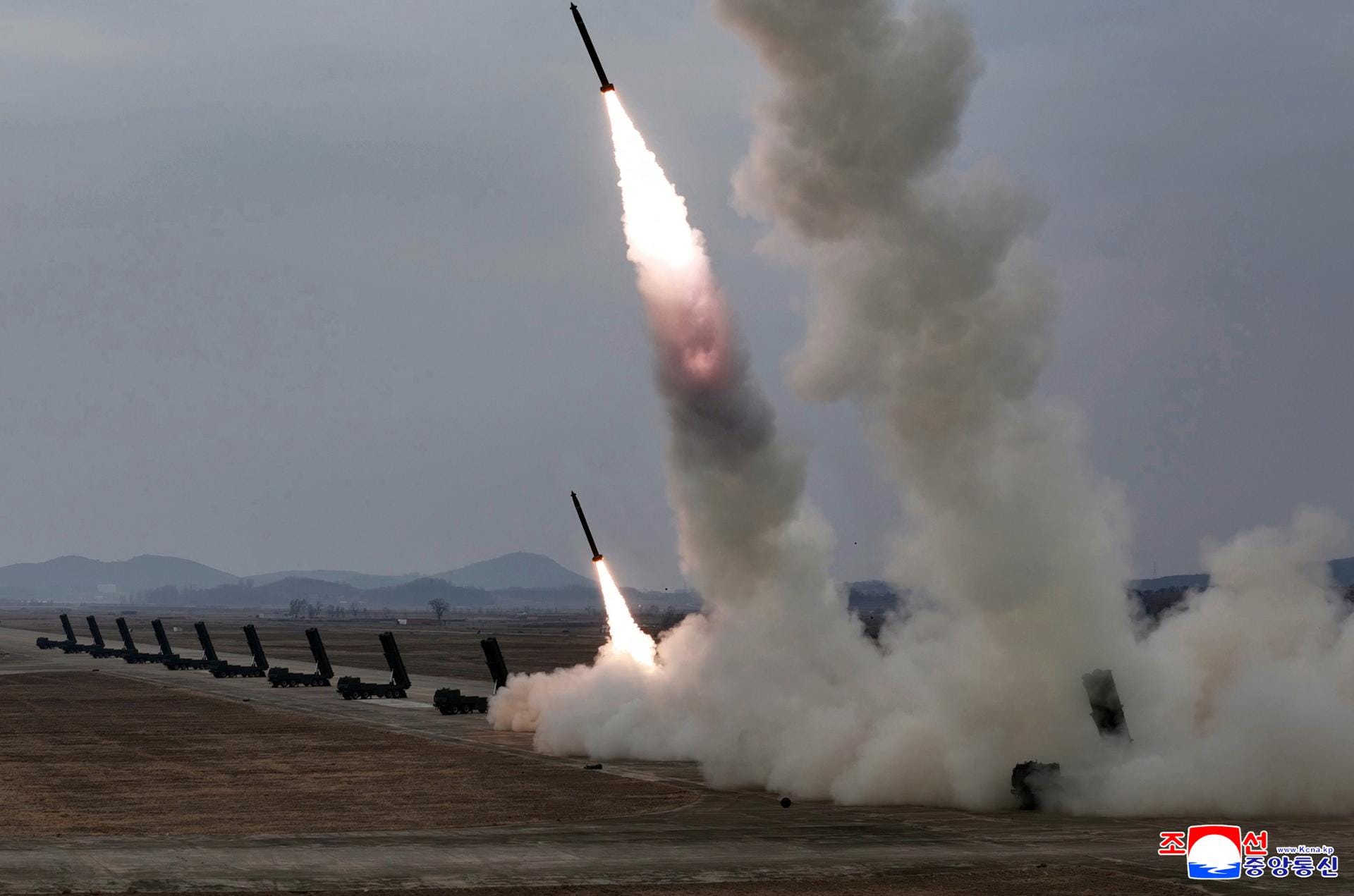
North Korea later said its three-day testing spree included ballistic missiles armed with cluster-bomb warheads, as well as demonstrations of anti-aircraft weapons, purported electromagnetic weapons systems and carbon-fiber bombs. The US military said the launches posed no immediate threat to the United States or its allies.
Sources: Associated Press, NPR

The US fertility rate fell to a record low of 53.1 births per 1,000 women of childbearing age in 2025, down from 53.8 in 2024, extending a decline that has largely continued since 2007. Births also fell 1 percent to 3,606,400. The drop was driven in part by another sharp fall among teenagers, whose fertility rate declined 7 percent from 2024 and is down 72 percent since 2007.
At the same time, childbearing continued shifting toward older women. The fertility rate for women aged 30 to 34 rose 3 percent in 2025, and birthrates for women in their late 30s exceeded those for women in their early 20s for the first time.
The total fertility rate fell to 1.57 births per woman, below the 2.1 replacement level, increasing the likelihood that future population growth will depend more heavily on immigration.
Sources: New York Times, Wall Street Journal
On this day …
On this day in1865, Confederate General Robert E. Lee surrendered to Union General Ulysses S. Grant at Appomattox Court House in Virginia, effectively ending the main military phase of the American Civil War.
The surrender preserved the Union and accelerated the abolition of slavery across the United States, while leaving unresolved questions about reconstruction, citizenship, and federal authority that would shape American politics for generations.
The settlement also demonstrated how civil wars can conclude militarily yet continue politically long afterwards.
How far did the consequences of Appomattox continue to shape the United States that followed?
Well it looks like what you were taught at school is working - ZPG is real now. It does make it difficult for an economy to grow if you have zero local population growth AND you crack down on immigration.
As I understand it Abbas Araghchi has been removed from the kill list so these talks can proceed - seems reasonable
https://www.ndtv.com/world-news/iran-war-news-why-irans-foreign-minister-abbas-araghchi-speaker-mohammad-ghalibaf-have-been-struck-off-israels-kill-list-11273986#:~:text=Why%20Iran's%20Foreign%20Minister%2C%20Speaker,the%20door%20to%20high%2Dlevel%20negotiations.
going back to ZPG 🕊️issue - Alex Karp of Palantir at Davos said: AI will destroy Humanity Jobs & make Mass Immigrantion Obsolete " ( I think their a clip on YouTube)
If what Karp says is true? Then ZPG scientist have been teaching us is still 🆗