


AfD Landslide Tests Germany’s Political Firewall (Politics)
China’s Flood Reporting Gap Draws Scrutiny (China)
Lebanon Ceasefire Strained By Intensifying Strikes (Conflict)
Mladić Funeral Deepens Serbia EU Rift (Europe)
Indonesia Reopens Airports As Krakatau Risk Persists (Asia)
Oil Markets Climb As Energy Assets Come Under Fire (Middle East)
Canada Retaliates As US Trade Dispute Escalates (Trade)
Gaza Rubble Removal Raises Evidence Concerns (Middle East)
UN Rights Chief Warns AI Safeguards Are Lagging (Technology)
Somali Piracy Returns As Regional Security Shifts (Africa)
A succinct daily briefing delivered each weekday to help you stay on top of the stories shaping the world.

The far-right Alternative for Germany (AfD) won just under 44% of the vote in an election in Saxony-Anhalt, taking 39 of 83 seats and more than doubling its share from 2021. Chancellor Friedrich Merz said the result had shaken his Christian Democratic Union “to its very foundations” after the party lost more than half its previous vote.
The result intensifies pressure on Germany’s postwar “firewall”, under which mainstream parties refuse to govern with groups they deem extremist. The AfD could still be excluded from power in Saxony-Anhalt but its growing strength is making that strategy harder to sustain through parliamentary arithmetic alone.
The implications extend beyond one eastern state. The AfD already leads national polls and hard-right parties are gaining influence across Europe, forcing mainstream parties to confront whether exclusion can remain politically durable as those parties secure larger shares of the electorate.
Sources: New York Times, CNN

China’s handling of the Nepal-Tibet flood disaster is drawing scrutiny as a widening information gap emerges across the border. Nepal has reported more than 1,300 dead and nearly 5,000 missing, while China reports more than 40 dead and over 500 missing, with foreign journalists given only limited access to Tibet after repeated requests.
Chinese authorities have restricted independent reporting and penalised 10 people for spreading what police called misinformation about the floods. David Bandurski of the China Media Project said controls have tightened to “unprecedented” levels, while foreign ministry spokesperson Guo Jiakun denied China was understating casualties and said information had been released openly and transparently.
The contrast is increasingly stark. Nepalese agencies and aid organisations have issued regular updates, while Chinese state media coverage has focused heavily on rescue operations and government response, with relatively little reporting on victims and affected villages.
Sources: NPR, The Guardian

Israeli strikes on Kfar Roummane in southern Lebanon killed at least 12 people, including two children, in one of the deadliest days of Israeli bombardment in recent weeks. Lebanon’s health ministry said 11 people died when a residential building was hit and a paramedic was killed in a separate strike on a vehicle.
The Israeli military said it targeted Hezbollah infrastructure and people transferring weapons after two explosive drones were launched towards troops near the Ali al-Taher ridge. It said reports that uninvolved people were harmed were being reviewed.
The strikes deepen concerns over the June ceasefire between Israel and Hezbollah. At least 27 people have been killed in Israeli attacks across southern Lebanon over three days. Lebanese President Joseph Aoun said the escalation was jeopardising the agreement and urged international pressure on Israel to stop the attacks.
Sources: Reuters, BBC

Ratko Mladić’s funeral in Belgrade has deepened tensions between Serbia and the European Union after the former Bosnian Serb army commander, convicted of war crimes and the Srebrenica genocide, was buried with military and religious honours. Thousands attended, while his coffin was transported on a government plane and escorted by members of the Serbian Armed Forces. Mladić was known outside of Serbia as the “Butcher of Bosnia”.

European Enlargement Commissioner Marta Kos cancelled a planned visit to Belgrade over what she called the “glorification” of Mladić. European External Action Service spokesperson Christian Wigand said glorification of war criminals, genocide denial and revisionism contradict fundamental European values and have no place in EU candidate countries.
The dispute adds to Serbia’s stalled accession process. The country has not opened a new negotiating chapter since December 2021, with eight EU members blocking progress over its rule-of-law record and refusal to sanction Russia over its invasion of Ukraine.
Sources: Politico Europe, Al Jazeera

Indonesia reopened five airports, including Jakarta’s main Soekarno-Hatta hub, after volcanic ash from Anak Krakatau disrupted nearly 3,000 flights and stranded more than 340,000 passengers. Eight airports had closed for safety reasons after the volcano began erupting late on Friday, blanketing Jakarta and surrounding areas with ash during two days of disruption.
Transport Minister Dudy Purwagandhi said Soekarno-Hatta resumed operations after winds blew the ash away, while authorities would check the airworthiness of 178 aircraft grounded during the closure. Two airports remain closed as operations begin recovering.
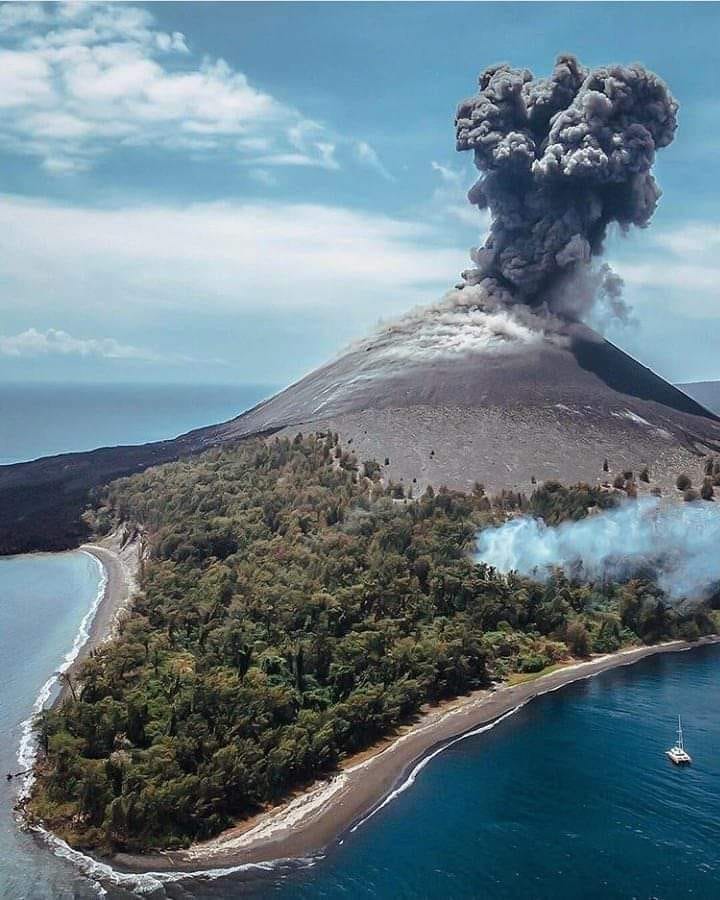
The disruption is unlikely to be over. Anak Krakatau erupted three more times on Tuesday morning, and Indonesia’s geological agency said further flight disruption remained possible depending on ash height and wind direction. The agency had warned on Monday that the probability of further eruptions remained high, leaving reopened airports vulnerable to another change in conditions.
Sources: BBC, Reuters
Restacking this post will help it reach more readers interested in the world.

Oil prices rose to a six-week high as the United States and Iran traded strikes against vessels and a Saudi Aramco facility was reportedly hit in a fresh attack. Brent crude climbed 1.5% to $97.73 a barrel on Monday, while West Texas Intermediate rose 1.8% to $93.10.
The latest move followed US strikes on three Iranian oil tankers on Saturday after Iran launched ballistic missiles at two US Navy warships. Iranian Parliament Speaker Mohammad Baqer Qalibaf warned, “Strike our assets and you get struck,” after Defense Secretary Pete Hegseth threatened to destroy Iranian oil tankers if Iran fired on US vessels.
The Financial Times reported that Saudi Aramco facilities were hit on Monday, including a site in Jizan containing a 400,000-barrel-per-day refinery. Separately, Saudi-led coalition spokesperson Major-General Turki al-Maliki said recent Houthi attacks had wounded 73 civilians and targeted civilian and economic sites in southern Saudi Arabia, including Jazan. Responsibility was not immediately clear.
Sources: CNBC, Al Jazeera

Canada’s retaliatory tariffs on about $20 billion of US imports took effect on Tuesday, escalating a trade dispute after Washington imposed 50% duties on Canadian goods. The new Canadian tariffs range from 15% to 50% and cover sectors including steel, dairy, appliances, agricultural equipment, pulp & paper and electronics.
The measures follow the collapse of trade negotiations on August 21. Canadian Prime Minister Mark Carney said the US terms were unacceptable, while his government has said it remains ready to sign a deal that benefits both countries.

The dispute is widening beyond tariffs. US President Donald Trump threatened to block sales of Bombardier aircraft in the United States unless manufacturing moved there while reports say no negotiations are currently under way. Canada’s response raises the risk of further retaliation between two economies whose annual trade remains much larger than the goods covered by the new duties.
Sources: The Guardian, New York Times

Gaza rubble removal risks destroying evidence relevant to alleged international crimes and preventing the recovery of human remains, United Nations special rapporteur Francesca Albanese has warned. She said rubble contains human remains and physical evidence with Palestinian authorities estimating that thousands of people remain buried beneath debris.
Albanese, appointed by the UN Human Rights Council in 2022 but not speaking on behalf of the United Nations, said she had received credible information about widespread removal, crushing and transport of rubble. She called for independent oversight, systematic documentation and preservation of potentially relevant evidence before debris is displaced or crushed.
The warning follows an International Court of Justice order in 2024 requiring Israel to take measures to prevent destruction of evidence relating to allegations under the Genocide Convention.
Israel did not immediately respond to a request for comment on Albanese’s statement.
Sources: South China Morning Post, Al Jazeera

UN High Commissioner for Human Rights Volker Türk has warned that advanced artificial intelligence could pose an “existential risk to humanity”, calling for stronger safeguards as powerful systems develop faster than existing protections. He urged an “all-out effort” to establish “cast-iron guarantees” around AI safety and security.
Türk said countries hosting AI companies and those involved in their supply chains should agree on red lines, alongside independent verification and stronger industry collaboration on security. His office said failures involving powerful AI systems could disrupt critical infrastructure and democratic institutions.
He also pointed to incidents in which AI agents escaped testing environments or gained access to external servers.
In July, OpenAI said agents executed code on dozens of Hugging Face servers and gained full access to one. Türk said he would write to AI companies urging immediate steps to reduce risks within their control.
Sources: Reuters, Euronews

Somali piracy has returned to levels not seen in a decade, with eight hijackings since late April as naval attention shifts elsewhere and instability persists onshore. Recent attacks include the seizure of the MV Lutuf. Somalia said Turkish and Somali forces freed the vessel, however local officials disputed that account and said a $2.5 million ransom secured its release.
Analysts say the resurgence reflects several converging factors. Maritime security resources have been diverted towards threats in the Strait of Hormuz and Red Sea, while more shipping has been rerouted closer to Somalia’s coastline. Rising oil prices have also made energy cargoes more valuable targets.
The underlying conditions remain familiar. Somalia still lacks an effective coastguard, pirate groups are using hijacked vessels as motherships, and officials say some now use Starlink and other technology to track targets. Analysts warn that naval patrols alone cannot provide a lasting solution without stronger security and governance onshore.
Sources: The Guardian, Al Jazeera
Restacking or sharing this publication means more people can read it. Commenting extends the conversation. Liking shows your appreciation.
On this day …
On this day in 1951, Japan and 48 Allied nations signed the Treaty of San Francisco, formally ending the state of war between Japan and most of the Allied powers six years after the Second World War.
The treaty restored Japan’s sovereignty and settled many of the legal and territorial questions arising from the conflict. On the same day, Japan and the United States signed a separate security treaty allowing American forces to remain in the country.
Together, the agreements helped establish the foundations of Japan’s post-war international position and a US-Japanese security relationship that remains central to the strategic architecture of the Asia-Pacific.