


US Signals Greenland Purchase While Military Option Lingers
US Has Broad Military Access to Greenland Under 1951 Pact
Albanese Orders Royal Commission After Bondi Terror Attack
Trump Orders US Exit From Dozens of UN and Global Bodies
US Seizes Russian-Flagged Oil Tanker After Atlantic Pursuit
Venezuela Move Raises China Oil Supply Fears
Trump Invites Colombia’s Petro After Earlier Military Threat
Trump Backs Russia Sanctions Bill With 500% Tariff Threat
EU Accused of Bankrolling Russia War Through LNG Imports
Trump Seeks $1.5 Trillion US Military Budget for 2027

U.S. officials sought to temper fears of an imminent military move on Greenland this week, even as President Donald Trump and senior aides continued to frame acquisition of the territory as a strategic priority. Secretary of State Marco Rubio told lawmakers the administration was examining options to buy Greenland from Denmark, distancing the White House from earlier rhetoric that had refused to rule out force.
The reassurances followed remarks by Trump that the United States “needs” Greenland for national security and comments from Stephen Miller suggesting military power could be used “unapologetically.” Rubio later said diplomacy remained the preferred route, but acknowledged that all options remained available to the president.
European allies reacted with alarm. Denmark and Greenland again rejected any sale, while leaders from major European states and Canada stressed Greenland’s sovereignty.
Sources: The Independent, Reuters

President Donald Trump’s renewed focus on Greenland has revived debate over whether the United States needs to buy or seize the territory to advance its security aims. Analysts say a Cold War era defence agreement already grants Washington sweeping military access across the island.

Under a 1951 pact with Denmark, the United States is permitted to construct and operate military bases, station personnel and control the movement of ships and aircraft throughout Greenland. The agreement, updated in 2004 to include Greenland’s self-governing authorities, allows significant expansion of US military activity with consultation rather than formal approval.
Greenlandic and Danish leaders have rejected the idea of a takeover, noting that Greenland’s 57,000 residents have the right to decide their future and that polls show strong opposition to US control. Critics argue that escalating rhetoric risks damaging NATO unity, particularly as European leaders warn that even threatening an ally undermines trust within the alliance.
Sources: New York Times, DW

Australia will establish a Commonwealth royal commission into antisemitism and social cohesion following the Bondi terror attack, after weeks of mounting pressure on the government. Prime Minister Anthony Albanese announced the inquiry after a cabinet meeting, saying a royal commission was now essential to promote unity and national healing.
The commission will be led by former High Court justice Virginia Bell and will examine the circumstances of the antisemitic attack, the drivers and prevalence of antisemitism, how institutions respond, and ways to strengthen social cohesion. Bell has been asked to report before December 2026, with an interim report due next year.
The move marks a shift after Albanese initially resisted a federal inquiry, citing existing state and intelligence reviews. The Bondi attack, which killed 15 people and injured more than 40, was the deadliest terror attack in Australian history and prompted calls for a coordinated national response.
Sources: SBS, Australian Prime Minister's Office

President Donald Trump has ordered the United States to withdraw from 66 international organisations, including 31 United Nations entities, marking a sharp escalation in his administration’s retreat from multilateral institutions. A White House fact sheet said the groups no longer served US interests, directing federal agencies to end participation and funding.
The list includes the UN Framework Convention on Climate Change and the Intergovernmental Panel on Climate Change, extending the administration’s pullback from international climate diplomacy. The decision follows an earlier order to leave the Paris Agreement and comes amid domestic regulatory shifts easing limits on fossil fuel pollution.
The move lands as the United Nations grapples with financial strain. The organisation recently approved a 7 percent budget cut, including thousands of job losses, after the US declined to pay what it owes. US officials said the withdrawals were necessary to protect sovereignty, while critics warned Washington would forfeit influence over global rules and cooperation.
Sources: Bloomberg, Al Jazeera

The United States has seized a Russian-flagged oil tanker in the North Atlantic after tracking it from near Venezuela, escalating enforcement of sanctions on so-called shadow fleet vessels. The tanker, formerly known as the Bella 1, had been sanctioned in 2024 for transporting illicit oil and was boarded by US forces on Wednesday.
US European Command said the vessel was seized pursuant to a federal court warrant roughly 190 miles south of Iceland. US officials said the tanker had attempted to evade an earlier boarding near Venezuela last month and later claimed Russian protection after its crew painted a Russian flag on the hull and re-registered the ship as the Marinera.
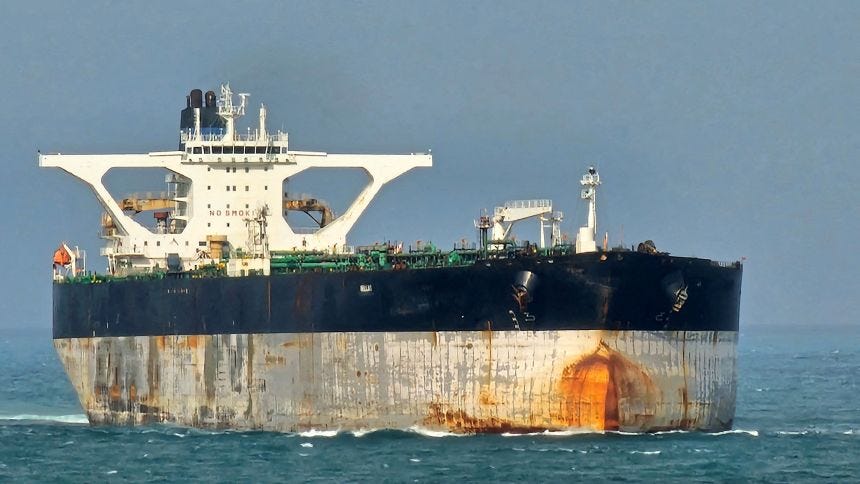
The operation unfolded as Russia moved naval assets, including a submarine, in the vicinity of the tanker. US officials said the administration did not recognise the vessel’s Russian status and considered it stateless. The seizure coincided with a second US operation targeting another sanctioned vessel in the Caribbean.
Sources: Le Monde, CNN

US intervention in Venezuela has unsettled Chinese oil buyers by highlighting Washington’s capacity to disrupt sanctioned crude supplies beyond Latin America. Analysts say the action has sharpened concern in Beijing that similar pressure could eventually be applied to Iran, a far larger source of discounted oil for China.
China is one of the world’s biggest crude importers, with about 20 per cent of its purchases coming from suppliers subject to US and western sanctions. Venezuela accounted for roughly 4 per cent of China’s seaborne imports in 2025, but flows from Iran are far more significant, supplying more than 13 per cent of shipments after surging nearly threefold in five years.
Chinese refiners warn that any disruption to Iranian oil would force a shift to higher cost suppliers, risking losses and potential shutdowns, particularly among independent “teapot” refiners that handle about a quarter of China’s processing capacity. Beijing has criticised US actions as bullying and is assessing corporate exposure, even as analysts note China holds large strategic reserves that could cushion short term shocks.
Sources: FT, Bloomberg

US President Donald Trump has invited Colombia’s President Gustavo Petro to visit the White House days after publicly floating the possibility of US military action against Colombia. The invitation followed the first phone call between the two leaders since Trump returned to office, which both sides described as cordial.
Trump said arrangements were being made for a meeting in Washington after Petro called to discuss drugs and other disagreements. Petro told supporters in Bogotá that he had asked for a restart of dialogue between the two countries. A source in Petro’s office said the call was respectful.
The shift in tone follows sharp rhetoric over the weekend, when Trump said a US military operation focused on Colombia “sounds good” and accused Petro of enabling cocaine flows into the United States. Relations have been strained for months, with US sanctions imposed on Petro in October and Colombia added to a list of countries failing to cooperate in the drug war.
Sources: Reuters, Associated Press

President Donald Trump has approved moving forward with a bipartisan Russia sanctions bill that would allow the United States to impose duties of at least 500 percent on countries importing Russian oil and petroleum products. The measure, titled the Sanctioning Russia Act of 2025, is now expected to advance toward a Senate vote.
The bill authorises sweeping secondary sanctions if the US president determines that Russia or its agents refuse to negotiate a peace agreement with Ukraine. It targets countries that knowingly trade in Russian-origin oil, gas or uranium, with India, China and Brazil identified by supporters as most exposed. The duties would be triggered if a negotiated peace is violated or further aggression against Ukraine occurs.
Supporters say the legislation is designed to choke off funding for Russia’s war effort by pressuring major buyers of discounted oil. Critics warn the approach risks widening trade disputes with key partners, particularly India, which has already faced higher US tariffs linked to its energy purchases.
Sources: Kyiv Independent, Times of India

European governments are facing renewed accusations of fuelling Russia’s war in Ukraine after new analysis showed the Kremlin earned an estimated €7.2bn from liquefied natural gas exports to the EU last year. Despite a pledge to ban Russian LNG by 2027, shipments to European ports increased in 2025.
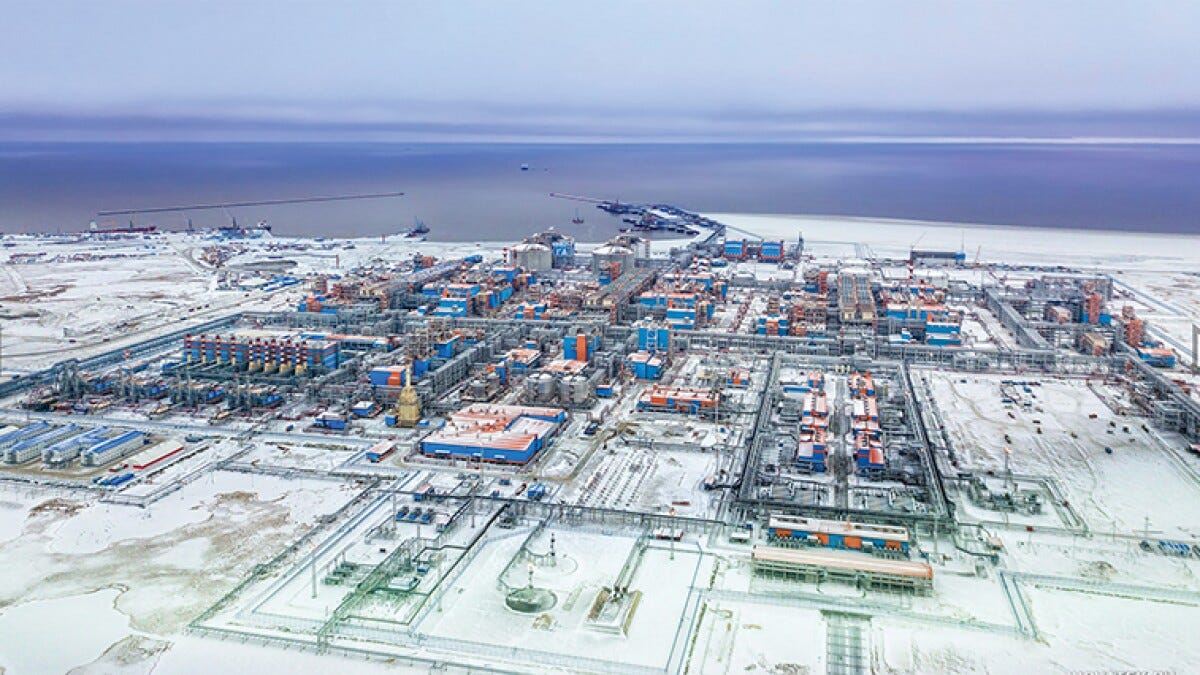
Around 15m tonnes of LNG from Russia’s Yamal project were delivered to the EU, accounting for 76.1% of the facility’s global exports, up from 75.4% the previous year. While pipeline gas imports have fallen sharply since the invasion of Ukraine, LNG shipments remain legal and continue to flow, particularly to central and eastern Europe.
Campaigners argue EU ports and shipping services are sustaining Russia’s largest LNG terminal. France was the biggest importer, while two European shipping firms carried most Yamal cargoes. Brussels insists the phase-out remains on track, but critics warn that continued imports are directly financing Russia’s war effort.
Sources: The Guardian, The Independent

President Donald Trump has called for a US military budget of $1.5 trillion in 2027, a sharp increase from the $901 billion approved by Congress for 2026. Trump said the proposal reflected “troubled and dangerous times” and followed discussions with lawmakers and senior officials.
Any increase would require congressional approval, although Republicans hold slim majorities in both chambers. Trump said the additional spending would be funded by revenues from tariffs imposed on nearly all countries and many industrial sectors, while still allowing debt reduction and payments to Americans.
The proposal comes days after US forces captured Venezuela’s leader Nicolás Maduro and amid discussions within the administration about acquiring Greenland, including potential military options. Budget experts questioned the scale of the plan, noting it would represent the largest percentage increase in defence spending since the Korean War era and raised doubts about whether the defence sector could absorb such a surge.
Sources: Reuters, PBS
On this day …..
On this day in 1918, US President Woodrow Wilson presented his Fourteen Points, outlining principles for a post-war international order based on self-determination, open diplomacy, and collective security.
The speech positioned the United States as a normative architect of global governance rather than a distant power operating from the margins.
Although many of the proposals were compromised or abandoned, the ideas influenced the creation of the League of Nations and later international institutions.
The contrast with contemporary US diplomacy, which often prioritises transactional interests and strategic competition, raises enduring questions about the role of values in shaping foreign policy.