


China Submarine Missile Test Rattles Pacific (Asia Pacific)
Trump Tests NATO Cohesion At Ankara Summit (Geopolitics)
Iran Missile Attacks Renew Hormuz Risk (Middle East)
Kyiv Exposed By Patriot Missile Shortage (Conflict)
Canada Turns To Europe For New Submarine Fleet (Defence)
Macron Makes First Major Western Syria Visit (Middle East)
Hamas Step Aside Leaves Gaza Disarmament Unresolved (Middle East)
Norway Presses China On Russia Talks (Diplomacy)
Wildfires Push Southern Europe Into Fire Emergency (Europe)
Russia Bank Risks Rise As EU Weighs Sanctions (Economy)
A succinct daily briefing delivered each weekday to help you stay on top of the stories shaping the world.

China’s test-launch of a long-range ballistic missile from a nuclear submarine has sharpened regional concern over Beijing’s military trajectory, even as its navy cast the event as routine. The missile was fired at 12:01 p.m. Monday carrying a simulated warhead to a designated area in the Pacific Ocean, according to Senior Captain Wang Xuemeng, a spokesman for China’s navy. U.S. State Department spokesman Tommy Pigott said Washington monitored the launch and described Beijing’s rapid and opaque nuclear weapons buildup as a concern for the region and the world.
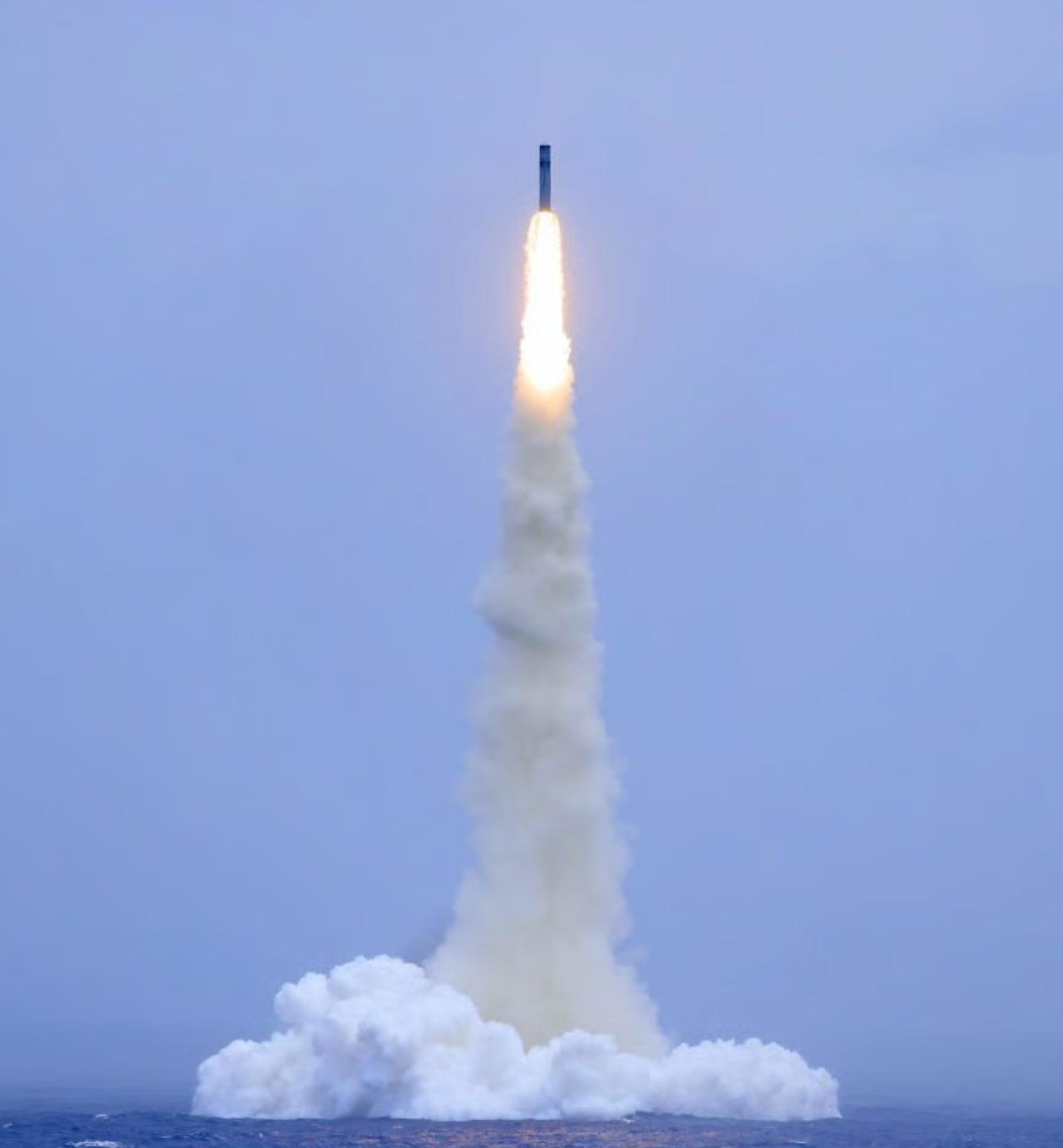
The test drew criticism across the Indo-Pacific. Australian foreign minister Penny Wong said China had informed Australia but called the launch destabilising to the region, while Japan said it had serious concern over the intensification of China’s military activities.
Analysts cited in the sources said the launch highlighted China’s expanding submarine-based nuclear deterrent and showed its navy testing capabilities beyond land-based missile forces. The test was launched within hours of the signing yesterday of a mutual defence alliance between Australia and Fiji.
Sources: Wall Street Journal, Times of India

Donald Trump arrives in Ankara for a NATO summit facing two overlapping pressures: Russia’s renewed attacks on Ukraine and Washington’s demand that allies accelerate defence spending.
The meeting comes as the alliance also absorbs disputes linked to the U.S. war against Iran, including complaints from Trump over limited European help in the Strait of Hormuz.
The pressure intensified before the summit. Russia struck Kyiv on Sunday with dozens of missiles and hundreds of strike drones, killing at least 11 people, while Ukrainian President Volodymyr Zelenskyy said the attacks showed Ukraine’s need for more military aid, especially from the U.S. Trump is due to meet Zelenskyy in Turkey, but his insistence that Vladimir Putin wants the war to end leaves NATO heading into Ankara with unity under strain and expectations deliberately low.
Sources: CNBC, Washington Post

Iran’s military fired at least two missiles at commercial ships transiting the Strait of Hormuz on Monday night, according to U.S. officials, damaging two vessels and threatening to undo a memorandum of understanding signed less than three weeks ago under which Tehran agreed to halt attacks in the waterway.
U.K. Maritime Trade Operations said it received a report from a tanker travelling south near Oman that was hit by an unknown projectile, causing a fire.
The attacks also came after a one-week agreement between the U.S. and Iran on halting attacks in the strait expired. One vessel under attack appeared to be Al Rekayyat, a liquefied natural gas tanker owned and managed by Nakilat, while a U.S. official said both vessels suffered significant damage but no casualties. The missile fire came as indirect talks in Doha ended without much progress on the Strait of Hormuz.
Sources: Axios, Wall Street Journal

Ukraine said a serious shortage of interceptor missiles meant none of the 23 ballistic missiles fired by Russia at Kyiv on Sunday night were shot down, leaving the capital exposed as Moscow intensified its air campaign ahead of this week’s NATO summit in Ankara.

At least 15 people were killed in Kyiv and eight more in the wider region, while officials said 56 people were injured in the capital and 48 in the region.
President Volodymyr Zelensky said the attacks showed the need for strong decisions on air defences at the summit, while Ukrainian Air Force spokesman Yurii Ihnat said Russia was exploiting a serious shortage. A second report said Ukraine had virtually run out of Patriot interceptors, the only system that has proven able to reliably stop ballistic missiles.
Sources: BBC, Wall Street Journal

Canada has chosen a German-Norwegian bid to build up to 12 diesel-electric submarines, handing Prime Minister Mark Carney one of the country’s largest defence procurement decisions as he pushes to deepen Nato ties and reduce military dependence on the United States.
Carney said the decision was about the best platform and partnership for Canada’s strategic, security and economic interests, while the government said the project would expand a fleet that currently relies on ageing submarines bought secondhand from Britain in 1998.

The choice of ThyssenKrupp Marine Systems and its Type 212CD design comes before a Nato summit in Turkey and fits Carney’s wider push to raise defence spending and strengthen Canada’s presence in the Arctic. Carney said the project would be the most costly military purchase in Canada’s history, though final negotiations with the contractor still lie ahead.
Sources: The Guardian, New York Times
Restacking this post will help it reach more readers interested in the world.

Emmanuel Macron arrived in Syria on Monday, becoming the first major Western leader to visit the country since the ouster of Bashar al-Assad in 2024 and the first Western European head of state to do so since the new authorities took power.
The visit places France at the forefront of Western engagement with Syria’s new leadership during a period of relative calm in the Middle East.
Macron was greeted at Damascus airport by Syrian Foreign Minister Asaad al-Shibani and is due to meet Syrian President Ahmad al-Sharaa before both leaders head to the NATO summit in Ankara. Syria’s state-run SANA news agency said Macron travelled with a business delegation to discuss regional security as well as business and investment opportunities, while his office said he would also engage directly with diverse Syrian people.
Sources: Associated Press, Euronews

Hamas said Monday it had dissolved its government in Gaza and was preparing to transfer power to a technical committee backed by the United Nations as part of a U.S.-brokered ceasefire deal. Ismail al-Thawabta, general director of the Hamas-run Government Media Office, said only technical and professional staff would remain to run day-to-day affairs, while Hamas spokesperson Hazem Qassem called the move a positive step forward.
However the move left the central dispute untouched. The Board of Peace said the technocratic committee must control all weapons in Gaza, while committee chair Ali Shaath said effective governance required a unified security apparatus under one authority.
Israeli Foreign Minister Gideon Saar dismissed the announcement as an attempt to avoid disarmament, and negotiations on the ceasefire’s second phase remain largely deadlocked for months.
Sources: Associated Press, South China Morning Post
Norway has urged China to use its close ties with Moscow to help bring Russia into negotiations over the war in Ukraine, linking Beijing’s role on the conflict to the prospects for deeper cooperation with Europe. Prime Minister Jonas Gahr Støre said after meeting Chinese Foreign Minister Wang Yi in Oslo that China had the best and most direct access to Russia’s leadership and should use that channel.
Støre also said there was potential for deeper cooperation between Europe and China, but that Beijing’s close partnership with Russia would remain a limit as long as the war continued. Norwegian officials said negotiations should begin without conditions, starting with a ceasefire based on the current front line in Ukraine, which Støre described as a major concession from Kyiv because Russian forces would still be on Ukrainian territory. China’s official readout of the meeting did not mention Russia or Ukraine.
Sources: Kyiv Post, Reuters

Wildfires sweeping southern Europe forced thousands from their homes, with the most acute threat in southwest France where a blaze in the Pyrenees scorched more than 11,000 acres and evacuated more than 10,000 people from nearly 30 villages and towns.
French interior minister Laurent Nuñez said Monday the fire was not yet contained and was still progressing, as more than 2,000 firefighters and water-dropping aircraft worked to slow its spread.
The fire expanded rapidly from Sunday evening and came as France, Spain and Portugal faced renewed wildfire danger after intense heat waves. Officials also barred spectators from Monday’s third stage of the Tour de France, with Nuñez saying the race would proceed without crowds because security and safety personnel had been deployed to fight the fires.
Sources: New York Times, The Guardian

A European state intelligence report warns Russia risks an explosive banking crisis as lenders shoulder more of the burden of the war economy just as the European Union prepares a new sanctions package targeting banks and cryptocurrency networks. The report said deteriorating loans, growing household indebtedness and state-backed credit programmes were masking vulnerability in the banking system.
The report estimated that 10% of corporate loans were doubtful, while some major banks reported retail non-performing loan ratios as high as 15% in 2025. It also said more than 500,000 Russians declared bankruptcy in 2025 and that more than 13 million people had taken out at least three loans simultaneously.
Russia’s central bank has played down the risk, while one analyst said there was no immediate financial crisis to hand. But the intelligence report warned that an ambitious sanctions package against banks could trigger a shock.
Sources: Reuters, The Telegraph
Restacking or sharing this publication means more people can read it. Commenting extends the conversation. Liking shows your appreciation.
On this day …
On this day in 2005, four coordinated suicide bombings struck London’s public transport network during the morning rush hour.
Three explosions hit Underground trains before a fourth bomb destroyed a double-decker bus in central London. Fifty-two people were killed and more than 700 injured in the deadliest terrorist attack in Britain since the Lockerbie bombing.
The attacks prompted major changes to the UK’s counter-terrorism strategy, intelligence cooperation and emergency response, while raising difficult questions about home-grown extremism and the balance between security and civil liberties.
More than two decades later, the events remain a defining moment in modern British history.
How should democratic societies respond to terrorism without compromising the freedoms they seek to defend?