


Iran Says Hormuz Deal Would Not Fully Reopen Strait (Middle East)
Houthis Escalate Yemen War Across Saudi Border (Conflict)
Trump Threatens Leakers Over Missile Shortage Report (US)
Rights Groups Say Israel Journalist Strike Was War Crime (Middle East)
US Sanctions Cuban Military Network (US)
Europe Heat Wave Exposes Infrastructure Strain (Europe)
Meta Ordered To Pay More In Child Safety Case (Technology)
AI Designs New Viruses Not Found in Nature (Technology)
Puerto Rico Starts Water Rationing (Climate)
Trump Makes New Birthright Citizenship Move (US)
A succinct daily briefing delivered each weekday to help you stay on top of the stories shaping the world.

Iran and Oman appear close to an agreement on managing traffic through the Strait of Hormuz however Tehran says the arrangement would not fully reopen the waterway.
Iranian Deputy Foreign Minister Kazem Gharibabadi said the understanding would create a “new and different model”, with a significant part of ship traffic passing through Iranian waters and a joint coordination centre obtaining information from vessels entering and exiting.
Iran says incoming ships would use Iranian territorial waters, while outgoing ships would exit through Omani waters. Iran is considering a ban on “hostile” vessels passing through the strait which could extend to any US or Israeli vessels.
The issue has become a central dispute with Washington since Iran effectively closed the strait after the United States and Israel launched their war in February. President Donald Trump has said progress is being made, but a U.S. official said any temporary routes must have no approvals, permissions, tolls or charges. Oil prices rose after Tehran’s comments.
Sources: Washington Post, The Hill
Yemen’s Iran-backed Houthis killed at least 58 government troops in missile and drone attacks on Thursday, while Saudi officials said Houthi attacks wounded 11 civilians in Najran, including Saudis, a Yemeni, Egyptians and a Pakistani.
The attacks came as Yemen is increasingly drawn into the US-Israeli war with Iran and a wider regional confrontation. Houthi military spokesman Yahya Saree said the rebels targeted government positions with ballistic missiles and drones in response to an alleged Saudi-backed military build-up. A military official said the strikes on troop camps were Yemen’s worst since 2022.
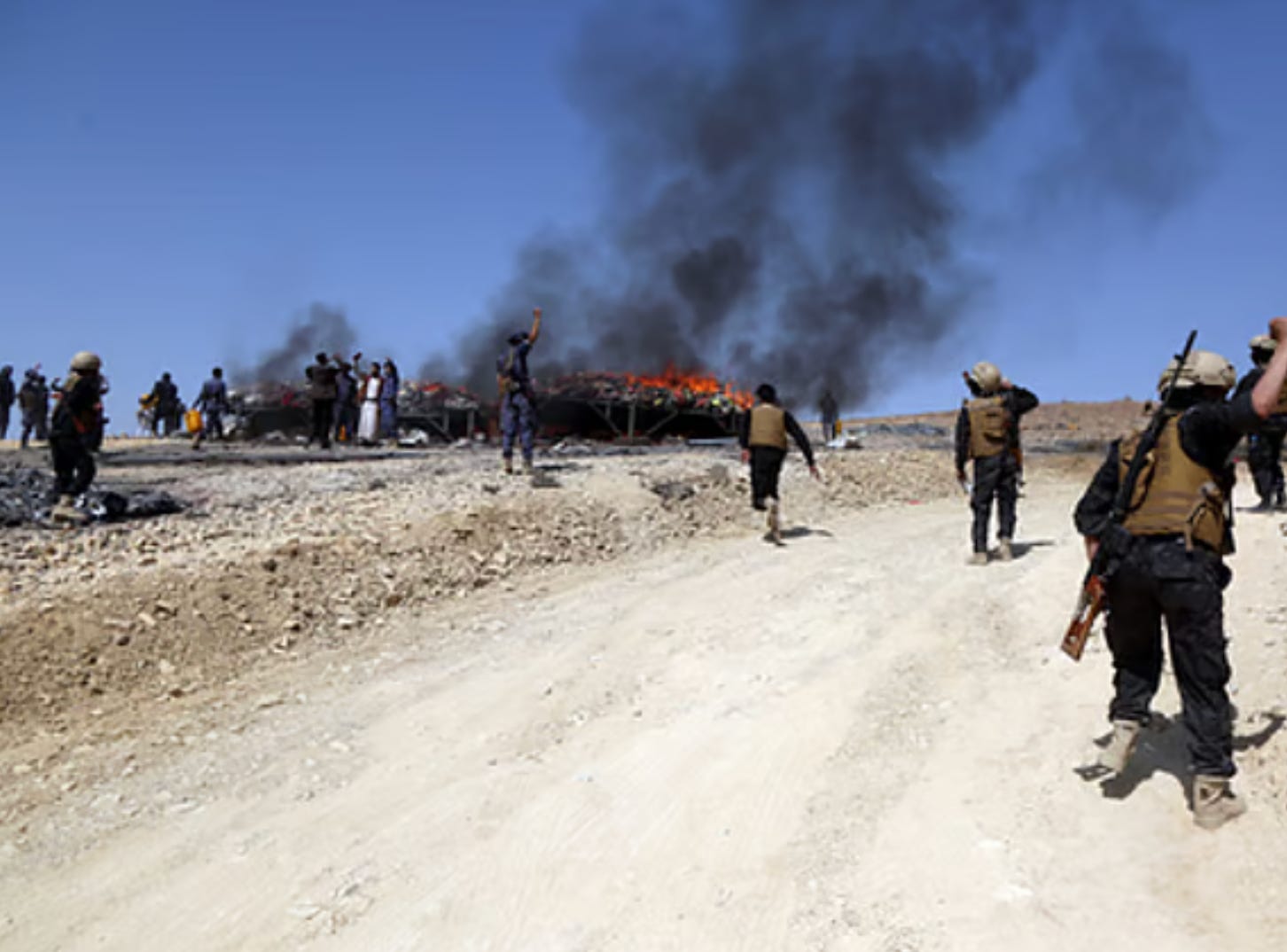
Coalition spokesman Major General Turki al-Malki accused the rebels of indiscriminate shelling against civilian objects and said coalition forces would protect civilians.
Saudi Arabia has led a coalition backing Yemen’s government since 2015. The Houthis control Sanaa and much of the north after a war that has killed hundreds of thousands.
Sources: Times of Israel, South China Morning Post

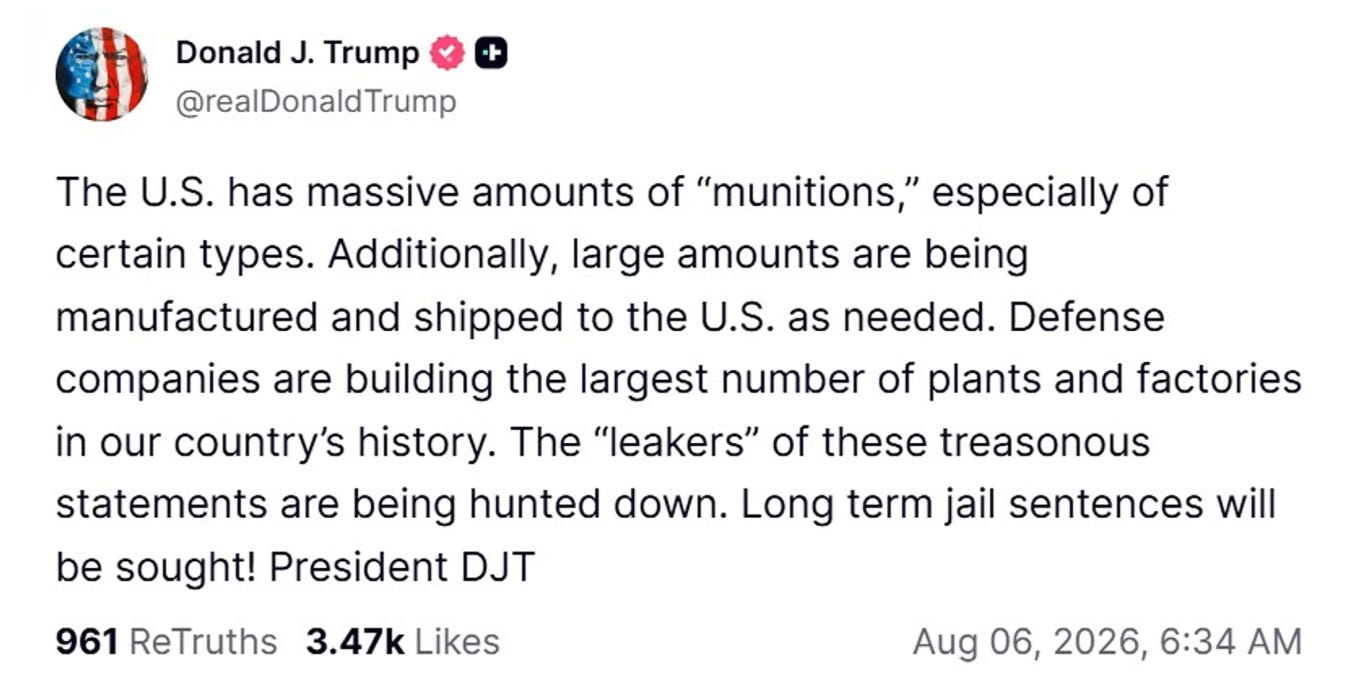
President Donald Trump threatened jail for “leakers” after reporting that he confronted Defense Secretary Pete Hegseth over alleged munitions shortages caused by the Iran war. The White House denied the account with Press Secretary Karoline Leavitt saying the incident “literally never happened” and that Trump had confidence in Hegseth.
The reported shortages centre on long-range guided missiles and air-defence interceptors. Sources said they helped explain why Trump pulled back from additional large strikes against Iran after saying he had ordered and called off “the biggest attack since World War II”.
The dispute exposes a military constraint inside a conflict now approaching its sixth month. The United States has announced new production agreements but critical munitions can take as long as two years to produce, leaving no immediate relief for depleted stockpiles and raising concerns about readiness for future engagements whether in the Persian Gulf or elsewhere.
Sources: The Independent, Sydney Morning Herald

Rights groups said an Israeli attack in southern Lebanon that killed al-Akhbar reporter Amal Khalil and seriously wounded freelance camera operator Zeinab Faraj was an apparent war crime.
Separate investigations by Human Rights Watch and Amnesty International concluded the journalists were targeted while reporting in al-Tiri on 22 April. Human Rights Watch said Israeli forces “knew or should have known” the women were civilians, after reviewing photo and video evidence, witness testimony, media reports and a Lebanese Red Cross message relayed to the Israeli military through Unifil.
The Israeli military denied targeting journalists, saying the strikes were aimed at two Hezbollah operatives and that the incident was under internal review.
Human Rights Watch and Amnesty called for an independent investigation, while Lebanon researcher Ramzi Kaiss said Israeli forces’ continued killing of journalists showed a willingness to commit atrocities without any fear of consequences.
Sources: BBC,Al Jazeera

The United States has imposed sanctions on five Cuban companies and eight individuals accused of helping Cuba procure military equipment for its armed forces and maintaining military relationships with Russia and China.
Secretary of State Marco Rubio announced the measures on Thursday under an executive order signed by President Donald Trump in May. The targets include Tecnoimport, which the State Department says imports military equipment from Russia and China, and EMI Yuri Gagarin, which Washington says repairs and maintains Cuba’s Russian-made military aircraft.
Rubio said Cuba uses its military and intelligence services to spy on the United States and serves as a staging ground for Russia, China and Iran. The sanctions freeze any U.S. assets held by those targeted, bar Americans from doing business with them and could expose foreign banks and companies with U.S. business to sanctions if they continue working with them.
Sources: Al Jazeera, The Independent
Restacking this post will help it reach more readers interested in the world.

Italy placed all 27 cities monitored under its national heat surveillance system on red alert Thursday as a heat wave gripped Europe, with temperatures above 40C in several countries and health warnings issued for millions.
The alert level signals a risk to the entire population, not only older adults and people with chronic illnesses. Authorities urged residents and tourists to avoid direct sunlight during the hottest hours, remain indoors where possible and drink water, while Rome extended evening opening hours at the Colosseum and Pantheon and installed mist fans at the Colosseum entrances.
The heat also disrupted energy and transport systems. Slovakia recorded an all-time high of 42.2C, Austria recorded 41.2C, and low Danube levels forced Slovakia’s biggest hydroelectric plant to shut seven of eight turbines. Hungary introduced energy-saving measures as river levels strained electricity supplies.
Sources: Associated Press, Modern Diplomacy
A New Mexico court ordered Instagram and Facebook parent Meta to pay $567 million to address harms to young people from its platforms, in the second phase of a landmark trial.
Judge Bryan Biedscheid said $420 million would fund treatment services for young people, with the rest going to awareness, prevention, screening and other costs over five years.
The penalty follows $375 million in civil penalties ordered in March, after jurors found Meta knowingly harmed children’s mental health and concealed what it knew about child sexual exploitation on its platforms.
Meta vowed to appeal, saying it works hard to keep people safe and remains confident in its record of protecting teens online. The company also faces thousands of lawsuits, while a federal trial in Oakland this month will hear claims from four states over alleged youth mental health harms.
Sources: NBC News, New York Times

US researchers have synthesised brand-new, self-replicating viruses not found in nature using genomes designed by artificial intelligence for the first time.
Scientists from Stanford University and the Arc Institute used genome language models named Evo 1 and Evo 2 to generate complete genomes for a viable bacteriophage, a virus able to infect and replicate inside bacteria. Using ΦX174, which infects E. coli, as an example, the models produced about 700,000 potential designs. Researchers selected 285, synthesised DNA molecules and inserted them into E. coli.
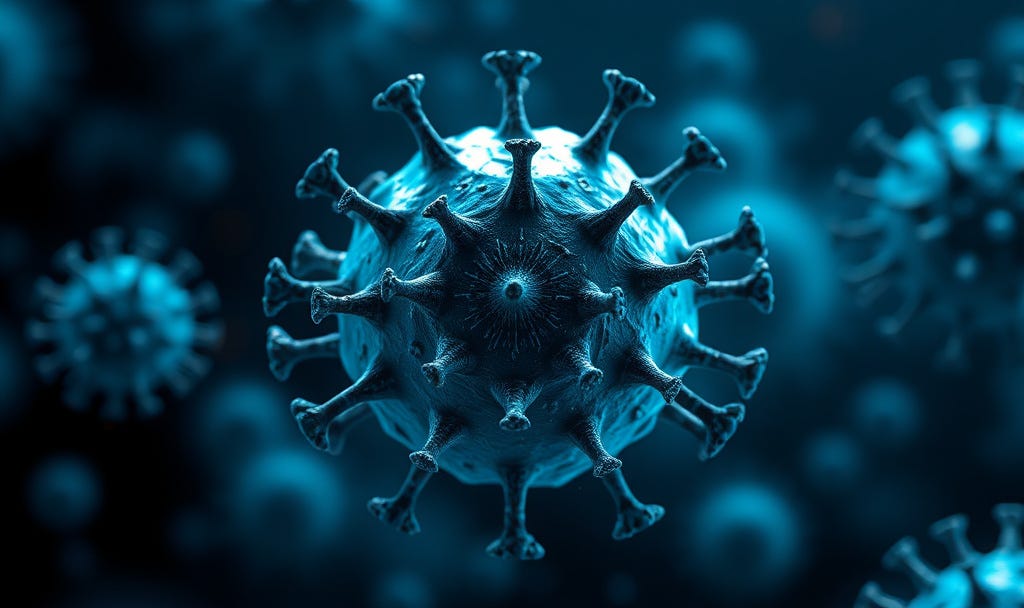
Sixteen designs produced viable viruses, some of which attacked E. coli more effectively than ΦX174. Brian Hie, an assistant professor and study author, said the model generated the entire genome end-to-end. The breakthrough could support medical advances, including phage therapy, but scientists warned it raises urgent biosafety and biosecurity questions.
Sources: New York Times
Puerto Rico will begin water rationing on Friday morning, with more than 180,000 customer accounts losing service for 48 hours at a time under an alternating schedule.
The measures will affect parts of San Juan and neighbourhoods in Carolina, Juncos, Gurabo, Trujillo Alto, Canovanas and Loiza after residents of San Juan and nearby communities went more than 100 days without reliable water. Governor Jenniffer González said the situation was out of the government’s hands and warned that nothing prevented it from worsening.
July was San Juan’s driest month since records began in 1899, with 0.54 inches of rain, while almost 25 percent of Puerto Rico is in severe drought and another 36 percent in moderate drought. Infrastructure problems are also compounding the crisis, with the governor acknowledging decades of underinvestment and maintenance failures at the water authority.
Sources: CBS News, El País

President Donald Trump signed two executive orders on Thursday to restrict automatic citizenship for people born in the United States, weeks after the Supreme Court rejected his earlier attempt to scale back birthright citizenship.
One order expands categories of non-citizen parents whose children are not eligible, including members of foreign terrorist groups, foreign government employees, people accused of fraudulent citizenship efforts and some people in U.S. territories. The second bans birth tourism, the practice of pregnant mothers travelling to the United States so their babies become citizens.
Trump criticised the Supreme Court’s June decision, while White House deputy chief of staff Stephen Miller said the president had authority under immigration law to ban birth tourism. University of California Davis law professor Gabriel Chin said the president may restrict entry for that purpose, but not decide a U.S.-born child is not a citizen.
Sources: Washington Post, BBC
Restacking or sharing this publication means more people can read it. Commenting extends the conversation. Liking shows your appreciation.
On this day …
On this day in 1990, the United States launched Operation Desert Shield, deploying forces to Saudi Arabia following Iraq’s invasion of Kuwait five days earlier.
The operation aimed to deter further Iraqi advances while assembling the international coalition that would later conduct Operation Desert Storm.
It marked one of the largest and fastest military deployments of the post-Cold War era, demonstrating a new model of multinational intervention under United Nations authority.
The Gulf crisis would shape Middle Eastern security and Western military strategy for decades.
How much did Desert Shield define the model for later international military coalitions?
How effective is the US’s protection of the Gulf States today?