


Trump Deadline Near As Hormuz Stays Closed
Iran Rejects Truce - Makes Ten Point Proposal
Israel Strikes Deeper Into Iran Command
IMF Warns War Will Lift Prices And Cut Growth
UN Vote Nears As Hormuz Text Is Watered Down
Ceasefire Strains Deepen After Gaza Clashes
Vance Visits Hungary As Orbán Faces Election Test
Ukraine Operations Reported In Western Libya
Ukraine Drones Hit Key Russian Black Sea Oil Terminal
Artemis II Heads Home After Record Lunar Flyby

Iran has thus far refused to reopen the Strait of Hormuz ahead of a Tuesday deadline set by Donald Trump, rejecting a Pakistan-brokered ceasefire proposal as attacks between Iran and Israel continued. Trump warned he could destroy Iranian bridges and power plants if Tehran failed to allow free passage through the waterway.
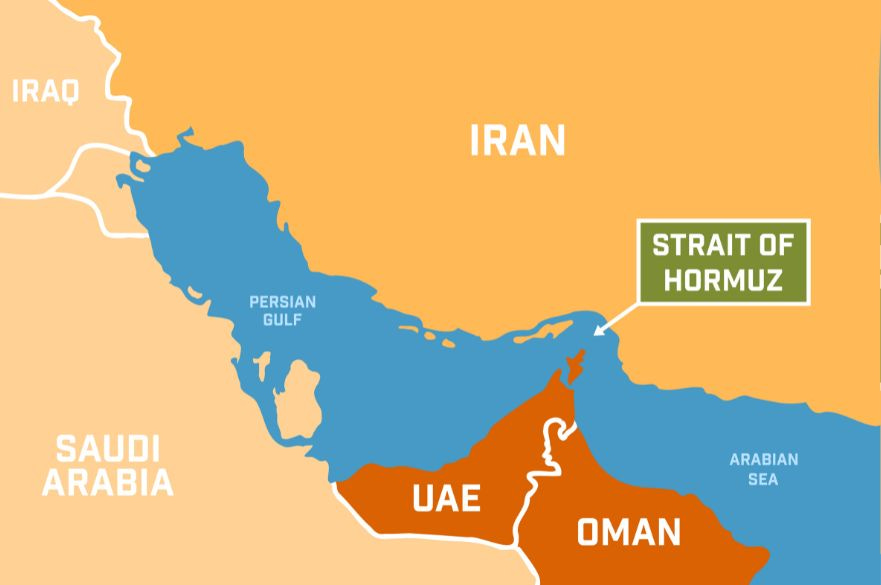
Israeli forces struck government infrastructure in Tehran and other areas, while Saudi Arabia intercepted ballistic missiles heading towards its eastern region with debris falling near energy facilities. Saudi Arabia, the United Arab Emirates and Bahrain issued simultaneous public safety alerts as regional exchanges persisted.
The strait carries about a fifth of global oil and gas supplies and has effectively been closed by Iran, helping keep crude prices around $110 a barrel. Negotiations through intermediaries were continuing, but Washington said the latest Iranian proposal was not enough to avert threatened strikes.
Sources: Reuters, Al Jazeera

Iran rejected proposals for a temporary ceasefire and told Pakistan it wanted a permanent end to the war, ahead of Donald Trump’s Tuesday night deadline for a deal. Tehran’s response, reported by state media, included ten clauses covering safe passage through the Strait of Hormuz, sanctions relief and reconstruction.
Trump said he would not extend the deadline and warned Iran would face attacks on bridges and power plants if no agreement was reached. He said any deal would have to include the reopening of Hormuz, which he described as a very big priority.
The White House said a 45-day ceasefire proposal was one of many options being discussed through mediators and that Trump had not signed off on it. The gap between Iran’s demand for a permanent end to the war and Washington’s deadline kept diplomacy active but still fragile.
Sources: Reuters, NBC

Israel said it killed Majid Khademi, the intelligence chief of the Islamic Revolutionary Guards Corps, in an overnight airstrike in Tehran, the latest in a series of blows to Iran’s senior leadership. Iran’s state broadcaster confirmed his death, which followed the mid-March killing of intelligence minister Esmaeil Khatib.
The Israeli military also said it killed two senior Quds Force officials in separate strikes on Sunday. They were identified as Kamil Melhem, artillery commander of the Imam Hussein Division, and Asghar Bagheri, head of Unit 840, which Israel said was responsible for global operations against Israelis, Americans and Jews.
The latest strikes suggest Israel is still pressing its campaign against Iran’s command structure after earlier killings of senior officials. Several of the posts now being targeted had been filled only in recent months, underscoring the churn at the top of the Iranian system.
Sources: New York Times, Jerusalem Post

The head of the International Monetary Fund, Kristalina Georgieva said the Middle East war would lead to higher inflation and slower global growth, with the fund now preparing to lower its economic outlook even if the conflict is resolved quickly. A new set of scenarios is due on April 14, after officials had previously expected a small upgrade in global growth for 2026 and 2027.
The war has triggered what she described as the worst-ever disruption in global energy supply, with global oil supply down 13% after Iran effectively blocked the Strait of Hormuz. The route is crucial for shipping one-fifth of the world’s oil and gas, while the shock is also rippling through helium and fertiliser supply chains.
She said poor energy-importing countries would be hit hardest, while even energy exporters were feeling the effects. A rapid end to hostilities would still leave a lingering negative impact on the wider world economy.
Sources: Reuters, Times of Israel

The UN Security Council is expected to vote on Tuesday on a resolution addressing threats to shipping in the Strait of Hormuz, but the text has been diluted after objections to any authorisation of force. The latest draft instead encourages defensive naval co-ordination, including ship escorts, and demands that Iran cease attacks on merchant vessels and attempts to impede transit.
The vote comes hours before Donald Trump’s deadline for Iran to make a deal or face attacks on bridges and power plants. Bahrain, backed by Gulf states and the United States, had initially sought a clear mandate for action to unblock the strait, where Tehran has restricted passage since the war began on February 28.
Russia and China could still veto the resolution, while France pushed for tighter limits on any use of force. The revised language reflects an effort to secure wider support without endorsing a more escalatory military response.
Sources: France 24, The National

At least 10 Palestinians were killed in central Gaza in Israeli air strikes and fighting between Hamas security personnel and an Israel-backed Palestinian militia, according to local sources. Bodies from the scene were taken to al-Aqsa hospital in Deir al-Balah, where a spokesperson said dozens of other people were wounded and some were in critical condition.
Witnesses said the militia had set up a checkpoint east of Maghazi refugee camp before coming under attack from Hamas personnel, triggering clashes. They added that Israeli drones then intervened in support of the militia, carrying out strikes on Hamas personnel in three locations.
The violence added to doubts over a ceasefire agreed almost six months ago. According to Gaza’s health ministry, at least 723 Palestinians have been killed in Israeli attacks since the ceasefire, while disarmament remains a key obstacle to moving to a second phase.
Sources: BBC, Anadolu Agency

Vice President JD Vance travelled to Budapest this week days before Hungary’s national election, in a visit widely seen inside the country as an attempt to bolster Prime Minister Viktor Orbán as he faces his biggest test in years. The trip comes with Orbán and his Fidesz party trailing in most polls ahead of Sunday’s contest.
The visit also carries broader geopolitical weight. Both the Trump administration and Moscow see Orbán as central to their shared antagonism towards Europe, while the European Union hopes the polls showing Fidesz lagging prove to be correct. Vance’s intervention follows a stated policy of aligning with what the administration calls “patriotic European parties”.
Vance was scheduled to meet Orbán and deliver a speech on the United States-Hungary partnership. By sending him so close to election day, Washington is signalling that it believes there is still time to turn the tide in favour of a close ideological ally.
Sources: CNN, New York Times

More than 200 Ukrainian officers and military experts are operating in western Libya and were behind a recent attack on a Russian liquefied natural gas carrier in the Mediterranean, according to an investigation citing Libyan sources. The vessel Arctic Metagaz, part of Russia’s so-called shadow fleet used to bypass sanctions, was struck by a maritime drone that hit its engine room and disabled the ship.
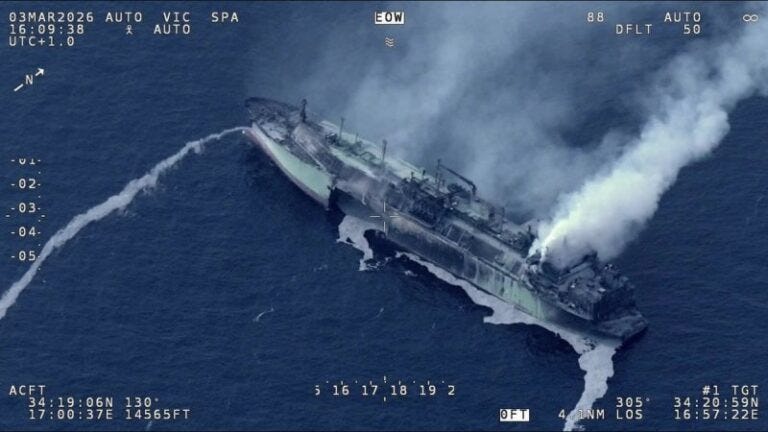
The Ukrainian personnel are based at multiple sites in western Libya with the agreement of the Tripoli-based government led by Abdelhamid Dbeibah. Facilities include locations in Misrata and Zawiya equipped to launch aerial and naval drones, alongside a coastal site strengthened with runways and antenna systems.
The deployment has raised concerns among some Libyan political figures about violations of sovereignty and the emergence of a proxy confrontation between Kyiv and Moscow extending into Libyan territory and waters.
Sources: Euronews, RFI

Ukraine said its drones struck the Sheskharis oil terminal in Russia’s Novorossiysk port area, causing a large-scale fire confirmed by satellite imagery. The terminal forms part of Russia’s largest Black Sea export port, where Ukrainian strikes earlier in March had already halted some oil loadings.
The attack followed a wider campaign targeting Russian oil infrastructure including Baltic ports such as Primorsk and Ust-Luga, which handle two-fifths of Moscow’s seaborne oil exports and almost 2 percent of global oil supply. Ukrainian officials said the strikes aim to curb Russia’s ability to benefit from higher global oil prices linked to the war involving Iran.
Recent attacks on Russian oil ports reduced seaborne exports in March to their lowest level in two months, while strikes on Baltic facilities have already cost Moscow $1bn and forced cargo to shift to smaller ports unable to handle the additional load.
Sources: Bloomberg, Al Jazeera

Four astronauts on the Artemis II mission are heading back to Earth after a lunar flyby that took them farther from Earth than any humans before. During the mission, the crew lost contact with Earth for about 40 minutes as their spacecraft passed behind the far side of the Moon, before communications were restored.
The flyby also included a total solar eclipse seen from the spacecraft, as the Moon briefly blocked the Sun and revealed its outer atmosphere. The mission broke the previous distance record set by Apollo 13 in 1970, reaching an anticipated furthest distance of 406,778 kilometres from Earth.

The mission is a test flight for the Orion spacecraft ahead of later plans including a return to human lunar landings and, ultimately, missions to Mars. The crew now face several quieter days of checks and experiments before a high-speed re-entry and splashdown in the Pacific.
Sources: BBC, Euronews
On this day …
On this day in 1994, large-scale killings of Tutsi civilians began in Rwanda following the assassination of the country’s president the previous day, marking the start of one of the twentieth century’s fastest and most devastating genocides.
Over the following months, hundreds of thousands of people were killed as state structures collapsed and international intervention failed to materialise in time.
The events later reshaped global debates about humanitarian intervention and the responsibilities of international institutions.
How far did events in Rwanda change expectations about when the international community should intervene to prevent mass violence?