


AI Sell-Off Wipes $2.5 Trillion From Nasdaq (Markets)
Republican Defeat Opens Up The 2028 Presidential Race (US)
Iran And US Review Nuclear Proposals Amid War Threat (Diplomacy)
Saudi Arabia Faces Costly Choices Over Houthi Threat (Middle East)
Israel’s Election Leaves Netanyahu’s Future Uncertain (Politics)
France Sees Mass Protests Over Wages And Living Costs (Europe)
Bomb Hoaxes Disrupt Dozens Of Flights Across Europe (Europe)
Sudan And Ethiopia Expel Diplomats As Tensions Rise (Africa)
Newsom Commutes All 548 California Death Sentences (US)
Climate Threats Put 90 Million Displaced People At Risk (Climate)
A succinct daily briefing delivered each weekday to help you stay on top of the stories shaping the world.

Global technology shares plunged after Democratic victories in the US midterm elections raised concerns about restrictions on artificial intelligence infrastructure. The Nasdaq Composite fell more than 5.5% on Thursday, wiping an estimated $2.5 trillion from its market value and entering correction territory. Nvidia lost more than 9%, while semiconductor stocks suffered even steeper declines.
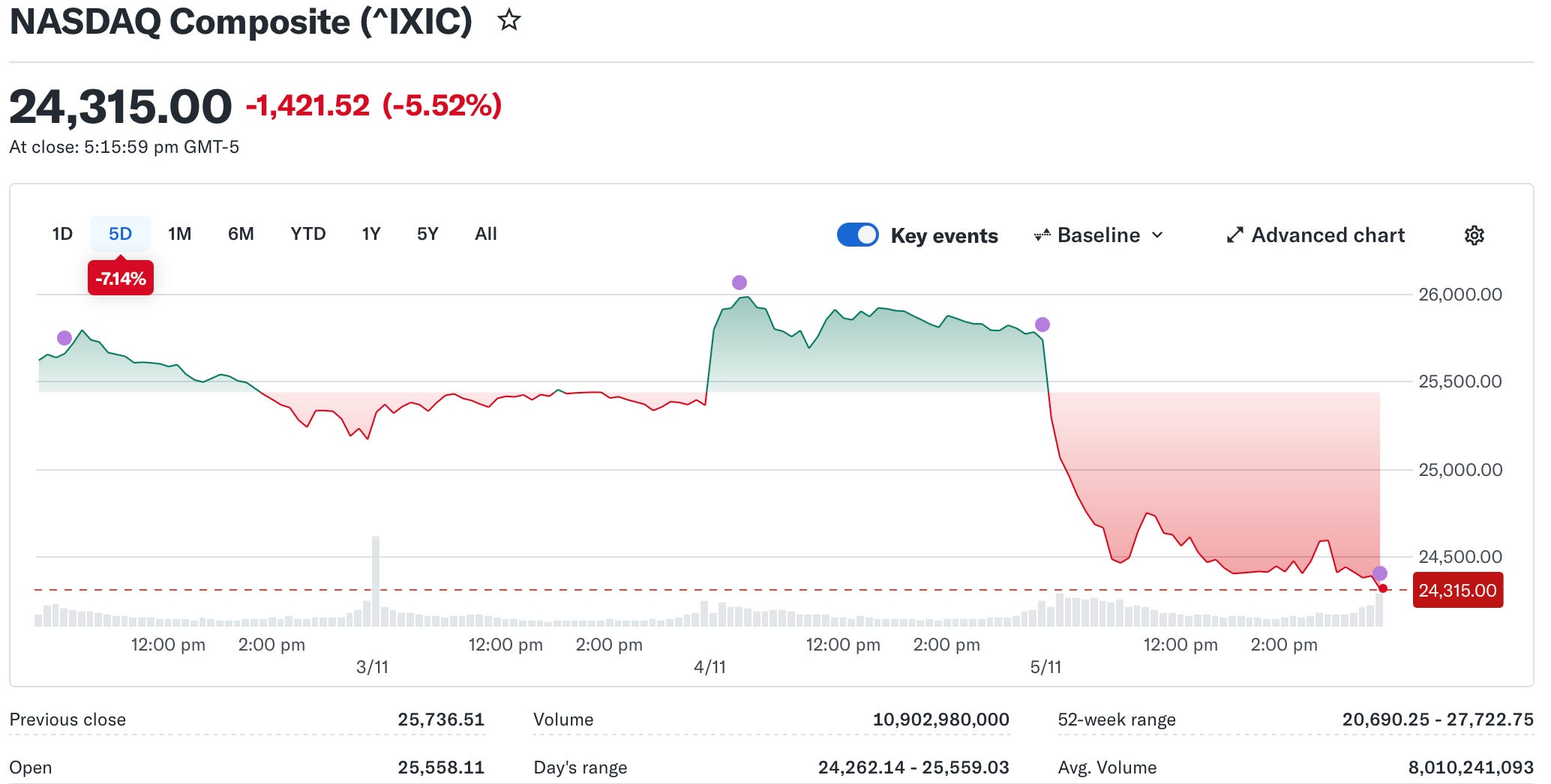
Democrats won control of both houses of Congress after campaigns that included opposition to rapid data centre expansion. Texas governor-elect Gina Hinojosa has called for a moratorium on new approvals. Investors were already questioning whether enormous spending on AI infrastructure would generate expected returns, while tighter approvals could delay projects and increase costs.
The sell-off spread into Asian markets on Friday. Japan’s Nikkei fell 6% in early trading, South Korea’s Kospi dropped more than 8.5%, triggering a trading halt and Taiwan’s Taiex lost over 8.3%. The S&P 500 also fell 4.4%.
Sources: BBC, Wall Street Journal

Republicans’ sweeping midterm defeat has thrown the party’s 2028 presidential succession into uncertainty, with Vice President JD Vance distancing himself from President Donald Trump’s Iran war and potential rivals positioning themselves for a contest.
Vance blamed the war for the losses, calling for an end to the conflict, greater attention to affordability and a reassessment of US relations with Israel. Florida Governor Ron DeSantis described the result as an “extinction-level event” for Republicans, while Senator Ted Cruz criticised the war’s duration and the party’s failure to address voters’ economic concerns.
Vance remains the nomination front-runner, supported by influential donors and conservative organisations but Trump’s endorsement has not materialised. Meanwhile, Democrats’ capture of both congressional chambers gives them greater scope to challenge the administration’s war policy through funding restrictions and investigations. The defeat has intensified debate over the party’s direction beyond Trump.
Sources: CNN, Al Jazeera

Iran and the United States are reviewing nuclear proposals through Qatari mediation, signalling renewed diplomatic engagement as both sides weigh the risk of further military escalation. A senior Iranian official said Tehran had submitted a proposal to Washington, while other officials described discussions of concrete terms for Iran’s nuclear programme.
Iran’s Supreme National Security Council chief Mohsen Rezaei publicly maintained that negotiations and reopening the Strait of Hormuz depend on Washington meeting seven demands, including sanctions relief and the release of frozen assets. Privately, however, officials said he had shown greater willingness to discuss nuclear issues.
US Vice President JD Vance has supported the mediation effort, while President Donald Trump has retained the option of renewed strikes. Iran’s highly enriched uranium stockpile remains a central obstacle, with Tehran opposing its removal from the country. The diplomatic activity follows weeks of confrontation and warnings of wider regional retaliation.
Sources: Reuters, New York Times

Saudi Arabia faces mounting military and diplomatic difficulties as Yemen’s Iran-backed Houthis intensify attacks on its oil facilities and airports while advancing towards Aden, the seat of Yemen’s internationally recognised government. The militants reportedly demanded $51 billion and recognition as Yemen’s rulers in return for ending hostilities, although Saudi Deputy Minister Rayed Krimly denied that any financial demand had been made.
The Houthis have moved within roughly 50 miles of Aden, while repeated strikes on Saudi infrastructure have disrupted travel and damaged energy facilities. Saudi airstrikes have failed to halt their advance, and deploying ground forces risks heavy casualties.
Riyadh’s options are further constrained by limited allied support. The United Arab Emirates has withdrawn from the campaign, while Pakistan and Egypt have ruled out offensive operations. Any settlement involving payments could also establish a precedent for further demands, leaving Saudi Arabia facing prolonged insecurity or costly military escalation.
Sources: Wall Street Journal, India Today

Israeli President Isaac Herzog will decide on Sunday who should attempt to form a government after opposition leader Gadi Eisenkot secured 67 parliamentary recommendations, compared with 46 for Prime Minister Benjamin Netanyahu. Neither bloc won a majority in the October election, leaving the country’s political future dependent on difficult coalition negotiations.
Netanyahu’s alliance fell to 53 seats in the 120-member Knesset, while Eisenkot’s bloc holds 48. Two Arab-majority parties won a record 19 seats and have endorsed Eisenkot but his potential allies remain divided over accepting their support. The ultra-Orthodox United Torah Judaism party also declined to endorse Netanyahu, weakening his position.
Herzog warned that mutual vetoes between parties make it unclear who can form a government. The chosen candidate will have 28 days, potentially extended by 14, to assemble a coalition. Netanyahu remains caretaker prime minister while negotiations proceed.
Sources: SBS, The Guardian
If you appreciate this edition of 10 Things Global News please restack it!

Hundreds of thousands of people marched across France on Thursday as protests over wages, living costs and public services brought together students, workers, pensioners and trade unions. The Interior Ministry estimated participation at 575,000, including 65,000 in Paris, while the CGT union claimed nearly 1.6 million nationwide.
The movement began with school protests in September over staffing and resources before expanding into broader discontent over affordability, inequality and government policy. Unions are demanding higher wages and pensions, alongside changes to the government’s proposed budget. Rail services were disrupted, while some schools faced blockades and strike action.
Authorities said the marches were largely peaceful, although clashes occurred in several cities and at least 448 people were detained. The mobilisation comes ahead of France’s presidential election in April, with the Yellow Vest movement calling for further strikes and demonstrations over the coming days.
Sources: CNN, RFI

Hoax bomb threats disrupted at least 34 flights across Europe on Thursday, forcing diversions, emergency landings and military escorts in several countries. The warnings affected airlines including Ryanair, Aer Lingus and Finnair, with flights involving airports from Ireland and Britain to Italy, Bulgaria and Poland. All affected aircraft landed safely and searches found nothing suspicious.
The disruption followed similar incidents earlier in the week. Threatening emails sent to Italian airports claimed to come from a Russian far-right movement but the group’s founder denied involvement. Investigators said there was no evidence linking the hoaxes to a hostile state or terrorist organisation and no responsibility claim has been verified.
Aviation specialists said the volume of threats suggested possible coordination, while warning that attribution remained difficult. The incidents also followed cyberattacks on supermarket refrigeration systems in Europe, raising concerns about disruption to essential services without establishing any connection between the events.
Sources: The Guardian, Japan Times

Sudan and Ethiopia have closed each other’s border consulates and expelled diplomats as accusations of involvement in neighbouring conflicts deepen tensions in the Horn of Africa. Ethiopia reportedly ordered six Sudanese diplomats to leave its Asosa consulate within 48 hours. Sudan responded by expelling Ethiopian consular staff from Gadarif. Neither foreign ministry has formally announced the expulsions.
Khartoum accuses Ethiopia of supporting Sudan’s paramilitary Rapid Support Forces (RSF) and allowing drone attacks from Ethiopian territory against electricity and fuel facilities. Addis Ababa denies supporting the RSF and accuses Sudan of aiding armed groups fighting Ethiopian forces in Tigray. Sudan denies those allegations.
Sudan has lodged complaints with the United Nations Security Council and African Union. Amjad Farid, an adviser to Sudan’s Transitional Sovereign Council, said Khartoum was trying to avoid open war. The diplomatic confrontation comes as Sudan’s civil war continues and Ethiopia faces worsening disputes with other regional neighbours.
Sources: Al Jazeera, Sudan Tribune

California Governor Gavin Newsom has commuted the death sentences of all 548 prisoners on the state’s death row to life imprisonment without parole, in the largest mass commutation of its kind in modern US history. The decision affects roughly a quarter of death sentences nationwide, although some cases require approval from California’s Supreme Court.
Newsom called capital punishment morally objectionable and said its application was unfair. California has not carried out an execution for 20 years, and the governor imposed a moratorium in 2019. His latest decision does not abolish the death penalty, which remains part of state law.
The move has divided victims’ families and is expected to face legal challenges. Former Sacramento district attorney Anne Marie Schubert argues that cases must be reviewed individually, while other legal experts say collective consideration may be possible. Newsom acknowledged that the commutations could revive painful memories for victims’ relatives.
Sources: New York Times, NPR

Nearly 90 million forcibly displaced people, about three-quarters of the global total, live in countries highly exposed to drought, flooding and extreme heat, the UN refugee agency said ahead of COP31 in Turkey. The agency warned that climate hazards are compounding the difficulties facing people displaced by conflict and persecution.
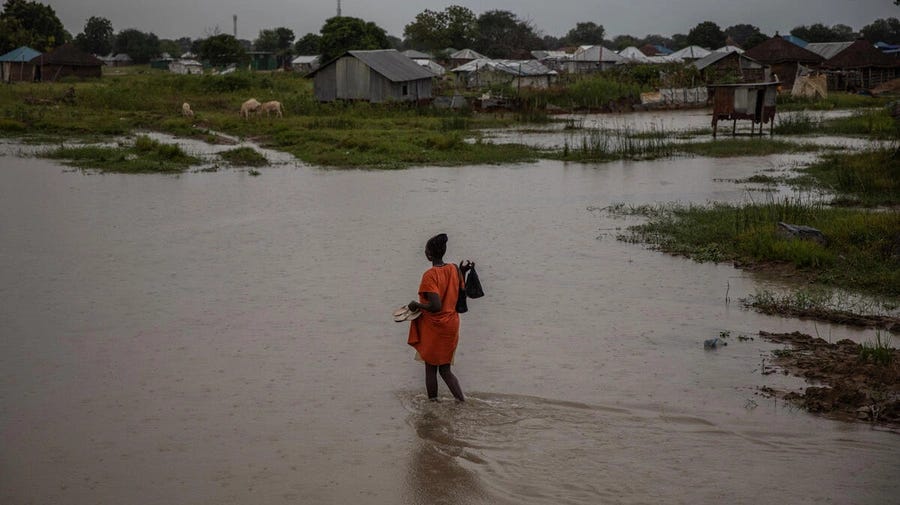
More than two-thirds of refugees who returned home in the first half of 2026 went to countries highly exposed to climate risks. In Syria, where nearly four million displaced people have recently returned, water scarcity and flooding threaten recovery. Across sub-Saharan Africa, one in three refugee settlements could face at least 100 days of dangerous heat annually by 2050.
Anton Leis Garcia, UNHCR’s assistant high commissioner for operations, called for climate financing to reach communities with the greatest needs. The agency said only about 10% of climate finance reaches fragile or conflict affected countries.
Sources: Reuters, France 24
Restacking or sharing this publication means more people can read it. Commenting extends the conversation. Liking shows your appreciation.
On this day …
On this day in 1962, the United Nations General Assembly adopted Resolution 1761, formally condemning South Africa’s apartheid system and calling on member states to impose diplomatic and economic measures against the country.
The resolution urged governments to restrict trade, suspend military cooperation and sever diplomatic relations. It also established a Special Committee to monitor apartheid, marking an important step towards coordinated international opposition to institutionalised racial segregation.
Although comprehensive sanctions would take decades to materialise, the resolution helped establish the international framework that eventually contributed to apartheid’s dismantling in the early 1990s.
The decision demonstrated how sustained international pressure could challenge policies once considered matters of domestic sovereignty and how, within our living memory, the world was able to unite to compel a sovereign nation to ultimately abandon a reprehensible system.