


Hormuz Deal Edges Closer As Stakes Rise (Geopolitics)
Houthi Attacks Target Saudi Red Sea Route (Conflict)
Israel Strikes Test Lebanon Ceasefire (Conflict)
Iran Executions Rise After Protests (Middle East)
Ukraine Missile Gap Exposes Air Defence Strain (Conflict)
Explosive Drone Raises German Hybrid Threat Fears (Europe)
Hasina Vows Return Despite Death Sentence (Asia)
China Drone Curbs Raise Stakes With US (Trade)
Trump Tariff Refunds Reach $100bn (Trade)
Food Price Surge Threatens Global Hunger (Society)
A succinct daily briefing delivered each weekday to help you stay on top of the stories shaping the world.

Iran said it is in the final stage of drafting an agreement with Oman on a proposed Strait of Hormuz shipping route, a potential step toward reopening a waterway central to energy supplies. Iranian Foreign Ministry spokesman Esmail Baghaei said a joint statement would be issued if third parties did not obstruct the process.
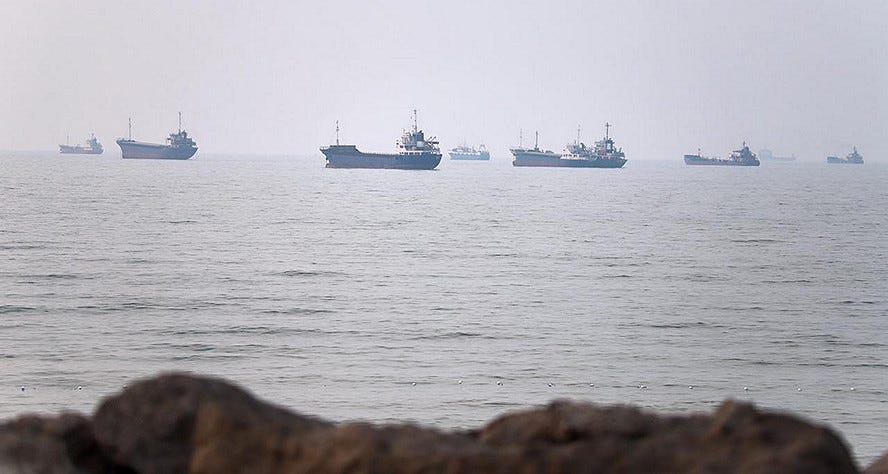
President Donald Trump said a deal could come this week but the possible arrangement still depends on unresolved US-Iran issues. Iran has insisted it will not return Hormuz to an open international waterway, while the US has opposed any arrangement allowing Tehran to charge fees or entrench control.
The dispute has become the focal point of a war now in its sixth month. Shipping disruptions through a route that once carried a fifth of traded oil and natural gas have raised global costs. For the moment fighting is paused and formal talks have not begun.
Sources: Bloomberg, Associated Press

The Houthis said they struck two Saudi oil tankers on Wednesday and have threatened to intensify attacks to close all access routes to Saudi oil shipments. Houthi military spokesman Brigadier General Yahya Saree said the group fired ballistic missiles at a tanker named Wafa near Yanbu and later targeted another tanker called Daisy in the Gulf of Aden.
Saudi authorities did not immediately comment on either claim. The Houthis declared a blockade of Saudi shipping last month and said the attacks were part of a maritime blockade and a “blockade for blockade” strategy.
The escalation extends a regional shipping crisis already widened by the effective closure of the Strait of Hormuz. Saudi Arabia had rerouted oil through Red Sea ports, but ship traffic through Bab al-Mandab has fallen by nearly half since the Houthis threatened to block Saudi exports, raising risks around routes toward the Suez Canal.
Sources: New York Times, Anadolu Agency

Israel struck southern Lebanon on Wednesday after issuing its first evacuation warning there in weeks, killing one person and injuring others, Lebanon’s health ministry said. The Israeli military said it was responding to a ceasefire violation by Hezbollah and had begun precise strikes about 30 minutes after ordering residents of Mansouri to evacuate.
The strikes hit Tebnine, where a cemetery was struck, and Mansouri, where families fled. Israeli and Lebanese officials were attending US-sponsored talks in Rome aimed at maintaining the ceasefire while Lebanon seeks Israel’s withdrawal and Israel wants Hezbollah disarmed.
The incident tests a fragile June ceasefire built around a Israeli withdrawal from occupied southern Lebanon and Hezbollah’s disarmament. Hezbollah has rejected that framework, and Israeli troops remain in a security zone while the Lebanese army has taken control of limited pilot zones.
Sources: The Guardian, BBC

Volker Türk, UN High Commissioner for Human Rights, said he was alarmed by a rise in executions and death sentences in Iran since March, warning that capital punishment continued to be used to instil fear and suppress dissent. He said at least 56 people had been executed on “national security-related” charges since 19 March, including 27 cases linked to protests at the start of the year.
More than 100 others are at risk of execution on similar charges, while drug-related executions are continuing at an alarming rate. Türk urged Iran to halt all executions and move towards abolition, saying the punishment had no place in the world.
He also cited persistent lack of fair trial and due process guarantees, including confessions allegedly obtained under torture, public executions and reports that 12 defendants were sentenced to death after a single three-hour closed-door hearing.
Sources: BBC, UN

Ukraine failed to shoot down a single Russian missile during Wednesday’s overnight attack on Kyiv and the surrounding region after Russia launched 24 ballistic missiles and four hypersonic cruise missiles alongside 115 drones. President Volodymyr Zelenskyy said 17 people were killed and linked the casualties to delays in supplying anti-ballistic systems.
Zelenskyy said air defence missile supplies from partners had fallen to a third of their 2025 level, and warned Moscow was seeking to boost ballistic missile production before winter. He urged allies to make political decisions on supplies and faster production.
Ukraine relies on US-designed Patriot systems as its only means to intercept Russian ballistic missiles. The shortage has sharpened after the US-Israel war on Iran consumed large numbers of Patriot and other interceptors. NATO Secretary General Mark Rutte said the alliance was working to get Ukraine air defences it urgently needs.
Sources: Washington Post, The Guardian
Restacking this post will help it reach more readers interested in the world.

Germany has opened a counterterrorism investigation after an explosive-laden drone was found in a restricted cargo area near the southern runway at Leipzig/Halle airport, prompting flight diversions and the closure of part of one of Europe’s biggest cargo hubs.
Interior Minister Alexander Dobrindt said the incident marked “a new level of danger” and did not appear to be amateur work. He said investigators were treating it as a professional hybrid threat scenario and examining whether foreign powers may have been involved.
A DHL cargo plane diverted from the airport struck an unidentified object while climbing away and later landed safely in Hanover with minor damage. The drone was found near a Ukrainian Antonov cargo plane at an airport used by DHL and Antonov Airlines.
German airports remain on high alert after unauthorised drone overflights at military facilities, energy terminals, seaports and logistics companies.
Sources: The Guardian, ABC News

Former Bangladeshi Prime Minister Sheikh Hasina said she plans to return from exile in India in December despite facing a death sentence in Bangladesh. In an audio address in New Delhi marking the second anniversary of the uprising that toppled her government, Hasina said it was her duty to return voluntarily.
Hasina fled to India in 2024 after student-led protests forced her from power. In 2025, a Bangladeshi court sentenced her to death in absentia on charges of crimes against humanity for ordering a crackdown on the uprising, which the United Nations said killed nearly 1,400 people. Hasina denies any wrongdoing.

Bangladesh said it was outraged by her media engagement in New Delhi and called it an affront to sovereignty. India has so far declined repeated Bangladeshi requests to extradite her, while Hasina called for the Awami League (her political party) ban to be lifted.
Sources: NBC News, CNN

China has tightened export controls on drones, key components and related technologies bound for the US after Washington widened technology and trade curbs on Chinese firms. The Commerce Ministry said shipments would face strict case-by-case scrutiny and cited national security and non-proliferation.
Beijing also added seven US entities to a countermeasures list, including six accused of assisting US sanctions linked to Xinjiang and Compliance Testing LLC over Federal Communications Commission measures. It also opened a national security investigation into imported printing and copying equipment with foreign-made software.
The measures raise tensions before President Xi Jinping’s scheduled meeting with President Donald Trump in the US next month. China called its response generally restrained and urged Washington to revoke its measures, while analysts said the contest is shifting from tariffs toward control over critical technologies, supply chains and dual-use goods.
Sources: South China Morning Post
President Donald Trump’s administration has paid about $100bn in tariff refunds after the US Supreme Court struck down its use of emergency powers to impose duties on trading partners. US customs officials told the US Court of International Trade that the sum represented about 60 per cent of the $165bn collected from the Liberation Day” tariffs.
The lower court ordered US Customs and Border Protection to process refunds after the February ruling curtailed Trump’s use of executive authority. CBP said more than $128bn had been accepted for processing, signalling more refunds are imminent.
Lawmakers said refunds are going to companies rather than consumers or small businesses that absorbed higher costs. The administration is trying to rebuild the tariff wall with new duties of 10 to 12.5 per cent on more than 60 economies but those measures already face at least three legal challenges.
Sources: FT, Al Jazeera

The world is nearing another bout of food inflation as wars in Iran and Ukraine, higher energy costs and El Nino combine with weaker crop outlooks, according to Maximo Torero, chief economist of the United Nations Food and Agriculture Organization.
Torero said commodity prices were likely to rise further, with food prices increasing by year-end and more next year because final food prices usually lag commodity moves by three to six months. He said Hormuz disruptions affect agricultural inputs through oil used for pumping, packaging, processing and transport, and natural gas used for fertilisers.
The World Food Programme warned that El Nino could push about 50 million people into acute hunger before the end of next year, adding to 225 million people in 45 countries already facing acute food insecurity. It said Central and South America, the Caribbean and southern Africa were likely to be worst affected.
Sources: Reuters, The Guardian
Restacking or sharing this publication means more people can read it. Commenting extends the conversation. Liking shows your appreciation.
On this day …
On 6 August 1945, the United States dropped an atomic bomb on Hiroshima, becoming the first nation to use a nuclear weapon in war.
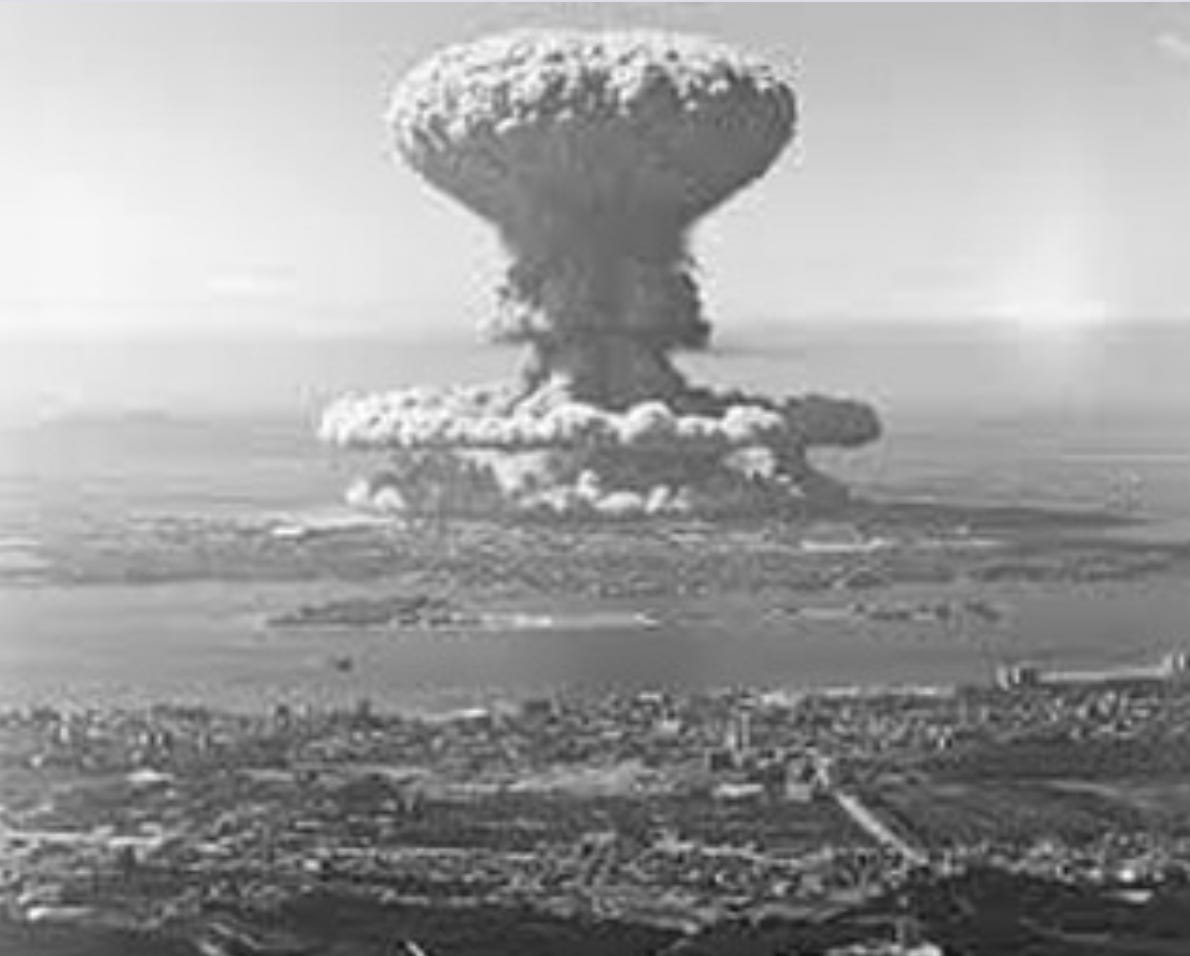
The attack destroyed much of the city and introduced an entirely new scale of destructive capability.
Hiroshima fundamentally changed military strategy, international diplomacy and the politics of deterrence, ushering in the nuclear age that continues to shape global security today.
More than eighty years later, debates over nuclear weapons remain central to international affairs and strategic stability.
Has the existence of nuclear weapons prevented major war, or simply changed its risks?