


Trump Acknowledges Iran War’s Role In Election Rout (Politics)
Hegseth In The Crosshairs After Republican Election Defeat (US)
Musk’s Record Election Spending Fails To Secure GOP Wins (US)
NATO Plans Deep Strikes Into Russia To Deter Invasion (Europe)
Iran Threatens European Bases As US Tensions Persist (Conflict)
Indonesia Deploys Troops Amid Presidential Wiretap Scandal (Asia)
Cyberattacks Reach French Blood Storage Facilities (Europe)
Hungary Opens Communist Secret Police Files To Public (Europe)
El Salvador Sends Thousands Of Troops Into Haiti (Caribbean)
Canada And China Extend Agricultural Tariff Truce (Trade)
A succinct daily briefing delivered each weekday to help you stay on top of the stories shaping the world.

President Donald Trump acknowledged that the war with Iran contributed to Republicans’ sweeping midterm election defeat but nonetheless defended his decision to launch the conflict. Democrats secured majorities in both chambers of Congress, with Trump conceding that higher petrol prices had damaged his party’s electoral prospects. Vice President JD Vance was more direct, blaming the war for the losses and calling for renewed attention to living costs.
Trump nevertheless insisted he would make the same decision again, citing Iran’s nuclear ambitions. Making his first public appearance since the election, he spent much of a White House ballroom construction tour discussing marble, steel beams and building plans rather than the political fallout.

Republicans have begun assigning blame for the defeat, while Democrats prepare to assume control of Congress in January. Their majorities will allow them to block legislation, Cabinet appointments and judicial nominations during Trump’s remaining two years in office.
Sources: Washington Post, New York Times

Defence Secretary Pete Hegseth faces growing scrutiny following Republicans’ midterm defeat, as criticism of the Iran war raises questions about accountability at the Pentagon. Republican congressman Thomas Massie has filed eight articles of impeachment against Hegseth and plans to force a House vote. Vice President JD Vance blamed the war for the party’s loss of congressional control.
President Donald Trump has defended Hegseth, saying he is doing a very good job. However, officials have also raised the possibility that General Dan Caine, chairman of the Joint Chiefs of Staff, or Admiral Brad Cooper, who oversees the Iran campaign, could be dismissed. Senior Pentagon officials are reportedly uncertain about possible personnel changes.
Democrats, who secured majorities in both chambers, are preparing investigations into the war and Hegseth’s management of the military. The election also complicates efforts to pass a proposed $1.5 trillion defence budget before the new Congress takes office.
Sources: Washington Post, The Guardian

Elon Musk spent at least $474 million backing Republican candidates in the US midterm elections, making him the largest political donor in an election cycle apart from self-funded candidates. Despite the spending, Democrats secured sweeping victories, including a Texas Senate seat. Around $224 million of Musk’s contributions went towards races in Texas.
The result has raised questions about the billionaire’s business interests. Shares in Tesla and SpaceX fell more than 3% on Wednesday, while some Democratic lawmakers signalled plans to investigate Musk and his companies. Both businesses are exploring a merger that could face additional scrutiny under Democratic congressional control.
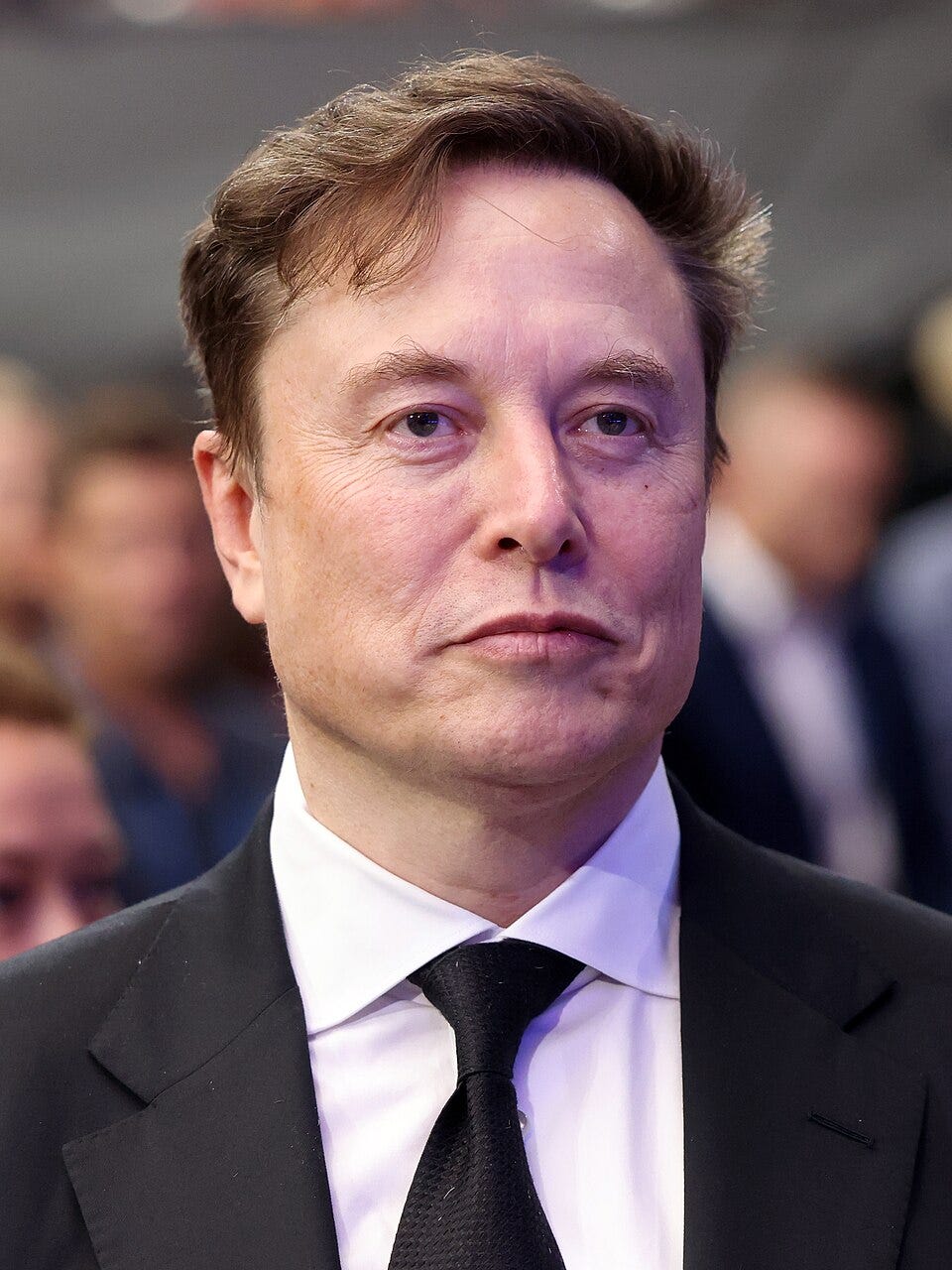
Newly elected Texas Governor Gina Hinojosa also campaigned to restrict data centre development, potentially affecting Musk’s operations in the state. Meanwhile, Democratic Senator Ed Markey pledged to examine Tesla’s self-driving technology, adding to the regulatory uncertainty facing Musk’s businesses.
Sources: BBC, New York Times

NATO is developing defence plans that would allow strikes deep inside Russia if Moscow attacked alliance territory. Under an approach outlined by NATO’s supreme commander, US General Alexus Grynkewich, allied forces would first halt an invasion before targeting the military bases, supply networks and industrial facilities sustaining it. The strategy reflects lessons from Ukraine, where defensive measures alone have proved insufficient.
Precision missiles and drones are central to the plans, with European countries expanding existing arsenals and developing cheaper long-range weapons. At least 48 cruise missile projects involving 20 manufacturers have been announced across Europe, although many remain years from production.
However, questions remain about whether European political leaders would authorise such operations. Former German defence official Nico Lange warned of a gap between military planning and political perceptions of defence. NATO commanders regard deep-strike capability as essential to credible deterrence but acquiring sufficient weapons and securing political approval remain significant challenges.
Sources: Wall Street Journal, Kyiv Post

Iranian lawmakers have threatened missile strikes against European countries if US forces use bases there to attack Iran. Ahmad Bakhshayesh Ardestani, a member of parliament’s National Security Committee, specifically named Italy and Germany, saying any facilities used against Iran would become targets. State-run media warned that renewed conflict could extend to the heart of Europe.
Iran’s Islamic Revolutionary Guard Corps separately pledged a response without geographical limits to future threats. Supreme Leader Mojtaba Khamenei warned that renewed US aggression would trigger retaliation on a much greater scale, while calling for stronger deterrence. The statements came during commemorations of the 1979 seizure of the US embassy in Tehran.
The warnings coincided with diplomatic efforts involving Qatar, Russia and China to avert further American strikes. Iranian security official Mohsen Rezaei said Washington had not adequately addressed Tehran’s demands and insisted that all seven conditions must be met before the Strait of Hormuz reopened.
Sources: Euronews, Jerusalem Post
Restacking this post will help it reach more readers interested in the world.

Indonesia is deploying nearly 21,000 military personnel to Jakarta as authorities investigate an alleged illegal surveillance operation targeting President Prabowo Subianto. Three senior police generals have been detained, including former national police chief Listyo Sigit Prabowo, who was appointed presidential chief of staff last month and dismissed on Wednesday. Officials have not confirmed any connection between the arrests and troop deployments.
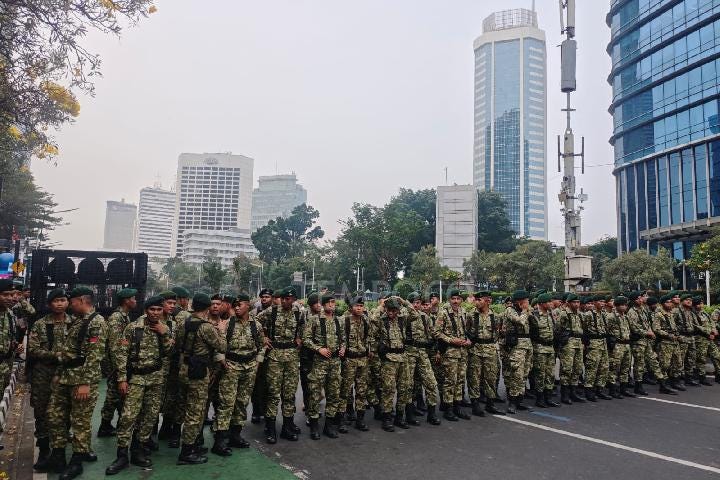
State Secretary Prasetyo Hadi said the alleged surveillance could constitute conduct leading towards treason. Investigators are examining whether the operation, which allegedly targeted politicians, journalists and business executives, was intended to undermine the government. The suspects have not publicly responded to the accusations.
The scandal comes amid growing political and economic difficulties for Prabowo. Analysts have highlighted tensions between his administration and former President Joko Widodo, a longstanding ally of Listyo. Indonesian equities have fallen approximately 40% this year, while investor confidence has weakened.
Sources: Associated Press, FT

Cyberattacks targeting refrigeration systems across Europe have reached French blood storage facilities, raising concerns about vulnerabilities in essential infrastructure. The French Blood Establishment said hackers altered temperatures in cold rooms storing donated blood but staff intervened before supplies were damaged. France’s health ministry confirmed that no blood products were lost and no health impact was identified.

The incident followed attacks on supermarkets across eight European countries, where manipulated refrigeration controls caused substantial food losses. Investigators found that affected systems were poorly protected, while cybersecurity researchers identified evidence of coordinated targeting of European facilities. Three security companies have deployed digital traps to investigate the attackers’ methods.
Responsibility remains unclear. Researchers are examining possible involvement by Russian or Iranian groups, although no technical evidence has established attribution. French authorities are investigating the incidents, while Britain’s National Cyber Security Centre has urged retailers to update vulnerable refrigeration software.
Sources: BBC, The Independent

Hungary has released thousands of communist-era secret police records, allowing citizens to search an online database identifying people linked to the former regime’s informant network. Prime Minister Péter Magyar said approximately 60,000 names had been published, fulfilling a campaign promise decades after the country’s transition to democracy in 1989.
The records document surveillance conducted during four decades of communist rule, when informants monitored colleagues, friends and relatives. However, inclusion in the files does not necessarily establish that someone was an informant, as some individuals were merely subjects of investigation. Archives estimate that around 150,000 people were recruited, although records for roughly two-thirds no longer exist.
Magyar urged families to approach potentially painful revelations with dignity. Culture Minister Zoltán Tarr said publication could encourage reconciliation. Former Prime Minister Viktor Orbán denied having cooperated with the secret police. Further documents detailing recruitment practices are scheduled for release by February 2027.
Sources: Politico Europe, DW

El Salvador has deployed more than 2,500 troops to Haiti following an October ambush in which four Salvadoran military technicians disappeared. President Nayib Bukele’s forces are patrolling Port-au-Prince, where gangs control roughly 90% of the capital. Haitian police have recovered the technicians’ burned vehicle but the men remain missing.
Most Salvadoran troops are operating under their own commanders through an agreement with Haiti’s government, rather than within the UN-backed Gang Suppression Force. Haitian Prime Minister Alix Didier Fils-Aime said the foreign forces were supporting, not replacing, the state. UN spokesperson Stephane Dujarric called for security operations to respect international law and human rights.
The intervention comes amid severe humanitarian conditions. More than 1.5 million Haitians have been displaced, while gang violence has disrupted food supplies and access to healthcare. Aid workers warn that intensified fighting could cause further civilian casualties and displacement.
Sources: Wall Street Journal, Al Jazeera

Canada and China have extended tariff relief on Canadian agricultural and seafood exports until the end of 2028, prolonging an agreement reached during Prime Minister Mark Carney’s January visit to Beijing. The arrangement suspends China’s additional tariffs on Canadian canola meal, peas, lobster and crab, providing producers with continued access to a major export market.

Canadian International Trade Minister Maninder Sidhu said the extension supports Ottawa’s objective of increasing exports to China by 50% by 2030. Canada will also maintain tariff waivers for certain Chinese steel and aluminium products unavailable domestically. Earlier concessions included reduced tariffs on a quota of Chinese electric vehicles.
The agreement reflects improving bilateral relations after years of diplomatic strain, as both countries face US trade tariffs. Carney is scheduled to visit China again for the APEC summit in Shenzhen later this month, while Canada continues exploring opportunities to expand trade with Beijing.
Sources: Bloomberg, CBC
Restacking or sharing this publication means more people can read it. Commenting extends the conversation. Liking shows your appreciation.
On this day …
On this day in 1605, Guy Fawkes was discovered guarding barrels of gunpowder beneath the English Parliament. He was part of a Catholic conspiracy led by Robert Catesby to assassinate King James I and destroy Parliament during its State Opening.
The plot emerged from religious tensions and the persecution of Catholics in Protestant England. Its failure led to executions, harsher restrictions on Catholics and an annual commemoration that eventually became Bonfire Night. More than four centuries later, the event remains embedded in British cultural and political history.
The Gunpowder Plot illustrates how religious divisions and political exclusion can make extremists feel the need to act in order to attempt to overturn established authority through violence.