


Strait Clashes Test Fragile Gulf Ceasefire (Conflict)
UAE Condemns Iranian Attacks on Fujairah (Conflict)
IMF Warns War Is Hitting Global Economy (Economy)
Iran Executes Three Protest Prisoners (Middle East)
Trump Troop Cut Tests NATO Reliance (Geopolitics)
Modi’s BJP Wins West Bengal For First Time (Politics)
Alberta Separatists File Referendum Petition (Politics)
Russia And Ukraine Trade Ceasefire Claims (Conflict)
Drone Strikes Break Calm In Khartoum (Conflict)
China Fireworks Factory Blast Kills 21 (China)
A succinct daily briefing delivered each weekday to help you stay on top of the stories shaping the world.

US and Iranian forces exchanged fire in the Strait of Hormuz, raising doubts over a four-week ceasefire and exposing renewed risks to global energy flows. Admiral Brad Cooper said US warships escorted two US-flagged vessels through the strait while intercepting drones, missiles and small boats. President Donald Trump said US forces had destroyed several Iranian craft, while separate incidents saw tankers struck and a UAE oil port set ablaze.
The flare-up comes as Washington attempts to reopen the strait through a naval effort dubbed Project Freedom, though major shipping firms remain reluctant to resume transit. Iran has signalled control over expanded maritime zones and warned against escalation, even as Foreign Minister Abbas Araghchi said talks were progressing but risked being derailed.
Analysts say the confrontation underscores a fragile truce and points toward prolonged, intermittent conflict keeping energy markets volatile.
Sources: Bloomberg, Channel News Asia

The United Arab Emirates accused Iran of launching missiles and drones at civilian sites, including the Fujairah Petroleum Industries Zone, where officials said a drone sparked a large fire and wounded three Indian citizens. The attacks marked the first on the UAE since a Pakistani-mediated ceasefire between Washington and Tehran began on April 8.
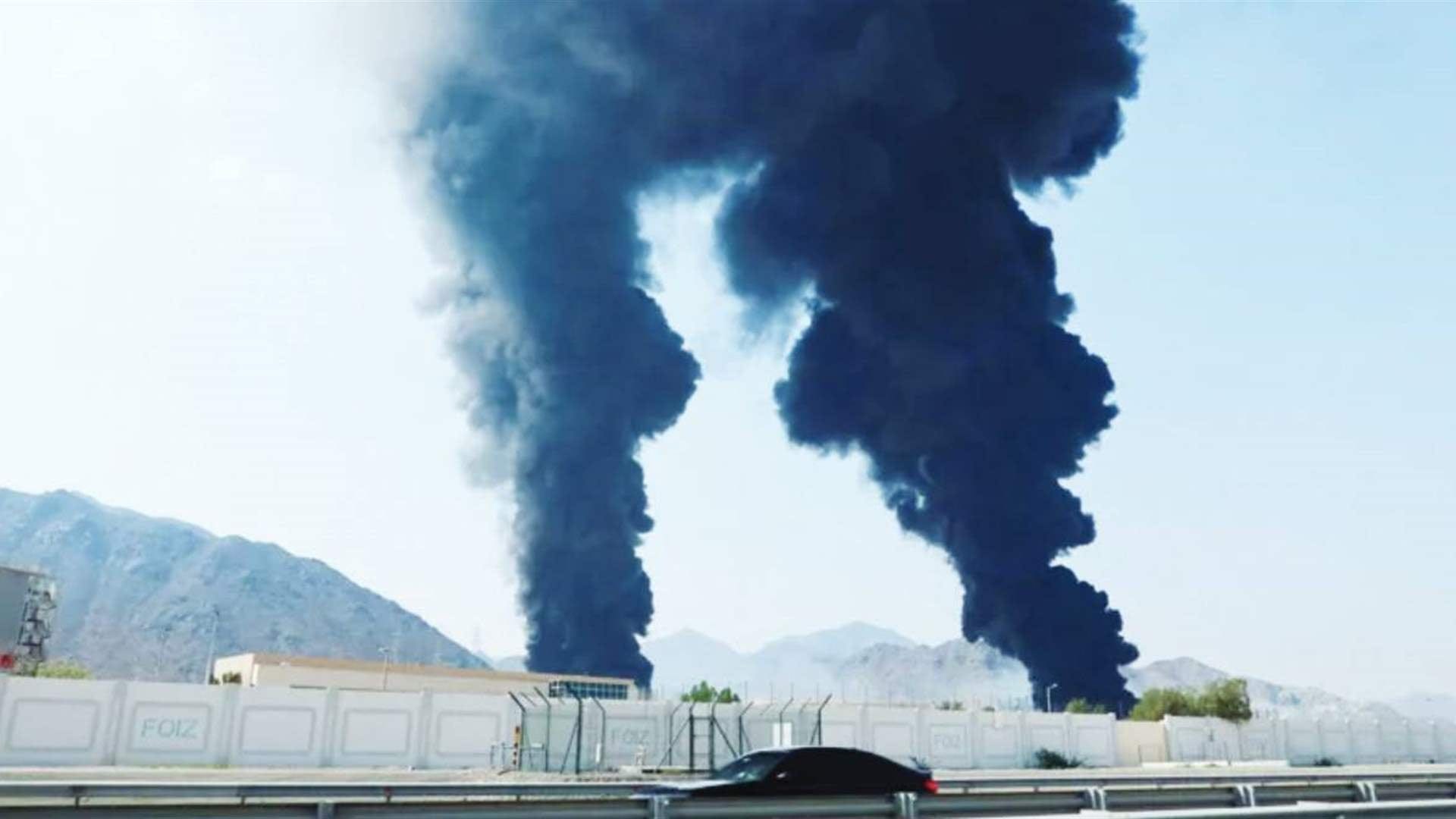
The strikes followed President Donald Trump’s effort to escort stranded tankers through the Strait of Hormuz, which has been largely closed since the US-Israel war on Iran began on February 28. Iran denied planning to target the UAE, while its Revolutionary Guards Navy issued a map claiming expanded control near the strait, including areas around UAE ports.
The episode drew regional and international condemnation, disrupted flights and exposed how Gulf energy infrastructure remains vulnerable even during a nominal truce.
Sources: Reuters, Al Jazeera

IMF Managing Director Kristalina Georgieva warned that the global economy faces a much worse outcome if the Middle East war drags into 2027 and oil prices reach about $125 a barrel. She said the IMF’s short-conflict reference scenario, which projected 3.1% growth and 4.4% inflation, was now moving further out of reach.
Georgieva said current conditions had already put the IMF’s adverse scenario into effect, with oil near or above $100 a barrel and inflationary pressures rising. That scenario forecasts global growth slowing to 2.5% in 2026 and headline inflation reaching 5.4%.
She also warned that prolonged conflict could de-anchor inflation expectations. Mike Wirth said physical oil shortages would begin appearing because the Strait of Hormuz remains closed, while Georgieva said fertiliser costs were already 30% to 40% higher, adding pressure to food prices.
Sources: Reuters, Xinhua

Iran has executed Mehdi Rassouli, Mohammad Reza Miri and Ebrahim Dolatabadi over unrest in Mashhad during January’s anti-government protests, according to the judiciary’s Mizan news agency. Human rights organisations considered all three men political prisoners.
Mizan said Rassouli and Miri were responsible for the death of a member of the security forces, while Dolatabadi was described as one of the instigators of unrest in Mashhad. The protests began in December over living costs and economic grievances before intensifying into nationwide rallies against the Islamic regime.
Rights groups say executions have increased since the war with the US and Israel began. Iran Human Rights said the three men were sentenced after unfair trials, while Amnesty International said authorities were escalating arbitrary executions of political dissidents and protesters to instil fear. Rights groups say Iran executes more people than any country except China.
Sources: CBS News, The Guardian

Trump’s decision to remove 5,000 US troops from Germany has sharpened European concern over the reliability of NATO’s American pillar. The troop cut was not unexpected, but officials were more alarmed by the limited consultation and by US links to Trump’s anger over Friedrich Merz’s criticism of the Iran war.
The move also included dropping a planned Tomahawk missile deployment to Germany, which Berlin viewed as more concerning. European officials are trying to keep Washington engaged before NATO’s July summit in Ankara, while preparing to act with the Americans if possible and without them if necessary.
Mark Rutte said European countries had “heard the message” from Washington and were providing logistical support near the Gulf. European leaders also said the decision showed Europe must strengthen its own defence capacity and role inside NATO.
Sources: Reuters, Al Monitor
Restacking or sharing this publication means more people can read it. Commenting extends the conversation. Liking shows your appreciation.

Modi’s BJP has won West Bengal for the first time, taking control of a politically significant eastern state that had long been an opposition stronghold. Partial results showed the party winning at least 124 seats and leading in 83 others, while another tally put it on course for more than 205 seats in the 294-member assembly.
The defeat removes Mamata Banerjee’s Trinamool Congress from power after 15 years and weakens one of Modi’s most prominent critics. Modi said “a new chapter” had been added to Bengal’s destiny, while Rahul Verma said the result reflected anti-incumbency, a stronger BJP campaign and consolidation of the Hindu vote.
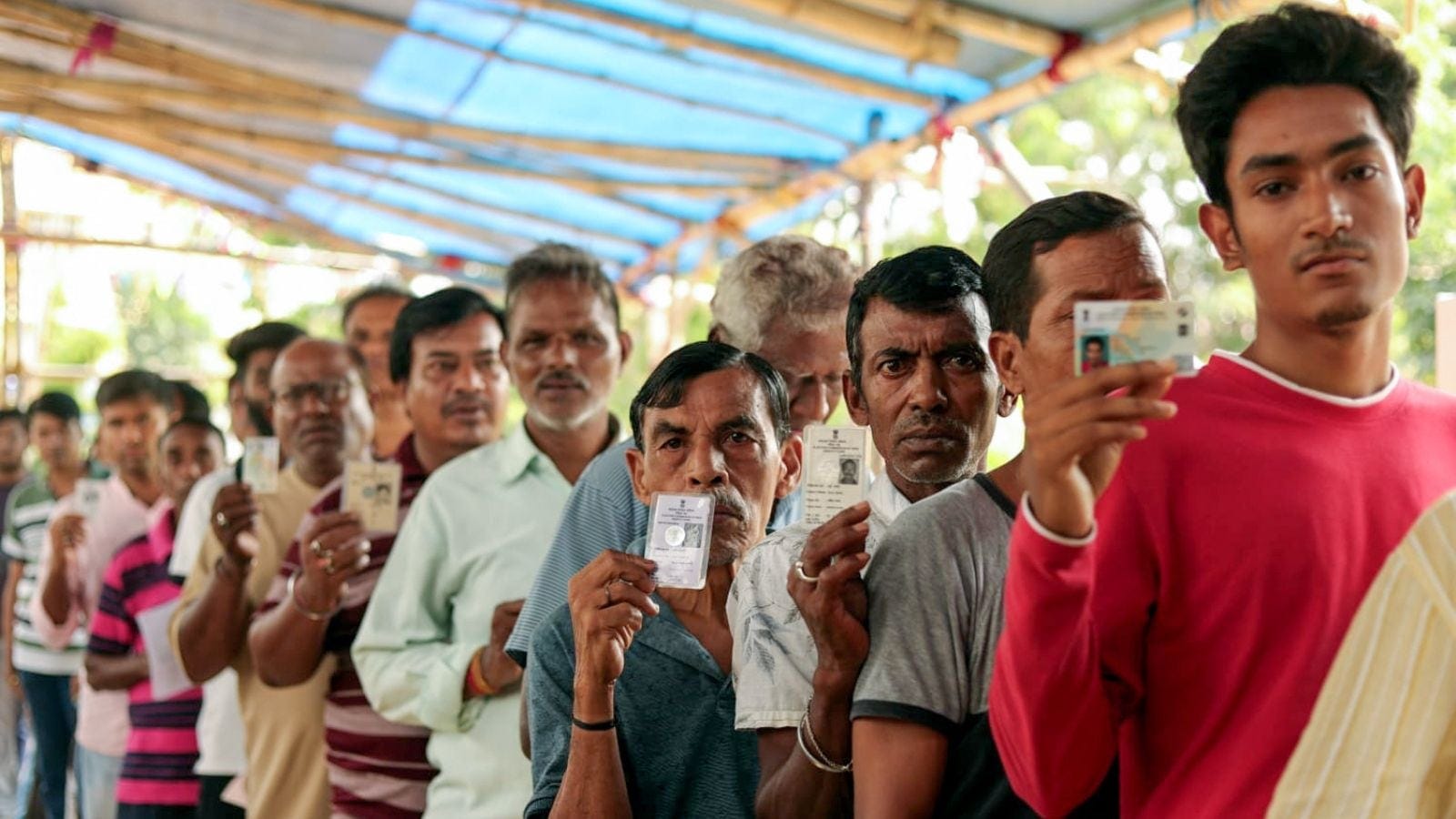
The result strengthens the BJP’s national position after its 2024 parliamentary setback, with the party also retaining Assam. Yet analysts noted southern India remains harder for the BJP to penetrate after opposition victories in Kerala and Tamil Nadu.
Sources: Washington Post, The Guardian

Alberta separatists have formally filed a petition seeking a referendum on whether the province should leave Canada, after organisers said they collected more than 300,000 signatures. The threshold for a citizen-led referendum campaign was 178,000 signatures, or 10% of eligible voters.
The process remains legally uncertain because an Alberta court has paused signature verification while it considers a challenge from First Nations, who argue separation would infringe treaty rights. First Nations lawyer Kevin Hille said an international border would affect their treaty rights and way of life, while a previous court ruling found an independence referendum unlawful under constitutional protections for First Nations.
If signatures are verified, Albertans could vote as early as October 19. Polls suggest most Albertans oppose separation, with about 25% in favour, while a pro-unity petition has also gathered hundreds of thousands of signatures.
Sources: CBC, BBC

Russia and Ukraine have announced separate unilateral ceasefires ahead of Moscow’s May 9 Victory Day parade, underscoring how even pauses in the war remain contested. Moscow said its truce would run from May 8 to 9, while Volodymyr Zelenskyy said Ukraine would begin its own ceasefire at midnight on May 5-6 after receiving no official Russian proposal on how a cessation should work.
Zelenskyy said human life was more valuable than any anniversary celebration and urged Russian leaders to take real steps to end the war. Russia’s defence ministry warned that any Ukrainian attempt to disrupt the parade would trigger a massive missile strike on central Kyiv.
The dispute comes after both sides accused each other of breaching an Orthodox Easter ceasefire, and as Russia prepares a parade without military equipment, which Zelenskyy said reflected fear of Ukrainian drones.
Sources: Times of India, Al Jazeera

Drone attacks have shattered months of relative calm in Khartoum, with Sudan’s armed forces blaming the United Arab Emirates and Ethiopia for a strike on the capital’s airport. The allegations could not be independently verified and neither country immediately commented.
Witnesses said Monday’s attacks targeted Khartoum International Airport, which had received its first international flight in three years last week after the army retook the city in March 2025. The information ministry said no one was wounded and no damage was caused at the airport, which would resume operations after safety checks.
The strikes follow attacks since Friday on military targets and civilian areas, while violence has also escalated in Omdurman, Blue Nile and Kordofan. Drone warfare has become the main tool of a conflict that the UN calls the world’s worst humanitarian disaster, with millions forced to flee.
Sources: Reuters, Dabanga Sudan

A fireworks factory explosion in Liuyang, Hunan Province, has killed at least 21 people and injured 61, in one of China’s deadliest industrial accidents in recent years. The blast happened on Monday afternoon at the Huasheng Fireworks plant, prompting rescuers to evacuate everyone within a 3km radius.
Nearly 500 personnel were deployed for search and rescue operations, with robots used to help locate people trapped inside the building. Officials said two gunpowder warehouses within the factory area remained high-risk, while nearby homes had windows shattered by the force of the explosion.
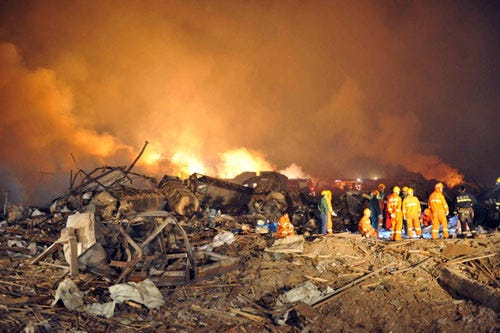
Xi Jinping urged all-out efforts to search for people still unaccounted for, save the injured and investigate the accident. Police have taken control measures against the person in charge of the fireworks company, as authorities seek to prevent secondary accidents during rescue work.
Sources:New York Times, BBC
Restacking this post will help it reach more readers interested in the world
On this day …
On this day in 1821, Napoleon Bonaparte died in exile on Saint Helena after his defeat at Battle of Waterloo ended his final return to power.
His campaigns had redrawn Europe’s political map and spread administrative reforms rooted in the Napoleonic Code across much of the continent.
Even after his fall, the legal and institutional changes associated with his rule influenced governance in several European states. His legacy remained contested, shaping debates about nationalism, leadership, and state power throughout the nineteenth century and beyond.
Did Napoleon’s lasting influence lie more in his military campaigns or in the political and legal systems that outlived him across Europe?
🌞🌞🌞Good Morning