


Kurdish Militias Consider Offensive As Iran War Widens
US Submarine Sinks Iranian Warship In Indian Ocean
NATO Intercepts Iranian Missile Headed for Turkey
Russian LNG Tanker Sinks After Blasts Off Libya
Spain Rejects White House Claim of Iran War Support
Senate Blocks Bid To Limit Trump’s Iran War Powers
Putin Floats Cutting Europe Gas Sales Amid Price Spike
China Moves to Halt Fuel Exports as Gulf Supply Tightens
China Sets Lowest Growth Target in Decades
Blackout Leaves Millions Without Power In Cuba

Kurdish Iranian militant factions are preparing for a possible ground offensive against Iran in the country’s northwestern region, as the conflict involving the United States and Israel expands, according to officials and sources familiar with the planning.
Five dissident Kurdish Iranian groups based in Iraq announced the formation of the Coalition of Political Forces of Iranian Kurdistan shortly before the war began. The factions have thousands of fighters along the Iran-Iraq border and have sent hundreds of members across the frontier in preparation for a possible attack on Iranian regime forces.
Iran has responded by launching operations targeting Kurdish groups in Iraq’s semi-autonomous Kurdish region, including reported strikes near Sulaimaniyah. The developments came as Iranian Kurdish armed groups were reported to have consulted with the United States about whether and how to attack Iranian security forces inside the country.
Sources: Axios, Al Jazeera

A US submarine sank an Iranian warship in the Indian Ocean using a torpedo, US Defense Secretary Pete Hegseth said, in an incident that left dozens of sailors dead and widened the conflict involving Iran, Israel and the United States.
Sri Lankan authorities identified the vessel as the frigate IRIS Dena, which went down about 40km off the country’s southern coastline after issuing a distress call. Rescuers recovered 87 bodies and saved 32 survivors, while about 60 people remained unaccounted for from an estimated crew of around 180. Survivors were taken to hospital in the port city of Galle.
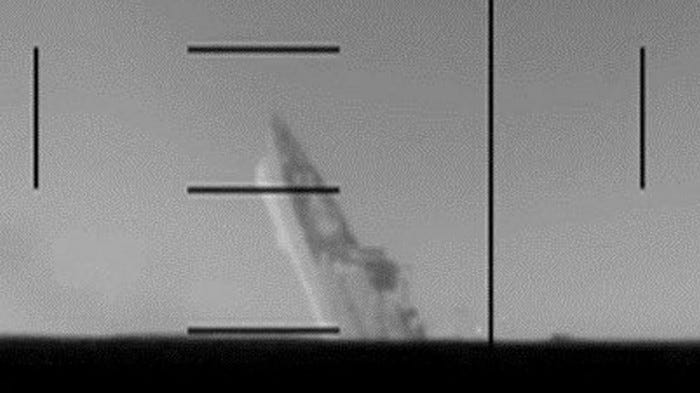
The warship had recently participated in a naval exercise in the Bay of Bengal organised by India. The attack occurred hundreds of miles from the Gulf, where US and Israeli forces are striking Iran while Tehran carries out missile and drone retaliation across the region.
Sources: BBC, Reuters

NATO air defence systems destroyed a ballistic missile fired from Iran and heading towards Turkish airspace, in an interception carried out by alliance assets stationed in the eastern Mediterranean, Turkey’s defence ministry said.
The munition travelled through Iraqi and Syrian airspace before it was engaged. Debris from the interceptor fell around the Dortyol area of Hatay province, and officials said there were no casualties. President Recep Tayyip Erdogan said Turkey was taking all necessary measures in consultation with NATO allies and was issuing warnings to prevent similar incidents.
Turkey summoned Iran’s ambassador in Ankara and Foreign Minister Hakan Fidan called his Iranian counterpart Abbas Araghchi to protest and to warn against steps that could widen the conflict. US Defense Secretary Pete Hegseth said there was no sense the incident would trigger NATO’s Article 5.
Sources: Bloomberg, Al Jazeera

A Russian-flagged tanker carrying liquefied natural gas exploded, caught fire and sank in the Mediterranean between Libya and Malta, after “sudden explosions” were reported off the Libyan coast.
Libyan officials said the Arctic Metagaz went down on Tuesday about 240km north of Sirte. It was carrying 61,000 tons of LNG. All 30 crew members were rescued. Maltese authorities said they were found safe in a lifeboat during a rescue operation.
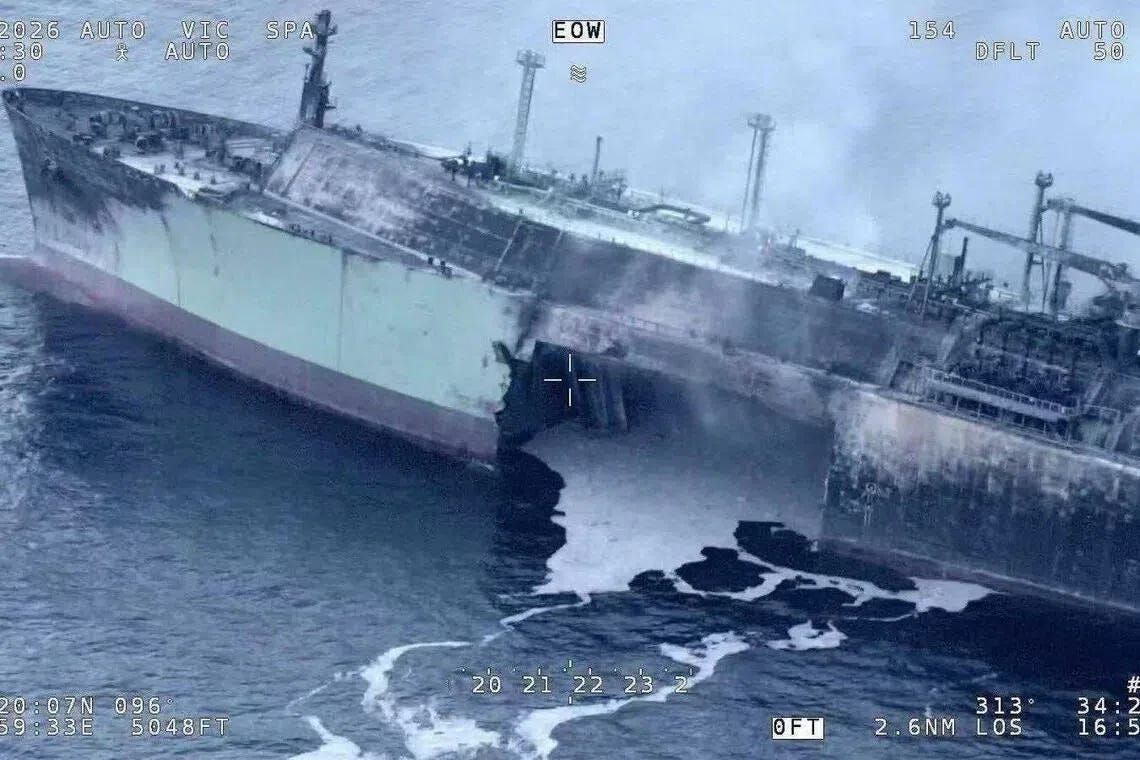
Russia accused Ukraine of targeting the tanker with uncrewed sea drones launched from the Libyan coast, though it provided no evidence. Ukraine’s security service did not comment and Libyan officials said the cause was unclear. The vessel had sailed from Murmansk and was apparently heading for Port Said. Egypt said it was not en route to any Egyptian port.
Sources: Associated Press, BBC

Spain rejected a White House claim that it had agreed to cooperate militarily with the United States in the war with Iran, after Washington suggested Madrid had shifted on the use of its bases.
Press secretary Karoline Leavitt told reporters Spain had heard President Donald Trump’s message and had agreed to cooperate. Foreign Minister Jose Manuel Albares said he denied the claim “categorically” and that Spain’s position on the attack on Iran and the use of its bases had not changed.
Trump had threatened to cut off trade with Spain after it refused to allow its military bases to be used for strikes. Prime Minister Pedro Sanchez said Spain continued to reject war and violations of international law, while Albares said any operation must be within the framework of the United Nations and that Spain could not be singled out for individual economic sanctions as an EU member.
Sources: Al Jazeera, Politico Europe

The Senate blocked a resolution that would have required President Donald Trump to obtain congressional authorisation to continue offensive hostilities against Iran, rejecting a Democratic-led bid to force a vote under expedited procedures.
The measure failed 53-47, with Senator Rand Paul the only Republican to support it and Senator John Fetterman the only Democrat to oppose it. Supporters said Congress must reassert its constitutional role on matters of war, while opponents argued limits would constrain the president mid-conflict.
The vote came four days after joint US-Israeli strikes began across Iran, as the administration offered varying explanations for the campaign and lawmakers faced pressure amid public opposition. The conflict had already resulted in the deaths of at least six American service members. A similar measure was expected to face a vote in the House on Thursday.
Sources: NBC News, New York Times

President Vladimir Putin said Russia would consider ending most sales of natural gas to Europe and redirecting supplies to other markets, as European gas prices spiked to a three-year high amid the widening conflict in the Middle East.
He linked the possibility to European Union plans to phase out imports of Russian pipeline gas and liquefied natural gas by late 2027, and to ban new short-term Russian LNG contracts from late April 2026. Putin said he would instruct the government to assess the shift with companies, arguing that premium buyers had emerged willing to pay higher prices.
Russian flows to Europe had dropped since the 2022 invasion of Ukraine, but Russia still supplied pipeline gas to a few markets including Serbia, Hungary and Slovakia. Russian gas still accounted for an estimated 13% of EU imports in 2025, worth over €15 billion annually.
Sources: Bloomberg, South China Morning Post

China has told refiners to suspend signing new contracts to export refined fuel and to try to cancel already-committed shipments, as an escalating conflict in the Persian Gulf disrupted crude flows and curbed refinery output, according to people with knowledge of the matter.
The request included exceptions for jet fuel refuelling for international flights, bonded bunkering and supplies to Hong Kong and Macau. Officials from the country’s top economic planner met refinery executives and made a verbal call for a temporary suspension that would begin immediately, the people said.

Lower exports from one of Asia’s biggest fuel exporters risked worsening tight supply conditions, with diesel processing margins near three-year highs around $49 a barrel and jet fuel cracks above $55. The new communication was expected to cut into exports from April, even as March deliveries were expected to proceed under earlier schedules.
Sources: Reuters, Bloomberg

China set a 2026 growth target of between 4.5% and 5%, the lowest range in decades, as leaders warned of rising “difficulties and challenges” at home and abroad.
The lower goal followed three years of targets of “around 5%” and came after China said GDP grew 5% in real terms last year. Officials framed the shift as tolerance for weaker growth amid muted household spending, dampened investment and a real-estate market in the doldrums.
Premier Li Qiang said China must “hone our own capabilities to navigate external challenges” and again made boosting domestic demand the top policy objective. The work report set a fiscal deficit target of around 4% of GDP, a consumer inflation target of around 2%, and a defence spending increase of 7.0% this year. It also pledged more than 12 million urban jobs while aiming to keep the headline unemployment rate at or under 5.5%.
Sources: Wall Street Journal, FT

A blackout hit the western half of Cuba on Wednesday, leaving millions of people in Havana and beyond without power as the island struggled with dwindling oil reserves and a fragile electricity system.
The government’s Electric Union said the outage affected areas from the western town of Pinar del Rio to the central town of Camaguey. Crews were working to restore power and officials said they trusted electrical workers to resolve the situation as quickly as possible.
The outage was the second to hit Cuba’s western region in the past three months. State media reported that a shutdown of the Antonio Guiteras thermoelectric power plant east of Havana after a leak in its boiler caused the disruption. The country has faced increasing pressure on energy supplies after an attack on Venezuela halted critical petroleum shipments, compounding longstanding problems with a crumbling grid and fuel shortages.
Sources: The Guardian, NBC News
On this day ….
On this day in 1946, Winston Churchill delivered a speech in Fulton, Missouri warning that an “Iron Curtain” had descended across Europe, dividing democratic Western nations from Soviet-controlled Eastern states.
Speaking alongside US President Harry Truman, Churchill argued that Soviet expansion threatened political freedom and required a unified Western response.
His remarks publicly framed the growing geopolitical divide that had emerged after the Second World War. The speech helped define the early Cold War and shaped Western policy for decades.
It marked the moment when wartime alliance gave way to long-term strategic confrontation between rival political systems.