


Hezbollah Rejects Lebanon Truce Terms (Conflict)
UN Peacekeeper Killed in Lebanon Shelling (Conflict)
Gaza Strikes Kill Civilians Despite Truce (Conflict)
Zelenskyy Seeks Direct Talks With Putin (Diplomacy)
Albania Resort Plan Tests EU Ambitions (Europe)
US Sanctions Cuba’s President (Geopolitics)
House Defies Trump on Ukraine Aid (Politics)
Taiwan Expands Anti-Ship Missile Force (Defence)
Tiananmen Memory Surfaces Despite Censors (China)
SpaceX IPO Pitch Leans on AI Surge (Technology)
A succinct daily briefing delivered each weekday to help you stay on top of the stories shaping the world.

Hezbollah has rejected the terms of a US-backed ceasefire between Israel and Lebanon, after Lebanese President Joseph Aoun said the latest joint statement offered a final opportunity to move toward a definitive and comprehensive ceasefire. The arrangement would require Hezbollah to halt fire, withdraw personnel south of the Litani River and allow pilot zones where only the Lebanese Armed Forces hold control.
Hezbollah Secretary-General Naim Qassem called the outcome humiliating and said broad segments of Lebanese people rejected it. Mahmoud Qamati, deputy head of Hezbollah’s political council, rejected partial agreements and security trade-off formulas.
The dispute leaves implementation uncertain and further talks scheduled for June 22. Joseph Aoun said the ceasefire could begin within 24 hours of final approval, while Israeli Defence Minister Israel Katz said operations would continue for the time being.
Sources: Arab News, BBC

A United Nations peacekeeper died on Thursday from wounds sustained when shelling hit his base near Marjayoun in southeastern Lebanon. UNIFIL said two other peacekeepers were injured, that the origin of the shelling was unclear, and that it had opened an investigation into the incident.

The mission said deliberate attacks on peacekeepers are grave violations of international humanitarian law and Security Council Resolution 1701, and may amount to war crimes. The incident came amid intensifying exchanges of fire between the Israeli military in southern Lebanon and Hezbollah fighters.
UN Secretary-General António Guterres condemned the killing, urged all combatants to respect the cessation of hostilities announced on 16 April, and called on Hezbollah to respect the Lebanese Government’s authority and Israel to withdraw fully from north of the Blue Line. Seven peacekeepers have been killed in Lebanon since hostilities began on 2 March.
Sources: Euronews, UN

Israeli air strikes across Gaza City killed at least 11 Palestinians, including women and children, according to medical sources and eyewitnesses. Israeli aircraft struck four residential buildings in Sheikh Radwan, Tel al-Hawa and Shati refugee camp early on Thursday, while Gaza medics said a girl was the only survivor of one attack on a family home.
The Israeli military said the strikes killed four senior members of Hamas’s General Security Apparatus, including Hassan Labad, the deputy head of the apparatus. Local sources said Labad was killed with his wife and three of their children.
The attacks came despite a US-brokered ceasefire deal. Israel says its strikes aim to thwart imminent attacks, while indirect talks on the second phase of the agreement, including Hamas disarmament and Israeli army withdrawals, have stalled.
Sources: The Independent, BBC

Ukrainian President Volodymyr Zelenskyy has proposed direct peace talks with Russian President Vladimir Putin and offered a full ceasefire for the duration of negotiations, in a public letter aimed at reviving efforts to end more than four years of war.
Zelenskyy said any meeting should take place in a third country and argued that peace efforts should not wait for shifts in international attention. US President Donald Trump welcomed the initiative and said it would be positive if the two leaders met.
The proposal comes as Germany, France and the UK discuss possible talks involving Russia and Ukraine. Kremlin spokesman Dmitry Peskov said Putin would be briefed on the letter and reiterated that Zelenskyy could travel to Moscow, an option Kyiv rejects. While Putin said proposals discussed with Trump could form the basis of an agreement, Zelenskyy rejected territorial concessions and argued that Europe must be involved in any peace process.
Sources: CNN, Bloomberg

The luxury resort project linked to Jared Kushner has triggered protests in Albania and scrutiny from the European Commission over construction in the protected Pishe Poro-Narta coastal landscape. The proposed development near Vlora could exceed €4 billion and create more than 10,000 jobs, while Prime Minister Edi Rama has argued it could help move Albania into the top tier of global tourism.
Opponents say the site contains lagoons, wetlands, pine forests and sand dunes that support migratory birds, including protected pink flamingos. Protests grew after videos showed demonstrators being forcibly removed from the area, while police later clashed with protesters in Tirana.
The dispute has widened because Albania is pursuing European Union membership. The European Commission said it is closely following developments and stressed that EU standards must be fully taken into account in the project.
Sources: DW, CBC
Restacking this post will help it reach more readers interested in the world.

The United States has imposed new sanctions on Cuban President Miguel Díaz-Canel, his wife and relatives of former president Raúl Castro, escalating pressure on Cuba’s leadership as President Donald Trump threatens military action against the island. The penalties freeze any assets the targeted individuals may have in US jurisdictions and also apply to non-American entities that do business with them.
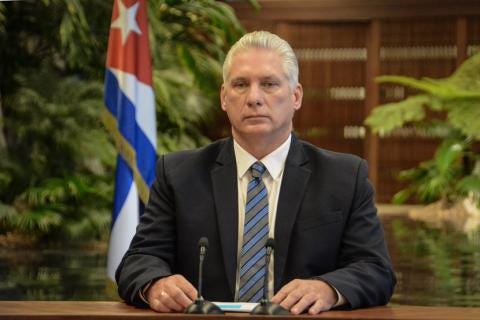
The measures follow Trump signing an executive order expanding sanctions against Cuba. They also target Cuba’s defence ministry, the Cuban Institute of Friendship with the Peoples, Amistur Cuba and the Committees for the Defense of the Revolution.
US Secretary of State Marco Rubio said the sanctions targeted a network enabling and funding Cuba’s operations. Cuba’s minister of foreign affairs, Bruno Rodríguez, condemned the move as part of a US interventionist plan and said threats against Cuba’s sovereignty would fail.
Sources: The Guardian, Associated Press

The US House has passed legislation to aid Ukraine and sanction key parts of Russia’s economy, overriding Republican leaders who said the bill could undermine negotiations with the White House. The 226-195 vote marked the House’s second major foreign policy break with President Donald Trump this week, after lawmakers also approved a war powers resolution aimed at halting US military action against Iran.
The bill, sponsored by Representative Gregory Meeks, would provide more than $1 billion in security and reconstruction aid and make another $8 billion available for Ukraine’s defence through loans. Supporters forced the vote with a discharge petition backed by 218 signatures.
The measure now faces an uncertain Senate path. Representative Brian Fitzpatrick said it would probably not get 60 Senate votes, but would force the chamber to address the issue.
Sources: Associated Press, The Guardian

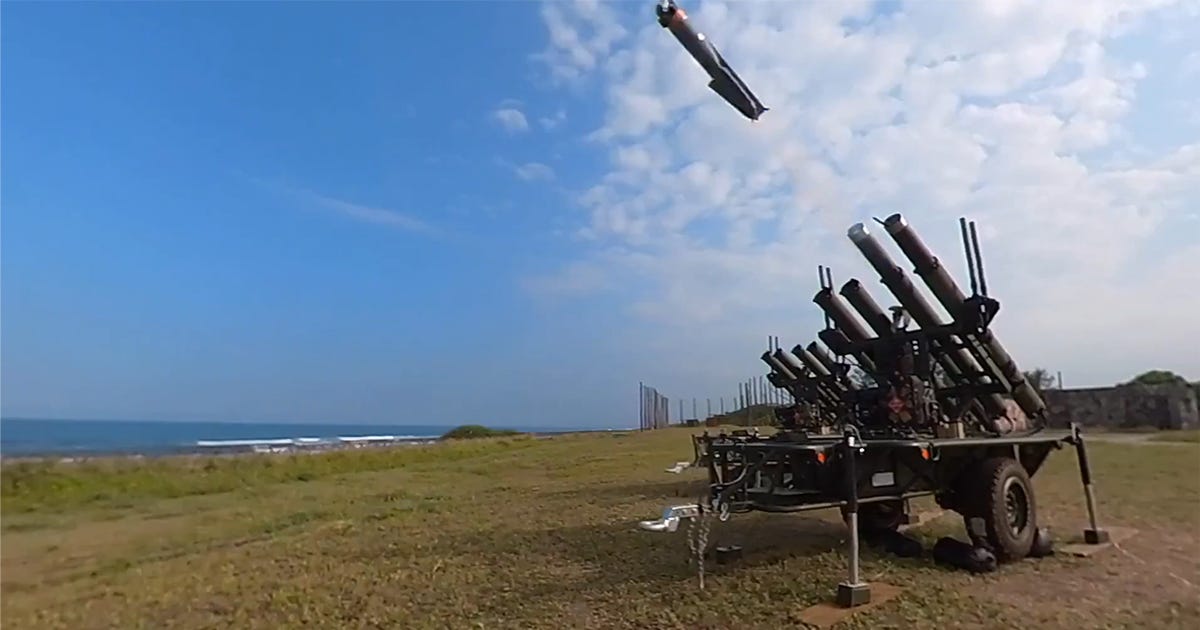
Taiwan will increase its anti-ship missile arsenal to more than 1,800 by early 2029 as it seeks to counter the threat of blockade or invasion by China. The weapons can be fired from aircraft, ships and ground-based launchers, and form part of an asymmetric strategy designed to offset China’s larger firepower.
Taiwan’s planned arsenal includes US-supplied Harpoon missiles and domestically produced Hsiung Feng missiles. Ou Si-fu, deputy chief executive officer for research at Taiwan’s top military think tank, said the aim was to stop the People’s Liberation Army from landing and completing its mission.
Taiwan is also seeking President Donald Trump’s approval for an arms sale package worth up to $14 billion. Beijing has never renounced force to bring Taiwan under its control, while Taiwan rejects Beijing’s sovereignty claims.
Sources: AsiaOne, Reuters

Chinese authorities are still working to erase public memory of the 1989 Tiananmen Square crackdown, 37 years after troops opened fire to end student-led pro-democracy protests in Beijing. The anniversary is not officially marked in China, where the events are not publicly discussed and censorship filters related words and images from the internet.
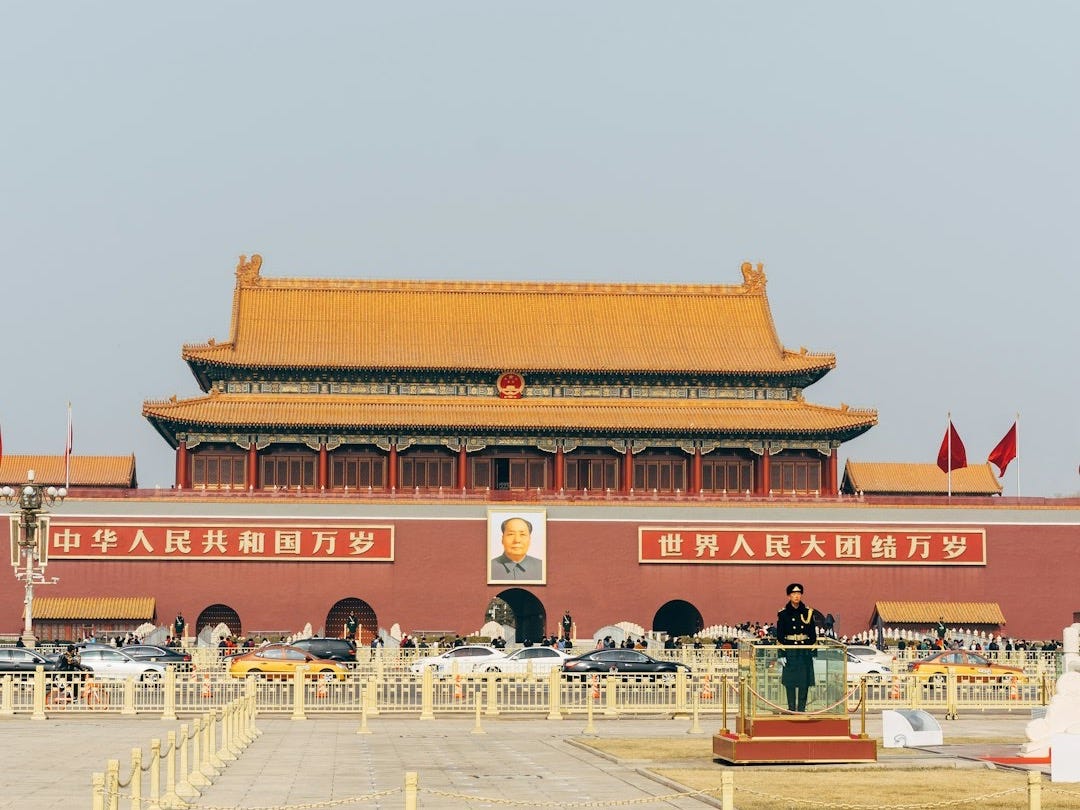
Yet some young Chinese are learning details in unexpected ways. Discussion of Olympic figure skater Alysa Liu drew attention to her father, Arthur Liu, who had participated in the protests before fleeing to the United States. Other students discovered the history after an influencer’s live-stream was abruptly cut when he showed an ice-cream cake shaped like a tank.
US Secretary of State Marco Rubio said Beijing’s censorship could not erase memories of the military assault. Chinese Foreign Ministry Spokesperson Mao Ning accused Washington of distorting history and smearing China’s political system.
Sources: Washington Post, Reuters

SpaceX’s pitch for a $1.78 trillion initial public offering valuation depends on revenues at its AI unit rising about 100 times by 2030, according to projections made by lead investment bank Goldman Sachs. The bank expects AI revenue to reach $322 billion in 2030, up from $3.2 billion in 2025, while total revenue is forecast to rise to $474 billion from $18.7 billion last year.
Goldman’s model was shared with a potential investor as SpaceX began its IPO roadshow. The deal could raise up to $86 billion, while another report said the company aims to raise $75 billion at a $1.75 trillion valuation.

The projections assume Grok models catch and surpass more advanced labs, but the AI unit has posted losses, faced upheaval and struggled to gain traction.
Sources: FT, Reuters
Restacking or sharing this publication means more people can read it. Commenting extends the conversation. Liking shows your appreciation.
On this day …
On this day in 1947, U.S. Secretary of State George C. Marshall outlined what became known as the Marshall Plan, a vast programme of economic assistance for post-war Europe.
The initiative provided billions of dollars in aid to help rebuild economies devastated by the Second World War. Beyond reconstruction, the plan aimed to promote stability, encourage trade and limit the spread of political extremism during the early Cold War.
Many historians regard it as one of the most successful economic recovery programmes ever undertaken. Its influence can still be seen in modern debates about development assistance, reconstruction efforts and international cooperation.
Can large-scale economic aid still play the same stabilising role in today’s more fragmented world?
It is fairly absurd for the UN to be saying anything considering the US and Israel involvement. It makes the UN look weak, at best.
Thank you for sharing ✨