


Trump Says Hormuz Deal Could Come Within Days (Diplomacy)
US Missile Stocks Strained By Iran War (Conflict)
Saudi Arabia Seeks Houthi Deal To Protect Oil (Diplomacy)
Ukraine Accuses Russia Over Drone Attack (Conflict)
Japan Warns On China’s Pacific Reach (Geopolitics)
US Weighs Ban On Chinese Data Centre Parts (Technology)
WHO Calls For More Ebola Support (Health)
Court Blocks Trump Climate Fund Clawback (US)
US Expands Intelligence Activity In Cuba (US)
Myanmar Diplomacy Tests Junta’s Isolation (Asia)
A succinct daily briefing delivered each weekday to help you stay on top of the stories shaping the world.

US President Donald Trump said a deal on the Strait of Hormuz could come as early as Wednesday or Thursday this week as Iran and Oman moved toward an agreement to reopen the waterway. The possible arrangement would route ships entering the Persian Gulf through Iranian-controlled waters and outbound traffic through a route controlled by Oman.
Shipping through the strait, which previously carried about one fifth of the world’s oil and natural gas, has been reduced to a trickle by Iranian attacks since the US and Israel attacked Iran on February 28. Brent crude slipped 1.2% to $78.43 a barrel early Wednesday on hopes of progress.
Iranian Foreign Ministry spokesman Esmail Baghaei said talks focused on safe inbound and outbound shipping lanes. US Secretary of State Marco Rubio said progress had been made, but not finality, while negotiations remained linked to lifting the US blockade on Iran’s ports.
What comes after the deal is a matter of speculation at this stage.
Sources: Associated Press, Axios
The US Army has used up much of its global stockpile of highly accurate long-range missiles during the five-month war with Iran, according to people familiar with the data, raising concerns about readiness for future conflicts.
The missiles include Army Tactical Missile Systems and Precision Strike Missiles, with two sources saying the US had used “virtually all” of them. The rundown means US President Donald Trump may have to rely more on riskier, piloted bombing missions if he relaunches large-scale attacks on Iran.
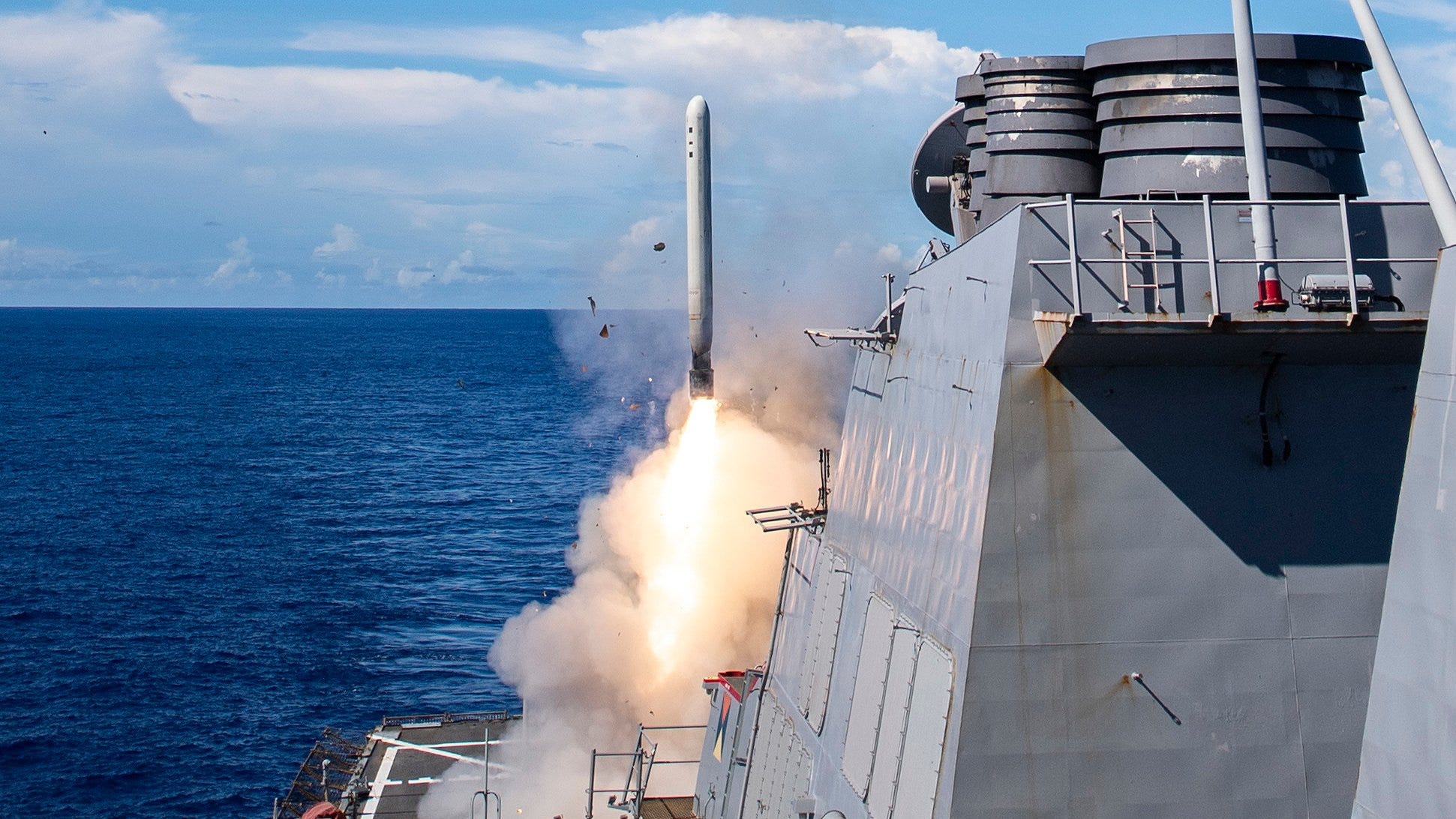
Military leaders have also warned that defensive weapons are dwindling, including Patriot interceptors. Chief Pentagon spokesperson Sean Parnell said the US military had everything it needed, while White House spokesperson Anna Kelly said it had enough munitions for Trump’s strategic goals. Analysts said supplies could take years to fully replenish.
Sources: Reuters, CNN

Saudi Arabia is pursuing behind-the-scenes diplomacy in an attempt to contain renewed hostilities with Yemen’s Iran-backed Houthis and prevent the conflict from threatening its oil industry and wider economy.
Riyadh has held indirect discussions with the Houthis through Omani mediators while preparing military options if diplomacy fails.
It carried out limited strikes on Houthi positions for two consecutive days in late July but has not repeated them as it seeks a negotiated solution with the group, which controls most of northern Yemen.
The talks reflect Riyadh’s effort to protect Red Sea routes used for the bulk of its oil exports while the Strait of Hormuz is effectively closed. The Houthis are pressing for economic concessions, including salary payments for some Yemeni civil servants and fewer restrictions on goods and people entering Houthi-controlled areas.
Sources: Bloomberg, Yeshiva World
Ukrainian Foreign Minister Andrii Sybiha accused Russia of committing a war crime after footage released by Ukrainian authorities showed a drone chasing a civilian street vendor in Kherson.
The video shows the 52-year-old man running around a van as the drone follows him, before diving towards him and detonating. Ukrainian police said the man survived with shrapnel injuries, a concussion and blast injuries. Ukraine’s President Volodymyr Zelensky said the world must see the evidence, while Sybiha said the attack demanded international condemnation and justice.
The incident comes as civilian harm from drone and missile attacks is rising. The U.N. Human Rights Monitoring Mission in Ukraine said it recorded 1,396 civilian deaths and 7,978 injuries in the first six months of 2026, a 37 percent increase from 2025 and more than double the 2024 figure.
Sources: BBC, The Independent

Japan’s latest defence white paper has warned that China is improving its ability to sustain military operations farther into the western Pacific, while pledging stronger monitoring systems, strike capabilities and ammunition production.
The report said Beijing is strengthening its aircraft carrier force and improving its capacity to operate in more distant seas and airspace. It cited the Liaoning’s deployment east of Iwo Jima in June last year, the first publicly confirmed Chinese carrier operation beyond the second island chain, and the simultaneous Pacific deployment of the Liaoning and Shandong.
In Beijing, defence ministry spokesman Chen Xi said the white paper contained “false narratives” and hyped the “China threat”. Japan said its Air Self-Defence Force is building a “gap-free” surveillance network linking ships, aircraft, satellites and uncrewed systems, while while warning that existing munitions, fuel stockpiles and equipment availability are “not necessarily sufficient”.
Sources: South China Morning Post, Bloomberg
Restacking this post will help it reach more readers interested in the world.

The Trump administration is drafting a ban on US imports of new Chinese data centre components as it seeks to protect infrastructure underpinning the AI boom.
The Federal Communications Commission is working on a measure to bar imports of new Chinese optical transceivers, which allow data to travel over fibre-optic cables within data centres. Officials hope to publish the measure this year, though the restriction could still be modified or shelved.

The move aims to prevent Chinese firms from stealing data, installing malware or disrupting service at US data centres. A ban would likely hit China’s Zhongji Innolight and could raise costs for American cloud firms such as Amazon Web Services.
The Chinese embassy in Washington urged the US to stop smearing Chinese companies and said China would respond to actions harming its interests.
Sources: Reuters, The Guardian

The World Health Organization called for greater support to tackle the Ebola outbreak in the Democratic Republic of Congo, warning that the response is still struggling to keep pace with the disease.
WHO spokesman Tarik Jasarevic said the outbreak was expanding beyond the capacity of the response and called for more finance and resources for treatment capacity, field investigation teams, safe burial teams and community workers. The country has recorded 3,802 confirmed Ebola cases, including 1,707 deaths, while 727 patients have recovered and 275 suspected cases remain under investigation.
Around 17,000 contacts are being monitored, with more than 80 percent receiving daily follow-up checks. Cases have been reported in five provinces, but nearly 90 percent are in Ituri. The outbreak is driven by the Bundibugyo strain, for which there are no proven safe and effective treatments, vaccines or post-exposure prophylaxis options.
Sources: Euronews, NDTV

A divided federal appeals court said the Trump administration improperly terminated billions of dollars in clean energy funds, handing a win to nonprofits chosen to run a Biden-era programme.
The ruling restored an injunction against Environmental Protection Agency Administrator Lee Zeldin’s decision to terminate grants from the Greenhouse Gas Reduction Fund, a congressionally authorised programme commonly referred to as a green bank. The money was intended for loans and investment in small energy projects, energy-efficient buildings and transportation.
The funds will not be distributed immediately, giving the EPA time to appeal to the US Supreme Court. Six of 10 judges said the EPA likely violated the 2022 law by trying to terminate the grants and claw back funds based on a policy disagreement, while four judges broadly sided with the agency.
Sources: Reuters, Washington Post

The US has increased its intelligence assets in Cuba in recent months as the Trump administration pushes the country’s communist regime to reform or fall from power, according to people familiar with its plans.
One person said the US had recently sent spies and assets to Cuba, while another described the move as increasing the CIA’s “presence”. The first person said the increased intelligence presence could pave the way for a US military incursion, though the outlines of any operation remain far from clear.
The administration has also increased wider pressure on Havana, including an energy blockade that has left the island largely in the dark. The Trump administration sent CIA Director John Ratcliffe to Cuba in May to warn the regime to make fundamental reforms, while Secretary of State Marco Rubio has closely overseen US efforts in Cuba and Venezuela.
Sources: The Independent, Politico

Myanmar’s president Min Aung Hlaing is due in Thailand this week as regional diplomacy inches toward re-engagement with his military-backed government.
Thailand’s Prime Minister Anutin Charnvirakul called for “calibrated re-engagement” with Myanmar, balancing cross-border issues including scams, toxic pollution and the economy against Asean’s guarded approach. Asean still bars Myanmar from full summits under a five-point agreement tied to ending violence against civilians, but Bangkok is pushing gradual re-engagement and talks.
The visit comes as analysts describe a rare window for dialogue after Myanmar’s military regained ground and regional pressure for negotiations increased.
The conflict, sparked by the February 2021 coup that deposed Aung San Suu Kyi’s elected government, has killed more than 100,000 people, displaced millions and devastated the economy.
Sources: South China Morning Post, Reuters
Restacking or sharing this publication means more people can read it. Commenting extends the conversation. Liking shows your appreciation.
On this day …
On this day in 1962, Nelson Mandela was arrested near Howick in South Africa after more than a year living underground while organising resistance to apartheid.
Convicted in the Rivonia Trial, he would spend 27 years in prison before his release transformed both South Africa and international politics.
Mandela became a global symbol of the struggle against racial oppression and later led negotiations that helped bring apartheid to a peaceful end.
His imprisonment ultimately strengthened, rather than diminished, the movement he represented.
Can imprisonment sometimes amplify a leader’s influence rather than silence it?