


US and Iran Signal Talks as Drone Is Shot Down at Sea
Russia Hits Grid Ahead Of Abu Dhabi Peace Talks
Russia Braces For World Without Nuclear Arms Limits
US Deploys Small Military Team To Nigeria Amid Jihadist Fight
Spain Plans Social Media Ban For Children Under 16
Paris Raids X Offices In Expanding Cybercrime Investigation
Trump Presses Call To Nationalise US Elections
Prosecutors Seek Five Year Office Ban For Marine Le Pen
EU Offers US Minerals Deal To Counter China
Vietnam Military Prepares For Possible US Conflict

The United States and Iran signalled a tentative move toward renewed negotiations on Tuesday, even as military incidents unfolded in the Gulf region. US President Donald Trump said talks with Iran were continuing to de-escalate tensions, while a US Navy fighter jet shot down an Iranian drone that approached the aircraft carrier USS Abraham Lincoln in international waters. Trump said negotiations were under way but declined to specify where they were taking place.
Iranian President Masoud Pezeshkian said he had instructed his foreign minister to pursue “fair and equitable negotiations” with Washington, provided suitable conditions exist and talks remain within Iran’s national interests. His comments marked the clearest indication yet that Tehran may re-engage diplomatically after recent unrest and heightened regional tensions.
US Central Command said the drone approached with unclear intent despite de-escalatory measures, and that Iranian Revolutionary Guard forces later harassed a US-flagged merchant vessel in the Strait of Hormuz. Despite the incidents, US officials said talks involving Trump’s envoy Steve Witkoff remain planned for later this week.
Sources: Al Jazeera, Associated Press

Russia launched its largest drone and missile attack of the year on Ukraine overnight, damaging energy infrastructure and leaving hundreds of thousands without heating as temperatures fell toward minus 20 degrees Celsius in Kyiv. Ukraine said strikes hit high-rise buildings and thermal power plants, while officials reported five wounded in the capital and thousands without electricity.

The barrage came one day before Ukrainian and Russian negotiators were due to meet for a second round of talks in Abu Dhabi. President Volodymyr Zelensky said Russia prioritised terror over diplomacy and told Ukrainians the country was waiting for a US response, noting it was America’s proposal to stop strikes on energy infrastructure during diplomatic efforts and the cold winter period.
Ukraine’s air force said Russia attacked with 71 missiles and 450 drones, and that Ukraine intercepted or destroyed 38 missiles and 412 drones. Strikes also hit Kharkiv, temporarily cutting heating to around 100,000 households, with overnight temperatures falling as low as minus 23 degrees Celsius.
Sources: Reuters, South China Morning Post

Russia said it is prepared for a new global reality in which there are no limits on US and Russian strategic nuclear arsenals, as the New START treaty is set to expire this week. Deputy Foreign Minister Sergei Ryabkov said Moscow was ready for a world without nuclear arms control constraints if no last-minute agreement is reached.
New START, signed in 2010, caps deployed strategic warheads at 1,550 and expires on Thursday. Unless the two sides reach an understanding, they will be left without any limits on long-range nuclear forces for the first time in more than half a century. Ryabkov said the lack of a US response to a Russian proposal to continue observing limits for one year amounted to an answer in itself.
Arms control advocates warn the treaty’s expiry would undermine trust and verification and raise the risk of an unrestrained arms race. Former US President Barack Obama urged Congress to intervene, while former Russian president Dmitry Medvedev said the world should be alarmed if no framework replaces the pact.
Sources: Reuters, Asia One

The United States has deployed a small military team to Nigeria to strengthen cooperation against jihadist groups, according to the head of US Africa Command. General Dagvin Anderson said the deployment followed discussions with Nigerian leaders and aimed to augment efforts Nigeria has pursued for several years, after recent US airstrikes targeting militants.
The move comes after US strikes on December 25 hit Islamic State targets in Sokoto state in northwestern Nigeria. Anderson said the two countries agreed to increase collaboration, but did not provide details on the team’s activities or when it arrived. US military support is expected to focus on the northwest and northeast, regions affected by long-running violence linked to Boko Haram and Islamic State West Africa Province.
The deployment follows diplomatic tension after President Donald Trump alleged a genocide of Christians in Nigeria, a claim rejected by the Nigerian government and independent experts, who say armed groups target civilians without regard to faith. Nigerian officials have said the security crisis affects both Christian and Muslim communities across the country.
Sources: Le Monde, Military Times

Spain plans to ban access to social media platforms for children under the age of 16, as the government moves to tighten digital protections for minors and push tougher regulation of technology companies. Prime Minister Pedro Sánchez said platforms would be required to implement age verification systems to enforce the restriction.
Sánchez said children face risks including addiction, abuse, manipulation, pornography and violence online, and argued governments must reclaim control from powerful technology firms. As part of a broader package of digital reforms due to begin next week, Spain plans to hold platform executives legally accountable for failures to remove hateful or illegal content, with criminal charges possible.
The proposal follows a similar ban introduced in Australia last December and comes as several European states consider tougher rules. Spain has formed a coalition with five other European countries to coordinate stricter and faster enforcement of social media regulation. The plan has drawn criticism from technology figures, including Elon Musk, who attacked Sánchez after the announcement.
Sources: Wall Street Journal,The Guardian

French prosecutors raided the Paris offices of social media platform X on Tuesday as part of a widening investigation into alleged cybercrime, including the spread of child sexual abuse images and sexually explicit deepfakes. The Paris prosecutor’s office said the inquiry was being conducted by its cybercrime unit with support from national police and Europol.
The investigation, opened in January last year, has expanded to examine X’s artificial intelligence chatbot Grok. Prosecutors said alleged offences now include complicity in possessing and distributing child abuse images, violation of image rights through sexualised deepfakes, denial of crimes against humanity and manipulation of an automated data processing system. Elon Musk and former X chief executive Linda Yaccarino have been summoned for voluntary questioning in April.
Scrutiny has also intensified in Britain, where data and media regulators are investigating whether X and its owner’s AI company complied with laws on personal data and safeguards against harmful manipulated images. European authorities say the aim is to ensure the platform complies with national and EU law as it operates across the region.
Sources: PBS, The Guardian

President Donald Trump renewed calls for Republicans to “nationalise” elections, arguing the federal government should intervene in states he claims cannot run votes honestly. Speaking in the Oval Office on Tuesday, Trump said federal agents should be involved in counting ballots and suggested control be taken from certain states, without presenting evidence of wrongdoing.
US elections are run by states under the Constitution, with administration handled largely at local level. Trump’s remarks echoed comments made in a podcast interview released on Monday, where he urged Republicans to take over voting procedures in at least 15 unnamed states. Democrats accused him of promoting an unconstitutional federal takeover of elections.
Some senior Republicans pushed back. Senate Majority Leader John Thune said he opposed federalising elections, while House Speaker Mike Johnson said Trump was expressing frustration rather than proposing a takeover. The comments come ahead of the 2026 midterms, as the Justice Department seeks voter data from states and Republicans advance legislation requiring proof of citizenship to register for federal elections.
Sources: Wall Street Journal, Reuters

French prosecutors have asked an appeals court to impose a five year ban on Marine Le Pen from holding elected office, a move that could block the far right leader from running in the 2027 presidential election. The request was made on Tuesday during a high profile appeal trial in Paris.
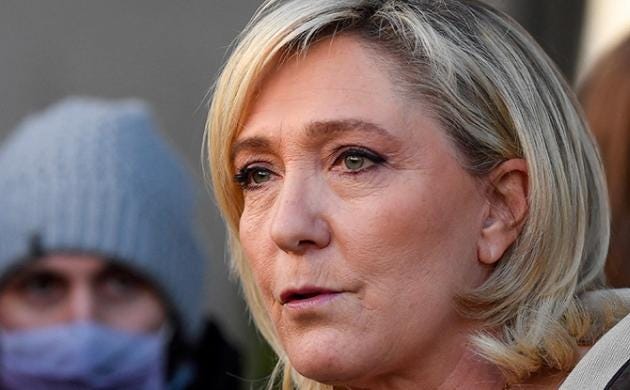
Le Pen, 57, is appealing a March 2025 ruling that found her guilty of misusing European Parliament funds between 2004 and 2016. Prosecutors argued she led a “system” that diverted EU money to benefit her party by paying parliamentary assistants who worked partly for the National Rally. They also requested one year of house arrest with an electronic bracelet and a 100,000 euro fine.
Le Pen has acknowledged that some assistants carried out party work while paid by the European Parliament, calling it a mistake, but denies any organised fraud. The appeal trial continues until next week, with a verdict expected later this year.
Sources: Associated Press, France 24

The European Union is preparing to pitch the United States on a critical minerals partnership aimed at reducing reliance on China, as Washington pushes to strike global agreements this week. The EU is ready to sign a memorandum of understanding with the US to develop a “Strategic Partnership Roadmap” within three months, according to people familiar with the matter.
Both sides are aiming to conclude negotiations within the next 30 days, according to a draft statement expected to be released on Wednesday. The proposal includes exploring joint projects, price-support mechanisms, and ways to shield markets from mineral oversupply and market manipulation, while building secure supply chains between the EU and US.
The EU proposal also insists both sides respect each other’s territorial integrity, after recent tensions when President Donald Trump signalled plans to buy Greenland. The memorandum also notes the possibility of stockpiling critical minerals, after Trump launched a $12 billion critical-mineral stockpile on Monday.
Sources: Bloomberg, Investing.com

An internal Vietnamese military document shows Hanoi preparing for a possible American “war of aggression” despite recently upgrading relations with Washington to their highest diplomatic level. The document, completed by the Ministry of Defense in August 2024 and revealed in a report released Tuesday, describes the United States as a “belligerent” power while noting there is currently little risk of war.
The analysis highlights deep fears within Vietnam’s leadership of a US-backed “color revolution” aimed at destabilising Communist Party rule. Military planners warn that Washington could create a pretext for intervention as it builds regional partnerships to counter China. While the US views Vietnam as a partner, the document argues it also seeks to impose values on democracy, human rights and religion to gradually change the socialist system.
US officials declined to comment directly on the document but stressed the 2023 Comprehensive Strategic Partnership. Analysts say the report exposes persistent mistrust inside Vietnam’s military, even as economic and diplomatic ties with Washington continue to deepen.
Sources: Associated Press, Macau Daily
On this day ….
On this day in 2004 Facebook was founded, initially as a university networking platform before rapidly expanding into a global social media giant.
What began as a tool for personal connection evolved into a central channel for political communication, advertising, and news distribution.
Governments, campaigns, and protest movements quickly learned to use, and struggle with, its reach and algorithms.
Facebook’s rise blurred the line between private platform and public infrastructure, raising lasting questions about regulation, responsibility, and democratic oversight.
Its founding marked the start of a digital media era in which information spreads instantly, but accountability often lags behind.