


Hormuz Deal Could Give Iran New Leverage (Geopolitics)
Gaza Plan Stalls Over Disarmament Terms (Middle East)
Supreme Court Lets PLO Judgment Stand (US)
Sailors Remain Trapped In Gulf War Zone (Middle East)
Ceuta Crossings Expose EU Border Divisions (Europe)
Cuba Grid Collapse Deepens Energy Crisis (Geopolitics)
Ukraine Drone War Hits Russian Beach (Conflict)
Red Cross Visits Aung San Suu Kyi (Asia)
Rhine Drought Threatens European Trade (Europe)
Two Japanese Mall Workers Died After Reentry Order (Asia)
A succinct daily briefing delivered each weekday to help you stay on top of the stories shaping the world.

An emerging deal over the Strait of Hormuz could reopen shipping traffic but give Iran new control over a waterway that was an open international waterway before the war. Iranian and American officials said Iran and Oman are closing in on an accord under which Gulf-bound vessels would use a channel controlled by Iran, while outbound ships would travel near Oman.
Iranian officials said the strait would remain closed until the United States lifts its naval blockade against Iranian ports and both countries return to the Islamabad memorandum. They also said the accord includes a service fee, though a US official said any temporary routes would involve no Iranian approvals or tolls.
Secretary of State Marco Rubio has warned that allowing a state to control an international waterway would threaten freedom of navigation. President Trump said the strait could reopen “literally by tomorrow”, but Pentagon officials remain sceptical.
Sources: New York Times, The Guardian

President Trump’s Gaza plan has run into immediate resistance as Israeli strikes continue and both Israel and Hamas dispute the sequence for disarmament and withdrawal. Palestinians in Gaza said Trump’s claim of a major milestone jarred with worsening conditions after Israel killed 18 people in one of the deadliest days since last year’s ceasefire.

The Board of Peace has said the goal was complete weapons decommissioning and a transition from rule by the gun to civilian governance. It said full Israeli withdrawal beyond the yellow line would happen only once decommissioning was complete, while Hamas insists Israel halt attacks before implementing the arms section of the agreement.
Defence Minister Israel Katz said Israeli troops would not move before Hamas disarms and its tunnels are destroyed. Trump said Israel was “very happy” with the plan, though he warned the process would have “ups and downs”.
Sources: Reuters, New York Times

US Supreme Court Justice Sonia Sotomayor refused to halt a $656 million judgment against the Palestine Liberation Organization and the Palestinian Authority in a long-running lawsuit brought by Americans killed or wounded in attacks in Israel.
The defendants had asked the justices to pause payment while they appeal the reinstatement of the verdict, saying immediate enforcement could destabilise government services in the West Bank. The case was brought by victims of attacks in Jerusalem in the early 2000s that killed 33 people and wounded hundreds more.
A federal court in New York previously threw out the verdict, but Congress revised the law to allow such suits to proceed and the Supreme Court revived two cases in 2025. The 2nd US Circuit Court of Appeals reinstated the verdict in March. The plaintiffs’ lawyers said the decision would allow justice to be done.
Sources: Times of Israel, PBS

Thousands of civilian sailors remain stranded in the Persian Gulf after US-Israel attacks on Iran and Iran’s closure of the Strait of Hormuz left commercial shipping exposed to regional conflict. The International Maritime Organization said the February escalation initially stranded 1,500 ships and nearly 20,000 sailors, with roughly 6,000 sailors still unable to leave safely as of today.
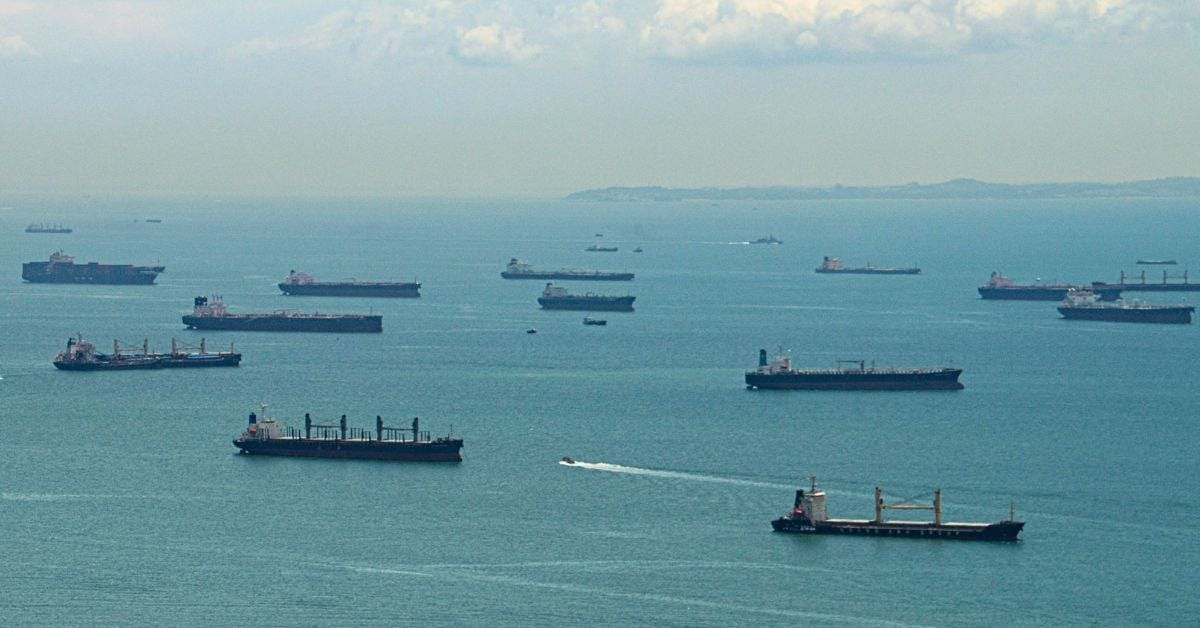
About two dozen merchant seamen on the MSC Francesca are entering their fourth month under Iranian guard after Iran seized the vessel on April 22. A second MSC-linked ship, the Epaminondas, remains in Iranian waters with seafarers on board.
The strait now sees just over a dozen crossings a day, down from around 130 before the war. Since the conflict began, 17 sailors have been killed in 63 attacks around Hormuz, while maritime officials say release talks are complicated by the wider geopolitical conflict.
Sources: Straits Times, New York Times

European Commission President Ursula von der Leyen has called for united action on border security after tens of thousands of migrants crossed from Morocco into Spain’s Ceuta, triggering emergency EU talks and a dispute among member states.
Spain estimates that about 69,500 migrants have returned to Morocco, exceeding initial estimates of 50,000 arrivals. Death tolls differed across reports, with Spain’s official figure at 72 on its side of the border and Ceuta authorities reporting 88 people killed trying to reach the territory, while at least 11 deaths were recorded in Morocco.
Von der Leyen urged stronger external borders, early warning systems, action against smuggling networks and more returns. Italy temporarily suspended Schengen arrangements with Spain, while Prime Minister Pedro Sánchez said some governments had attacked Spain through prejudice, fake news, ignorance or political interest.
Sources: BBC, The Guardian
Restacking this post will help it reach more readers interested in the world.

Cuba’s electricity grid collapsed late Sunday, plunging the island of about 10 million people into darkness after three prior nationwide blackouts in July and a wider energy crisis driven by fuel shortages and severe US sanctions.
The outage came as the state-owned grid operator gave no further details and authorities worked to restore power, with much of the island still without electricity on Monday. A US-imposed oil blockade has further strained Cuba’s ageing energy infrastructure after the country lost Venezuelan supplies and imports from Mexico also halted.
Rolling blackouts now last more than 20 hours a day, while fuel shortages have hit public transport, hospitals and access to basic goods. Havana has recently authorised its first foreign-backed fuel import venture and allowed nearly 200 Cuban businesses to participate in wholesale fuel distribution, a cautious opening of its tightly controlled energy sector.
Sources: NBC, Associated Press

A Ukrainian drone incident killed seven people, including three children, in Russia’s southern Krasnodar region after debris fell onto a crowded Black Sea beach near Gelendzhik. Regional governor Veniamin Kondratiev said nearly 40 others were wounded, with 21 hospitalised and 19 receiving medical treatment.
The cause remained disputed with analysis of video finding automatic gunfire before the drone veered sharply and dived into the beach, while Andriy Kovalenko, head of Ukraine’s Center for Countering Disinformation said Russian air defences shot it down over vacationers and blamed Russian authorities for failing to protect civilians.
The incident came as Russia and Ukraine traded heavy attacks. Russian officials reported further deaths in Moscow region, Crimea and Belgorod, while Ukrainian officials said Russian strikes killed civilians in Dnipropetrovsk and Zaporizhzhia.
Both sides deny targeting civilians.
Sources: CNN, Al Jazeera

Myanmar’s long detained former leader Aung San Suu Kyi has met Arnaud de Baecque, the International Committee of the Red Cross resident representative to Myanmar, in the first publicised visit between her and a foreign official since she was ousted in a 2021 coup.
The ICRC confirmed the Monday visit was conducted under its standards for people deprived of liberty, including a private conversation. The meeting followed years of questions over the 81-year-old’s wellbeing, with little seen or heard of her since late 2022.

Her son, Kim Aris, who had demanded proof of life, called the meeting the first positive development concerning her in more than five years, but said it must not be the last. ASEAN Parliamentarians for Human Rights (APHR) urged regular independent access, family contact and her release.
The meeting came following international pressure as the Myanmar Government are trying to burnish their image on the world stage and amid ongoing reports of civilian attacks by the military.
Sources: The Guardian, ABC News, APHR

The Rhine River has fallen to its lowest level in nearly 150 years, threatening a key European trade route as hot, dry weather grips the continent. At Kaub, a choke point for vessels heading to southern Germany and Switzerland, the water level fell to 24 centimetres on Monday, the lowest since records began in 1880.
The drop has already pushed freight rates sharply higher as barges cut cargo loads to navigate shallow water. The Rhine carries oil products, chemicals, coal, iron ore, grains and container goods, while alternative rail routes may not prevent higher costs from further eroding Europe’s industrial competitiveness.
The same extreme weather is also drying the Danube and other waterways. Hungary’s Paks nuclear power station has been forced to shut down because of low water levels, while Romania detonated a rock formation in the Danube in an attempt to boost water flows toward its sole nuclear plant.
Sources: Bloomberg, BBC

Two store employees died after being sent back into the earthquake-hit Aeon Mall Kumamoto to secure sales proceeds before an explosion tore through the facility. Their employer, variety store operator Habita, said the two had initially evacuated to a parking lot after guiding customers to safety.
The quake registered shindo 7, Japan’s highest seismic intensity level, and the explosion occurred at around 5:50 p.m. at the mall in Kashima, Kumamoto Prefecture. Habita sales manager Koji Yuse said he had instructed the store manager to have the workers reenter at around 5:35 p.m. and move the day’s sales proceeds from the second floor to a first-floor safe.
Habita apologised for the loss of two lives. Yuse said the instruction was inappropriate and that if he had not raised the sales proceeds, “this would never have happened”.
Sources: Japan Times, BBC
Restacking or sharing this publication means more people can read it. Commenting extends the conversation. Liking shows your appreciation.
On this day …
On 4 August 1914, Britain declared war on Germany after German forces invaded neutral Belgium, bringing the British Empire into the First World War.
What had begun as a regional European crisis rapidly expanded into a global conflict involving colonies, dominions and allies across multiple continents.
Britain’s decision altered the military balance, drew millions into the fighting and shaped the course of the twentieth century.
Four years of war would redraw borders, topple empires and leave political consequences that extended well beyond the battlefield.
Did Europe’s leaders underestimate how quickly a regional crisis could become a global war?
Do they still underestimate this today?