


Iran Threatens Ships As Hormuz Shuts
US Jets Downed In Kuwait Friendly Fire
US Boosts Forces As Iran War Expands
Rubio Signals Escalation In Iran Campaign
Drones Hit US Embassy In Riyadh As Iran Claims Strike
France Moves To Extend Nuclear Deterrence In Europe
Ukraine Russia Talks Still Planned Despite Iran War
India And Canada Reset Ties With Nuclear Energy Deal
South Sudan Attack Kills 169 In Ruweng
US Drops Appeals Over Law Firm Executive Orders

Iran’s Revolutionary Guards declared the Strait of Hormuz “closed” on Monday and warned that any vessel attempting to pass would be set “ablaze”. The warning followed U.S. and Israeli strikes on Iran on February 28 and marked Tehran’s most explicit threat to block the waterway.
About 20 percent of the world’s daily oil consumption passes through the strait, which is roughly 33 kilometres wide at its narrowest point.
Shipping has ground to a near halt, with traffic down at least 80 percent and around 150 ships stranded. At least five tankers have been damaged and two personnel killed. Oil prices rose above $79.40 per barrel on Monday after trading at $73 on Friday.
Most commercial operators and insurers have withdrawn from the corridor, while some ships have rerouted around the Cape of Good Hope, adding costs and delays.
Sources: Reuters, Al Jazeera

Three U.S. fighter jets were mistakenly shot down by Kuwaiti air defences during active combat in the campaign against Iran, according to U.S. Central Command. The incident occurred as the aircraft were supporting the operation, with attacks from Iranian aircraft, ballistic missiles and drones under way.
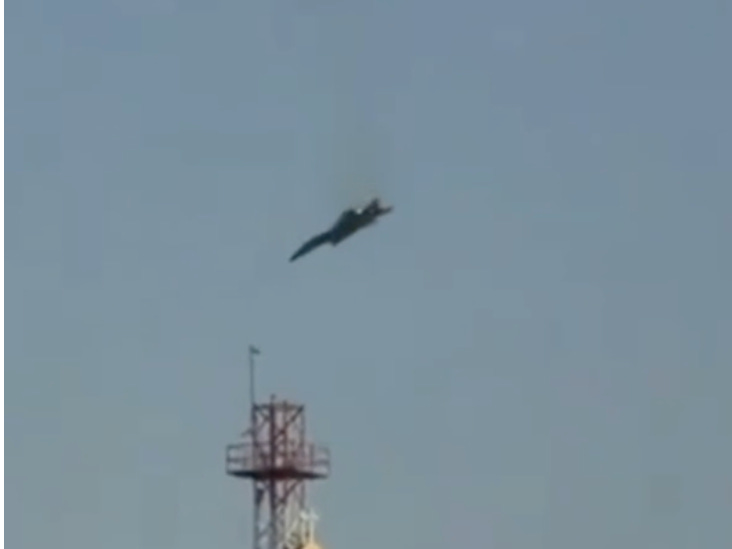
All six crew members ejected safely, were recovered and are in stable condition. Kuwait’s defence ministry said rescue teams evacuated the crew members to hospital and that authorities were coordinating with U.S. forces to investigate. Footage verified by media showed a fighter jet spiralling down as smoke billowed from its back end.
The episode comes as Iran has targeted American assets across the Persian Gulf in retaliation for the U.S.-Israeli military campaign. Several U.S. bases and facilities in the region have been attacked, prompting Gulf states to mobilise air defences. A separate drone attack struck the American Embassy compound in Kuwait.
Sources: CNN, New York Times

President Trump warned on Monday that the U.S. military campaign in Iran, designated Operation Epic Fury, would intensify and could stretch on for weeks, saying it had projected four to five weeks but had the capability to go far longer. “Whatever the time is, it’s OK, whatever it takes”, Trump said.
The United States and Israel have conducted thousands of airstrikes over three days, killing hundreds, including several Iranian military leaders and senior officials such as Ayatollah Ali Khamenei. Iran has responded with drones and missiles targeting Israel, American bases and U.S. allies in the Persian Gulf. At least 10 people have been killed in Israel in retaliation.
The Pentagon said more U.S. forces were being sent to the region and that six American service members have been killed so far.
Sources: New York Times, Reuters

Secretary of State Marco Rubio warned on Monday that “the hardest hits are yet to come from the U.S. military” and that the “next phase will be even more punishing on Iran than it is right now”. He said the United States had objectives and would continue “as long as it takes” to achieve them.
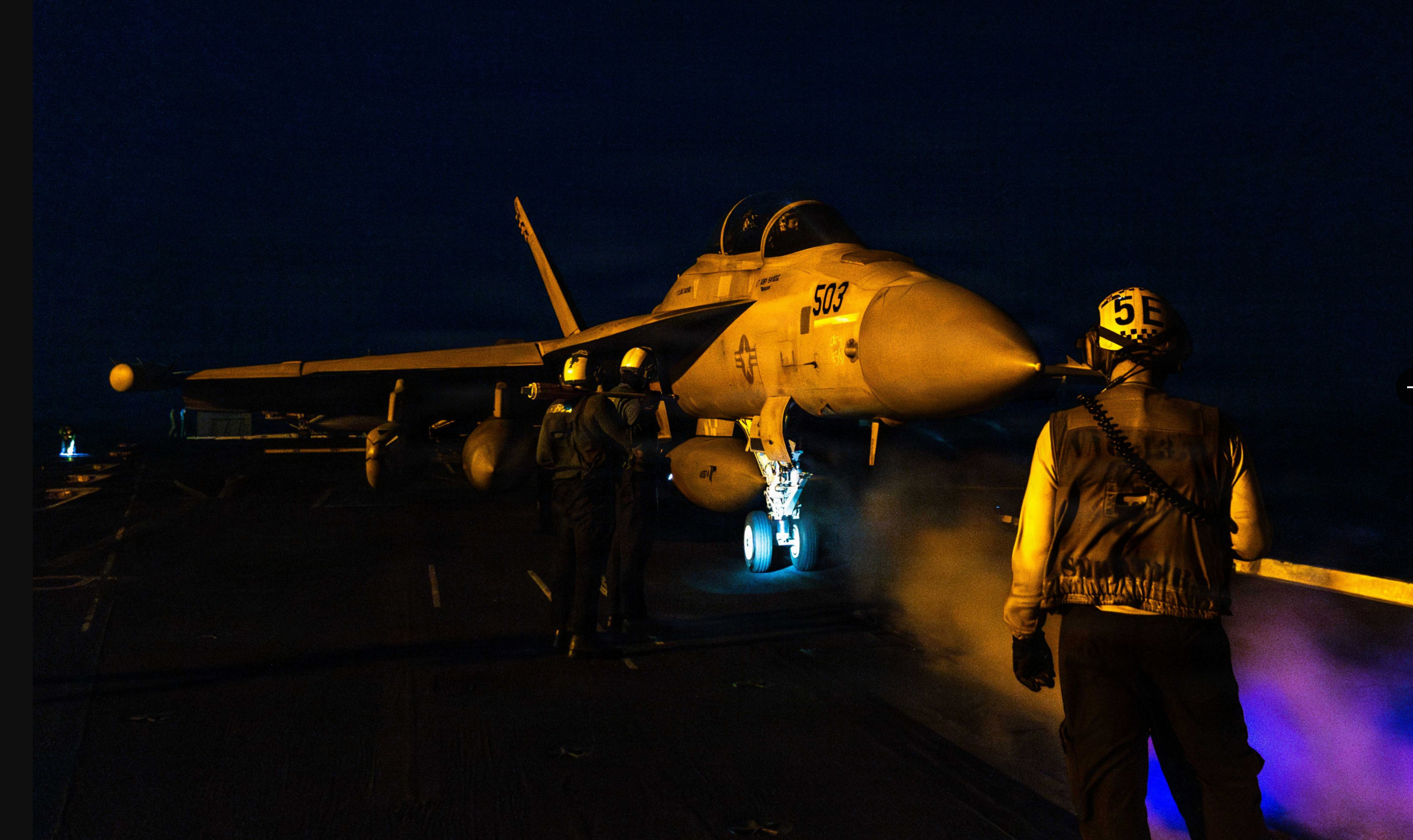
Rubio described the strikes as both pre-emptive and defensive, saying the United States acted “proactively in a defensive way” to prevent Iran from inflicting higher damage on U.S. forces once Israel began bombing Iran. He also said the purpose was to destroy Iran’s missile capability and to stop Iran from continuing to grow its naval and ballistic missile capabilities.
His remarks, delivered ahead of a closed-door meeting with senior lawmakers, raised renewed questions about Congress’s role. Rubio said he did not know how long the United States would be engaged and did not rule out deploying U.S. troops.
Sources: New York Times, Wall Street Journal

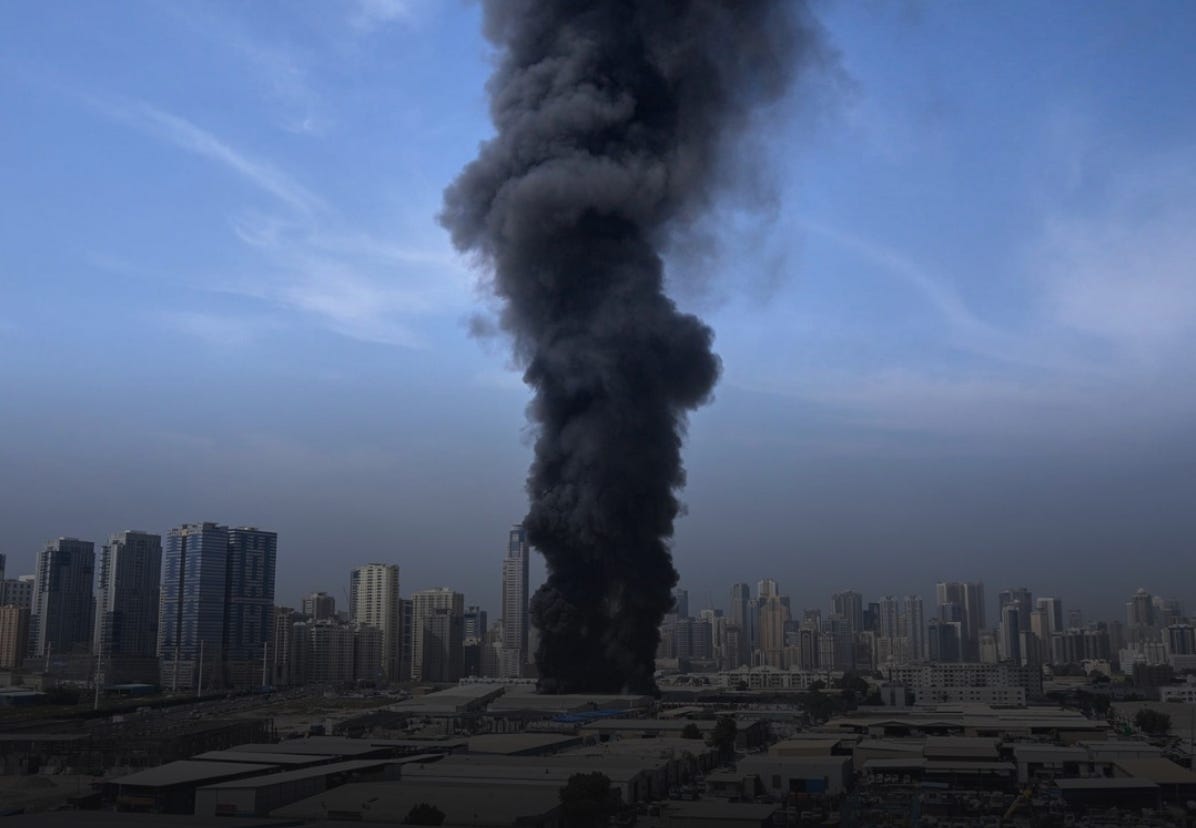
The U.S. Embassy in Riyadh was hit by two drones early Tuesday and a “limited fire” broke out, Saudi Arabia’s Ministry of Defense said. The ministry said the diplomatic compound sustained “minor material damage”.
Black smoke was seen rising over Riyadh’s Diplomatic Quarter, and three people said a loud blast was heard and flames were seen, though the ministry said the fire was small in scale. Two people familiar with the matter said the embassy building was empty, and there were no reports of casualties.
The embassy issued a “shelter in place” notice to U.S. citizens in Riyadh, Jeddah and Dhahran and urged Americans to avoid the compound.
Iran’s Islamic Revolutionary Guard Corps said it targeted a United States airbase in Bahrain at dawn with 20 drones and three missiles, claiming they destroyed the base’s main command headquarters, without providing evidence. The U.S. State Department ordered the evacuation of non-emergency personnel and family in Bahrain and Jordan as a precaution.
Sources: Al Jazeera, Associated Press

President Emmanuel Macron said France will boost its nuclear arsenal and extend deterrence to other European countries, describing the shift as a response to an increasingly unstable strategic environment. He said France will bring European nations into nuclear military drills and that partners could host air bases where French nuclear-capable aircraft could be stationed.

Macron said eight European countries - the UK, Germany, Poland, the Netherlands, Belgium, Greece, Sweden and Denmark - have agreed to take part in the new approach. He said France will increase the number of nuclear warheads from around 300, and that France will no longer communicate the number of warheads in its possession.
Macron said the nuclear button will remain solely in the hands of the French president, while France and Germany said the cooperation will complement, not replace, Nato’s nuclear deterrent. France also announced a new nuclear-armed submarine, The Invincible, to be launched in 2036.
Sources: Washington Post, BBC

Russia and Ukraine still expect U.S.-led peace talks to take place this week, even as the Trump administration continues a military campaign against Iran. The talks had been planned for around March 5-6 in Abu Dhabi, but the meeting has not been cancelled, President Volodymyr Zelenskiy said. With airspace in the United Arab Emirates currently closed amid the risk of missile and drone attacks, the talks are unlikely to take place there. Turkey and Switzerland have been proposed as alternative locations, and Istanbul has also been discussed.
This would be the fourth meeting between the sides this year after two rounds in Abu Dhabi and one in Geneva, as the United States seeks to broker a deal to end Russia’s full-scale invasion of Ukraine.
A key unresolved issue is Russia’s demand for Ukraine to cede territory in the eastern Donetsk region that Moscow’s troops have failed to capture in fighting since 2014.
Sources: Bloomberg, RTE

India and Canada announced a 10-year nuclear energy deal after Prime Minister Narendra Modi met Prime Minister Mark Carney in Delhi to reset ties. Modi said the countries reached a “landmark deal” for long-term uranium supply and would work together on small modular reactors and advanced reactors. Carney said Canada was well positioned to contribute to India’s nuclear fuel needs and that the two countries were launching a strategic energy partnership.
Carney said they agreed to conclude a free trade deal by the end of 2026 as both countries seek to reduce exposure to punitive US trade tariffs. Relations had been strained after Canada accused Delhi of a link to the 2023 assassination of Sikh separatist Hardeep Singh Nijjar, an allegation India rejected. The case of four men charged over Nijjar’s killing is still before the courts.
Sources: BBC, Al Jazeera

South Sudan authorities said at least 169 people, including senior officials, were killed on Sunday when unidentified men attacked Abiemnom county in the north of the country. The dead included 90 children, women and elderly people, and 79 members of regional forces, including police. Fifty others were wounded.
Ruweng officials said dozens of armed youth entered before dawn, at around 04:30 local time, when people were still sleeping. Authorities said homes and markets were set on fire during fighting that lasted between three and four hours, and that the county commissioner and executive director were among those killed. The SPLA-IO denied involvement.
The UN mission said about 1,000 civilians began seeking protection near its base, and peacekeepers were providing emergency medical care to at least 23 wounded people.
Sources: PBS, BBC

The Justice Department told the U.S. Court of Appeals for the District of Columbia that it was no longer interested in pursuing the cases contesting executive orders against major law firms. With a brief due this week, department lawyers said they were voluntarily asking the court to dismiss the consolidated appeal.
Four firms fought the measures and quickly received favourable rulings from district court judges. The orders barred firms from government business and suggested their clients could lose government contracts, triggering panic across the legal profession.
The withdrawal leaves firms that struck deals to head off executive orders facing fresh scrutiny over their decision to capitulate. The administration also acknowledged in court that a parallel effort using the Equal Employment Opportunity Commission to scrutinise hiring practices amounted to very little, and the commission now considers the matter closed.
Sources: New York Times, FT
On this day ….
On this day in 1861, Tsar Alexander II issued an imperial decree abolishing serfdom across the Russian Empire, freeing more than 20 million people from legal bondage.
Serfs had been tied to land owned by nobles, unable to move freely or control their labour. The reform aimed to modernise Russia’s economy and prevent unrest after its defeat in the Crimean War exposed systemic weaknesses.
Although many former serfs remained economically constrained, the decree marked a decisive break with feudal structures that had dominated for centuries.
It reshaped Russian society and set forces in motion that would transform the empire in the decades ahead.