


Trump Pulls Back As Iran Talks Resume (Geopolitics)
Israel Flags Risks In Hamas Deal (Middle East)
Ceuta Counts Cost Of Border Surge (Europe)
Pakistan Rally Bombing Kills 14 (Conflict)
Ukraine Strikes Deeper Inside Russia (Conflict)
Greece Helicopter Crash Shows Fire Risks (Europe)
Sudan Drone Strike Kills 35 At Darfur Court (Africa)
Japan And US Intervene To Support Yen (Markets)
China Draws Lines Before Trade Talks (China)
South Korea Heat Record Triggers Alerts (Climate)
A succinct daily briefing delivered each weekday to help you stay on top of the stories shaping the world.

U.S. President Donald Trump said negotiations with Iran would begin Monday after he called off planned strikes, citing requests from Saudi Arabia, the United Arab Emirates, Qatar and also Iran. He described a deal on the Strait of Hormuz and Iran’s denuclearisation as “imminent”, but no agreement has been reached.
The reversal has lowered the temperature after days of escalating Gulf attacks, including Iranian drones launched within Kuwaiti airspace and a reported explosion near a tanker close to Khasab, Oman. The Strait of Hormuz, which handled around one-fifth of global oil supply before the war, has seen traffic fall to a trickle.
Diplomacy remains very fragile and analysts said progress was likely to be interrupted by periodic military flare-ups while Iranian foreign ministry spokesperson Esmaeil Baghaei said talks with Oman over a new shipping route were separate from reopening the strait.
Several Iranian sources meanwhile denied that any peace talks were actually underway.
Sources: CNBC, New York Times

Israel has raised serious security concerns with the White House over a proposed Hamas disarmament deal, as Israeli strikes across Gaza killed at least 17 people, including children. Doron Spielman, spokesperson for Israeli Prime Minister Benjamin Netanyahu’s office said Israel’s assessment was that Hamas remained committed to rebuilding its military rather than genuinely demilitarising.
Spielman said the Israeli military would not withdraw from Gaza, where it controls more than 60% of the territory, before Hamas disarms. He said redeployment before full disarmament would allow Hamas to expand its presence, rebuild infrastructure and threaten Israeli communities.
The dispute highlights the obstacles facing the U.S.-brokered ceasefire framework. The agreement says Hamas-run police weapons would be transferred to a Palestinian technocratic committee, while heavy weapons, production sites and tunnels would be decommissioned after the committee and international forces arrive.
Sources: Associated Press, South China Morning Post

More than 50,000 people crossed from Morocco into Spain’s Ceuta enclave by land and sea last week, in an unprecedented surge at one of the European Union’s only two land borders with Africa. Spanish authorities said more than 48,000 returned to Morocco within 48 hours, with more leaving over the weekend.
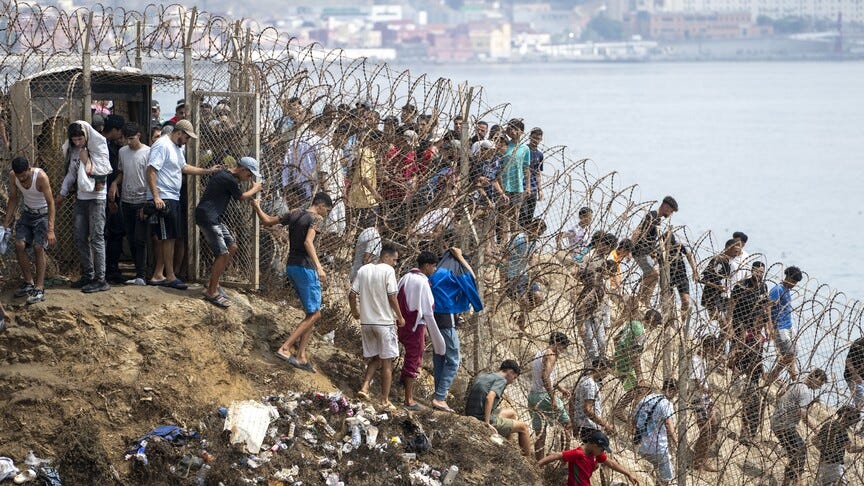
At least 72 of the migrants died, including some who drowned and others who were crushed while trying to climb a breakwater and border fence. Miguel Angel Perez, the Spanish government representative in Ceuta, said more than 1,000 people had been treated by health services and that the situation had improved markedly, although more remained to be done.
The surge reopened Europe’s contentious immigration debate as Morocco blamed social media misinformation, human trafficking networks and misinterpretation of a Spanish ruling, while far-right Spanish figures arrived in Ceuta and drew counterprotests from residents.
Sources: CNN, Reuters

A suicide bomber has targeted an antimilitant rally in Kabal, a town in Pakistan’s Swat Valley, killing at least 14 people and wounding more than two dozen others. District police chief Omar Khan said demonstrators had gathered near a police station, chanting antimilitant slogans and demanding peace.
Bilal Faizi, spokesman for the Khyber Pakhtunkhwa provincial emergency service, said the attacker struck dozens of people. Omar Khan said at least nine civilians and five police officers were among the dead.
The bombing underlined renewed fears over militancy in Swat, where residents have repeatedly staged anti-Taliban rallies after militants resurfaced in recent months. No group immediately claimed responsibility, but suspicion is likely to fall on the Pakistani Taliban, known as Tehrik-e-Taliban Pakistan. Pakistan’s military spokesman Ahmad Sharif Chaudhry said on Friday that 3,145 terrorism incidents had been recorded since January.
Sources: Associated Press, South China Morning Post

Ukrainian drone strikes killed at least eight people in Russian regions overnight and on Sunday, hitting targets including a Wildberries warehouse in Samara, about 800 kilometres from Ukraine’s most advanced military positions. Russia’s Defence Ministry said it downed 635 Ukrainian drones during the night.
Ukraine’s military said its forces attacked the Saratov refinery and Engels airbase, sparking fires at both facilities, and also struck an oil depot in Kaluga. Ukrainian forces have been hitting deeper inside Russia as they expand strikes on economic and energy targets.
The attacks showed the war’s expanding reach beyond the front line. Russian strikes also hit Ukraine, with Zaporizhzhia regional governor Ivan Fedorov saying Russian-launched glide bombs killed one person and injured 21, while Russia’s Defence Ministry said its forces struck infrastructure and vessels with military cargo in Mykolaiv.
Sources: Reuters, Al Jazeera
Restacking this post will help it reach more readers interested in the world.

Two firefighting helicopters have collided in Greece’s Attica region while battling a wildfire sweeping through a mountainous coastal area, killing two crew members and injuring two others. The Hellenic Fire Service said the Bell-type aircraft had taken off from a military airport at Elefsina in West Attica before the crash in Psatha, about 65 kilometres west of Athens.
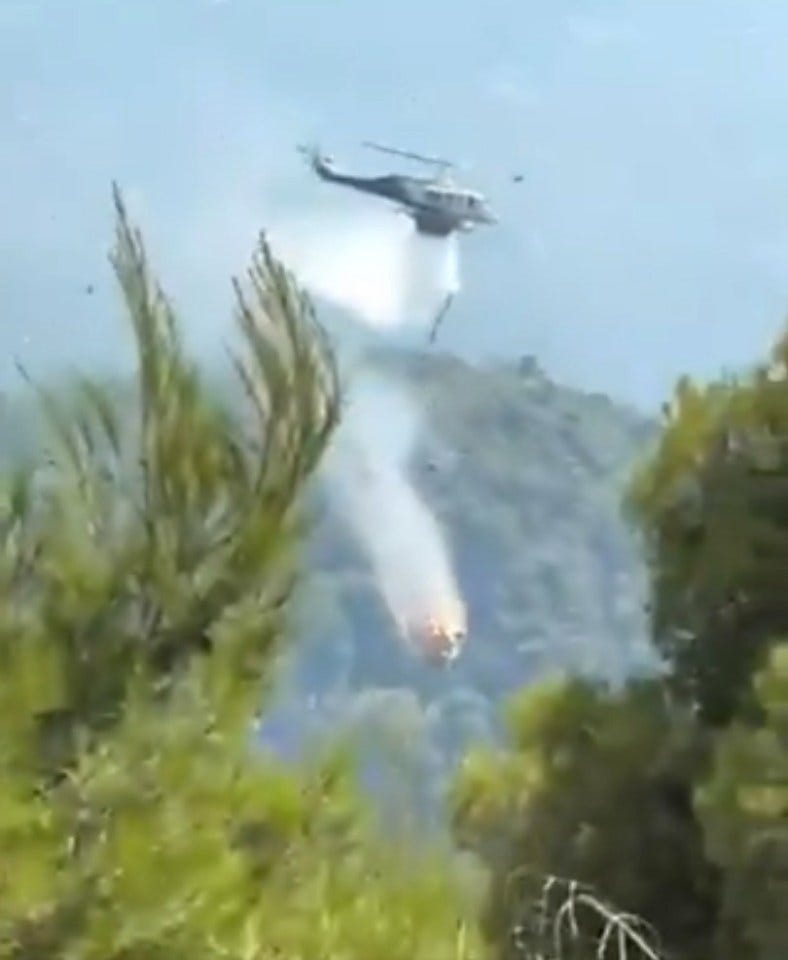
The fire started in neighbouring Viotia on Friday and spread into Attica over the weekend. Around 500 firefighters, including 46 volunteers from France and Romania, were tackling the blaze, with more than two dozen planes and helicopters deployed to support ground crews.
The wildfire has scorched 10,000 hectares and advanced near Megara after reaching Porto Germeno. Prime Minister Kyriakos Mitsotakis said extreme weather and wind gusts had tested the resilience of firefighters, civil protection, local government and citizens.
Sources: Bloomberg, CNBC

At least 35 people were killed and several others wounded when Sudanese army drones struck a traditional court in Garra al-Zawaya, a village in North Darfur controlled by the Rapid Support Forces. The Emergency Lawyers group said civilians had gathered there on Sunday for hearings on local cases and disputes.
The court, used to resolve local and tribal feuds, was also damaged. A witness said the session was being held under a tree with local community leaders, and that four tribal leaders and two RSF commanders were among those killed.
The attack underscored the growing role of drone warfare in Sudan’s three-year conflict between supporters of RSF commander Mohamed Hamdan Dagalo and Sudanese army chief Abdel Fattah al-Burhan. The United Nations said more than 1,000 civilians were killed in drone strikes during the first five months of this year.
Sources: Al Jazeera, The New Arab

Japan has confirmed a historic joint intervention with the United States to support the yen, after the currency hit its weakest level against the dollar since 1986. Finance minister Satsuki Katayama said Japan’s finance ministry intervened on Friday in co-ordination with the U.S. Treasury Department to counter excessive volatility and disorderly movements.
Katayama said Japan would not hesitate to conduct further joint intervention. U.S. Treasury secretary Scott Bessent also said the Treasury would not hesitate to participate again after Friday’s co-ordinated foreign exchange actions.
The move came as investors watched Prime Minister Sanae Takaichi’s spending plans, including a two-year cut in sales tax on food and soft drinks. Following Katayama’s comments, the yen strengthened by more than 1 per cent against the dollar to ¥155.50 before paring gains, while the Nikkei 225 fell as much as 2.2 per cent.
When asked what the US gained from the move, President Trump replied “Financial benefit. It’s also good for the world economy.”
Sources: FT, Wall Street Journal

China is defending its economic model that favours advanced industries over consumption as it prepares for trade talks with Europe and the United States. A meeting of top Communist Party leaders signalled policy continuity, calling for targeted support rather than consumer-focused stimulus and structural changes long urged by China’s trading partners and many economists.
The stance comes as Western countries accuse China of pushing cheaper goods into global markets, while Beijing says its products are increasingly better and its technology and science investments can benefit the world. Chinese leader Xi Jinping and U.S. President Donald Trump plan more face-to-face meetings this year, and Brussels has set an October deadline for Beijing to settle disputes.
Xu Tianchen, senior economist at the Economist Intelligence Unit, said China’s messaging sent a signal about drawing a red line, while Eswar Prasad, professor of trade policy at Cornell University, said Beijing’s export narrative was falling flat.
Sources: Japan Times, South China Morning Post

South Korea has recorded its highest temperature since modern observations began in 1904, as Yangsan reached 42.5C on Sunday afternoon. Authorities warned people in affected areas to immediately stop all outdoor activities after temperatures there exceeded 40C for a fifth consecutive day.
More than 20 localities were under emergency heatwave alerts, a warning category introduced this year. The Korea Meteorological Administration said indoor spaces without air conditioning were dangerous and urged people to move to cooling centres or shaded areas and stay hydrated.
The heatwave is disrupting life nationwide. The Korea Disease Control and Prevention Agency said 1,781 heat-related illness patients were recorded between May 15 and Friday, including 13 deaths, while South Gyeongsang’s agricultural reservoir levels fell from 52.9 per cent in early July to 41.7 per cent within a month, about half the normal level.
Sources: Korea Joongang Daily, The Guardian
Restacking or sharing this publication means more people can read it. Commenting extends the conversation. Liking shows your appreciation.
On this day …
On this day in 1492, Christopher Columbus departed the Spanish port of Palos with three ships - Santa María, Pinta and Niña - seeking a western sea route to Asia.
Instead, the expedition opened sustained contact between Europe and the Americas, reshaping trade, exploration, empire and human migration for centuries.
The voyage marked the beginning of an era that transformed economies, cultures and political power across the Atlantic world.
Few journeys have had such enduring global consequences, with its legacy continuing to be debated more than five centuries later.
How should history weigh exploration against its long-term consequences?