


US Expands Infrastructure Targets In Iran War
Iran Keeps Pressure On Hormuz And Gulf States
US Intel Says Iran Retains Strike Capacity
US Legal Experts Warn Iran Strikes May Be War Crimes
Hegseth Ousts Army Chief During Iran War
Macron Rejects Force To Reopen Hormuz
Zelensky Offers Maritime Help On Hormuz Crisis
Trump Removes Bondi After Mounting Internal Frustration
Report Says Burkina Army Killed Most Civilians
SpaceX Seeks $2 Trillion IPO Valuation
Please note that there will be no edition of 10 Things Global News on Monday 6th April - we will be back in your inbox on Tuesday

US President Donald Trump threatened further strikes on Iranian bridges and electric power plants after confirming a US attack destroyed the country’s largest suspension bridge between Tehran and Karaj, killing eight people and wounding 95. He warned more infrastructure could be targeted if Tehran did not accept Washington’s terms.
The bridge strike followed earlier warnings that additional energy infrastructure could be hit as the United States signalled the campaign might escalate despite earlier claims that strategic objectives were nearing completion. International law experts warned attacks on essential civilian sites could breach the Geneva Conventions.
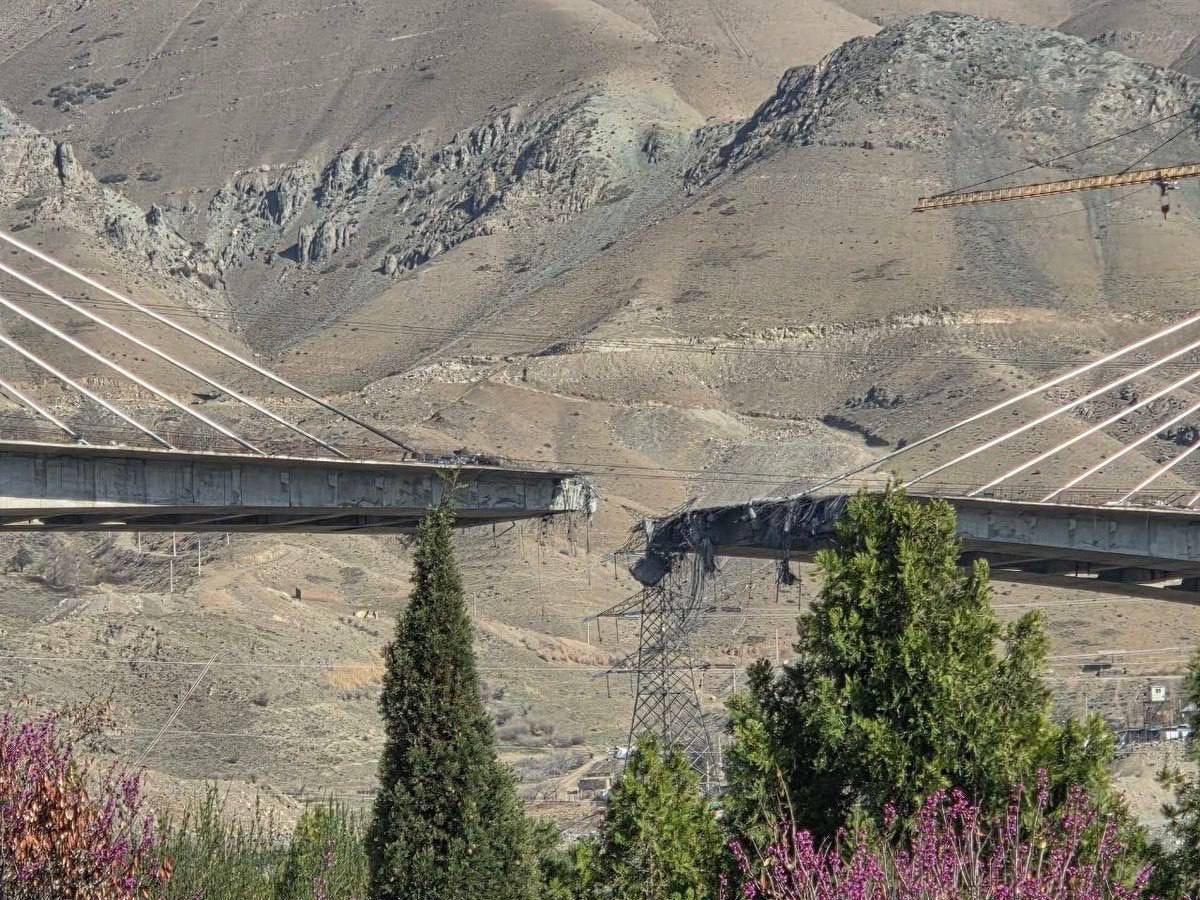
The war, which began on 28 February with US and Israeli attacks on Iran, after which Tehran launched strikes on Israel and Gulf states hosting US bases, has contributed to thousands killed and millions displaced. The UN has warned the world was on the edge of a wider war with global implications.
Sources: Reuters, The Guardian

Iran fired more missiles at Israel and Gulf Arab states on Thursday, showing it could still strike across the region even as Donald Trump said the threat from Tehran was nearly eliminated and suggested the war could end soon. Explosions were heard in Dubai before his address, Israel reported incoming missiles shortly afterwards, and sirens also sounded in Bahrain.
The attacks, alongside Iran’s chokehold on the Strait of Hormuz, have disrupted energy supplies far beyond the Middle East. Nearly all traffic through the waterway has halted, and 35 countries were due to discuss diplomatic and political measures to resume shipping once the fighting ends.
The conflict has pushed Brent crude to about $108 to $109, around 50% above its level on 28 February, while interrupting jet fuel supply and increasing pressure on stock markets, gasoline prices and a wider range of goods.
Sources: The Independent, PBS

Recent US intelligence assessments say roughly half of Iran’s missile launchers remain intact and thousands of one-way attack drones are still in its arsenal despite five weeks of daily US and Israeli strikes. The assessment also found a large percentage of coastal defence cruise missiles remained intact, preserving a key capability to threaten shipping in the Strait of Hormuz.
That picture contrasts with public claims from Donald Trump, who said Iran’s ability to launch missiles and drones had been dramatically curtailed and that very few launchers were left. Israeli military officials put the number of operational launchers lower, at roughly 20-25%, but do not count launchers buried or made inaccessible in caves and tunnels.
US and Gulf personnel, Israel and regional shipping have continued to face missile, drone and maritime threats, while private US assessments say a two-to-three-week timetable for ending operations is unrealistic.
Sources: CNN, Eurasian Times
More than 100 international law experts in the United States have signed an open letter warning that American strikes on Iran may amount to war crimes. The letter said the conduct of US forces and statements by senior officials raised serious concerns about violations of international human rights law and international humanitarian law, including potential war crimes.
The warning followed renewed threats from Donald Trump to strike Iran’s power, desalination, energy and oil infrastructure if Tehran did not accept Washington’s terms. The experts also cited Trump’s mid-March remark that the US might strike Iran “just for fun” and earlier comments from the Pentagon chief that the US does not fight with “stupid rules of engagement”.
The letter said experts were seriously concerned about strikes that had hit schools, health facilities and homes, including a strike on a girls’ school on the war’s first day.
Sources: Reuters, TRT World

Defence Secretary Pete Hegseth has removed the Army’s top uniformed officer, General Randy George, with immediate effect, as the United States continues its war against Iran. The Pentagon gave no reason for the move, which came nearly five weeks into the conflict and amid continued uncertainty over how long the campaign will last.
George, who had served as Army chief of staff since August 2023 after nomination under the Biden administration, is to be replaced on an acting basis by General Christopher LaNeve. Hegseth also removed two other Army generals, David Hodne and William Green, without explanation.
The decision extends a broader leadership shake-up under Hegseth, who has fired or overseen the early departure of more than a dozen senior generals and admirals since taking office. The latest changes come as additional US forces head to the Middle East and Donald Trump forecasts further military action against Iran.
Sources: Associated Press, BBC

French President Emmanuel Macron has rejected the idea of a military operation to reopen the Strait of Hormuz, calling such an approach unrealistic and saying the waterway can only be reopened in consultation with Iran. His remarks amounted to a direct rebuttal of Donald Trump’s calls for countries reliant on the route to take responsibility for restoring passage.
Macron said any operation by force would take too long and expose shipping to risks from Iran’s Revolutionary Guards and ballistic missiles. He instead argued for diplomacy, a ceasefire and a return to negotiations, while noting that the strait is strategic for energy flows, fertilisers and international trade.
The Strait of Hormuz, which handles about a fifth of global oil and liquefied natural gas supplies, has been effectively shut by Tehran during the war. Macron also criticised shifting American messaging on the conflict and warned that constant doubt over alliance commitments weakens NATO.
Sources: The Independent, South China Morning Post

Volodymyr Zelensky said Ukraine was ready to share its maritime security expertise to help protect navigation in the Strait of Hormuz, as the United Nations prepared to discuss an international response to the worsening crisis in the waterway. He said Ukraine had relevant experience from more than four years of war with Russia, including efforts to keep Black Sea sea lanes open and develop technologies such as sea drones.
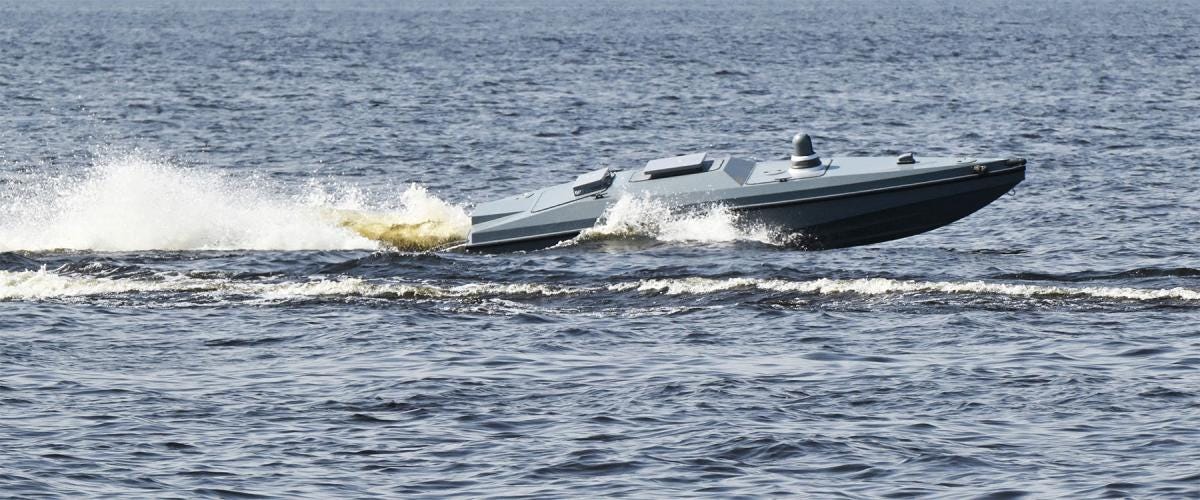
The offer came after Ukrainian Foreign Minister Andrii Sybiha joined a virtual meeting of about 40 countries focused on reopening the strait without triggering wider regional escalation. Zelensky also said Rustem Umerov, secretary of Ukraine’s National Security and Defense Council, would present a detailed report on 3 April covering work with countries from the Gulf to Turkey.
At the same time, the UN Security Council was preparing to vote on a Bahrain-drafted resolution authorising defensive force to protect shipping from Iranian attacks.
Sources: Kyiv Post, Deccan Herald

Donald Trump removed Pam Bondi as attorney general on Thursday, ending the tenure of a loyalist who had overseen upheaval inside the Justice Department. Her departure followed months of scrutiny over the department’s handling of files related to the Jeffrey Epstein investigation and failed efforts to meet Trump’s demands for criminal cases against his adversaries.
Trump said Bondi would move to a new private-sector role, while Deputy Attorney General Todd Blanche, one of his former personal lawyers, was named acting attorney general. Bondi said she would spend the next month helping with the transition.
Bondi had entered office pledging not to politicise the department, but went on to oversee large-scale firings, investigations into Trump’s perceived enemies and the departure of thousands of career employees. Her removal comes after Trump privately discussed firing her as his frustrations mounted over her handling of the Epstein files and wider political pressures.
Sources: Associated Press, New York Times

Human Rights Watch said Burkina Faso’s army and allied civilian militias killed more civilians than jihadist groups between January 2023 and August 2025, with at least 1,255 deaths attributed to official forces in 33 incidents. The group said all parties to the conflict were responsible for acts amounting to war crimes and crimes against humanity.
The report said at least 1,837 civilians were killed in 57 incidents across 11 regions during the period, while JNIM, an al Qaeda affiliate, was responsible for at least 582 deaths in 24 attacks. Human Rights Watch based its findings on more than 450 interviews, as well as analysis of photos, videos and satellite imagery.
The rights group said the military junta that took power in 2022 had failed to stabilise the country and warned that state violence, including alleged targeting of Fulani civilians, could strengthen militant groups and deepen Burkina Faso’s crisis.
Sources: DW, France 24

SpaceX is targeting an initial public offering valuation above $2 trillion, according to reports that say the company and its advisers are presenting the figure to prospective investors ahead of meetings in the coming weeks. If achieved, the listing would set up what could become the largest stock market debut on record.

The company has reportedly filed confidentially for an IPO that could take place later this year and could raise as much as $75 billion. That would surpass the 2019 Saudi Aramco listing, which remains the biggest IPO so far. The higher target would also mark a sharp rise from the $1.25 trillion valuation reported in February after the merger with xAI.
The proposed valuation reflects investor debate over how much value should be assigned to the cash-generating Starlink business, launch dominance and more speculative ventures including Starship and space-based AI.
Sources: Bloomberg, Reuters
On this day …
On this day in 2016, journalists began publishing the Panama Papers, a vast leak of financial records exposing offshore structures used by political leaders, business figures and public officials around the world.
The disclosures triggered investigations, resignations and new transparency debates across multiple jurisdictions.
The episode highlighted how global financial networks could operate beyond traditional regulatory oversight and prompted renewed discussion about tax policy, governance standards and accountability in an interconnected economy.
Did the revelations change global financial behaviour, or mainly public expectations about transparency?
Ballard Partner lobbyist Pam Bondi invests Saudi UAE Qatar USA Iran War may have contributed her no longer at DOJ ??