


Hamas Disarmament Plan Faces Verification Test (Middle East)
Saudi Arabia Moves To Protect Red Sea Oil Route (Conflict)
US Iran Strikes Deepen Middle East War Risk (Conflict)
Suez Route Exposed After Egypt Port Attack (Middle East)
Russian Missile In Poland Raises NATO Alarm (Conflict)
Spain Sends Troops After Ceuta Migrant Surge (Europe)
Europe’s Wildfires Expose Climate Fire Shift (Climate)
Danube Drought Forces Nuclear Output Cuts (Climate)
Cuba Opens Economy As US Sanctions Bite (Geopolitics)
China Pledges Spending But Avoids Big Stimulus (China)
A succinct daily briefing delivered each weekday to help you stay on top of the stories shaping the world.

US officials have announced that Hamas and other Palestinian armed groups had agreed to a multiphase plan that would see them disarm and lose power in Gaza if Israel withdraws from the enclave. The announcement follows months of diplomacy involving the US, Israel, Hamas, Middle East mediators and the Board of Peace.
President Donald Trump called the agreement a “monumental step” towards peace and security, but Board of Peace chairman Nickolay Mladenov warned that implementation and verification had to be real. Ghazi Hamad, a member of Hamas’s negotiating team, said the group had agreed to place weapons in storage under a Palestinian-run national committee, not hand them to Israel.
Israel has yet to approve the agreement, while mediators said talks with Hamas would continue in Egypt on Friday. The road map aims to set an implementation schedule within two weeks.
Sources: Wall Street Journal, Al Jazeera

Saudi Arabia is preparing a major military response to Houthi attacks that threaten its Red Sea oil export route, with Yemeni sources saying forces are concentrating for a possible offensive in central Yemen. Riyadh is also trying to organise a multinational naval coalition to protect shipping in the Red Sea, the Bab al-Mandab strait and the Gulf of Aden.
The Saudi defence ministry said 14 states had supported the maritime coalition, while Riyadh has also asked the US and European countries including Germany, France, the UK and Italy to join.
The Houthis announced a blockade against Saudi ships on 20 July and have claimed multiple attacks on Saudi vessels and oil-linked sites.
The stakes have risen meaningfully because the Red Sea has become significantly more important since the US-Iran conflict disrupted the strait of Hormuz. More than half of Saudi oil is now moved overland by pipeline to terminals at Yanbu in the Red Sea.
Sources: The Hill, The Guardian

The US and Iran exchanged further missile barrages on Thursday as renewed strikes dimmed any hopes for a quick end to the five-month conflict and widened fears of a wider war across the Middle East.
US Central Command said American forces hit dozens of Revolutionary Guard targets, including command centres, missile and drone facilities, coastal surveillance and defence sites. The strikes followed an Iranian missile attack on a US base in Jordan, while Jordan said it intercepted Iranian missiles for a second consecutive day and Kuwait said a strike killed one worker.
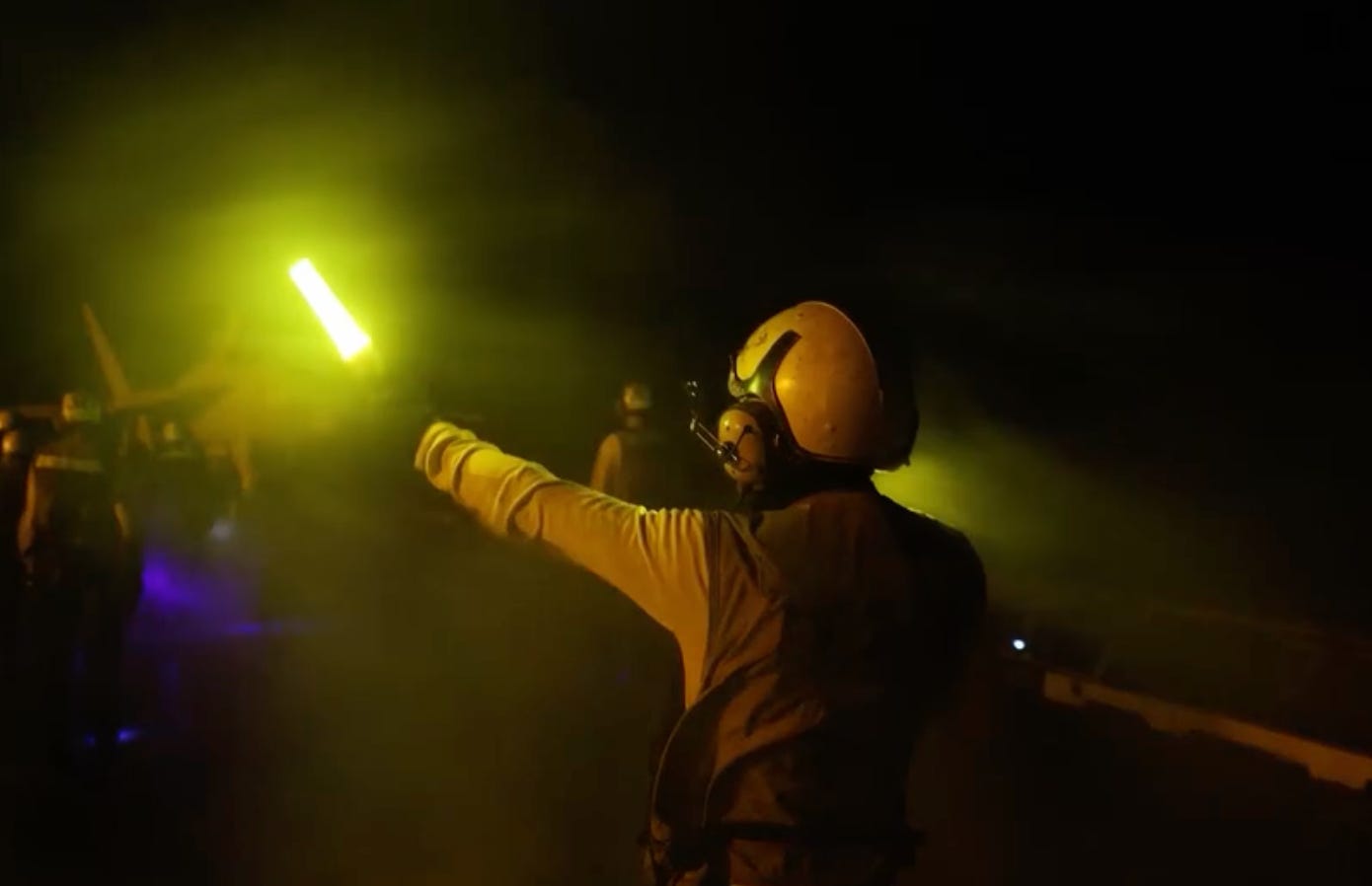
The conflict has disrupted energy flows through the strait of Hormuz, where wartime traffic fell from 82 ships during July 13-19 to only 39 from July 20-26, according to Lloyd’s List Intelligence. The latest exchange also followed Saudi Arabia joining US strikes on Iran-backed militias in Iraq.
Sources: Associated Press, Washington Post

An attack on Egypt’s Port of Damietta has exposed the Suez Canal’s vulnerability as conflict across the Middle East threatens wider disruption to global trade & energy flows.
Two ships, including a US-owned gas storage tanker, caught fire in Wednesday’s attack, which Egypt said appeared to have been carried out by drone. The episode did not appear to disrupt Suez traffic so far. The canal carries about 10% of all seaborne trade and is the shortest maritime route between Europe and the Indian Ocean so it is vitally important.
The risk is rising because Suez and the Sumed pipeline had become safer northbound export routes for Saudi Red Sea energy cargoes since Hormuz disruption and Houthi threats complicated other routes. Dimitris Ampatzidis, a maritime risk analyst at Kpler, said the Hormuz and Suez risk stories were increasingly separate but compounding.
Sources: Reuters, New York Times

A Russian missile and drone barrage across Ukraine killed at least 10 civilians, including children, and injured more than 50 others, Ukrainian officials said, as NATO scrambled aircraft after a missile crossed into Poland during the overnight onslaught.
NATO said the Russian missile entered Polish airspace and landed in a rural area without causing injuries or damage. NATO Secretary-General Mark Rutte called it another reckless act by Russia, while Polish Prime Minister Donald Tusk said there was no reason to believe Poland had been the target.
The assault expanded Russia’s almost daily bombardment and exposed Ukraine’s shortage of Western-supplied air defences. Ukrainian President Volodymyr Zelenskyy said Russia launched more than 70 missiles and over 280 attack drones, while Russia’s defence ministry said it targeted Ukrainian air bases, arms factories and military logistics facilities.
Sources: Associated Press, The Guardian

Spain is sending troops to Ceuta after thousands of migrants entered the North African enclave from Morocco on Thursday, overwhelming local authorities and turning the border into a security and humanitarian emergency.
At least 15 people drowned while trying to reach the territory, while Spanish media estimated that between 2,000 and 3,000 people entered Ceuta. Spain’s interior ministry said human trafficking networks were exploiting a recent Supreme Court ruling that migrants stopped at sea while trying to reach Ceuta or Melilla (another Spanish enclave in North Africa) cannot be summarily returned to Morocco.
The breach also triggered political tensions inside Europe. Prime Minister Pedro Sanchez pledged to return things to normal immediately, while Italian Prime Minister Giorgia Meloni said she was considering extraordinary measures, including suspending the open-border Schengen agreement with Spain.
Ceuta and Melilla represent the European Union’s only land border with Africa.
Sources: BBC, New York Times

Europe’s wildfire crisis is intensifying as climate change makes extreme fire weather more common, with major blazes spreading across France, Spain, Greece, Portugal, Italy, the UK and Albania.
The Gironde fire began on July 22, burned roughly 420 square kilometres, destroyed around 200 homes and forced more than 220,000 people to evacuate as firefighters tried to stop it reaching Bordeaux’s western suburbs. Around the same time, two fires southwest of Madrid merged, forcing tens of thousands to flee.
Raul Cordero Carrasco, a climate researcher at the University of Groningen, said firefighters could not stop a fire when conditions were as extreme as those seen in Europe.
A Scientific Reports study said southern Europe’s fire-prone summer days have more than doubled since 1981, while Europe is warming faster than any other continent.
Sources: Bloomberg, Al Jazeera

Hungary and Romania have cut nuclear output as record-low Danube water levels disrupt cooling, river traffic and energy supply during Europe’s heatwave.
Hungary’s Paks plant cut output at reactor 2 by 50% on Thursday before Prime Minister Péter Magyar said the country’s only nuclear plant would be shut down entirely for the first time in 44 years. He warned that an energy crisis situation could arise from Monday and urged the public to reduce power use.
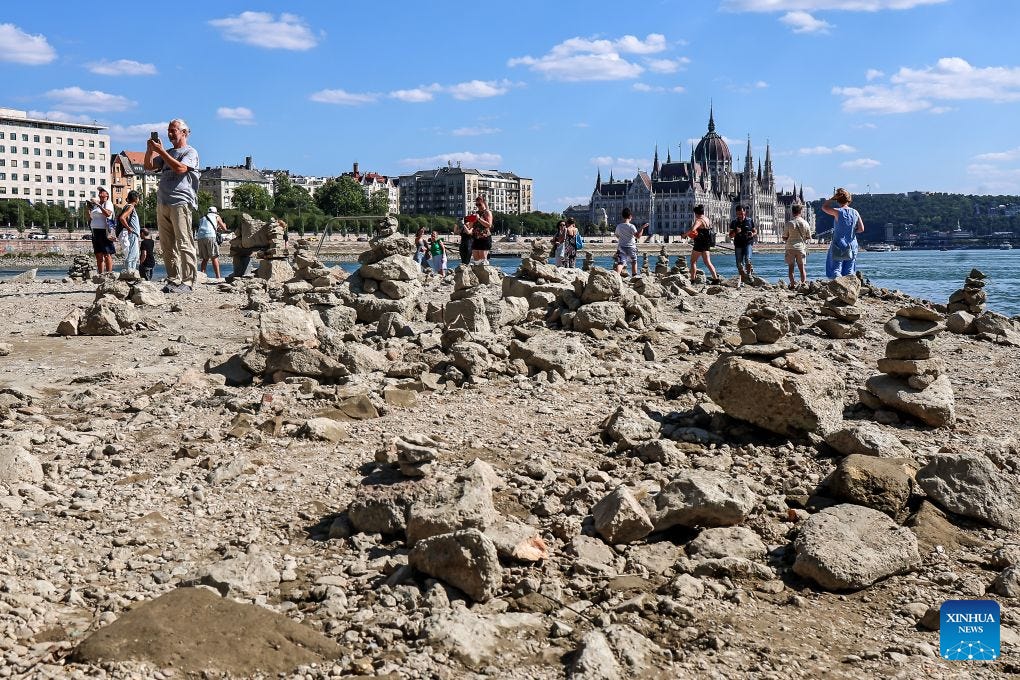
Romania shut one reactor at Cernavoda earlier this week because of low Danube levels, while its energy ministry considered closing the second before keeping it operating overnight.
River traffic has also been hit, with Hungary saying cargo ships had almost entirely stopped operating and Bulgaria evacuating 186 tourists from a cruise ship that ran aground near Vidin.
Sources: DW, BBC

Cuba has announced details of reforms opening parts of its state-run economy to private industry, as US sanctions and a six-month oil blockade deepen strain on the communist-run island.
Lawmakers discussed easing restrictions on land use, allowing businesses to import fuel and medications and authorising private tourist companies to operate.
Cuban President Miguel Diaz-Canel said the changes were not being made to please the US and that healthcare, science, culture and strategic services would not be privatised.
Prime Minister Manuel Marrero Cruz said Cuba had authorised its first foreign investment venture to import and sell fuel while nearly 200 Cuban businesses had received permission for wholesale fuel distribution. Lawmakers also approved agriculture and tourism measures, but Marrero said results would be achieved gradually and that the most difficult stage was beginning.
Sources: Reuters, Bloomberg

China’s leadership has signalled faster public spending but looks to be avoiding sudden stimulus as weaker growth data and soft domestic demand test the world’s second-biggest economy.
Officials at the Communist Party politburo agreed to accelerate fiscal expenditure and effectively expand domestic demand, according to state media. President Xi Jinping said the economy faced some difficulties and challenges and reports from the meeting said practical and effective incremental policies would be introduced.
China’s GDP rose 4.3% in the second quarter, below the official annual target of 4.5% to 5%. Economists said Thursday’s announcement showed no major policy shift, with Beijing still relying on cautious support rather than sweeping reforms. China’s domestic economy has faltered, while consumer spending remains weak, youth unemployment remains high and much of the housing market is still in crisis, even as exports remain strong.
Sources: FT, New York Times
Restacking or sharing this publication means more people can read it. Commenting extends the conversation. Liking shows your appreciation.
On this day …
On this day in 1917, Allied forces launched the Third Battle of Ypres, better known as Passchendaele.
Fought in relentless rain and deep mud, the offensive became one of the most costly and controversial campaigns of the First World War.
After more than three months of fighting, hundreds of thousands of soldiers had been killed or wounded for relatively limited territorial gains.
Passchendaele has since become a symbol of the human cost of industrial warfare and the difficult balance between military objectives and sacrifice.
What lessons should modern military planners still draw from one of history’s most infamous battles?