


Hormuz Oil Flows Recover But Risk Remains (Markets)
Iran’s Rial Hits Record Low as Talks Intensify (Middle East)
Senate Vote Exposes Widening Divide Over Israel (US)
Court-Ordered Return Blocked by Israeli Settlers (Middle East)
NATO Urges Calm Over Russian Sabotage Campaign (Europe)
Europe Has Few Answers for Winter Energy Crunch (Europe)
First Child Euthanised Under New Dutch Rules (Europe)
Morocco Names Its First Female Prime Minister (Politics)
Bardella Allegations Test National Rally Rebrand (France)
Malaysia Begins Controversial Myanmar Repatriations (Asia)
A succinct daily briefing delivered each weekday to help you stay on top of the stories shaping the world.

Oil flows through the Strait of Hormuz averaged 13.1 million barrels a day last week, just under 80% of the 17.1 million pre-war level, according to Kpler. JPMorgan estimates total Middle Eastern crude flows through and around the strait have recovered to 98% of pre-war levels.
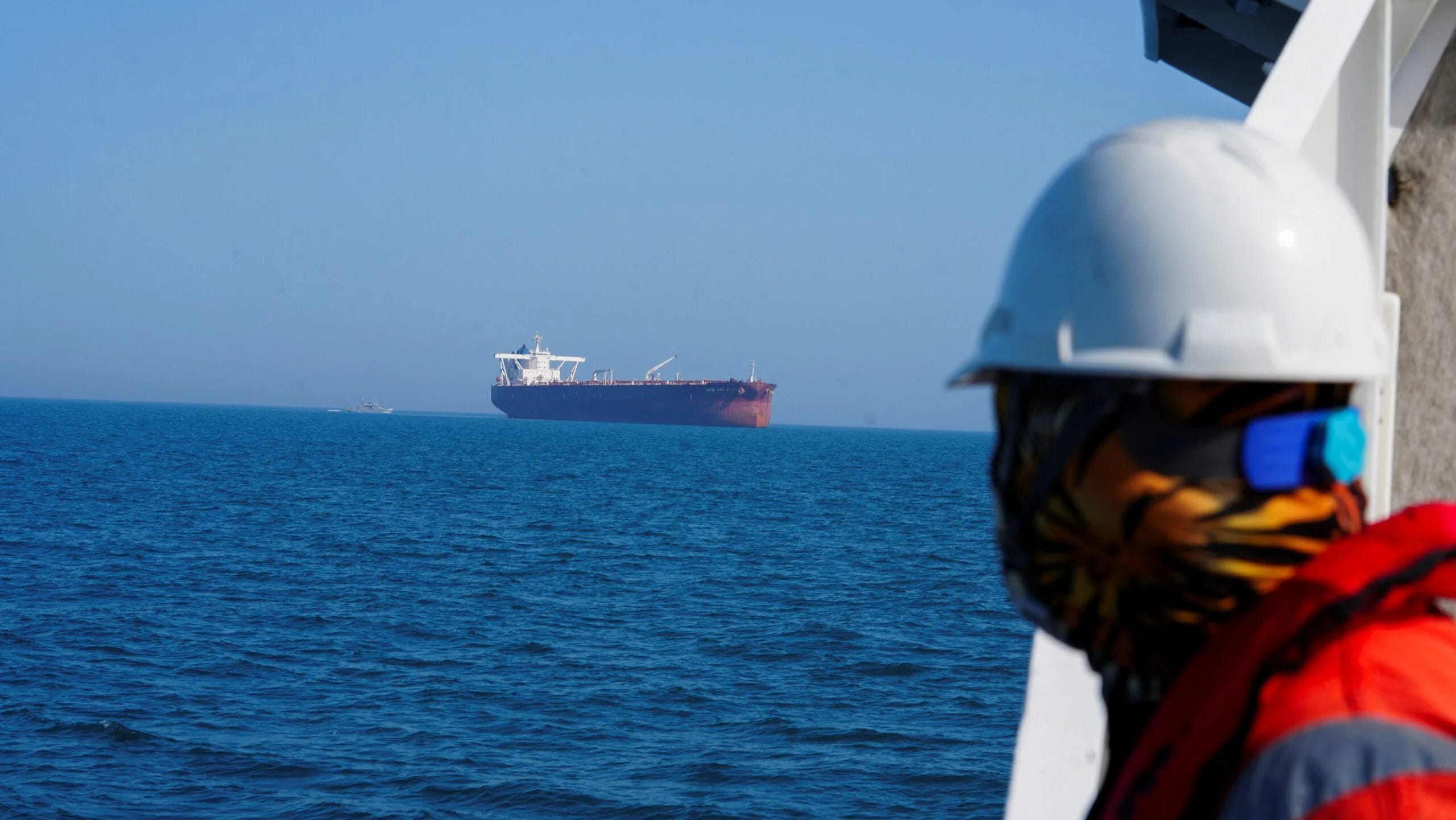
The recovery has relied on military-escorted shuttles, “dark” transits and Saudi barrels redirected through Hormuz after the East-West pipeline was attacked. Yet the wider market remains constrained. Global inventories have fallen by around 2 billion barrels during the Iran war while refined product flows from the Middle East remain at only 58% of pre-war levels.
Kpler commodity research director Matt Smith says Iran is losing influence over the strait. But JPMorgan head of global commodities strategy Natasha Kaneva warns that higher crossings reflect an industry adapting to sustained risk, not improved safety. Iran has recently increased attacks on tankers as it seeks to deter transits.
Sources: CNN, The Economist

Iran’s currency has fallen to a record low of more than 2.5 million rials to the US dollar, just 27 days after reaching its previous low of 2.2 million. The rial has repeatedly hit new lows since the war began in February, while a US naval blockade on Iranian oil and new sanctions have intensified longstanding economic strain.
US President Donald Trump said he did not know whether Iran would “give up yet” but insisted it eventually would. His administration says the blockade and sanctions are having their intended effect, while Iranian President Masoud Pezeshkian told the UN General Assembly last week that Tehran would never surrender to US pressure.
Meanwhile, Iranian Foreign Minister Abbas Araghchi said indirect negotiations with Washington over reopening the Strait of Hormuz had become “more serious”. Qatari intermediaries are expected to approach the US again, with any response then conveyed to Tehran.
Sources: Associated Press, Canberra Times

In the US Senate Republicans blocked a Democratic-led resolution requiring the State Department to report on violence and human rights abuses in the West Bank, including the deaths of American citizens. The measure failed 47-51, with Republican Rand Paul supporting it and Democrat John Fetterman opposing it.
The resolution would not itself have cut aid to Israel but failure by the administration to provide a report could have triggered restrictions. Democratic Senator Chris Van Hollen of Maryland, the lead sponsor, cited the deaths of nine Americans since 2022 and said recipients of US taxpayer dollars should act in line with US laws and values.
The vote exposes a widening partisan divide over Israel. Democrats have become increasingly willing to challenge Israeli Prime Minister Benjamin Netanyahu’s government and oppose arms sales, while Republicans continue to strongly support his coalition.
The split comes weeks before US midterm elections that could change control of Congress.
Sources: Politico, Reuters

More than 100 Israeli settlers attacked Palestinians and security forces in the West Bank, preventing a Palestinian family from returning home despite a Supreme Court order requiring the military to ensure their safe return. The Toubassi family had fled Jalud in July after repeated settler attacks and briefly returned on Monday before being evacuated again as settlers attacked the property.
The military said settlers blocked roads, burned tyres, threw rocks at security forces and set Palestinian property alight. Three people were arrested. Israeli Prime Minister Benjamin Netanyahu condemned the violence, while President Isaac Herzog called the attack “a moral stain”.
The incident comes amid a wider surge in settler violence. The UN humanitarian office has recorded more than 1,600 attacks on Palestinians and their property this year, putting 2026 on course to be the worst year since it began tracking such violence in 2006.
Sources: New York Times, FT

NATO Secretary General Mark Rutte has urged allies to remain calm over what European governments describe as a growing Russian campaign of sabotage and interference. Estonia accused Russian special services of ordering an August arson attack on defence company Milrem Robotics, while Moscow rejected the allegation as baseless.
Rutte said Russia was trying to weaken NATO resolve and support for Ukraine but was failing to undermine alliance unity. Lithuanian Prime Minister Mindaugas Sinkevicius said intelligence services had no evidence Moscow was preparing something bigger in the coming weeks or months, although the risk remained.
Estonian Prime Minister Kristen Michal said a conventional Russian attack on Europe was currently improbable because of NATO’s response capability and Russia’s forces being tied down in Ukraine. He nevertheless warned that covert activity designed to test and divide allies was likely to persist while Moscow maintained its military goals.
Sources: Euronews, NPR
If you appreciate what you are reading then please Restack it!

Europe has few immediate tools to shield consumers from another energy crunch as winter approaches, with gas reserves unusually low and energy costs surging. EU countries have spent more than €100 billion extra on energy imports since the Iran war began, while consumers in some countries are paying nearly 50% more at the pump for gasoline.
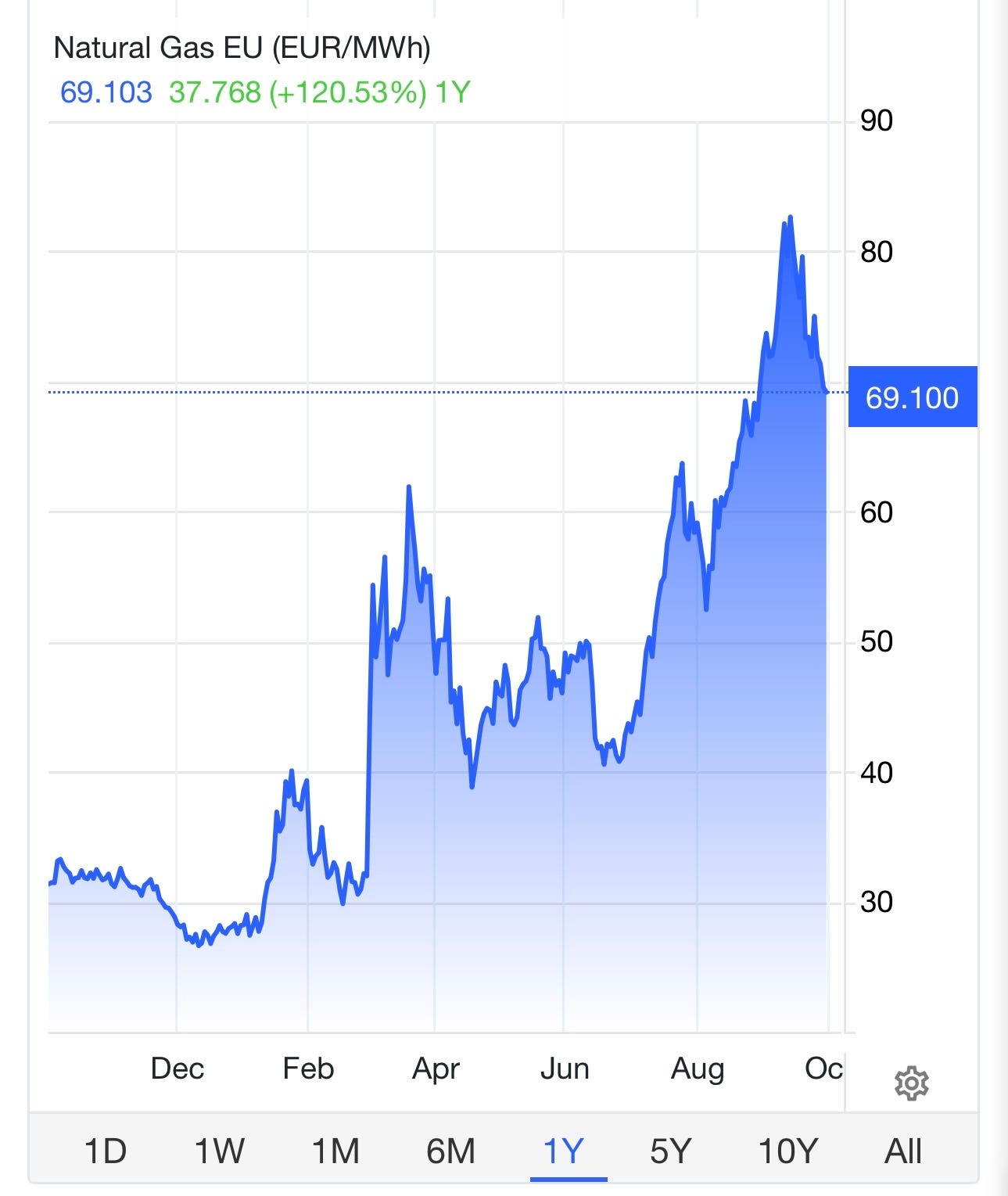
EU energy commissioner Dan Jørgensen said ministers were considering faster electrification and expanded electricity infrastructure, arguing that imported fossil-fuel dependence was unsustainable. Irish Energy Minister Darragh O’Brien said governments could use tax measures but could not protect consumers from every price increase.
Europe is particularly exposed to diesel disruption, with about half its supply coming directly from the US. Washington is considering an export ban, although European officials hope it will not proceed. International Energy Agency executive director Fatih Birol said Europe was among the most exposed regions but strategic petroleum releases were not yet a priority.
Sources: Politico Europe, Associated Press

A one-year-old child with extensive and irreversible brain damage has become the first reported case of euthanasia in the Netherlands under 2024 rules covering seriously ill children aged one to 12. The child also had severe cerebral palsy, epilepsy and visual impairment with doctors concluding there was no prospect of improvement.
The decision followed disagreement over whether euthanasia was justified. Independent physicians initially concluded the child was not continuously suffering unbearably and that palliative care and other medication remained reasonable alternatives. Further treatment was attempted but halted after causing additional side effects. Another independent doctor later concluded the suffering was clear and unbearable and that the requirements had been met.
The government review committee concluded the physician acted with due care. The rules require unbearable suffering without prospect of improvement and termination of life to be the only reasonable way to end it.
Sources: CBS News, Euronews

Morocco’s King Mohammed VI has named Fatima Ezzahra El Mansouri as the country’s first female prime minister after her centrist Authenticity and Modernity Party won the most seats in parliamentary elections. El Mansouri, 50, is the mayor of Marrakesh and served as urban planning and housing minister in the previous government.
Her appointment makes her only the second woman to lead a government in the Arab world, after Tunisia’s Najla Bouden. El Mansouri described her selection as historic and a source of pride for Moroccan women.
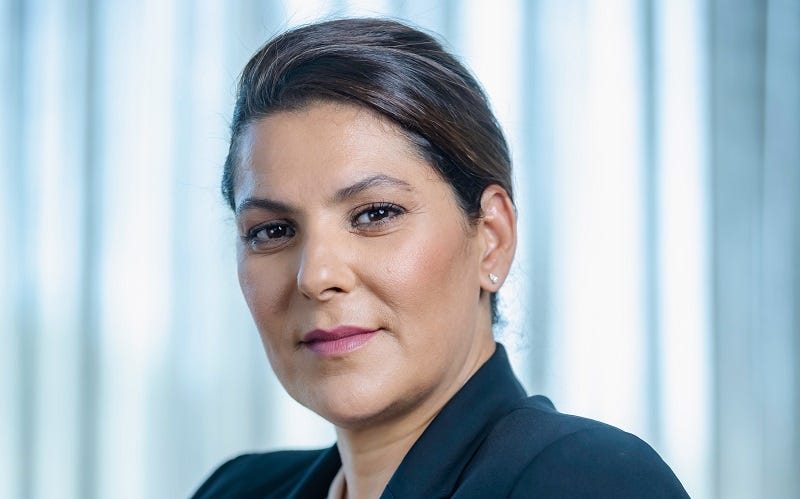
Her immediate challenge is forming a government. Pam won 97 of parliament’s 395 seats, well short of the 198 required for an absolute majority. The party has fallen out with the National Rally of Independents, while the Justice and Development Party, which rebounded to 54 seats, has said it will remain in opposition and ruled out a partnership with Pam.
Sources: BBC, New York Times

National Rally president Jordan Bardella has filed a defamation lawsuit against Mediapart after it alleged he made antisemitic remarks in private messages between 2013 and 2015. Bardella, 31, said the statements were not his and described the report as an attempt to destabilise campaigning ahead of France’s presidential election next year.
The allegations challenge the National Rally’s decade-long effort to distance itself from its racist and antisemitic past. Bardella has become a central figure in that strategy, presenting the party as a defender of France’s Jewish population and supporting closer ties with Israel.
Marine Le Pen, the party’s presidential candidate, said she believed the report was a manipulation and has previously said Bardella would become prime minister if she wins. Mediapart said it independently authenticated the messages, while Reuters said it had not. The allegations remain disputed, but they place the party’s efforts to reshape its image under renewed scrutiny.
Sources: Politico Europe, Reuters

Malaysia has begun repatriating undocumented migrants from Myanmar, with 1,476 people boarding three Myanmar navy ships on Tuesday in the first phase of a plan covering around 5,000 people. Malaysia says those selected consented to return voluntarily but migrants, relatives and human rights groups have challenged that claim.
Rights groups warn returnees could face violence, persecution or forced conscription into Myanmar’s civil war. Malaysia barred the UN refugee agency from screening those being returned, while one migrant’s sister said her brother had been told to sign a paper and informed he would be sent back by ship.
Malaysian Prime Minister Anwar Ibrahim has described the refugees as an economic and security burden and wants to repatriate about 200,000 people, including Rohingya. The Rohingya are stateless in Myanmar, with many of those returning fearful of being forced to fight after arrival.
Sources: New York Times, BBC
Restacking or sharing this publication means more people can read it. Commenting extends the conversation. Liking shows your appreciation.
On this day …
On this day in 1947, Pakistan and the Mutawakkilite Kingdom of Yemen were admitted to the United Nations, becoming two of its earliest new members after the organisation’s creation in 1945.
Pakistan had existed as an independent state for barely six weeks, following the partition of British India in August. Yemen, by contrast, was an established independent monarchy whose origins predated the UN by decades. Their admission reflected the early expansion of an institution initially dominated by the Allied powers that had emerged victorious from the Second World War.
The UN had 51 founding members in 1945. Today it has 193, reflecting the extraordinary transformation of the international system that followed.