


Doha Talks Unclear As U.S.-Iran Truce Frays (Middle East)
Iran Hardens Hormuz Position Before Doha Talks (Middle East)
Lebanon Deal Risks Locking In A Stalemate (Middle East)
Britain Recasts Defence Around Ukraine Lessons (UK)
Lukashenko Resists Deeper Role In Ukraine War (Europe)
Poll Shows U.S. Support For Foreign Aid Endures (US)
Heatwave Spreads Across Both Europe And U.S. (Climate)
EU And China Open Three Months Of Trade Talks (Trade)
World Bank Drops Climate Lending Target (World)
Australia Locks In Pacific Security Pact With Vanuatu (Geopolitics)
A succinct daily briefing delivered each weekday to help you stay on top of the stories shaping the world.
President Donald Trump said the United States and Iran would meet in Doha on Tuesday, but Iran said no talks were scheduled, exposing fresh disagreement over the June ceasefire accord after days of U.S. and Iranian strikes.
Both sides have accused the other of violating the agreement, which set at least 60 days for negotiations on a permanent truce, Iran’s nuclear programme and the Strait of Hormuz.
The dispute now centres on what the memorandum actually requires. Iranian officials said a technical team would go to Qatar to discuss the release of $6 billion in frozen assets, while U.S. officials said technical issues were already being discussed.
Maritime traffic has resumed but remains below prewar levels, with 108 verified crossings recorded between June 26 and 28 against a daily prewar average of 130 or more.
Sources: Washington Post, Reuters

Iran has intensified its claim to control maritime traffic through the Strait of Hormuz ahead of fresh negotiations with the United States, raising the stakes around the next phase of diplomacy.
Deputy Foreign Minister Kazem Gharibabadi said Iran wants an agreement with Oman to oversee ships passing through the waterway, but would move ahead with its own plans if Oman was not interested. He also said Iran would designate any temporary transit routes in the strait.

The tougher line comes before talks the United States has said are due in Doha on Tuesday. President Donald Trump said the meeting might or might not prove important, while stressing that the focus remained the denuclearization of Iran. Oman and France reaffirmed their commitment to freedom of navigation without conditions or restrictions, even as oil tankers continued to pass through the strait despite recent attacks.
Sources: Bloomberg, The Guardian

A United States-brokered framework agreement between Israel and Lebanon ties Israeli withdrawal from southern Lebanon to the verified disarmament of non-state armed groups, including Hezbollah. Hezbollah has rejected disarmament, while Prime Minister Benjamin Netanyahu said Israel would continue to hold territory in the security zone until Hezbollah and other organisations are disarmed and no further threat is posed from Lebanon.
Analysts and politicians say the condition is unattainable and risks entrenching a stalemate rather than ending the war. They say the structure puts the burden on Lebanon without a reciprocal guarantee of Israeli withdrawal, giving Israel political cover for an open-ended military presence in the south and leaving the Lebanese state caught between obligations it cannot meet and sovereignty it cannot fully reclaim.
President Joseph Aoun called the agreement a first step towards restoring Lebanon’s sovereignty.
Sources: Reuters, Al Jazeera

Britain is set to publish a Defence Investment Plan that recasts its armed forces around lessons drawn from Ukraine’s war against Russia, with the Ministry of Defence saying the focus is now on “cheap systems destroying high-value targets and innovation cycles measured in weeks, not years”.
The shift comes as the government prepares one of the biggest shake-ups of the armed forces in decades and argues that state conflict has returned to Europe.
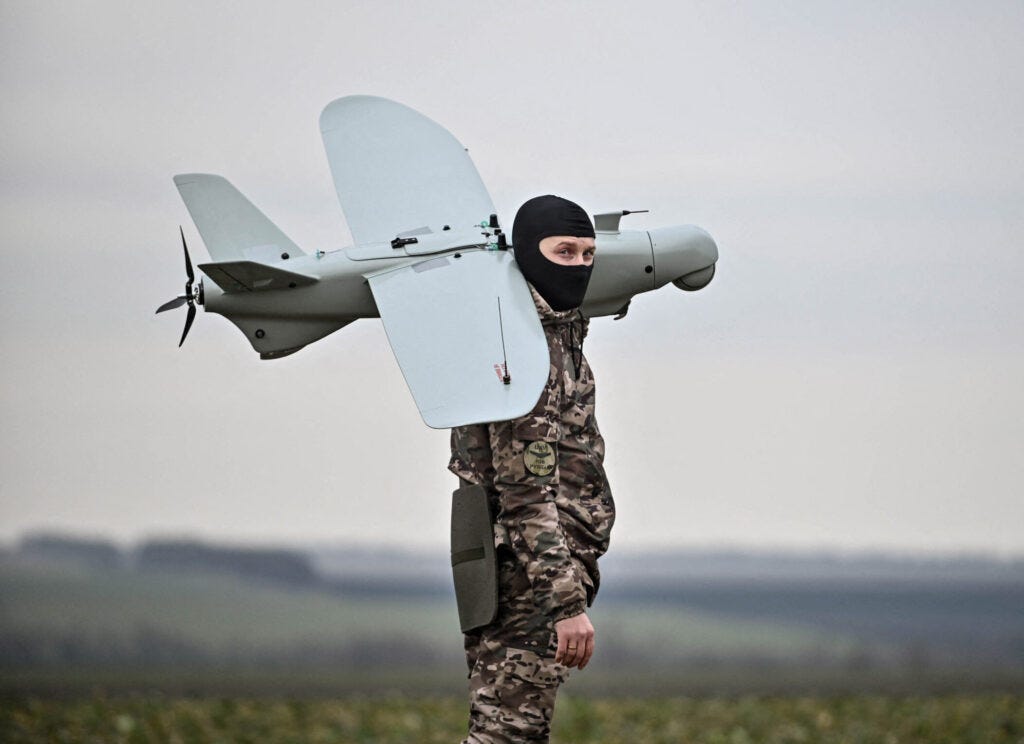
The plan drops new money for up to eight Type 83 destroyers and Type 32 frigates and instead backs at least six Common Combat Vessels designed to act as control ships for uncrewed systems. It also includes £5 billion for a drone transformation, with the Ministry of Defence citing the 200,000 drones used each month by Ukraine as the model to copy.
Sources: Politico Europe, FT

Russia’s alliance with Belarus is facing a new test as President Alexander Lukashenko has resisted deeper involvement in Vladimir Putin’s war against Ukraine, warning Russian officials there was no need for Belarus to be drawn into the conflict.
After talks with Russian Ambassador Boris Gryzlov in Minsk, Lukashenko said his country’s position was peaceful and that Belarus did not want to fight Ukrainians.
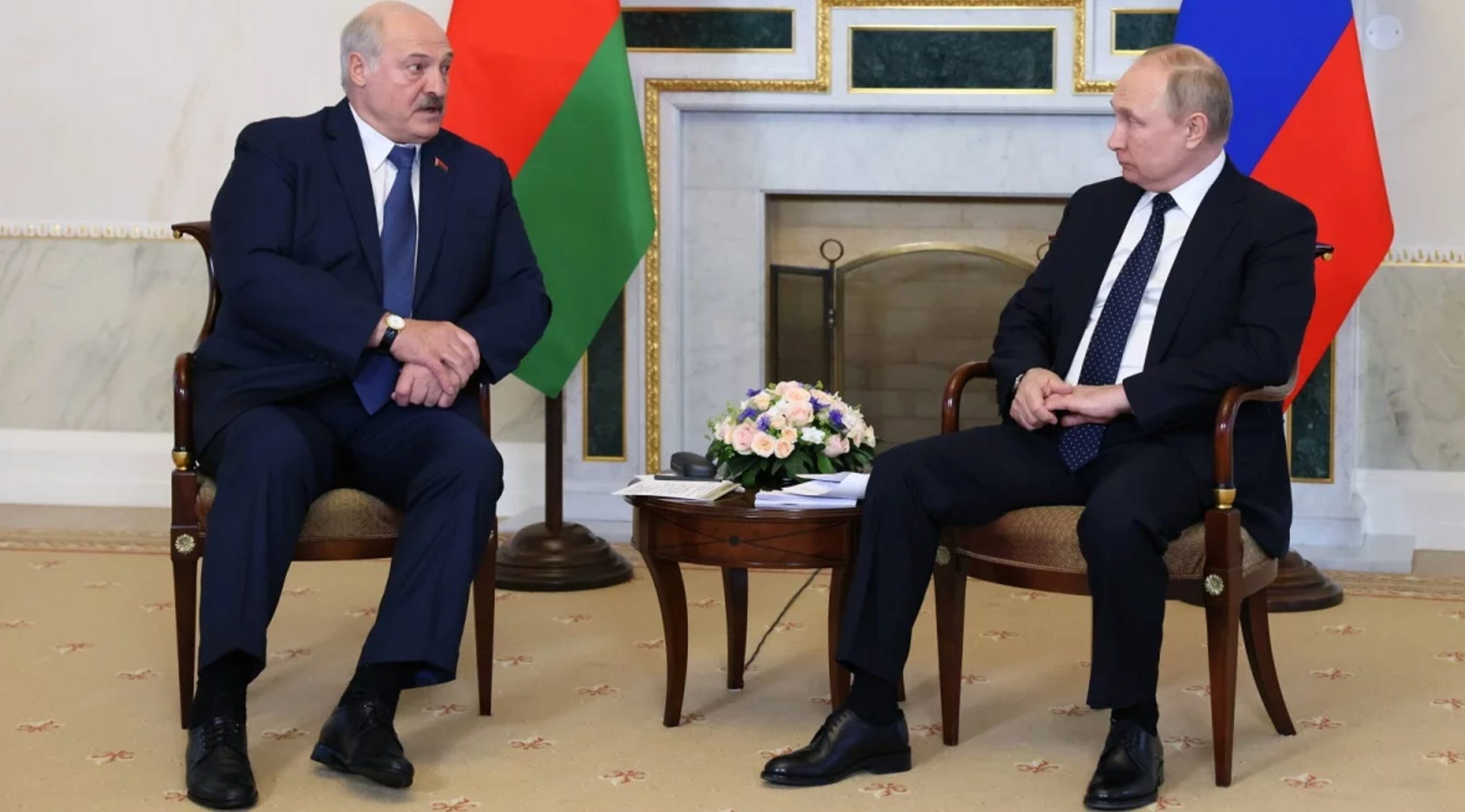
The pressure on Minsk comes as military ties with Moscow continue to deepen. The Kremlin says it deployed tactical nuclear weapons to Belarus in 2023 and the longer-range, nuclear-capable Oreshnik missile in 2025.
After two days of talks with Putin near Lake Valdai, Lukashenko travelled to Beijing, where President Xi Jinping said China supports Belarus in safeguarding its sovereignty, independence and territorial integrity.
Sources: Bloomberg, Modern Diplomacy
Restacking this post will help it reach more readers interested in the world

A year after the Trump administration dismantled the U.S. Agency for International Development, most Americans still support foreign aid for disaster relief, disease prevention and security, according to a new Echelon Insights poll commissioned by the Rockefeller Foundation.
The survey found 54% had a favourable view of foreign aid, while 81% said the right path was to strengthen programmes with stricter safeguards rather than eliminate them.
Support increased when voters were told foreign aid had accounted for about 1% of the U.S. budget before 2025 and were given more detail about specific programmes. Overall backing rose to 70%, while support for humanitarian relief and preventing disease outbreaks reached 90%. U.S. foreign aid disbursements fell to $47 billion in fiscal year 2025 from $72 billion a year earlier after USAID was shut down.
Sources: Reuters, Rockefeller Foundation

A record-breaking heatwave continued to grip Italy and the Balkans on Monday, with authorities warning of further strain after more than a week of extreme temperatures, excess deaths and wildfire risk.
Across the Atlantic, the U.S. National Weather Service also warned of dangerous heat across much of the central and eastern United States ahead of the July 4 celebrations.
In Italy, 22 cities were under red heat warnings, while Croatia issued red alerts for Zagreb, Split and Dubrovnik and firefighters battled a wildfire on the island of Vis.
France has reported 1,000 excess deaths linked to the heat, and forecasters said temperatures in central and eastern Europe were running 8-10 degrees Celsius above average, with another surge expected from July 5 or 6 across parts of western Europe.
Sources: Reuters, Al Jazeera

The EU and China have agreed to three months of formal trade consultations to try to avoid a trade war over the bloc’s €360 billion annual trade deficit with Beijing.
After talks in Brussels, EU Trade Commissioner Maroš Šefčovič and Chinese Commerce Minister Wang Wentao said the process would focus on making the bilateral relationship more balanced, with Brussels seeking tangible results before their next meeting in Beijing in October.
The two sides agreed to consultations on trade and investment rebalancing, export controls including rare earths, intellectual property rights and World Trade Organization reform. They also set up a joint monitoring mechanism for trade flows so sudden surges in imports or exports can trigger political discussions.
Šefčovič said the gap was widening and that the status quo was not an option.
Sources: The Guardian, South China Morning Post

The World Bank Group said it will retire its goal of devoting 45% of annual lending resources to projects with climate co-benefits, abandoning a target adopted in 2023 as it shifts from input goals to lending outcomes. At the same time, it will extend its Climate Change Action Plan, which had been due to expire, and continue tracking greenhouse gas emissions and beneficiaries with enhanced resilience to climate risks.
The move follows pressure from the Trump administration to scrap climate lending targets. The bank said its climate work would remain client driven and that further progress on outcomes would be shaped by client ambition.
World Bank President Ajay Banga has recast the approach as “smart development”, linking job creation with climate-related benefits such as drought-resistant agriculture, storm-resistant infrastructure and renewable energy where appropriate.
Sources: Reuters, The World Bank

Australia and Vanuatu have signed a bilateral security and economic treaty that bars any foreign military base or military infrastructure on Vanuatu’s territory, tightening Canberra’s effort to limit China’s security influence in the South Pacific.
Prime Minister Anthony Albanese said the agreement provided certainty that there would be no foreign military base, while Prime Minister Jotham Napat said Vanuatu would keep its critical infrastructure free from militarisation, foreign interference or unauthorized access.
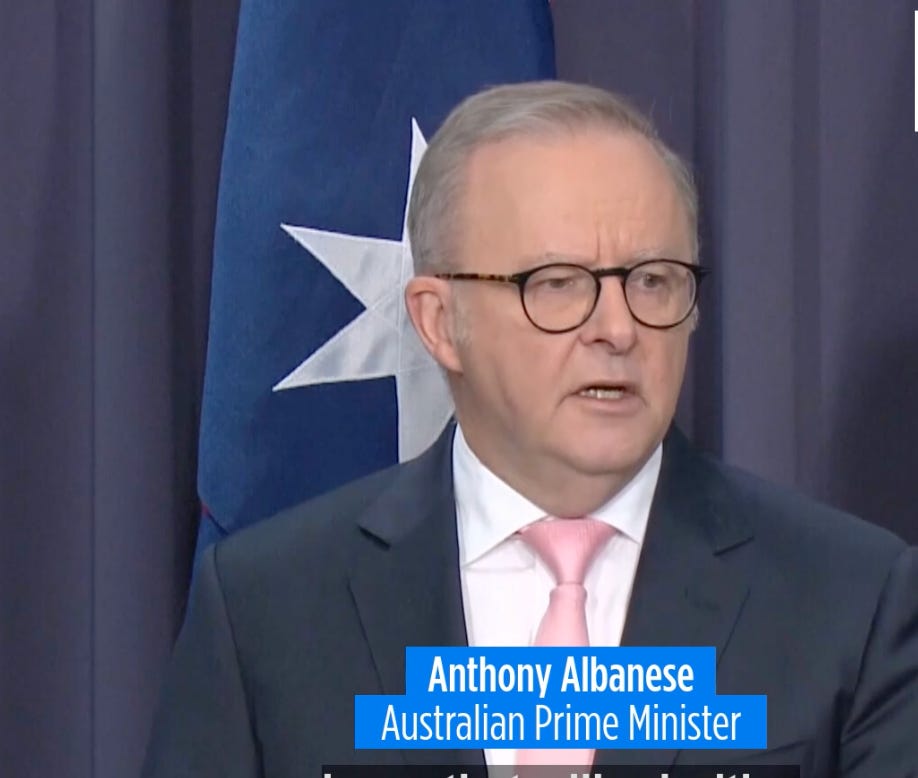
The Nakamal Agreement also requires Vanuatu to consult Australia when considering third-party engagement in critical infrastructure, though without the veto power proposed in an earlier draft.
Vanuatu will prioritise policing cooperation with Pacific Islands Forum members, while China warned against using Pacific cooperation as a tool for geopolitical rivalry. The pact follows months of delay after Vanuatu rejected an earlier version last year.
Sources: Associated Press, Euronews
Restacking or sharing this publication means more people can read it. Commenting extends the conversation. Liking shows your appreciation.
On this day …
On this day in 1997, ceremonies began to mark the transfer of Hong Kong from British to Chinese sovereignty, with the formal handover taking place shortly after midnight on 1 July.
The agreement established Hong Kong as a Special Administrative Region under the principle of “one country, two systems”, promising a high degree of autonomy for fifty years while recognising Chinese sovereignty.
In the decades that followed, Hong Kong became the focus of growing political tensions, including large-scale pro-democracy protests and the introduction of a national security law that critics argue has reduced the territory’s autonomy.
Beijing rejects that characterisation, saying the measures restored stability and safeguard national sovereignty.
Nearly three decades later, the handover continues to shape debates over sovereignty, international agreements and the future of Hong Kong.