


US Saudi Strikes Deepen Iraq Sovereignty Crisis (Conflict)
US Strikes Iran As Regional War Widens (Conflict)
Netanyahu Presses Trump On Iran Options (Diplomacy)
Saudi Seeks Red Sea Shipping Coalition (Geopolitics)
Japan Quake Rescue Effort Faces Heat And Aftershock (Asia)
Fedorov Links Dismissal To Procurement Reforms (Europe)
Fed Holds Rates As Inflation Risks Rise (Economy)
Sudan’s El-Obeid Faces RSF Advance (Africa)
Southern Europe Fires Force Mass Evacuations (Europe)
US Restores Gavi Vaccine Funding (Health)
A succinct daily briefing delivered each weekday to help you stay on top of the stories shaping the world.

US-Saudi strikes on Iran-backed militias in Iraq have sharpened Baghdad’s sovereignty crisis, killing at least 20 people and threatening efforts to bring these independent groups under state control.
Iraq’s National Security Council, chaired by Prime Minister Ali al-Zaidi, condemned the attacks as a violation of sovereignty and warned they could stoke further chaos. Baghdad said the strikes were carried out without coordination. Saudi Arabia and US Central Command said they responded to drone attacks on US forces and Saudi energy infrastructure launched from within Iraq.
The militias deny responsibility, and Iraq says no evidence has been provided. Mr al-Zaidi cancelled his first official trip to Saudi Arabia, while Mohammad Tamimi, leader of al-Waad al-Sadeq, an Iran-backed militia group, warned the response would be “actions on the ground”. Kataib Hezbollah, an Iraqi paramilitary group gave the government until August 6 to show it can defend Iraq’s sovereignty. The active entry of these militias potentially further complicates an already volatile situation in the region.
Sources: New York Times, Al Jazeera
The US carried out fresh strikes in Iran on Wednesday, intensifying a five-month war that is drawing more countries into the region’s widening conflict.
US Central Command said the strikes began at 8pm ET in response to attempted Iranian attacks on US forces in the Middle East. Earlier, Iran said it had fired on US bases in Jordan and ships in the Strait of Hormuz, while a drone hit a US-owned gas storage tanker at Egypt’s Damietta port. US and Saudi forces also struck Iran-backed groups in Iraq, killing at least 20 members of the Popular Mobilisation Forces.
President Donald Trump promised to “hit them very hard” while saying Washington still wanted a peace deal with Tehran. Oil prices rose more than 8 percent, pushing Brent crude above $90 a barrel, as the war spread across Iran, Iraq, Jordan, Egypt, Saudi Arabia and the Strait of Hormuz.
Sources: Reuters, Times of Israel
Israeli Prime Minister Benjamin Netanyahu used his first White House meeting with President Donald Trump since the Iran war began to discuss three possible next steps: a deal with Tehran, a continued blockade & economic measures or intensified military strikes.
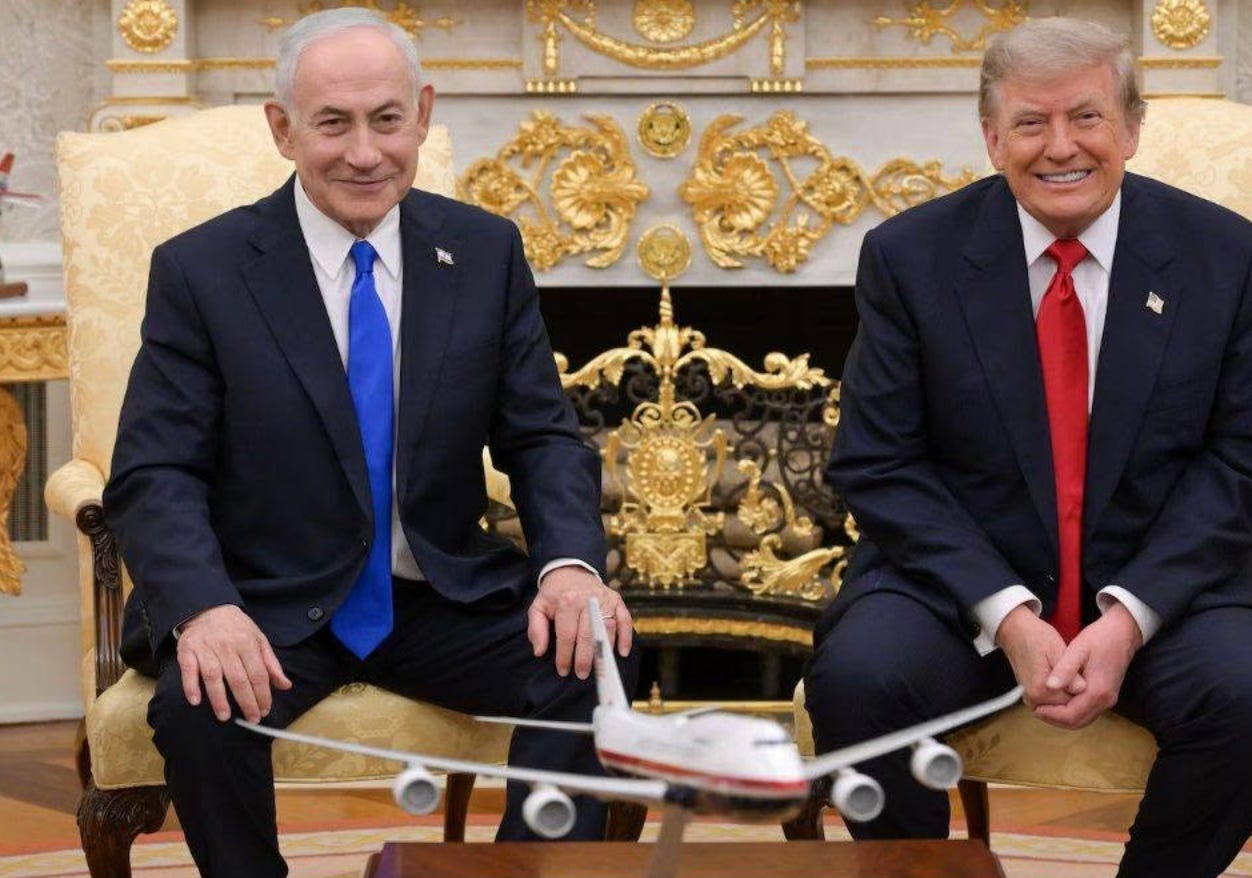
A senior Israeli official said Mr Netanyahu was sceptical that an agreement could be reached, but stopped short of urging a specific course. The caution reflected concern that Israel should not appear to be pushing Washington into a deeper conflict, after earlier Israeli military expectations failed to bear out and the White House grew frustrated with demands from a foreign power.
Mr Trump expressed concern about the war’s impact on energy markets and the global economy. Mr Netanyahu argued Iran was using the Strait of Hormuz as leverage, and said Israel would respond immediately and powerfully if Iran attacked it.
Sources: Politico, Axios

Saudi Arabia is seeking to build an international coalition to protect Red Sea shipping from Houthi attacks, as the Iran war opens a new maritime front beyond the Gulf.
Two people familiar with the deliberations said the coalition’s composition has not been finalised and is being discussed with dozens of countries. The Iran-aligned Houthis said on July 20 they would impose a naval blockade on Saudi Arabia in the Red Sea, after alleging a Saudi siege on Yemen, which Riyadh denied.
Since then, the Houthis said they have launched attacks on Saudi vessels, while Saudi Arabia has responded with air strikes on what it said were Houthi military facilities at Yemen’s Hodeidah port.
Regional sources said the Houthis are also considering fees on most commercial traffic through the Bab al-Mandab, a gateway linking the southern Red Sea with the Gulf of Aden.
Sources: Reuters, Jerusalem Post

Rescue teams in south-western Japan are searching for survivors after a powerful earthquake in Kumamoto killed at least 23 people, injured more than 62 and damaged homes, factories and a crowded shopping mall.
Almost 5,000 Self-Defence Forces personnel have deployed to the region, where temperatures were forecast to reach 35C and a magnitude 5.8 aftershock further complicated recovery. About 170 rescue workers were searching the Aeon mall in Kashima, where about 3,000 customers had been evacuated before a gas explosion. Several people died at the mall site, while more deaths were reported after a factory chimney collapsed in Yatsushiro.
Prime Minister Sanae Takaichi said people were still waiting to be rescued and called the effort a race against time. Tens of thousands of homes remained without electricity or running water, and thousands of people were sheltering across Kyushu.
Sources: The Guardian, NBC News
Restacking this post will help it reach more readers interested in the world.

Former Ukrainian Defence Minister Mykhailo Fedorov said resistance to his overhaul of military procurement was the main reason for his dismissal this month, deepening the political fallout from Kyiv’s recent wartime shake-up.
Mr Fedorov, who held office for six months, told Ukrainska Pravda that changes to procurement, tenders and internal management had angered officials, people and companies whose interests were affected. He said his first tasks had been to launch tenders, restructure the Defence Ministry’s management system and to choose personnel differently.

President Volodymyr Zelenskiy replaced Mr Fedorov with Yevhenii Khmara, previously head of the SBU security service, in a shake-up that also removed Prime Minister Yulia Svyrydenko. Mr Fedorov denied any personal conflict with former commander-in-chief Oleksandr Syrskyi, saying the dispute was about how the war should be fought, and said he would “100%” return if offered the defence ministry again.
Sources: Reuters, Kyiv Post
The Federal Reserve held interest rates steady for a fifth consecutive meeting, leaving its main rate at 3.5-3.75 percent despite concern that the Iran war, tariffs and AI-linked demand are lifting inflation risks.
Fed chair Kevin Warsh said the central bank would not “waver” in its commitment to return inflation to its 2 percent target. Three of the 12 Federal Open Market Committee voters, Lorie Logan, Beth Hammack and Neel Kashkari, backed a quarter-point rise, while Marc Giannoni at Barclays described the decision as a “hawkish hold”.
Markets reacted sharply as investors questioned whether a slower approach would contain inflation. The 30-year Treasury yield rose as much as 0.12 percentage points to 5.21 percent, its highest since mid-2007, while the S&P 500 closed 1.5 percent lower, its biggest one-day drop since mid-June.
Sources: FT, South China Morning Post

Thousands of displaced people sheltering in El-Obeid face renewed danger as Rapid Support Forces fighters advance towards the army-controlled Sudanese city, which has become a key refuge for people escaping violence in surrounding areas.
The UN and G7 foreign ministers have warned the RSF may be preparing to attack, raising fears of atrocities like those seen in El-Fasher earlier in the year. The International Organization for Migration said families had run out of safe options, while satellite imagery shows the main displacement camp has expanded significantly since March.
The Sudanese military said it had secured a vital highway between El-Obeid and Khartoum, but aid agencies warned this did not guarantee meaningful humanitarian access. Nearly 400,000 people nearby face food shortages, RSF drone strikes have hit infrastructure and aid workers report 80 to 100 new households arriving in the city daily.
Sources: BBC, The New Arab

Wildfires across southern Europe have killed three firefighters in Greece and forced mass evacuations in France and Spain, as crews battle heat, drought and strong winds.
In south-west France, an uncontained blaze four times the size of Paris remained the country’s biggest wildfire fight. More than 2,200 firefighters and over 20 aircraft were mobilised in Gironde, where Interior Minister Laurent Nuñez said the advance of major fires in Landes and Var had been halted. Gironde authorities ordered 4,000 more people out of Atlantic coast tourist sites, after the fire forced 220,000 people to flee at the peak of the crisis.
In Greece, two firefighters died battling a blaze on Crete and a third died after tackling a separate fire in the Peloponnese.
In Spain, tens of thousands began returning home, but 10,000 remained under evacuation orders in Castellón.
Sources: Associated Press, New York Times

The Trump administration will immediately release $600 million in congressionally appropriated vaccine funds for Gavi, restoring support for a global alliance that helps the world’s poorest countries buy shots against diseases including measles and diphtheria.
Washington had withheld the money over unsubstantiated safety concerns raised by US Health Secretary Robert F. Kennedy Jr., a longtime vaccine sceptic who said in June 2025 that the US would stop funding Gavi because it ignored safety. US Secretary of State Marco Rubio had cited congressional concerns and global health goals when saying in June that it was time to re-engage.
The State Department said the release followed Gavi’s commitment to work towards replacing mercury-containing vaccines and expanding access to mercury-free alternatives.
The US also said it would not provide government funding to the World Health Organization through Gavi, expects to resume its place on Gavi’s board and will assess future support based on reforms.
The US used to provide 13% of Gavi’s funding and the organisation has been forced to cut costs to address the shortfall.
Sources: Reuters, Al Jazeera, Gavi
Restacking or sharing this publication means more people can read it. Commenting extends the conversation. Liking shows your appreciation.
On this day …
On this day in 1935, the first Penguin paperbacks went on sale in Britain. Founded by Allen Lane, Penguin challenged the idea that quality books should be expensive, offering well-produced editions at prices affordable to ordinary readers.
The model transformed publishing, expanded access to literature and ideas, and helped establish the paperback as the dominant format for much of the twentieth century.
By making knowledge more accessible, Penguin reshaped reading habits around the world.
In an age increasingly dominated by digital media, what does the paperback’s enduring appeal tell us about how people still prefer to learn?