


Hormuz Attacks Threaten Fragile Shipping Recovery (Conflict)
Iran Offers Conditional Route Back to US Talks (Middle East)
Xi Returns to Egypt as Strategic Ties Deepen (Diplomacy)
Israel Captures Hamas Security Chief in Gaza Raid (Middle East)
Germany Blames Russia for Leipzig Drone Attack (Europe)
Ukraine Warns Airlines Off Russian Airspace (Europe)
Modi Urges Putin to End Ukraine War (Diplomacy)
Carney Says US Must Get Serious on Trade (Trade)
Trump Reviews US Position on Falklands (South America)
Himalayan Glacial Flood Risk Intensifies (Asia)
A succinct daily briefing delivered each weekday to help you stay on top of the stories shaping the world.

Two oil supertankers attempting to exit the Strait of Hormuz were struck by projectiles on Monday, as US-Iran military exchanges resumed after weeks of relative calm. The US said it targeted Iranian rocket launchers preparing to send mines into the strait and Iran retaliated with attacks on the United Arab Emirates and Jordan.
Oil shipments through Hormuz had recovered to roughly half of pre-war levels during the lull in hostilities, aided partly by clandestine shuttle runs from major Middle East producers. The renewed fighting threatens that recovery. Brent crude traded about 2% higher at more than $92 a barrel on Tuesday, while shipping companies continue to regard the region as too dangerous for regular trade.
The US and Iran have shown little appetite to resume negotiations since an interim peace agreement collapsed. Iranian President Masoud Pezeshkian said repeated US violations had shown that pressure and threats could cause diplomacy to fail.
Sources: Bloomberg, New York Times

Iranian President Masoud Pezeshkian said Tehran would immediately reciprocate if the United States returned to commitments under the interim agreement signed in June. Speaking at the Shanghai Cooperation Organisation summit in Bishkek, he said Iran remained open to a negotiated solution and that war was in no one’s interest.
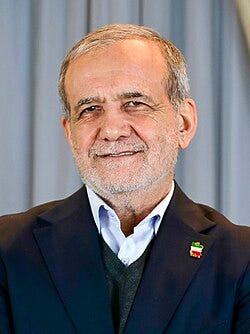
The agreement called for an end to military operations and a 60-day period for negotiating a final settlement but collapsed after Washington and Tehran accused each other of violations. Iran has tied free navigation through the Strait of Hormuz to US implementation of the deal.
The diplomatic opening contrasts with Washington’s current stance. US President Donald Trump said last week that the US was not seeking talks, while Treasury Secretary Scott Bessent said the administration aimed to “economically asphyxiate” Iran to force concessions and make Tehran want a deal.
Sources: Reuters, Time

China’s President Xi Jinping has made his first visit to Egypt in a decade, as Beijing and Cairo mark 70 years of diplomatic relations and seek to deepen their strategic partnership. Egyptian President Abdel Fattah el-Sisi received Xi in Cairo where talks are expected to cover regional issues as well as economic cooperation.
China is Egypt’s largest trading partner in non-petroleum goods, with bilateral trade reaching nearly $20.7bn by the end of 2025. Chinese investment is concentrated around the Suez Canal Economic Zone, including the TEDA cooperation zone in Ain Sokhna, which hosts about 200 companies with investments exceeding $3.8bn.
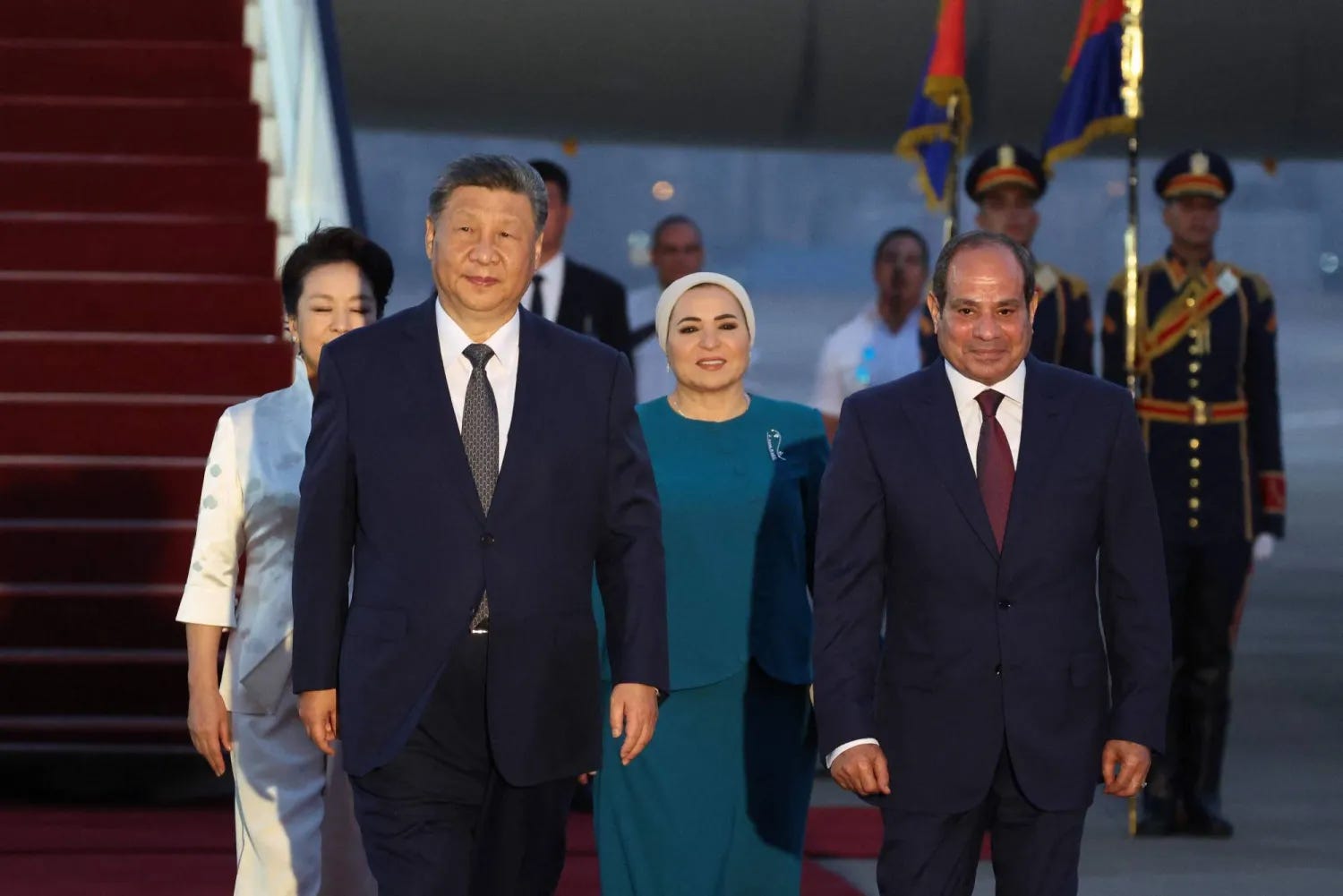
The timing places those expanding ties alongside possible US sanctions over financial links to Iran. Washington has warned of expanded measures against Tehran’s partners, while Beijing has sought to strengthen ties with US-friendly regional states ahead of an expected Xi-Trump meeting this month.
Sources: Al Jazeera, Times of Israel

Israel has confirmed that Shin Bet special forces captured Muein al-Arabid, the head of Hamas’s internal security apparatus, during a raid in Gaza City on Tuesday. Israeli Prime Minister Benjamin Netanyahu said al-Arabid had been involved in efforts to restore Hamas’s governance and capabilities, while the military said the operation was intended to undermine Hamas’s control and plans to attack Israeli forces and civilians.
Israeli air strikes during the raid killed at least four Palestinians, including two children and a woman, medics said. Hamas condemned the operation as a serious crime and a violation of the ceasefire.
The raid highlights how the October 2025 US-backed ceasefire has halted major fighting without ending Israeli strikes across the territory. Gaza remains divided between Israeli and Hamas controlled areas. Hamas continues to accuse Israel of undermining the broader plan for withdrawals and disarmament.
Sources: BBC, Times of Israel

Germany has blamed Russia for an attempted hybrid attack involving an explosive-laden drone at Leipzig/Halle Airport on 4 August. Interior Minister Alexander Dobrindt said analysis of the drone technology and intelligence findings showed Russian involvement, adding that Germany expected further hybrid attacks.
Foreign Minister Johann Wadephul announced that Germany would close Russia’s consulate in Bonn, terminate the contract for the Russian House in Berlin, tighten entry controls for Russian nationals and increase pressure on Moscow’s shadow fleet. Russia rejected the allegations as absurd and warned of consequences.
The airport is used by Germany’s military and Nato allies to transport military goods and serves as a base for Ukraine’s Antonov Airlines. Nato chief Mark Rutte said the alliance stood in full solidarity with Germany. EU Commission President Ursula von der Leyen said additional sanctions against Russia were being prepared.
Sources: Japan Times, BBC
Restacking this post will help it reach more readers interested in the world.

Ukrainian President Volodymyr Zelensky has warned airlines and insurers that Russian airspace is becoming unsafe as Ukraine expands long-range drone operations. He said Ukraine was not threatening civilian aircraft directly but that drones would increasingly operate over Russia for as long as the war continued.
Air traffic at Russian airports has already been repeatedly disrupted, while aviation risk adviser Osprey Flight Solutions said daily attacks deeper inside Russia were near-certain through 2026 and warned of likely miscalculation or misidentification around the conflict. Both sides have intensified long-range attacks in recent months.
Russian President Vladimir Putin called Zelensky’s comments a declaration of state terrorism and said Russia would continue its own attacks. Zelensky said Ukraine could clear drones from Russian skies for specific periods and destinations if partners requested it for diplomatic purposes. Thus far US-led efforts to end the war remain stalled.
Sources: South China Morning Post, BBC

Indian Prime Minister Narendra Modi has urged Russian President Vladimir Putin to end the war in Ukraine, telling him during a meeting in Bishkek that every day of fighting set humanity back and that the conflict should move towards a cessation of hostilities. Modi said India supported all peace efforts and would continue to do so.
The appeal came alongside praise for growing economic ties between the two countries. India remains one of the biggest buyers of Russian oil, helping Moscow replenish its budget despite Western sanctions, while Modi said energy, innovation, space, fertilisers and people-to-people links remained focus areas in the relationship.
Russia continues to insist that the war can end only on Moscow’s terms, which Ukraine rejects. Putin responded that Russia was moving forward along the path Modi described, while Russian and Ukrainian attacks on energy infrastructure continued.
Sources: The Independent, Politico Europe

Canadian Prime Minister Mark Carney has said trade talks with the United States can resume only if Washington becomes serious about negotiations, after discussions collapsed on 21 August over what Ottawa called unacceptable last-minute demands.
Carney said proposed US terms would have left core Canadian industries effectively as subsidiaries of American companies or gradually wound down in Canada. He said Ottawa would not accept those conditions, adding that Canada remained a sovereign state free to strike future trade deals with countries of its choosing.
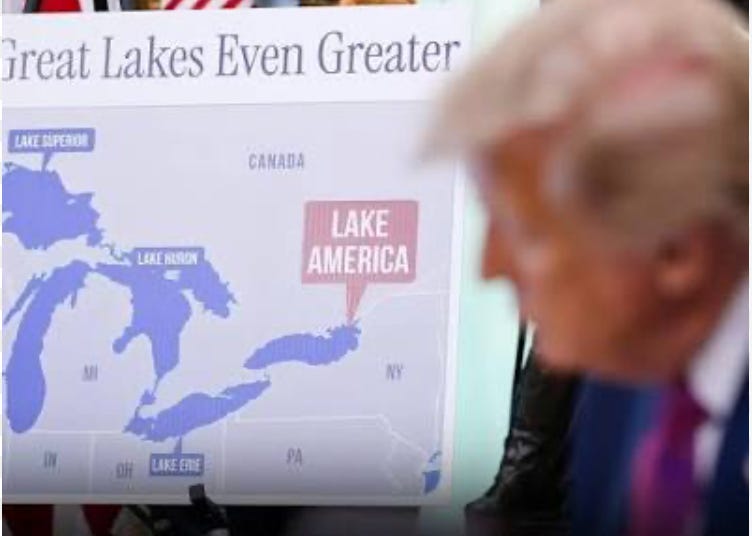
US President Donald Trump has since intensified criticism of Canada, while Washington imposed 50% tariffs on roughly $20 billion of Canadian goods. Ottawa plans retaliatory tariffs on nearly $20 billion of US goods from 8 September. Carney said there was still a chance for a mutually beneficial agreement but described recent US actions as not constructive.
Sources: Times of India, Reuters

US President Donald Trump has suggested Washington is reviewing its position on the Falkland Islands as pressure grows on Britain to meet Nato defence spending commitments. The United States officially remains neutral on sovereignty while recognising British administration of the territory.
An internal Pentagon memo leaked in April had already raised the possibility of reviewing that stance as diplomatic leverage. A senior US official has since said Britain would receive special attention in a burden-sharing review examining whether allies have credible paths towards the 5% defence and security spending target agreed for 2035.
Britain says the islands’ status as a British overseas territory is not open to discussion. Prime Minister Andy Burnham’s spokesperson said the Falkland Islanders’ right to determine their future was clear and Britain’s commitment remained unwavering. Argentine President Javier Milei, whose government maintains close ties with Washington, has reacted favourably to the prospect of a US shift.
Sources: Mercopress, The Guardian

UN Assistant Secretary-General Kanni Wignaraja has warned that the Himalayan region faces severe risks from future glacial floods, with millions of people exposed and critical infrastructure increasingly vulnerable across the region. Researchers identified 47 potentially dangerous glacial lakes across Nepal, China and India in 2020, while later estimates suggest the true number is significantly higher.
Last week’s flood in Nepal was triggered by the collapse of parts of a glacier near Langtang Lirung, sending ice, rock and water down the Trishuli River. The disaster killed more than 1,000 people and damaged power infrastructure, including 15 major stations under construction.

UN officials say both glacier collapses and glacial lake outbursts are becoming more likely as climate change accelerates glacier melt, loosens rock and increases strain on natural barriers. Wignaraja said technology could improve resilience but warned that some events would overwhelm existing defences.
Sources: Reuters, UN
Restacking or sharing this publication means more people can read it. Commenting extends the conversation. Liking shows your appreciation.
On this day …
On this day in 1945, Ho Chi Minh declared the independence of the Democratic Republic of Vietnam before a large crowd in Hanoi, bringing an end to decades of French colonial rule in principle, if not yet in practice.
France attempted to re-establish control, leading to the First Indochina War and its defeat at Dien Bien Phu in 1954. Vietnam was subsequently divided, and the struggle over its political future became one of the defining conflicts of the Cold War, drawing the United States into a long and costly war. The country was finally reunified under communist rule in 1976.
Independence can be declared in a day - securing it can take a generation.