


Ukraine Debuts Its Own Ballistic Missile (Conflict)
Putin Reinforces Nuclear Warning Over Kaliningrad (Russia)
Pakistan Strikes Afghanistan As Ceasefire Unravels (Conflict)
Saudi-Houthi Fighting Escalates Again (Conflict)
US Sanctions Target Iran’s Land Transport (Middle East)
Iran Offers Nuclear Access For Sanctions Relief (Middle East)
French School Protests Spread As Violence Escalates (France)
Eritrea Severs Ties With Ethiopia As Fighting Spreads (Africa)
UK Iranian Arrested Over RAF Fairford Incident (UK)
FlyDubai Attack Raises Cockpit Security Questions (Middle East)
A succinct daily briefing delivered each weekday to help you stay on top of the stories shaping the world.

Ukraine has used its domestically made FP-7 tactical ballistic missile in combat for the first time, adding a harder-to-intercept weapon to an arsenal that has relied heavily on long-range drones. President Volodymyr Zelenskyy said the next focus was production. Iryna Terekh the Chief Executive of Fire Point, the Ukrainian defence technology company that developed the FP-7, said the missile was made in record time under fire.
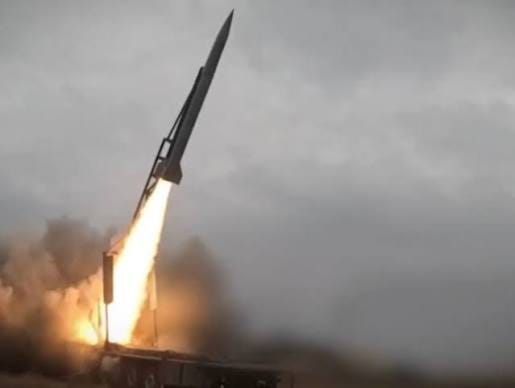
Fire Point says the FP-7 can reach about 155 miles and carries a warhead of more than 440 pounds, giving Ukraine greater ability to damage bunkers, bridges and buildings. Thursday’s strike hit a target in occupied Ukraine, according to a person familiar with the matter.
The constraint is scale. Ukraine’s weapons industry lacks the financial power and capacity to produce weapons in required numbers, while Russia fired 195 ballistic and hypersonic missiles in July alone. Carnegie Endowment senior fellow Michael Kofman said much depends on the FP-7’s production rate.
Sources: Wall Street Journal, Reuters

Russian President Vladimir Putin has warned that Moscow could use nuclear weapons if Kaliningrad were directly attacked, reinforcing a warning Russia sent NATO this week. Putin said all weapons at Russia’s disposal would “inevitably and immediately” be considered if the Baltic exclave, wedged between Poland and Lithuania, were threatened.
NATO Secretary General Mark Rutte said the alliance had responded by stressing its defensive nature and that nuclear threats were unhelpful. Putin also warned that escalating retaliatory measures could reach a “fatal point of no return”, while saying Russia had no plans to attack any European country and wanted peaceful coexistence.
Putin separately ruled out stopping Russian strikes on Ukrainian targets in the Black Sea area. He acknowledged that Ukrainian attacks on Russian oil refineries had cost Russia 1% of GDP and said Moscow was responding in kind.
Sources: Al Jazeera, Reuters

Pakistan has carried out further air strikes inside Afghanistan as a fragile ceasefire between the neighbours continues to unravel. The United Nations mission in Afghanistan said at least 10 civilians, most of them children, were killed in Helmand and Kunar provinces, while nine people were injured.
Pakistan’s Ministry of Information said the strikes targeted militant hideouts & camps and that initial reports indicated 22 militants were killed. Islamabad says militants operating from Afghanistan carry out attacks inside Pakistan, while Kabul denies providing them a safe haven.
Cross-border fighting escalated dramatically in February, when Pakistan declared it was in an “open war” with Afghanistan. China-mediated talks produced a ceasefire in March, but it did not last. The UN mission said last week that it had documented more than 1,100 civilian deaths and injuries from cross-border violence in Afghanistan this year.
Sources: BBC, Associated Press

Saudi-backed Yemeni government forces have carried out strikes against Houthi positions after the Saudi-led coalition accused the group of attacking a power distribution station in Medina. The coalition said a Houthi drone hit the Taiba station on September 29, putting one transformer out of service without affecting the electricity network.
The station supplies the Prophet’s Mosque. A Houthi military source denied responsibility, while the coalition said an investigation and examination of drone wreckage confirmed Houthi involvement. Yemeni government forces later said they had conducted more than two dozen strikes against Houthi positions in Taiz, including missile storage and command centres.
The escalation is the most serious fighting between Saudi Arabia and the Iran-aligned Houthis since a UN-brokered truce largely halted cross-border attacks in 2022. Hostilities resumed this year after the Houthis declared a naval blockade on Saudi Arabia in July and began attacking Saudi territory and shipping.
Sources: Arab News, Straits Times

The US has widened its wartime economic campaign against Iran, imposing sanctions on its rail and auto sectors as Washington targets transport alternatives Tehran has increasingly relied upon since a naval blockade restricted oil shipments through the Strait of Hormuz.
The measures designate Iran Khodro and SAIPA, which together represent more than 90% of Iran’s domestic auto market, alongside state-owned rail and passenger companies. Foreign suppliers in Indonesia, the UAE and Turkey were also targeted. The US says the blockade has forced Iran to rely more heavily on road and rail to move petroleum, fertiliser, chemicals and other goods.
The sanctions extend US economic restrictions across Iran’s transport system after Washington sanctioned all Iranian airlines last month. Sanctions expert Brett Erickson warned that constricting Iran’s economy in this way would also damage the livelihoods of ordinary Iranians who depend on it.
Sources: Reuters, The Hill
If you are getting some value from this newsletter then please Restack it.

Iranian Foreign Minister Abbas Araghchi has offered to restore nuclear inspectors’ access to bombed facilities in exchange for sanctions relief, according to diplomats familiar with private meetings he held with European and Middle Eastern counterparts at the United Nations.
The proposal comes as sanctions and a US naval blockade squeeze Iran’s economy. Inflation is almost 90% year over year, the rial has weakened 30% against the dollar and Iran loaded no crude oil onto tankers last month. Iranian President Masoud Pezeshkian also said last week that Tehran was willing to allow inspectors back.
Araghchi also urged Europeans to reverse broad UN sanctions re-imposed last year, but officials refused. US President Donald Trump has denied reports that Washington would offer sanctions relief and frozen funds for nuclear concessions. US-Iran talks in New York made little progress, while Iranian officials have come to believe no agreement is possible before November’s US midterm elections.
Sources: Bloomberg, Jerusalem Post
French high school protests over teacher shortages, overcrowded classrooms and deteriorating facilities have spread nationwide, with 1,027 of the country’s 3,700 lycées affected and blockades at 222. University students joined on Thursday, with at least 30 campuses also reportedly blockaded.
The unrest has become increasingly violent. Fires broke out at schools, staff were attacked and public transport was disrupted in several cities. The Interior Ministry said 1,949 people were arrested on Thursday and 305 police officers were injured. Prime Minister Sébastien Lecornu held a crisis meeting, after which the government said the demonstrations had descended into “urban violence”.
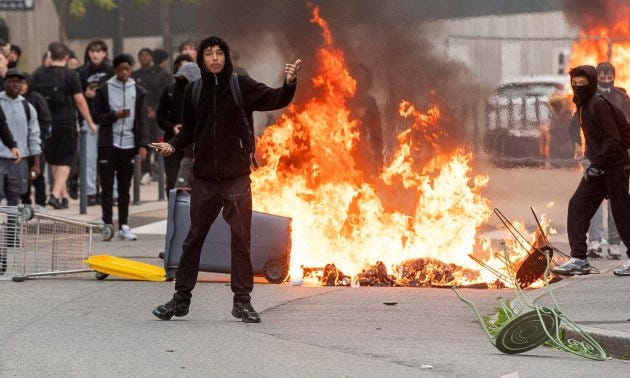
The protests began last week before spreading across France. The government has accused the hard-left France Unbowed of encouraging the unrest, while party leader and presidential candidate Jean-Luc Mélenchon has called for non-violent protest and argued that blaming the left would not address the grievances driving the demonstrations.
Sources: BBC, Le Monde

Eritrea has severed diplomatic ties with Ethiopia after Addis Ababa ordered 10 Eritrean diplomats to leave within 48 hours and announced it would close its embassy in Asmara. Ethiopia accused Eritrea of hostile acts and of supporting an opposition alliance fighting federal forces, allegations Eritrea rejected.
The rupture comes as fighting intensifies inside Ethiopia. Explosions were heard in Addis Ababa on Wednesday and Thursday, while researchers and diplomats said drone strikes targeted two defence facilities, including military headquarters. Clashes have also continued in the northern Afar region.
The fighting is the biggest escalation since the 2020-2022 civil war. Eritrea fought alongside Ethiopia’s government during that conflict but relations later deteriorated. Ethiopia has also expelled an Egyptian diplomat, prompting Egypt to reciprocate. US lawmakers warned that the increased conflict threatens Ethiopia and the wider region.
Sources: Wall Street Journal, Al Jazeera
British counter-terror police have arrested a UK-Iranian dual national on suspicion of preparing terrorist acts in connection with Sunday’s security incident at RAF Fairford. The 25-year-old was arrested in London and two properties were searched.
Five British men arrested near the US-run airbase on Sunday remain on police bail. Officers found petrol in three vans linked to the group but no explosives. Senior counter-terror coordinator Vicki Evans said investigators were examining all possible angles, including possible foreign state involvement.
Prime Minister Andy Burnham said there were “strong indications” Iran played a part, without providing further details. Tehran strongly denies involvement. RAF Fairford has been used by US bombers for strikes on Iran after Britain approved an American request to use the base. US Secretary of State Marco Rubio said “the hands of a foreign actor” had clearly been involved.
Sources: Washington Post, BBC

Investigators are examining whether a cockpit attack on a FlyDubai flight from Dubai to Tel Aviv was linked to terrorism after the co-pilot stabbed the captain and the aircraft plunged more than 16,000 feet in 30 seconds. Passengers subdued the attacker before reserve pilots stabilised the aircraft and landed safely in Saudi Arabia.

The United Arab Emirates is leading the investigation into whether the attack had a terrorist motive or prior planning. Israeli Prime Minister Benjamin Netanyahu said the Omani co-pilot had undergone “Islamist radical indoctrination” but provided no further details. Investigators have not established whether he acted alone.
The attack has also exposed security questions. Israeli regulations bar pilots from countries without diplomatic relations with Israel from flying to Tel Aviv, while authorities are investigating whether the weapon was smuggled through airport security or was an emergency axe already stored in the cockpit.
Sources: New York Times, Washington Post
Restacking or sharing this publication means more people can read it. Commenting extends the conversation. Liking shows your appreciation.
On this day …
On this day in 1187, Jerusalem surrendered to the forces of Saladin, ending 88 years of Christian rule established after the First Crusade.
Saladin’s victory followed his destruction of the main Crusader army at the Battle of Hattin in July. After besieging Jerusalem, he negotiated its surrender with Balian of Ibelin.
Rather than repeating the widespread killing that had accompanied the Crusaders’ capture of the city in 1099, inhabitants were generally permitted to leave after paying a ransom, although some unable to pay were enslaved.
The loss of Jerusalem shocked Christian Europe and helped trigger the Third Crusade, bringing Richard the Lionheart east to confront Saladin and continuing a struggle whose historical memory remains powerful today.
This is a poignant reminder of the fact that the struggle for religious position in the Middle East is something that has persisted for hundreds and hundreds of years.