


Hormuz Talks Advance As Military Threats Persist (Diplomacy)
Israel Faces Coalition Deadlock After Election (Politics)
UN Ends Western Sahara Mission After 35 Years (Africa)
Ukraine Resumes Strikes On Russian Refineries (Conflict)
US Proposes Return Of Russian Gas To Europe (Europe)
Canada And US Signal Progress Towards Trade Deal (Diplomacy)
France Opens Murder Probe After Protest Firebombing (Europe)
Spain Train Crash Victims Include Foreign Nationals (Europe)
German Youth Protests Erupt Into Violence (Europe)
Chinese Maritime Activity Raises Regional Security Concerns (Asia)
A succinct daily briefing delivered each weekday to help you stay on top of the stories shaping the world.

Qatari mediated talks between Iran and the United States have entered a third day, with negotiators discussing a proposal to reopen the Strait of Hormuz within two days of an agreement. Iranian Foreign Minister Abbas Araghchi said on Sunday that discussions were continuing but no final conclusion had been reached.
The proposal shortens an earlier seven day timetable, although major disagreements remain over which side must act first. Iranian security chief Mohsen Rezaei has demanded an end to the US naval blockade, sanctions waivers, the release of frozen assets and an end to fighting on regional fronts before normal transit resumes.
The diplomatic effort comes amid renewed military warnings. US President Donald Trump has ruled out fresh strikes before Tuesday’s midterm elections but not afterwards. Iran’s Supreme Leader Mojtaba Khamenei has ordered military readiness, while tanker attacks continue around Hormuz, leaving global oil supplies exposed to further disruption.
Sources: Al Jazeera, Reuters

Israel faces difficult coalition negotiations after last week’s election left neither Prime Minister Benjamin Netanyahu nor opposition leader Gadi Eisenkot with a parliamentary majority. Netanyahu’s bloc secured 53 seats, against 48 for Eisenkot’s allies, while Arab parties won 19 in the 120-member Knesset. Both leaders had ruled out working with them before the vote.
President Isaac Herzog, who will begin consultations with parties on Wednesday, has urged politicians to approach negotiations with an open heart and find creative solutions to avoid another election. Eisenkot has since indicated willingness to work with representatives who accept four conditions covering Israeli sovereignty, military service and opposition to Hamas. Netanyahu continues to reject cooperation with Arab parties.
Alternative routes also face obstacles. Netanyahu could seek defectors from the opposition or a unity government with Eisenkot but longstanding political disputes complicate both options. Netanyahu remains caretaker prime minister while coalition talks proceed.
Sources: NBC News, New York Times

The United Nations has ended its 35 year peacekeeping mission in Western Sahara after Russia and the United States failed to agree on its future. Russia vetoed a US resolution supporting Moroccan sovereignty over the disputed territory, while a rival Russian proposal to extend the mission failed to secure sufficient votes.
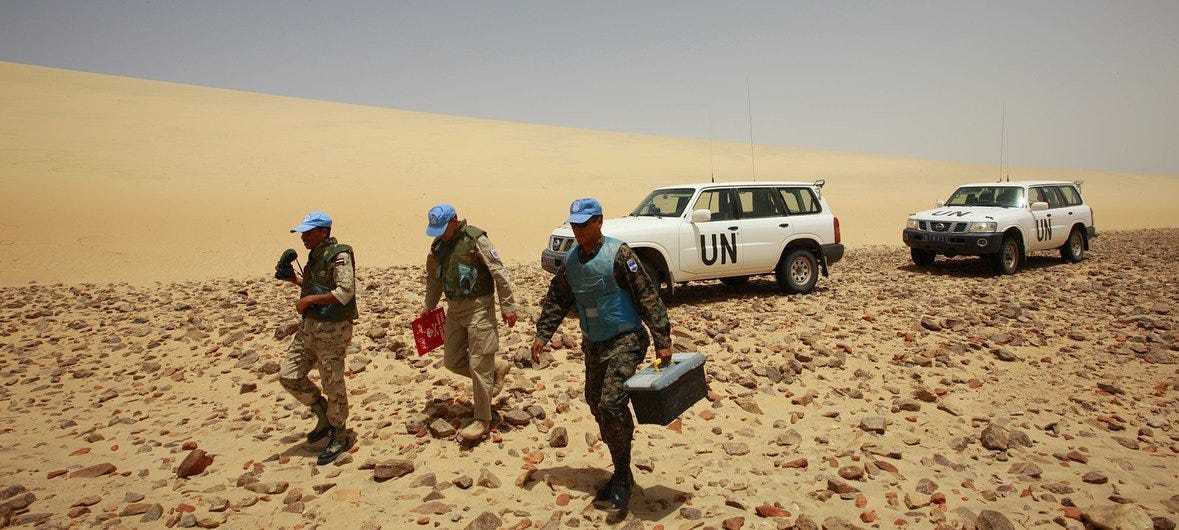
Established in 1991, the mission monitored a ceasefire between Morocco and the pro-independence Polisario Front and was intended to facilitate a referendum on self-determination that never took place. Morocco welcomed the mission’s closure, while the Polisario and its principal backer, Algeria, condemned the decision.
UN Secretary-General António Guterres warned of escalating hostilities and urged restraint. Fighting resumed in 2020 and tensions have persisted. Although peacekeeping operations have ended, the UN will continue diplomatic efforts through envoy Staffan de Mistura. The withdrawal removes an international presence from a dispute that continues to divide Morocco and Algeria.
Sources: Associated Press, UN News

Ukraine has resumed strikes on Russian oil refineries despite pressure from US President Donald Trump’s administration to halt attacks on energy infrastructure. Russian authorities reported a major drone attack on an industrial facility in the Nizhny Novgorod region, amid reports that the Kstovo refinery was hit. Another refinery in Samara was struck on Friday.
Ukrainian officials denied agreeing to a 30 day pause requested by Trump’s son-in-law Jared Kushner. The White House has blamed Ukrainian refinery attacks for rising global fuel prices, while Trump lifted US sanctions on Russian diesel last month. Kyiv has targeted Russian energy facilities to weaken the country’s war economy.
Meanwhile, Ukrainian President Volodymyr Zelenskyy reported extensive Russian strikes on Ukraine’s electricity infrastructure, leaving hundreds of thousands of households without power. A six-day humanitarian ceasefire in Russian-occupied Oleshky also ended on Sunday after enabling residents to reunite with relatives.
Further US-Russia-Ukraine talks are expected later this month.
Sources: The Guardian, Euronews

The United States is proposing renewed Russian natural gas sales to Europe through Ukraine as an incentive for an energy ceasefire before winter. The plan, raised by US envoys Jared Kushner and Steve Witkoff, would use an American intermediary and could provide Ukraine with transit revenue. Washington has also discussed holding Russian proceeds in escrow to prevent their use in financing the war.
The proposal faces strong European opposition. EU legislation requires Russian gas imports to end by 2027 and Energy Commissioner Dan Jorgensen has rejected renewed reliance on Moscow even after peace. Russian supplies have already fallen from 45% to 11% of Europe’s gas consumption.
However, the war with Iran has increased European energy costs by €100 billion, while gas storage stands at about 75% ahead of winter. Ukraine’s renewed refinery strikes have added urgency to ceasefire discussions, although Moscow has resisted US proposals.
Sources: Wall Street Journal, Times of India
Restacking this post will help it reach more readers interested in the world.

Canadian Prime Minister Mark Carney and US President Donald Trump have reported progress towards a trade agreement, with negotiators expected to continue discussions over the coming weeks. Following talks, Carney described the conversation as constructive, while Trump said the countries had the “concept” of a deal and were very close to agreement.
Negotiations include the proposed Keystone XL pipeline and possible removal of tariffs paid by US farmers on Canadian products. Both sides have also discussed relief from American tariffs on Canadian steel and automobiles, although no final terms have been announced. The improved tone follows August’s breakdown, when Canada rejected US demands and Washington imposed 50% tariffs on roughly $20 billion in Canadian goods.
The discussions come ahead of Tuesday’s US midterm elections, where the tariff dispute has become an issue in key states. Meanwhile, Canada is pursuing closer European Union ties to reduce its dependence on the US.
Sources: Associated Press, PBS

French prosecutors have opened an attempted murder investigation after petrol bombs were thrown at security forces during protests in Paris on Saturday. A homemade incendiary device exploded at a gendarme’s feet, setting his lower body alight. Thirteen members of his unit were injured, while prosecutors reported injuries including second-degree burns. No suspects had been arrested in connection with the incident.
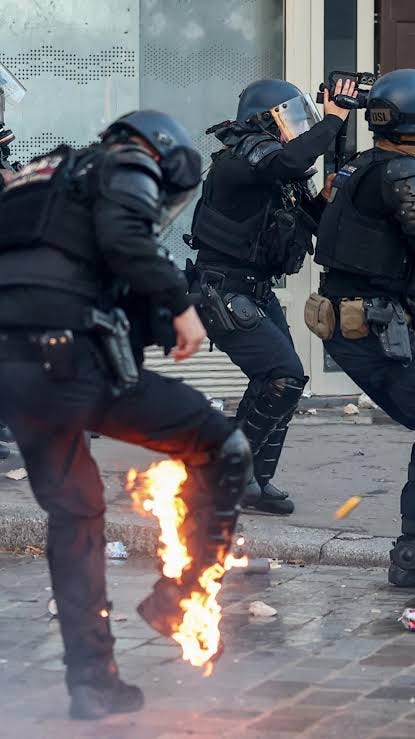
The clashes followed a third weekend of nationwide demonstrations against soaring living costs, with protesters also raising concerns about police violence and racism. Hundreds of thousands participated, while police said several hundred rioters attacked officers with projectiles. Interior Minister Laurent Nunez described the violence by some participants as “extraordinary”.
More than 770 people were arrested nationwide and 159 law enforcement personnel were injured during protests & Halloween celebrations. Around 20 businesses were damaged, fewer than in previous weekends, with businesses concerned about holiday trading.
Sources: Straits Times, Le Monde

Spanish authorities have confirmed that foreign nationals were among the 69 people killed in last week’s high-speed train collision near Urda. Four Americans and one citizen each from Canada, Japan, Argentina, Mexico, Tunisia and the Czech Republic were among the dead, alongside 54 Spaniards and citizens of France and Portugal. All but three victims have been identified, while two Australians and one Japanese citizen remain listed as missing.
The collision occurred on 28th October when a Renfe train struck the rear of a stationary Iryo service south of Madrid. An automatic safety system had failed and a control centre authorised the Renfe train to proceed while the other remained stopped.
It was Spain’s second deadly rail disaster this year, following a January collision that killed 46 people. Transport Minister Óscar Puente blamed a controller’s judgment, while railway unions cited staffing shortages and increasing workloads.
Sources: The Guardian, CBS News

Youth led protests over affordability across Germany descended into violence on Saturday, with rioters looting shops, smashing windows and attacking police. Organiser Gen Z regelt said about 120,000 people demonstrated in 34 cities and distanced itself from the disorder, saying its events had ended before the violence escalated.
Frankfurt saw some of the worst clashes. Hesse state Interior Minister Roman Poseck said 54 people were arrested, 100 officers injured and 17 buildings damaged, five of them looted. In Cologne, 23 officers were injured, while Berlin reported another 27. Police used water cannon as rioters threw petrol bombs and fireworks.
The demonstrations reflected wider youth grievances over living costs, housing, education and public services. Gen Z regelt plans further nationwide protests on 14 November. Similar unrest has spread across Europe, including France, where more than 300,000 people demonstrated over the weekend amid renewed violence.
Sources: Washington Post, Bloomberg

Chinese research vessels are suspected of mapping undersea cables near Japan and the Philippines, prompting calls for stronger regional protection of infrastructure carrying 99% of international communications. Philippine authorities said a Chinese vessel surveyed waters near the Batanes Islands without permission in September, accompanied by two Chinese coast guard ships. Tracking data also showed unusual movements by research vessels overlapping cable routes near Japan.
Separately, Taiwan accused China of harassment after a coast guard vessel entered restricted waters near the Pratas Islands on Saturday. Taiwanese officers confronted the ship, with the vessels approaching within one nautical mile. Taiwan said it was the thirteenth such intrusion this year, while Beijing described its patrols as routine law enforcement.
Japan is strengthening government oversight of cable security, including surveillance and protection of landing stations. A British research institute has urged coordinated warning systems involving regional partners, citing potential threats to trans-Pacific connections.
Sources: Japan News, Politico
Restacking or sharing this publication means more people can read it. Commenting extends the conversation. Liking shows your appreciation.
On this day …
On this day in 1917, British Foreign Secretary Arthur Balfour issued a declaration supporting the establishment of a “national home for the Jewish people” in Palestine, then part of the Ottoman Empire.
The 67-word statement also stipulated that nothing should prejudice the civil and religious rights of existing non-Jewish communities.
The declaration became a cornerstone of British policy during its subsequent mandate over Palestine and a foundational document in the movement towards the establishment of Israel in 1948. Its competing commitments, and the absence of any explicit recognition of Palestinian political rights, contributed to disputes that continue more than a century later.
Few diplomatic statements have cast such a long shadow.