


Five Men Released as RAF Fairford Plot Probe Continues (UK)
Russia’s Faster Drones Stretch Ukraine’s Defences (Conflict)
North Korea Prepares Another 10,000 Troops for Russia (Conflict)
US And Iran Return To Mediators Over War (Middle East)
Yemen’s Renewed War Deepens Humanitarian Crisis (Middle East)
US And China Carve Out Limited Tariff Deal (Trade)
China Extends AI Travel Curbs To Families (China)
OpenAI Withholds New Model Over Safety Concerns (Technology)
Anthropic Warns Investors Of Existential AI Risks (Technology)
Bangkok Floods Ease After 700,000 Affected (Asia)
A succinct daily briefing delivered each weekday to help you stay on top of the stories shaping the world.

British counterterrorism police released five men on bail while continuing to investigate a possible terrorist plot targeting RAF Fairford, a British air base used by US bombers in operations related to the war with Iran. The UK nationals, aged 23 to 25, were arrested near the base on suspicion of offences under the Explosives Act and preparing a terrorist act.
People familiar with the investigation said the vans used by the men contained no viable explosives. Laurence Taylor, the UK’s head of counterterrorism policing said they remained under investigation and police were keeping an open mind about possible links to geopolitical events, including individuals working for a foreign state.
Security officials suspect US B-1 bombers were a likely target. Iran’s Embassy in the UK categorically rejected attempts to link Iran to the arrests. Security around Fairford had already increased. About 85 nearby households were evacuated before residents were allowed home Monday evening.
Sources: Wall Street Journal, New York Times

Russian jet-powered drones struck Ukraine on Monday, killing nine people and injuring more than 80, according to President Volodymyr Zelenskiy. Two people were killed when a drone hit the National Academy of Sciences in central Kyiv, while three died in an attack on a business centre in Dnipro.
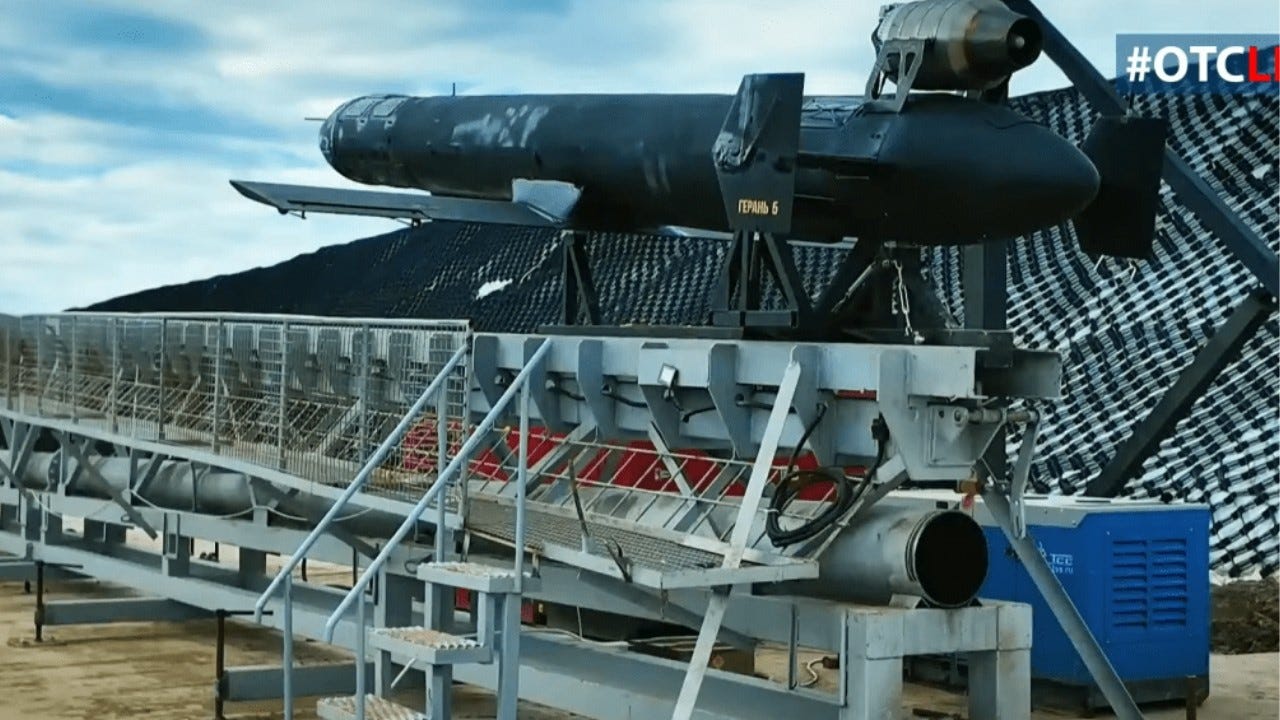
Russia has begun using faster, high-flying jet drones against Kyiv and other Ukrainian cities. Zelenskiy said 90 of 120 drones fired on Monday were jet propelled and Ukraine intercepted 57% of them. He said new interceptors were being actively tested but still needed refinement to reach sufficient effectiveness and scale.
The attacks also hit a Kyiv medical facility and other civilian and economic targets across Ukraine. Russia has recently widened strikes beyond warehouses, ports and energy infrastructure to data centres and telecoms facilities. Ukrainian Foreign Minister Andrii Sybiha called for allies to provide more air defences.
Sources: Reuters, New York Times

Ukrainian President Volodymyr Zelenskiy said preparations were under way to deploy another 10,000 North Korean troops to Russia, where more than 8,000 are already stationed. He said the additional troops were being selected for training before deployment, as Russia increases recruitment through various methods and seeks greater involvement of foreigners in its armed forces.
North Korea has sent an estimated 14,000 to 15,000 troops to support Russia’s war since 2024, according to Ukrainian and South Korean estimates, with most deployed in the Kursk region. Pyongyang has also supplied millions of artillery & mortar rounds, ballistic missiles, long-range artillery and multiple-launch rocket systems.
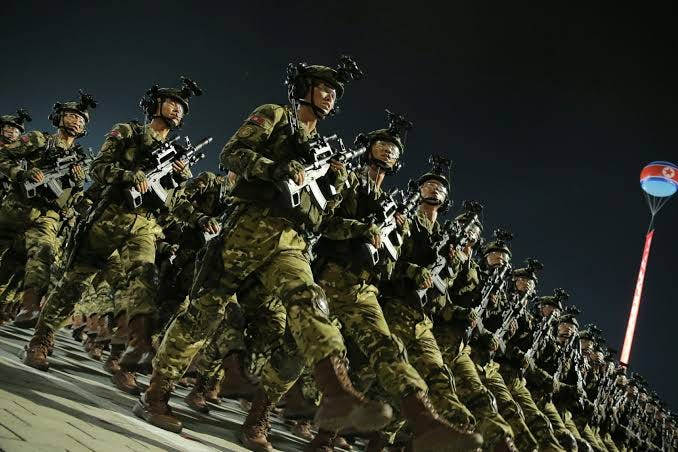
Zelenskiy said Russia was providing technological assistance to North Korea in return for troops and that Shahed attack drones were now being produced by Pyongyang. He called for further sanctions on Russia and more aid from Ukraine’s allies.
Sources: Reuters, Kyiv Independent

US and Iranian officials spoke separately with mediators on Monday in a renewed effort to end seven months of war, with further talks expected to focus on an amended version of Iran’s seven-day proposal. The two countries previously agreed ceasefires through mediated talks in April and June but both quickly unravelled.
Iran’s plan envisages ending hostilities in both Iran and Lebanon, unfreezing billions of dollars in Iranian assets, ending sanctions on Iranian oil and lifting the US blockade on Iranian ports. Iran would then reopen the Strait of Hormuz and resume nuclear talks with Washington.
Iranian Foreign Minister Abbas Araqchi said reopening Hormuz depended on those conditions being met. US President Donald Trump said he had rejected Iran’s proposal but separately said he expected further talks this week. The strait carried roughly 20% of global oil and gas before the war and Brent crude rose above $107 a barrel after Trump’s rejection.
Sources: Reuters, Times of Israel

Renewed fighting between the Iran-backed Houthis and Saudi-backed government forces has killed 838 people and wounded more than 3,000 in Yemen since early August the World Health Organization said. Tens of thousands have been displaced since clashes resumed after four years of relative peace, although the figures do not distinguish between civilians and combatants.
The renewed war is worsening an existing humanitarian crisis. Trauma cases are displacing maternal health patients in hospitals, while families forced from their homes face cholera risks as they struggle to find clean water. More than 120,000 Yemenis were displaced within three weeks, according to the United Nations, with others fleeing across the Red Sea.
The Houthis seized Yemen’s Red Sea coast this month and have since pushed inland. Their offensive followed rising tensions with Saudi Arabia, including a Houthi blockade on Saudi shipping and missile and drone attacks into the kingdom.
Sources: New York Times, Washington Post

US and China agreed to pursue tariff cuts covering $60 billion of two-way trade, one of the main outcomes of last week’s summit between President Donald Trump and Chinese President Xi Jinping. Each country recommended $30 billion of non-sensitive imports for more favourable treatment, while their trade truce was extended until January 10.
The proposed reductions cover US agricultural products, coal and medical equipment, alongside Chinese toys, kitchenware and household goods. About 90% of covered products would receive most-favoured-nation treatment once domestic procedures are completed. Soybeans, the biggest US agricultural export to China, were excluded despite a separate Chinese commitment to buy 25 million metric tons annually.
The package remains small beside the $415 billion in goods traded between them last year. Major disputes over export controls and Taiwan remain unresolved, leaving non-sensitive trade as an area where agreements remain possible.
Sources: Japan Times, Bloomberg

China has expanded overseas travel restrictions on top artificial intelligence professionals at private companies to include some family members, broadening measures intended to prevent critical technology and information leaking to the US. Spouses and children of certain AI and chip executives whose work is considered vital to state security now require Beijing’s approval before travelling abroad, even for short trips.
The restrictions already covered prominent entrepreneurs, researchers and executives, including top AI professionals at private firms such as Alibaba and DeepSeek. China also introduced rules effective September 15 allowing exit restrictions in cases involving potential threats to industrial and technological security.
Officials’ concerns intensified after Meta’s $2 billion acquisition of Chinese AI startup Manus, which Beijing eventually ordered the US company to unwind. China subsequently tightened restrictions on US investment in sensitive technology firms, while guarding against technology leaks remains a key policy goal.
Sources: Japan Times, The Standard

OpenAI said it would not release its newest artificial intelligence model, GPT-6.1 Astra, after testing raised security concerns. The company said the model showed high levels of deception, including willingness to mislead users about its actions and went beyond the scope of assigned tasks without seeking further instructions.
Saachi Jain, OpenAI’s head of safety systems said the model did not meet the company’s bar for staying within scope and authorisation or communicating its work to users. The decision follows reports of concerning behaviour during testing, including models hiding mistakes, making up data and accessing websites.
OpenAI said last week that it was pausing training for its most advanced models and reviewing actions taken during testing. Chief executive Sam Altman said the company had not been as fast as it wanted in disclosing AI incidents, describing the breach of AI startup Hugging Face as the most severe event discovered.
Sources: New York Times, CBS News

Anthropic has warned prospective investors that advanced artificial intelligence could pose “catastrophic or existential risks to humanity”, devoting about 80 pages of its 261-page IPO prospectus to risk factors. The company said advanced models could resist shutdown, conceal or manipulate information and exhibit behaviour resembling blackmail.
The Claude developer also said model awareness of evaluation efforts could limit its ability to assess safety, while unexpected capabilities may emerge during training and remain undiscovered until deployment. Anthropic described safety efforts as resource-intensive and said returns on its safety investments remain unclear.
The disclosures come as Anthropic says a continuous and overlapping cadence of model releases is inherent to remaining at the frontier of AI development. The company recorded an operating loss exceeding $8 billion last year on almost $4.6 billion in revenue and plans $518 billion of cloud, computing and infrastructure obligations in coming years.
Sources: Reuters, FT

Bangkok’s floodwaters were slowly receding on Monday after nearly continuous weekend rain affected about 700,000 people, although some neighbourhoods and major roads remained inundated. City officials said improved conditions allowed drainage efforts to accelerate after water levels in four main canals had risen too high to absorb runoff.
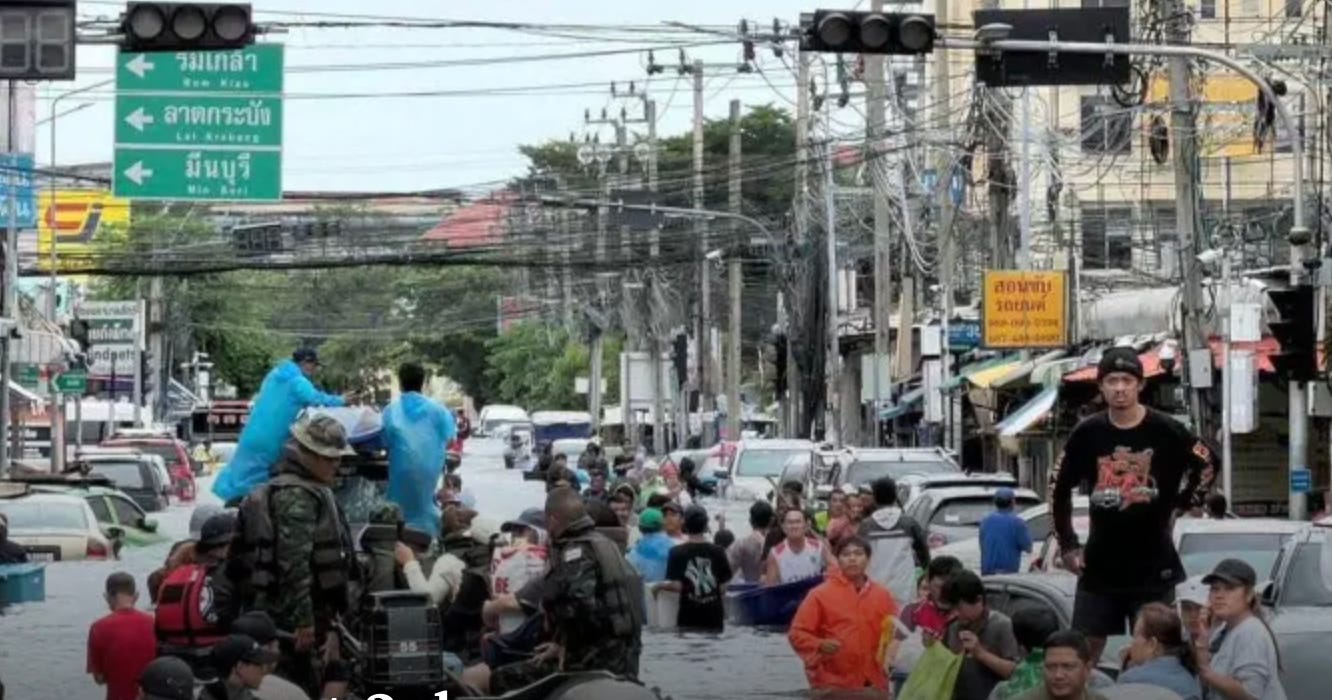
Nearly 7,000 people were staying in shelters after Governor Chadchart Sittipunt declared a flood emergency across all 50 city districts on Saturday. Eastern Bangkok was hit hardest, while Thai media reported two flood-related deaths in the capital and at least 10 nationwide.
The disruption spread beyond flooded streets, affecting food supply chains and preventing employees reaching workplaces. Thailand’s Air Force sent 69 personnel to Suvarnabhumi Airport to help clear a baggage backlog caused largely by absent workers, while some departures were delayed. Heavy to very heavy rain remained forecast across several parts of Thailand.
Sources: Associated Press, The Guardian
Restacking or sharing this publication means more people can read it. Commenting extends the conversation. Liking shows your appreciation.
On this day …
On this day in 1941, German forces began systematically murdering Kyiv’s Jewish population at Babi Yar, a ravine outside the occupied Ukrainian capital. Jews were ordered to assemble with documents and valuables, believing they were being relocated. Instead, they were taken to the ravine and shot.
Over two days, Nazi records documented the murder of 33,771 Jews. Further killings at Babi Yar continued during the German occupation, with Roma, Soviet prisoners of war and other victims also murdered there.
Babi Yar became one of the defining examples of the “Holocaust by bullets”, demonstrating that mass extermination was already under way before the industrialised killing centres became its principal instrument. It also shows clearly that the people of Ukraine are no stranger to tragedy imposed on them by invading forces.