

10 Things Global News - 29th July 2026
Deadly quake in Japan, Lack of progress coupled with surprise Iranian attack in Middle East, FIFA looks to cash in and US bans Chinese robots | Succinct, unbiased global news

Iran Strike Shatters Gulf Pause (Conflict)
Japan Rescuers Race After Deadly Kumamoto Quake (Asia)
Iran Demands More Control Over Hormuz (Middle East)
Fujimori Takes Office In Polarised Peru (South America)
Trump Hosts Zelensky And Netanyahu As Wars Drag (Diplomacy)
Oil Windfall Meets Capital Caution (Markets)
Trump Bans New Robot Imports From China (US)
Ukraine Warns Iran Over Caspian Strike (Conflict)
Europe Firefighting Gaps Exposed (Europe)
FIFA Faces Backlash Over World Cup Company (Sport)
A succinct daily briefing delivered each weekday to help you stay on top of the stories shaping the world.

Today the U.S. military said it intercepted all Iranian missiles fired at American forces in the Middle East, as Washington and Riyadh struck the Iran-backed militia sites in Iraq used for recent attacks. U.S. Central Command warned that further attacks on American troops or Saudi energy infrastructure risked additional retaliation.
The flare-up broke a brief pause after weeks of escalation over the Strait of Hormuz, where 20% of the world’s traded oil normally flows.
In an oft repeated message President Donald Trump told reporters that Iran knows he will “finish the job” if its leaders do not make a deal to end the war.
Saudi Arabia said it shot down drones from Iran-backed militias in Iraq for a second day, while the Houthis claimed they had forced a Saudi oil tanker to turn around, extending risks toward vessel passage through the Red Sea.
Sources: Associated Press, Wall Street Journal
Japan’s rescuers rushed to free people trapped in collapsed buildings after a powerful earthquake struck the city of Kumamoto on Tuesday afternoon, killing at least 13 people. More than 60 aftershocks continued to jolt Kyushu, and reports emerged of dozens trapped inside partially collapsed structures, including a shopping mall in nearby Kashima.
Fire response teams and police joined 3,600 military personnel in rescue efforts. Kumamoto Governor Takashi Kimura said operations were still arduous and the situation unpredictable, while Prime Minister Sanae Takaichi said rescuers were in a race against time.
The toll was expected to rise, with five people in cardiopulmonary arrest and at least seven others still unaccounted for on Wednesday morning. Four hospitals were treating about 250 injured people, while officials assessed damage to buildings, expressways, bridges and historic sites across the prefecture.
Sources: New York Times, South China Morning Post

Iran has rejected Oman’s proposal to divide control of the Strait of Hormuz jointly, putting efforts to revive negotiations with Washington at risk. Oman had suggested temporary equal lanes of control across the waterway, but Kazem Gharibabadi, Iran’s deputy foreign minister, said the plan did not address Iran’s security concerns.
Tehran countered that the inbound shipping lane must be entirely under Iran’s control, while part of the outbound lane could remain under Oman’s control. Gharibabadi said Iran would move to the next stage of talks only if Oman accepted that current proposal.
The dispute followed a brief lull in fighting since Friday and a mediation push that included a proposed 10-day ceasefire. Before the war, roughly 100 ships passed freely through Hormuz each day, carrying about one-fifth of global oil consumption.
Sources: Wall Street Journal, Times of Israel

Keiko Fujimori was sworn in as Peru’s president on Tuesday after winning the June runoff by fewer than 50,000 votes, making her the country’s ninth president in a decade. The conservative leader and four-time presidential candidate takes office promising to stabilise turbulent politics, reduce crime and boost economic growth.

Fujimori’s Popular Force party and its main ally, Popular Renovation, will hold half the senate seats once the new legislature is installed, complicating attempts by opponents to remove her. She campaigned on improving security, easing public-private infrastructure partnerships and fighting crime with an “iron fist”.
She also said the military will temporarily lead security operations in crime-afflicted areas, announced a 15% minimum wage increase and pledged to prepare Peru for El Niño.
Opposition leaders want laws reversed that they say weaken efforts against organised crime.
Sources: NPR, FT

President Donald Trump held separate White House meetings with both Ukrainian President Volodymyr Zelensky and Israeli Prime Minister Benjamin Netanyahu on Tuesday, visits that underscored his direct involvement in conflicts he had promised to end quickly. The White House called both meetings positive and productive.
Zelensky said he and Trump discussed diplomacy and Trump’s pledge to allow Ukraine to produce U.S.-designed Patriot air defence systems. Ukraine is seeking Patriot missiles to defend cities from escalating Russian drone and ballistic missile attacks, and Zelensky later told reporters that Trump had accepted he would give Ukraine licences.
Netanyahu said his talks with Trump covered their shared goal of ensuring Iran does not have nuclear weapons. After the meeting, the U.S. military said Iranian forces had attempted a surprise missile attack on American forces in the Middle East, but all missiles were intercepted.
Sources: New York Times, BBC
Restacking this post will help it reach more readers interested in the world.
U.S. oil companies are set for a wartime windfall after crude prices averaged $95 a barrel between March and June, up from about $66 before the Iran war. FactSet estimates ExxonMobil, Chevron, ConocoPhillips and Occidental Petroleum will collectively earn about $31 billion in the second quarter, compared with about $12 billion a year earlier.
The windfall is also global. Wood Mackenzie said the upstream sector could accumulate $495 billion this year if Brent averages $90 a barrel, while 49 major international and national oil companies would net $272 billion. Yet investment budgets remain flat and capital discipline is holding.
That restraint is politically fraught. Gasoline prices have risen past $4 a gallon in the US, Republicans fear the war could hurt them in the midterm elections, and President Donald Trump has ordered the Justice Department to investigate oil companies.
Sources: Wood MacKenzie, Wall Street Journal

The Trump administration banned new foreign-made advanced robotic devices from entering the U.S. on Tuesday, citing unacceptable national-security risks. The restrictions cover humanoid and four-legged machines, many made in China, and apply only to models not previously authorised by the Federal Communications Commission.
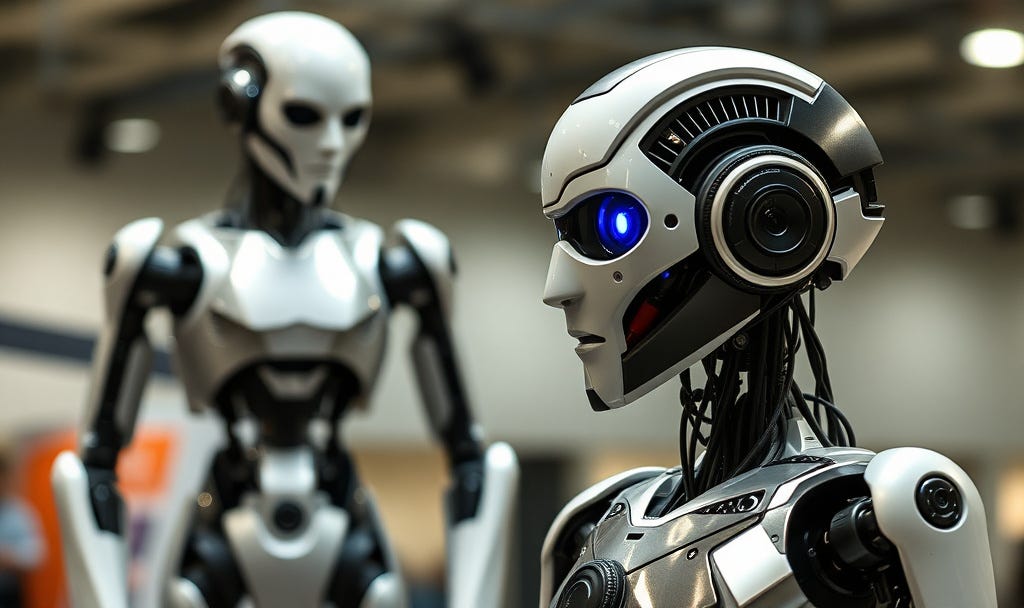
The FCC also banned connected power inverters used in data centres, solar panels, renewable energy systems and batteries, saying robots could allow malign actors to surveil Americans, enhance foreign intelligence capabilities or remotely commandeer machines. FCC chairman Brendan Carr said the agency was working to secure America’s critical supply chains.
China’s embassy in Washington said Beijing opposed the politicising of trade issues and sanctions based on groundless pretexts. It said China would take all necessary measures against actions causing material harm to its interests, as the Trump administration has increasingly sought to keep Chinese technology out of the U.S.
Sources: BBC, The Guardian
Ukrainian Foreign Minister Andrii Sybiha said he called Iranian Foreign Minister Abbas Araghchi after Tehran denounced a Ukrainian drone attack on an Iranian commercial vessel in the Caspian Sea, warning him against escalation and urging Iran to end all support for Russia.
Araghchi said Sybiha assured him the attack was unintentional and that Kyiv did not seek escalation. He said Iran did not seek escalation either, but any attack on Iranian citizens or interests was unacceptable and there must be restitution for losses.
The strike killed one sailor and injured another. Ukraine said it had targeted a Russian warship and vessels used for transporting Iranian-linked military cargo, while Sybiha said its actions were aimed only at defending Ukraine from Russian aggression and not at civilian vessels or people. In more than four years of conflict, Ukraine has faced barrages of Iranian-designed drones fired at them by Russian forces.
Wildfires across France and Spain have exposed shortages in Europe’s aerial firefighting capacity as large blazes burn through peak summer. France has 12 Canadair water-bombers but only seven are available, while Spain has 14, with just eight operational.
The aircraft can scoop water directly from lakes or the sea and make faster runs than other water-bombing planes, but production halted for several years from 2015, leaving ageing fleets. The EU has ordered 12 Canadairs for its own fleet, though deliveries will not begin until 2028.
The shortage has triggered political backlash as firefighters battle major fires in Gironde and across Spain. Some 42,000 hectares have burned in France and at least 80,000 in Spain, while more than 320,000 people have been evacuated across both countries.
EU commissioner for crisis management Hadja Lahbib said Europe would double firefighting capacity, but that it takes time.
Sources: Al Jazeera, Reuters
FIFA President Gianni Infantino plans to create a $20 billion subsidiary, FIFA Forward Enterprise, to run the World Cup and other events, with external investors offered stakes of up to 20%. FIFA said it would retain control while raising up to $4.2 billion from minority investors, including an investment vehicle founded by Joshua Kushner.
UEFA attacked the proposal, saying football’s soul and governance were not assets to trade and that the game was not FIFA’s to sell. The plan deepens a divide between FIFA and Europe’s governing body after the expanded 48-team World Cup across the U.S., Canada and Mexico.
FIFA says the money would fund member associations, with an optional programme offering up to $20 million in one-off capital for infrastructure, coaching, national teams, competitions, grassroots football and the women’s game.
Sources: Associated Press, Reuters
Restacking or sharing this publication means more people can read it. Commenting extends the conversation. Liking shows your appreciation.
On this day …
On this day in 1958, US President Dwight D. Eisenhower signed the National Aeronautics and Space Act, creating NASA.
Formed in response to the Soviet Union’s early successes in the Space Race, the new civilian agency became central to American scientific ambition.
Within little more than a decade it would land astronauts on the Moon, while its research has since driven advances in communications, Earth observation and space exploration.
NASA’s creation demonstrated how strategic competition can accelerate technological progress with benefits far beyond its original purpose.
Does the next era of space exploration depend more on national governments or private companies?