


Ukraine Strike Links Wars In Caspian (Conflict)
Saudi Drone Attacks Test Gulf Lull (Middle East)
Red Sea Blockade Tests Asian Energy Supplies (Asia)
Hormuz Talks Aim To Reopen Shipping Route (Middle East)
Iran War Support Falls In US Poll (US)
Ukraine Seeks European Missile Shield (Europe)
US Walkout Exposes France Rift At UN (Diplomacy)
French Wildfire Creates Its Own Storm (Europe)
Romania Expels Russian Diplomat (Diplomacy)
Language Diversity Falls From Ancient Peak (World)
A succinct daily briefing delivered each weekday to help you stay on top of the stories shaping the world.

Ukraine’s Caspian Sea strike has turned a Russia-Iran supply route into a direct point of contact between two previously separate wars.
Ukraine’s President Volodymyr Zelensky said Ukrainian forces had achieved strong long-range results in the Caspian, including against vessels used in military cargo shipments involving Iran.
Ukraine’s Security Service said drones hit a Russian oil field, a Russian missile boat as well as ships used to transport Iranian drones to Russia. Iranian Foreign Minister Abbas Araghchi said one sailor was killed on an Iranian commercial vessel, and that Kyiv’s actions could not go unanswered.
The Caspian is important because it is Iran’s most direct route to Russia and a corridor less exposed to US or allied interdiction than Iran’s southern ports. For Kyiv, striking it disrupts Moscow’s links with Tehran and frames Iran’s drone support for Russia as part of the same battlefield.
Sources: Wall Street Journal, BBC

Saudi Arabia says it intercepted drones targeting both oil facilities in its eastern province and Riyadh, attributing the attack to Iran-backed armed groups in Iraq.
The strike came during a lull in attacks between the United States and Iran, after Washington paused strikes on Iran and Tehran said it had paused attacks on US allies across the Gulf.
Saudi Arabia’s Foreign Ministry said the kingdom reserved the right to respond, while Yemen’s Houthis separately said they had targeted Saudi crude oil transport infrastructure. It remained unclear whether the incidents were coordinated or separate.
Jordan and Iraq also reported drone attacks on Monday, widening the pattern of attacks beyond Saudi Arabia. Iraq’s Prime Minister Ali al-Zaidi said Iraq would not allow its territory to be used to launch attacks against neighbouring countries, after Riyadh demanded measures to prevent Iraqi territory being used as a launching point.
Sources: Al Jazeera, Wall Street Journal

Asian governments are scrambling to avoid a second major energy crisis in six months as the Houthi blockade of Saudi shipping through Bab al-Mandab threatens yet another Middle East chokepoint.
Japan, the Philippines, Thailand and South Korea rely on Middle East oil for up to 90% of imports, while many are still recovering from Iran’s effective closure of the Strait of Hormuz in March.
Saudi Arabia had rerouted more than 70% of its crude exports to Yanbu on the Red Sea, creating a lifeline for Asian buyers after Gulf routes were disrupted.
That lifeline is now exposed. Some Japanese and South Korean refiners are seeking routes through Suez, the Mediterranean and around Africa, but the detour can more than double voyage times and add freight, fuel and insurance costs that are likely to reach consumers already hit by the earlier energy shock.
Sources: The Guardian, Bloomberg

Iran and Oman are trying to reach an agreement to restart shipping through the Strait of Hormuz, after traffic through the waterway became the biggest obstacle to renewed US-Iran peace talks.
Officials met in Tehran over the weekend and continued discussions on reopening the strait’s middle passage, which ships have largely avoided since the conflict began in late February. Omani negotiators are optimistic they may announce progress in the next few days, though no agreement is guaranteed. US President Donald Trump said “deep talks” were taking place, while in fact the discussions are mainly between Iran and Oman.
The middle passage through the Strait possibly contains sea mines placed by Iran and could need clearing before regular use. A successful deal would be a short-term fix rather than an end to the conflict, but mediators hope it could cool tensions and lead to more advanced talks.
Sources: Bloomberg, Jerusalem Post

Only a third of Americans support the war on Iran, the lowest Reuters/Ipsos reading since the five-month conflict’s early days, while 69% say US President Donald Trump has not clearly explained America’s goals.
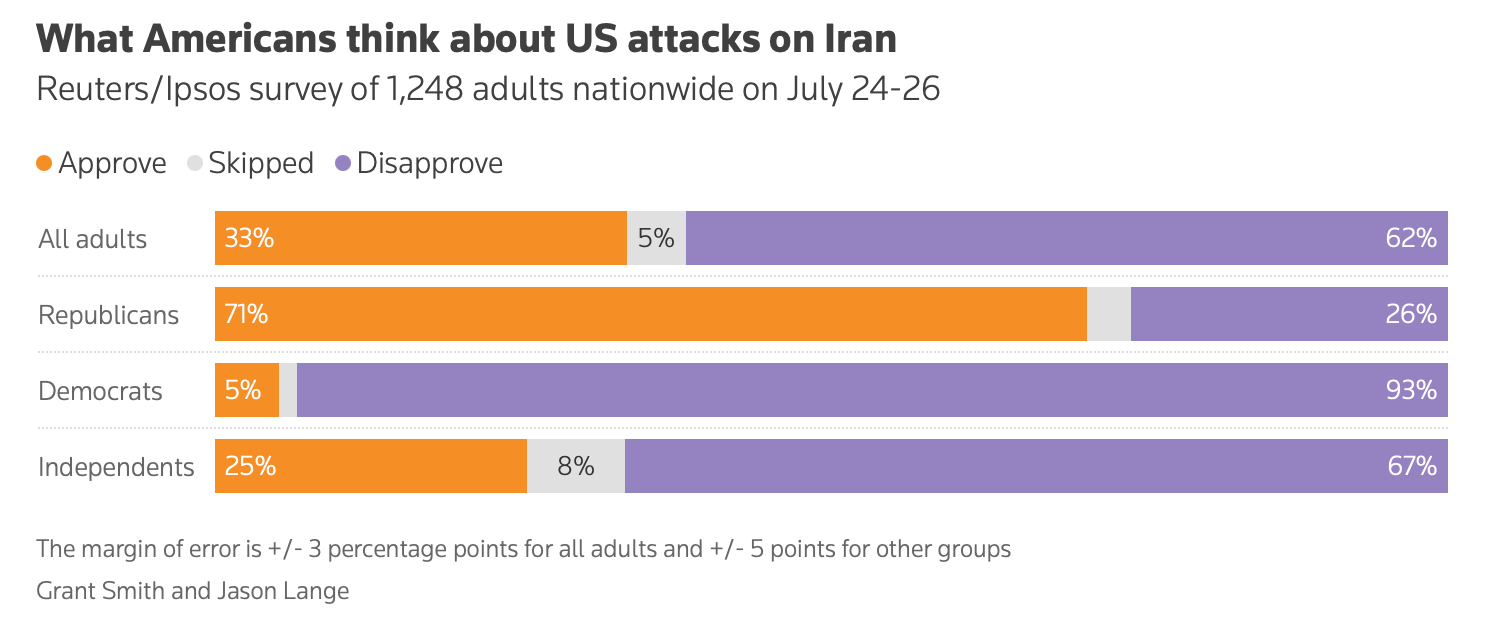
The poll was conducted Friday through Sunday and also found Trump’s approval rating rose to 37%, up three points from last month. He has offered shifting objectives, from including helping Iranians topple their leaders, to removing Iran’s ballistic missile capabilities and preventing it from obtaining a nuclear weapon. White House spokeswoman Olivia Wales said Trump would not make decisions based on “fluid opinion polls” and said his priority was keeping Americans safe.
The war is also carrying material domestic costs. Eighteen American soldiers have died, petrol prices have risen from about $3 a gallon before the war to just over $4, and independent registered voters favour Democrats over Republicans for Congress by 36% to 20%.
Sources: Reuters, The Business Standard
Restacking this post will help it reach more readers interested in the world.

Ukraine wants a prototype of a European anti-ballistic missile system to be ready in the first half of 2027, as Kyiv seeks an alternative to its reliance on US-made Patriot batteries against Russian ballistic missiles.
Davyd Aloian, deputy secretary of Ukraine’s National Security and Defence Council, said the Freyja project aims to produce a minimum viable product able to show practical results. Leaders from 10 European countries, including Ukrainian President Volodymyr Zelenskiy, and around a dozen defence manufacturers launched the anti-ballistic coalition in Paris two weeks ago.
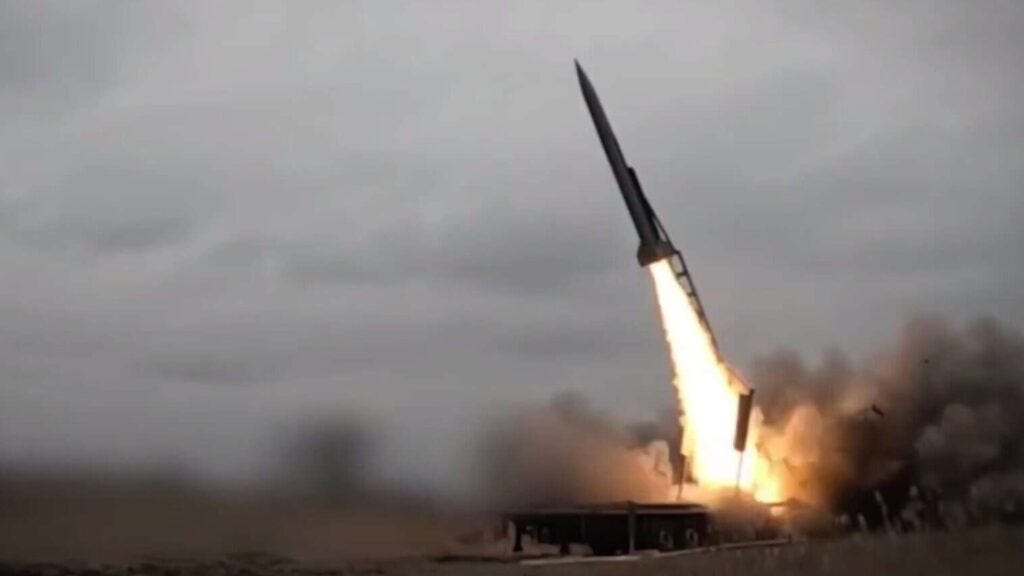
Ukraine is ready to provide a launcher and interceptor missile, while allies are expected to contribute radars, sensors and missile-guidance expertise. Freyja is designed as an open-architecture system with interchangeable components, allowing countries to integrate national equipment, as Kyiv seeks lower-cost capability amid Patriot supply volatility, low stocks, high cost and long production cycles.
Sources: Reuters, The New Voice of Ukraine

US diplomats walked out while French counterparts spoke at a UN Security Council meeting on Ukraine, after France criticised the Trump administration’s human rights record.
The dispute followed US opposition to giving UN human rights chief Volker Turk another four-year term. The General Assembly backed the reappointment by 144 votes to 10, with 13 abstentions, and France supported it.
France’s UN Mission in Geneva said the US no longer stood as a human rights beacon and had been isolated alongside North Korea, Nicaragua, Mali and Russia.
Deputy US ambassador Dan Negrea accused France of politicised drivel and said the delegation would not listen until France renounced what he called condescending and disrespectful rhetoric. France’s UN ambassador Jerome Bonnafont did not mention the walkout, instead defending France’s work within the UN for human rights and peace.
Sources: South China Morning Post, Reuters

A wildfire in southwest France became powerful enough for its smoke column to turn into a thunderstorm, generating lightning that struck the ground and ignited new fires beyond the original blaze.
French officials said the phenomenon, called a pyrocumulonimbus, is rare in Europe and had never previously been recorded in France by the national firefighters federation. The blaze originally erupted near Saumos on July 22 and has burned more than 420 square kilometres of forest and scrubland, damaged or destroyed more than 240 homes and forced 220,000 people to evacuate in Gironde.
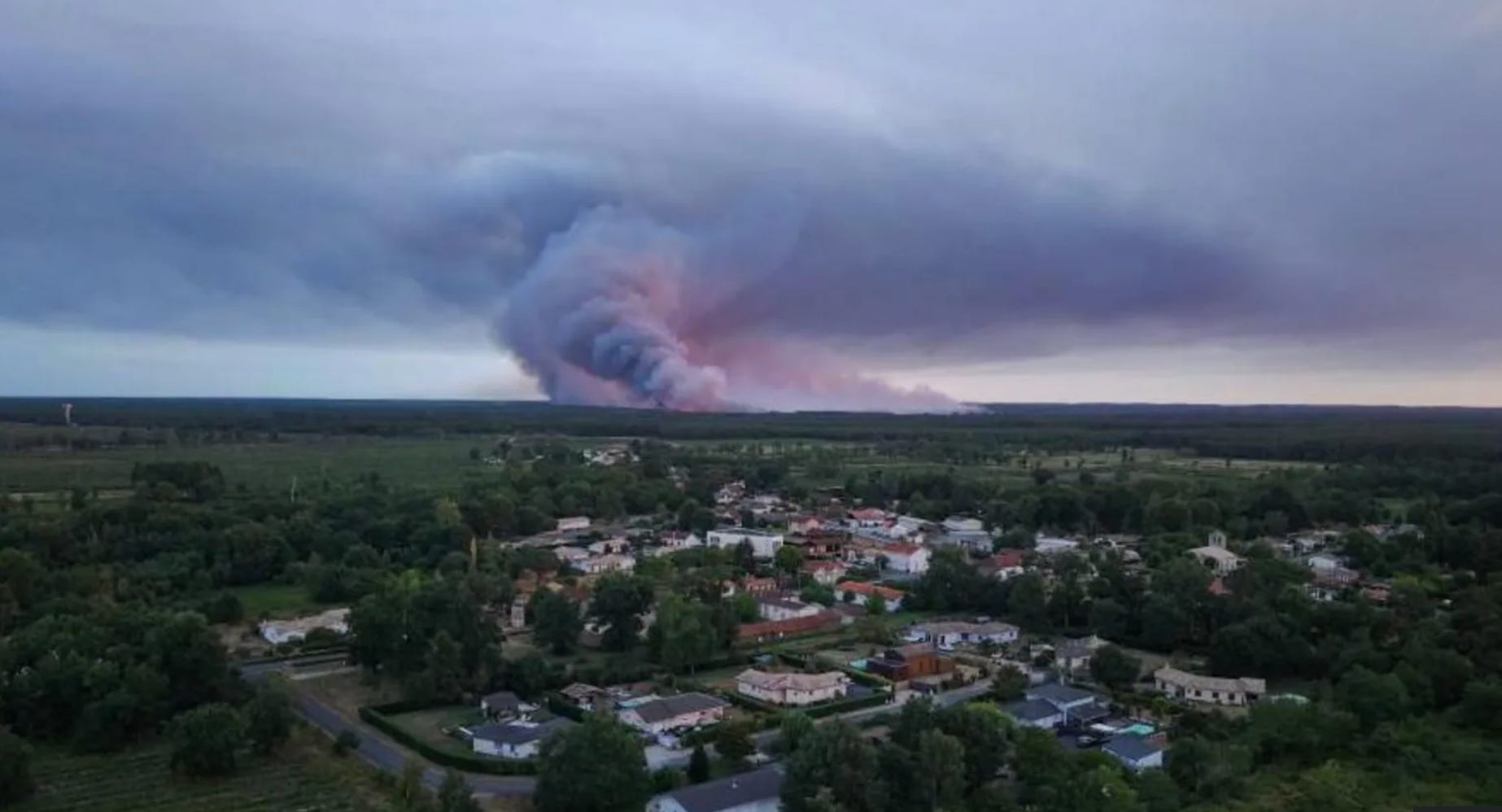
The cloud also produced violent, erratic winds capable of pushing flames in new and unexpected directions. Fire meteorologist Theodore M. Giannaros said the system becomes its own weather, making the fire harder to predict. Officials said the blaze had stopped growing by Monday, but was still burning as a new heatwave approached.
Sources: Associated Press, The Guardian

Romania has expelled a Russian diplomat and recalled its ambassador to Moscow after shooting down three suspected Russian drones that violated its airspace between Friday and Sunday.
Bucharest summoned Russia’s ambassador and presented him with fragments of drones shot down in Romanian airspace. Romania’s Foreign Ministry said Russia bore exclusive responsibility for the incidents and for the deterioration of the regional security environment. Romanian Foreign Minister Oana Țoiu said the aircraft were Shahed-type drones used by Russia, likely crossing into Romania during attacks on Ukrainian ports in the Odesa region.
Romanian President Nicușor Dan called the repeated incursions inadmissible and intolerable, saying they violated Romania’s sovereignty as well as NATO and EU airspace.
The Russian embassy rejected what it called unfounded accusations and said Russia had never directed drones at Romanian targets, while also signalling retaliatory measures.
Sources: Politico Europe, Reuters

Researchers estimate that the world’s language diversity has fallen sharply from an ancient peak, with roughly 7,500 languages used today compared with a possible 30,000 to more than 75,000 at any one time during a linguistic “golden age”.
The study, published in Science, used mathematical modelling with anthropology, linguistics and demography to trace language use across about 12,000 years of the Holocene. It found that people near the end of the last Ice Age may have spoken about 4,500 to 6,200 languages, before population growth and more settled agricultural communities helped diversity expand.
The later decline was driven by language replacement linked to the expansion of large empires and European colonialism. Yale University professor Claire Bowern said languages carry knowledge, memories and information about the past, while about half of languages used today are deemed endangered.
Sources: Reuters, Science
Restacking or sharing this publication means more people can read it. Commenting extends the conversation. Liking shows your appreciation.
On this day …
On this day in 1914, Austria-Hungary declared war on Serbia, one month after the assassination of Archduke Franz Ferdinand.
What began as a regional dispute rapidly activated Europe’s alliance system, drawing major powers into the First World War.
The conflict reshaped borders, toppled empires and altered the global balance of power, leaving political and social consequences that extended well beyond the twentieth century.
It remains a powerful reminder of how quickly interconnected crises can escalate beyond their original cause.
Could Europe’s leaders have halted the slide into war, or had events already become impossible to control?