


Nepal-China Flood Threat Grows As Lake Swells (Asia)
US Eyes Direct Stake In Venezuelan Oil Fields (South America)
US Patriot Stocks In Europe Fall To Critical Levels (Europe)
Hormuz Deal Pauses Fighting As Economic War Deepens (Middle East)
Trump Raises Prospect Of Sanctions On Chinese Banks (Finance)
US Reviews Deeper Troop Cuts Across Europe (Europe)
Half Of World’s Soils In Poor Condition (World)
US Corporate Profits Hit Record As Labour Share Falls (US)
Malaysia Sets First Rohingya Repatriation For September (Asia)
Nigeria Kidnappings Surge As Ransom Payments Triple (Africa)
A succinct daily briefing delivered each weekday to help you stay on top of the stories shaping the world.

Rescuers were racing on Friday to find hundreds of people still missing after catastrophic flooding along the Nepal-China border. Nepal’s death toll rose to 469 and both Nepal and China warned that a newly formed barrier lake could trigger further flooding. More than 1,500 people are missing across the two countries.
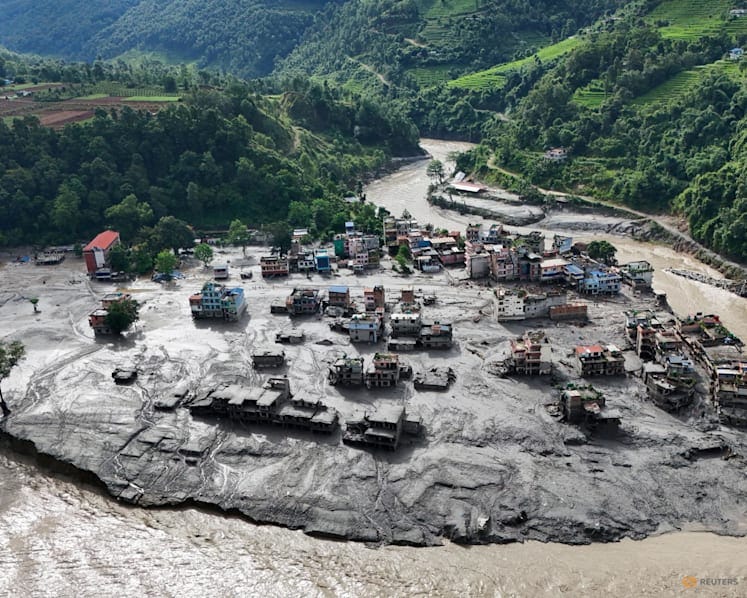
Chinese authorities mobilised an eight-member engineering team to survey and model the lake which contains about 2 million cubic metres of water. China warned that another 3 million cubic metres could flow into it over three days, creating a high risk of a breach with peak flow expected around September 1.
The lake formed after a glacier collapse and lies upstream from Gyirong Port, which was engulfed by mud and floodwater two days ago. Nepal has airlifted more than 3,000 people from the disaster area. Both locals and foreigners from multiple countries are among those missing.
Sources: Associated Press, Reuters

The Trump administration is in advanced talks with Venezuela for the U.S. to take a direct stake in at least 17 oil & gas fields holding about 90 billion barrels of proven reserves. The arrangement could involve joint ventures with private companies or hiring companies to operate the fields, although details remain under negotiation and the deal could still collapse.
Venezuela is also considering whether to leave OPEC, with the idea discussed in conversations with U.S. officials but no final decision has been made. Some officials envision a U.S.-Venezuela oil alliance that would diminish OPEC’s influence, however Venezuela is currently not subject to OPEC production limits.
Major U.S. oil companies have yet to make significant new investments in the country since Nicolás Maduro was ousted in January. Venezuela is producing about 1.1 million barrels a day. The proposed U.S. stake is intended to reassure companies considering capital commitments.
Sources: Wall Street Journal, Bloomberg

The U.S. military is facing a severe shortage of Patriot missile interceptors in Europe after stocks were shifted to the Middle East and heavily used in the war with Iran. A U.S. defence official described inventories as “beyond critical”, saying forces in Europe lack enough Patriots to stop a sustained ballistic missile attack and have very limited capacity against even a single strike.
The Pentagon and NATO dispute that assessment, saying sufficient air-defence munitions remain available. U.S. Army Col. Martin O’Donnell, a senior NATO military spokesperson, said it was “simply not the case” that Patriot stocks were beyond critical.
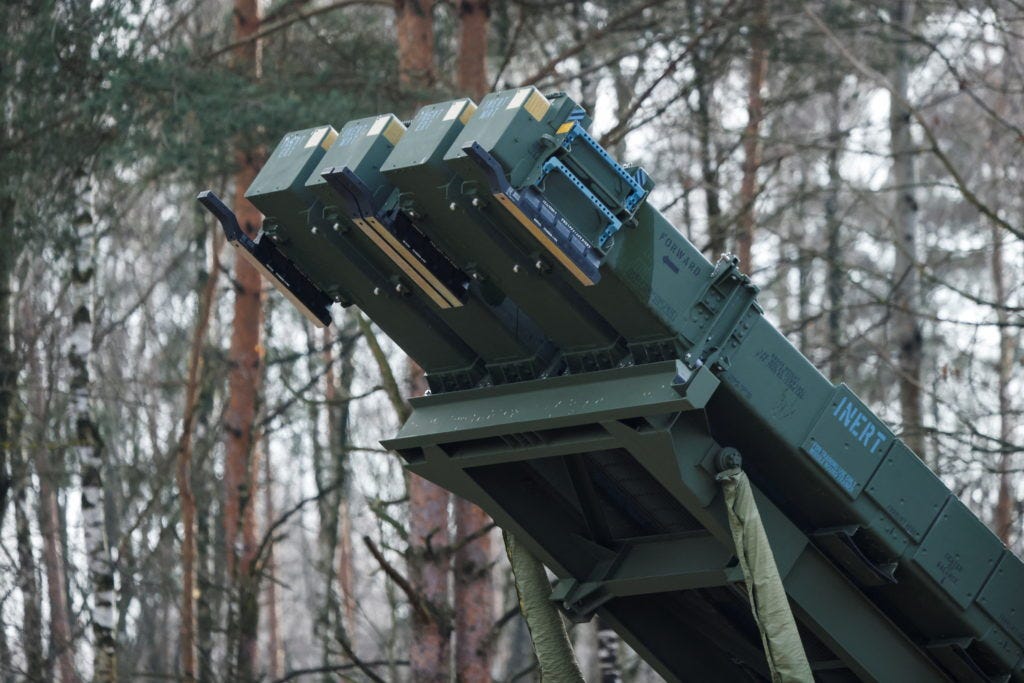
The Iran conflict has used about 65% of U.S. Patriots, roughly 1,500 of 2,330 interceptors, according to the Center for Strategic and International Studies. Europe’s first Patriot production facility is expected to open in Germany in September, with deliveries possibly beginning early next year. For now a Russian ballistic missile attack on NATO is not imminently expected but little could currently be done if one were to eventuate.
Sources: PBS, France 24

Iran and Oman have agreed in principle to a temporary maritime route through the Strait of Hormuz, raising the prospect of easing the rival blockades that have restricted shipping since the conflict began.
Iran is allowing a “temporary and limited” corridor, but Mohsen Rezaei, secretary of Iran’s Supreme National Security Council, said any broader understanding must include an end to wars and military operations in Lebanon, Gaza and Syria.
Washington is simultaneously shifting its strategy. The U.S. announced an “economic D-Day” campaign on Monday, moving its focus from military action to economic pressure, while President Donald Trump is reportedly no longer interested in returning to the June agreement framework.
The result is a pause rather than a settlement. Analysts describe a recurring pattern of confrontation followed by diplomacy, with military action and economic measures likely to coexist while both sides continue testing whether the other will yield.
Sources: South China Morning Post, CNBC

President Donald Trump has suggested the U.S. could sanction Chinese banks over their commercial links with Iran, days after Treasury Secretary Scott Bessent warned that banks helping convert Iranian oil into money would be targeted. Washington has already sanctioned 60 entities and individuals, including some in mainland China and Hong Kong but has not yet blacklisted major Chinese banks or refiners.
The threat comes weeks before Chinese President Xi Jinping is expected to visit Washington. U.S. Ambassador David Perdue met Chinese Foreign Minister Wang Yi and other officials in Beijing on Wednesday to discuss preparations for the visit, while both governments continue trying to preserve high-level engagement.
China, the largest buyer of Iranian oil, has opposed the new secondary sanctions against Tehran and said it would safeguard its interests. Beijing’s official response to the U.S. measures has so far been muted.
Sources: South China Morning Post, CNBC
Restacking this post will help it reach more readers interested in the world.

The Pentagon is preparing at least four options for future U.S. troop levels in Europe by November 6 as Washington moves towards a smaller military role on the continent. Around 80,000 U.S. troops remain deployed but further cuts are under review as allies are pressed to take greater responsibility for Europe’s conventional defence.
The review will assess allied defence spending, military capabilities and whether countries provide U.S. forces with reliable access to bases and airspace. U.S. Under Secretary of Defense Elbridge Colby said Washington wants NATO to become more balanced and praised Germany, Poland and Scandinavian countries while saying he hoped to see more from the United Kingdom.
The Trump administration says it is transitioning towards more limited support with allies in the lead. European governments remain concerned that the review could lead to substantial reductions in U.S. forces.
Sources: The Independent, Associated Press

More than half of the world’s soils are in poor condition, threatening food supplies and biodiversity, according to a UN report presented at the Cop17 summit on desertification in Ulaanbaatar, Mongolia. The report found soil management was poor or very poor in 52.5 percent of assessed regions and sub-regions, while only 14 percent was rated good or very good.

The Food and Agricuture Organisation (FAO) said soil degradation continues to accelerate even though most techniques for protecting and restoring soils were already well known before 2015. Soil management improved in just 10 percent of assessed areas between the two major reports and deteriorated in 58 percent.
Erosion remains the greatest threat, while limited access to resources and high upfront costs are preventing farmers from widely adopting better practices.
The FAO called for greater financial incentives, more localised data and greater practical use of indigenous knowledge.
Sources: RFI, Taipei Times

US corporate profits reached a record in the second quarter as workers’ share of national income fell to historic lows. Pre-tax earnings rose to an annualised $4.8tn, or 18 percent of national income, the highest share since the aftermath of the second world war, while wages and benefits fell to 60 percent, the lowest since the 1950s.
After-tax profits as a share of gross value added also climbed to a record 19.4 percent, from 18.2 percent. Strong earnings have helped push US equities to record highs, while inflation outpaced wage growth and real hourly earnings fell 0.2 percent in July from a year earlier.
Workers have lost sway in corporate America since the early 1980s, and the decline in labour’s share has accelerated over the past five years. Economists say it remains unclear whether the move reflects a lasting structural shift or temporary factors.
Sources: FT, Bloomberg

Malaysia has finalised the first phase of a voluntary repatriation programme that will return 1,476 Myanmar nationals on September 29, as part of an agreement for 5,000 people to be sent back. Prime Minister Anwar Ibrahim said in July that Myanmar had agreed to receive 5,000 members of the Rohingya minority.
Malaysia says the process will be voluntary and carried out in an orderly and dignified manner. Earlier this month, Communications Minister Fahmi Fadzil said Malaysia would not return refugees if they faced persecution or threats to their lives.
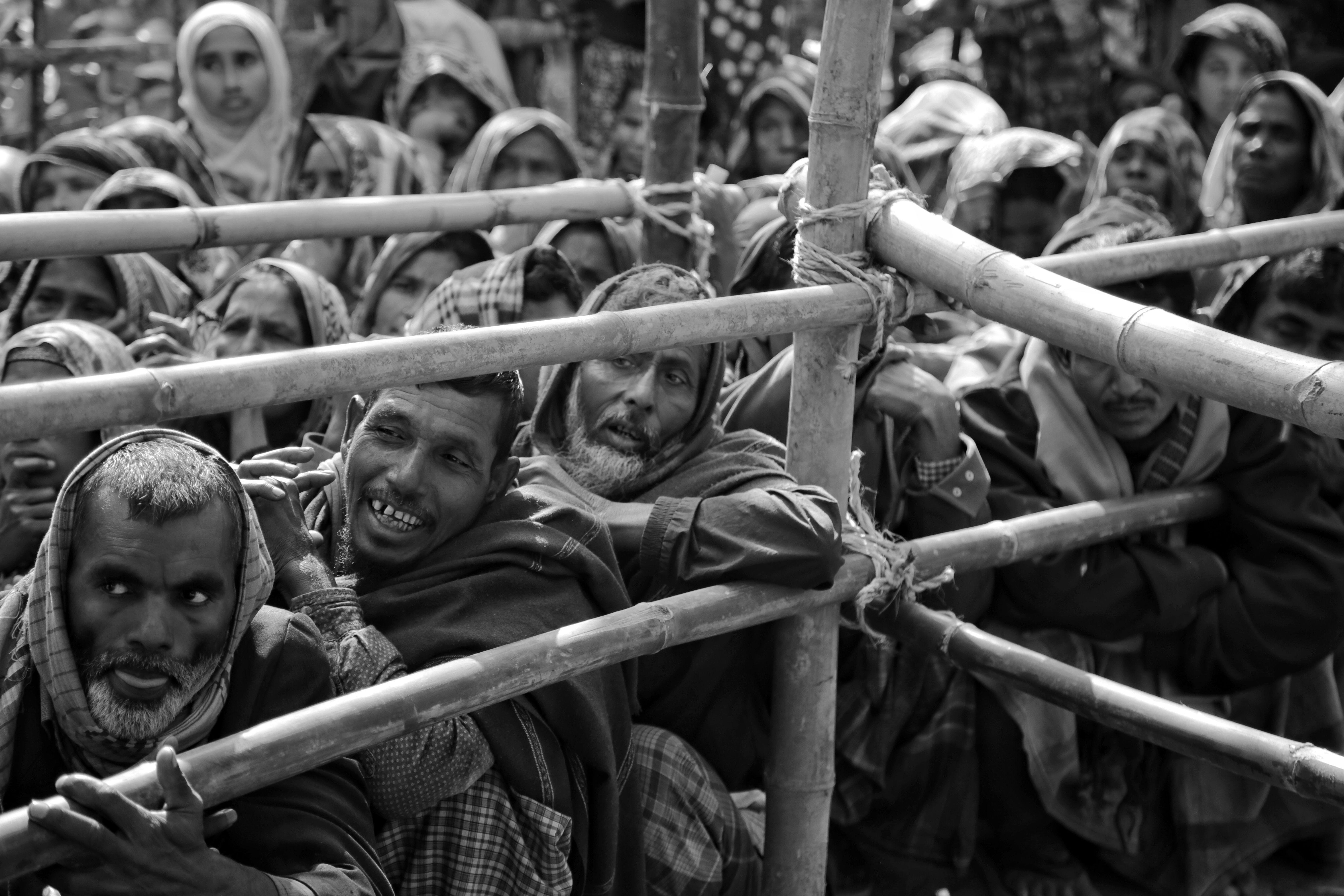
Rights groups remain concerned about the plan. Human Rights Watch says conditions for a safe, dignified and voluntary return do not currently exist, while Malaysia’s main Rohingya rights group has urged the government to halt the plan. Malaysia hosts more than 126,000 Rohingya from Myanmar registered with the UN refugee agency, its largest refugee community.
Sources: Al Jazeera, Euronews

More than 7,800 people were kidnapped across Nigeria between July 2025 and June 2026, according to SBM Intelligence, as ransom payments rose to N7.78 billion. The research group recorded 1,411 kidnapping incidents and 963 deaths, including 68 security agents.
Boko Haram received about N7 billion, or 90 percent of all ransom paid, from just eight incidents. The report said ransom demands fell from N48 billion to N22.9 billion but actual payments more than tripled from N2.56 billion.
The crisis has spread across every region, although northern Nigeria accounted for 85 percent of kidnapping cases and 96 percent of civilian deaths. SBM Intelligence recorded only 302 anti-kidnapping operations during the year, compared with 1,411 incidents. It has been reported that abductions are spreading southwards as security forces struggle with overlapping threats.
Sources: BBC, Premium Times Nigeria
Restacking or sharing this publication means more people can read it. Commenting extends the conversation. Liking shows your appreciation.
On this day …
On this day in 1845, the first issue of Scientific American was published in New York. Founded by inventor and publisher Rufus Porter, the weekly initially focused on new inventions, patents and developments in science and technology at a time when industrialisation was rapidly changing American economic life.
The publication evolved considerably over the following decades, eventually becoming one of the world’s best-known magazines devoted to science and scientific ideas.
More than 180 years after its first issue, it remains in publication. Its longevity is a reminder that technological revolutions create demand not only for new discoveries, but for people and institutions capable of explaining what those discoveries mean.