


Two Italians Killed in Kuwait Drone Attack (Conflict)
US Trading Partners Reject New Tariff Justification (Trade)
Hamas Weighs Response to Escalating Israeli Strikes (Middle East)
Trump Urges Putin to End Aggression Across Europe (Diplomacy)
North Korea Reportedly Suspends Military Aid to Russia (Conflict)
European Leaders Choose De Cos as Next ECB President (Europe)
Ukraine Aid and US Tax Warning Complicate EU Budget Talks (Europe)
Congo Ebola Cases Surpass 12,000 as Fighting Disrupts Aid (Africa)
UN Forecasts Zero Growth in Global Maritime Trade (Trade)
Britain Contacts 100,000 Veterans Over Military Readiness (UK)
A succinct daily briefing delivered each weekday to help you stay on top of the stories shaping the world.

Two Italian defence technicians were killed in a drone attack on Kuwait on Thursday, with Kuwaiti and Italian authorities attributing the incident to Iran. The Rheinmetall employees were maintaining detection equipment for Kuwait’s air defence systems. A Kuwaiti and a Pakistani national were also injured.
Iran denied responsibility, with armed forces spokesperson Brigadier General Abolfazl Shekarchi claiming the incident was a false flag operation. Italian Foreign Minister Antonio Tajani said the drone was manufactured in Iran, while acknowledging that numerous pro-Iranian militias operate across the region. Iranian Foreign Minister Abbas Araghchi offered to cooperate with Kuwait and Italy to establish the origin of the attack.
Kuwait and Bahrain have borne the brunt of recent Iranian strikes as Tehran seeks to increase pressure on Washington to end the war. The US blockade continues to impose severe economic strain on Iran, while efforts to reach a diplomatic settlement appear to have stalled.
Sources: Washington Post, CNN

China, Japan and other US trading partners have rejected Washington’s justification for new tariffs targeting 14 economies that together account for roughly half of global economic output. The proposed duties follow a Section 301 investigation into excess manufacturing capacity and are intended to restore tariffs struck down by the US Supreme Court in February.
US Trade Representative Jamieson Greer said manufacturing practices in the targeted economies unfairly burden US commerce. China, facing a 20% tariff that could double to 40%, rejected allegations of overcapacity and reserved the right to retaliate. Japan, Singapore, Malaysia and the European Union also disputed Washington’s findings.
Most of the proposed tariffs broadly match rates established under existing trade agreements. However, the prospect of higher duties threatens to complicate ongoing negotiations, including the US-China trade truce, which was recently extended until 10 January 2027. Vietnam and India also face higher tariffs if trade negotiations fail.
Sources: Associated Press, FT

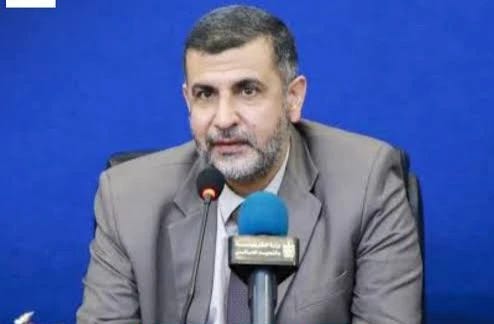
Hamas leader Khalil Al-Hayya said on Thursday that the group would consult other Palestinian factions on how to respond to continued Israeli attacks in Gaza. His comments marked a rare indication of possible retaliation following months of intensified Israeli strikes that have killed dozens of Hamas leaders and members.
Palestinian medics reported at least 10 deaths in the latest violence, including Khaled Abu Nada, a member of Hamas’s political office and deputy education minister. His wife was also killed. Israeli Prime Minister Benjamin Netanyahu said Israel had killed approximately 80 Hamas militants over the past month, while Hamas accused Israel of violating the ceasefire agreement.
The US-backed ceasefire agreed in October 2025 has neither halted the violence nor secured Hamas’s disarmament. Israeli forces now control approximately two-thirds of Gaza, compared with more than half when the agreement was reached, while Hamas controls a narrow strip of coastal territory.
Sources: Reuters, BBC

US President Donald Trump said on Thursday that he had urged Russian President Vladimir Putin to end military aggression across Europe during their meeting in Shenzhen last week. His remarks broadened the focus of Washington’s diplomatic efforts beyond Ukraine, although Trump did not specify which Russian activities he wanted halted.
The comments followed Russian missile and drone incursions into Polish airspace during attacks on Ukraine earlier this week. Trump and NATO Secretary General Mark Rutte subsequently issued a joint statement urging Russia to avoid actions that could widen the conflict. Poland has raised the possibility of NATO intercepting Russian missiles over Ukraine, while Kremlin spokesperson Dmitry Peskov blamed Kyiv for attempting to expand the war.
Trump remained optimistic about reaching a settlement but identified animosity between Putin and Ukrainian President Volodymyr Zelensky as a major obstacle to negotiations.
Sources: Kyiv Independent, Reuters

Ukraine’s military intelligence agency said on Thursday that North Korea had temporarily suspended some military cooperation with Russia following a diplomatic dispute over Moscow’s relations with South Korea. The reported suspension includes deliveries of ballistic missiles and artillery ammunition, although the intelligence findings have not been independently verified.

According to Ukrainian intelligence, North Korean Foreign Minister Choe Son-hui demanded clarification of Moscow’s policy towards Seoul after Russian Deputy Foreign Minister Andrey Rudenko reportedly indicated that Russia would help reduce tensions on the Korean peninsula. Pyongyang is also reportedly withholding approval of a Russian request to expand North Korea’s military presence in Russia from approximately 8,500 to 50,000 troops.
North Korea has supplied Russia with weapons since 2023 and troops since 2024. Despite the reported suspension, diplomatic contacts continue under a strategic partnership signed in 2024 that includes a mutual defence provision.
Sources: The Telegraph, Reuters

European leaders have selected Pablo Hernández de Cos, the former governor of Spain’s central bank, to succeed European Central Bank President Christine Lagarde when she steps down on 7 February. Currently general manager of the Bank for International Settlements, De Cos will become the first Spaniard to lead the ECB, subject to formal confirmation.
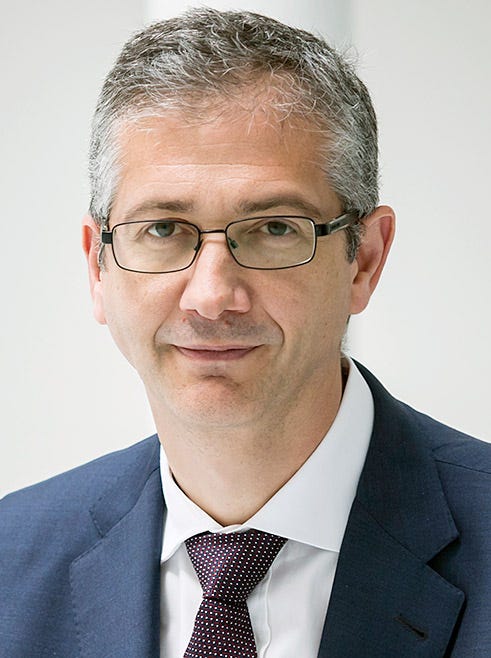
De Cos secured the backing of France and Germany over former Dutch central bank governor Klaas Knot, who was regarded as favouring higher interest rates. Although De Cos has a reputation for supporting monetary stimulus, he recently warned that central banks must remain vigilant about inflation risks stemming from high energy prices.
The appointment comes as eurozone inflation stands at 4%, double the ECB’s target, while several European governments face rising borrowing costs and high debt levels. The ECB could still raise interest rates at its December meeting under Lagarde.
Sources: Associated Press, Bloomberg

European Union leaders meeting in Brussels face competing demands over the bloc’s 2028-2034 budget, with disagreements over financial support for Ukraine and proposals to raise additional revenue.
German Chancellor Friedrich Merz insists that all 27 member states support a proposed €45bn loan for Ukraine in 2027, despite opposition from Slovakia, Hungary and Czechia. Germany also wants future Ukraine funding decisions to require majority approval rather than unanimity, seeking to protect financial assistance against a potential French presidential victory by National Rally leader Marine Le Pen, who has pledged to end French aid.
Meanwhile, European Council President António Costa has proposed reviving discussions on an EU-wide digital services tax to help finance the budget. Washington has warned against the proposal, arguing that it discriminates against American companies. The tax also faces opposition from Ireland and would require unanimous approval, complicating efforts to reach a budget agreement by year-end.
Sources: The Guardian, Politico Europe

The Ebola outbreak in the Democratic Republic of Congo has reached 12,021 confirmed cases and 5,904 deaths, according to government data released on Thursday. The outbreak, which began in May in the northeastern province of Ituri, has spread to eight of the country’s 26 provinces. It is the fastest growing Ebola outbreak on record.
Renewed fighting between government forces and rebels has disrupted efforts to contain the disease. World Health Organization Ebola incident manager Dr Catherine Smallwood said fighting had prevented response teams from reaching some communities, disrupted contact tracing and reduced staffing at treatment centres. Health officials and WHO personnel have also been evacuated.
The outbreak is caused by the rare Bundibugyo strain, for which no approved vaccine or treatment exists. Ebola cases have been detected in five countries, although Congo currently has the only active cases. Just 15% of new infections originate from contacts already known to health authorities.
Sources: Associated Press, CBC

Global maritime trade, which carries more than 80% of the world’s goods, is projected to record zero growth in 2026, according to the United Nations trade and development agency (UNCTAD). Seaborne trade reached 12.3 billion tonnes in 2025, growing by 1.9%, compared with 3.9% in 2024.
Disruptions to the Strait of Hormuz, Red Sea, Black Sea and Panama Canal are increasing shipping costs and extending voyages. Despite stagnant trade volumes, maritime transport demand measured in tonne-miles is expected to increase by 1.5% in 2026. Container spot freight rates more than doubled between January and August.

Developing countries face disproportionate economic consequences. UNCTAD estimates that a sustained 70-80% increase in maritime fuel costs would raise consumer prices by 0.35% in least-developed countries, compared with 0.19% globally. The agency projects a recovery in maritime trade growth to 3.2% in 2027 and advocates greater investment in shipping resilience.
Sources: Straits Times, UN

Britain has reportedly contacted approximately 100,000 former military personnel to assess their availability for potential recall in the event of war, marking the first such initiative since the Cold War. The Ministry of Defence has invited members of its Strategic Reserve to volunteer for military training, including NATO’s Steadfast Defender exercises scheduled for spring 2027.
Former service members have been asked to update their contact details and provide information about their employment, professional qualifications and skills. Defence Secretary Wes Streeting cited a deteriorating European security environment, including Russian missile incursions into Polish airspace, as justification for strengthening military preparedness.
The initiative comes as Britain’s regular army approaches 73,000 personnel, its smallest size since the Napoleonic Wars. Streeting has warned that Britain must be prepared for a potential war within 1,000 days. Officials emphasised that participation remains voluntary and that no immediate mobilisation is planned.
Sources: United 24, BBC
Restacking or sharing this publication means more people can read it. Commenting extends the conversation. Liking shows your appreciation.
On this day …
On this day in 1095, Pope Urban II addressed a gathering at the Council of Clermont in France, calling on Western Christians to undertake an armed expedition to the eastern Mediterranean.
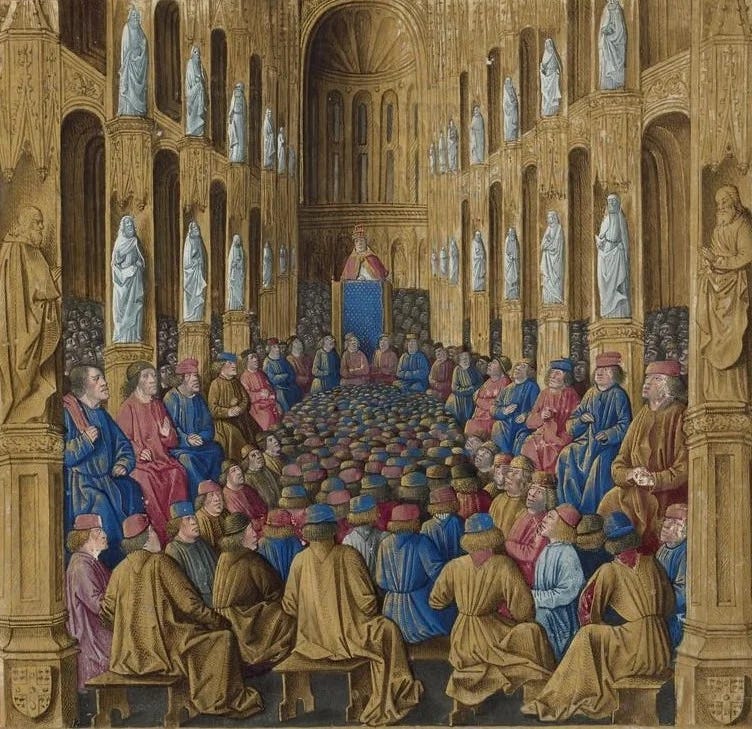
His appeal followed a request for military assistance from the Byzantine emperor, whose territories faced pressure from Turkish forces. Urban also urged the recovery of Jerusalem, offering spiritual rewards to those who joined the campaign.
The resulting First Crusade culminated in the capture of Jerusalem in 1099 and the establishment of Crusader states.
The Crusades subsequently shaped political, religious and cultural relations between Christian and Muslim societies for centuries, leaving a legacy that remains contested today.
It just shows how long Westerners have been interfering in the Middle East and how much trouble has been caused as a result.