


US Strikes Test Fragile Iran Ceasefire (Conflict)
Israel Expands Lebanon Offensive (Conflict)
Blair Warns Labour Against Moving Left (UK)
US Plans Reduced Nato Commitments (Geopolitics)
UN Warns Over Russian Threats To Kyiv (Geopolitics)
Huawei Chip Claim Tests US Tech Leverage (Technology)
China Curbs Travel For Top AI Talent (China)
UK And Poland Deepen Defence Ties (Geopolitics)
US Opens Plutonium Fuel Talks (Energy)
Trump Administration Seeks Federal Worker NDAs (USA)
A succinct daily briefing delivered each weekday to help you stay on top of the stories shaping the world.

Iran remained engaged in ceasefire negotiations with the United States on Tuesday despite condemning fresh US strikes on missile-launch sites and Iranian vessels in southern Iran as a “definitive violation” of the truce. The attacks killed four Iranian soldiers and targeted efforts to lay mines in the Strait of Hormuz, according to Iranian and US officials. Brent crude prices rose after the renewed fighting.
Talks mediated by Qatar and Pakistan continued in Doha as negotiators worked to unlock more than $12bn in frozen Iranian assets and secure temporary sanctions relief for Iranian oil exports. US Secretary of State Marco Rubio said discussions were focused on specific language in the draft agreement and could take several more days.
The proposed framework would extend the ceasefire while reopening shipping through the Strait of Hormuz and restarting negotiations over Iran’s nuclear programme. Political pressure from hardliners in Washington, Tehran and Jerusalem continued to complicate the negotiations.
Sources: The Guardian, Washington Post

Israel intensified its offensive in Lebanon on Tuesday, launching more than 120 air strikes as Prime Minister Benjamin Netanyahu said the military was deepening operations and seizing strategic areas. Lebanese authorities said recent Israeli strikes had killed 31 people and wounded 40, including deaths in Burj al-Shamali and Mashghara.
The escalation further strained the April 16 ceasefire with Hezbollah, which was already appearing increasingly nominal as Israeli troops pushed farther north along the Litani River. Israel said it was fortifying a security strip inside southern Lebanon to protect northern communities, while Hezbollah said it had attacked advancing Israeli forces with rockets, artillery and explosive drones.
The fighting also complicates wider diplomacy around the Iran war. Tehran wants any broader agreement to include an end to fighting in Lebanon, while Lebanese officials hope direct talks with Israel can lead to a permanent ceasefire and Israeli withdrawal.
Sources: South China Morning Post, Associated Press

Sir Tony Blair, the former Labour prime minister, has warned that the party risks a “delusion” if it responds to electoral losses by shifting further left, as pressure builds on Sir Keir Starmer’s leadership after poor election results and ministerial resignations.
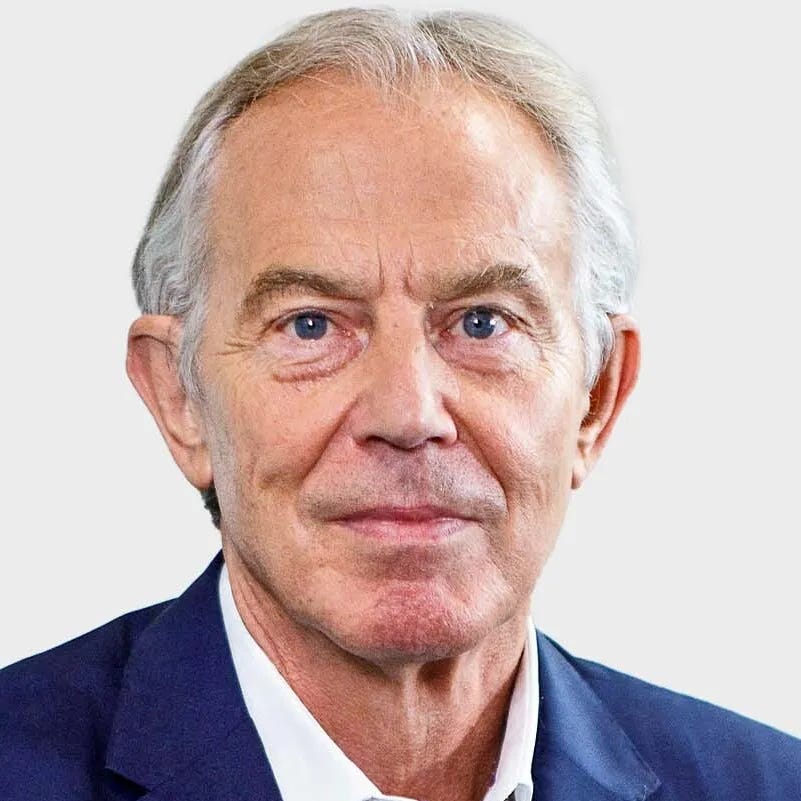
In a 5,600-word essay, Blair said Labour lacked a worked-out coherent plan for the country and argued that trying to force the prime minister out before agreeing a policy direction was not serious. He criticised new workers’ rights laws, employer National Insurance rises, parts of the net-zero agenda and policies he said had created headwinds for business.
The intervention targeted the leadership debate around Greater Manchester mayor Andy Burnham, who is seeking to return to Westminster and is expected to challenge Starmer if he wins the Makerfield by-election. Blair said leadership change was irrelevant without a policy debate first.
Sources: Reuters, The Independent

The United States intends to reduce military capabilities available to Nato allies in a crisis, including fighter jets, warships, strategic bombers, refuelling aircraft and drones, according to reports based on briefings at alliance headquarters.
The reported plan would cut US fighter jet commitments by a third, provide only half the previous number of strategic bombers, reduce destroyers and end submarine availability to the alliance. Europe would also have to provide its own reconnaissance drones, while US armed drone support would be scaled back.
The move comes as Nato faces strain over Washington’s role in European defence. US President Donald Trump has criticised allies over military spending and support during the Iran war, while a Nato spokeswoman said force planning had relied too heavily on the US and responsibilities could be reorganised as Europe and Canada invest more in defence.
Sources: FT, BBC

UN Secretary-General António Guterres said he was “deeply concerned” on Tuesday after Russia announced plans for future strikes on Ukrainian defence enterprises and decision-making centres in Kyiv. The warning followed one of the heaviest bombardments of the Ukrainian capital since the war began and came after reports of a Ukrainian drone strike in Russian-occupied Starobilsk.
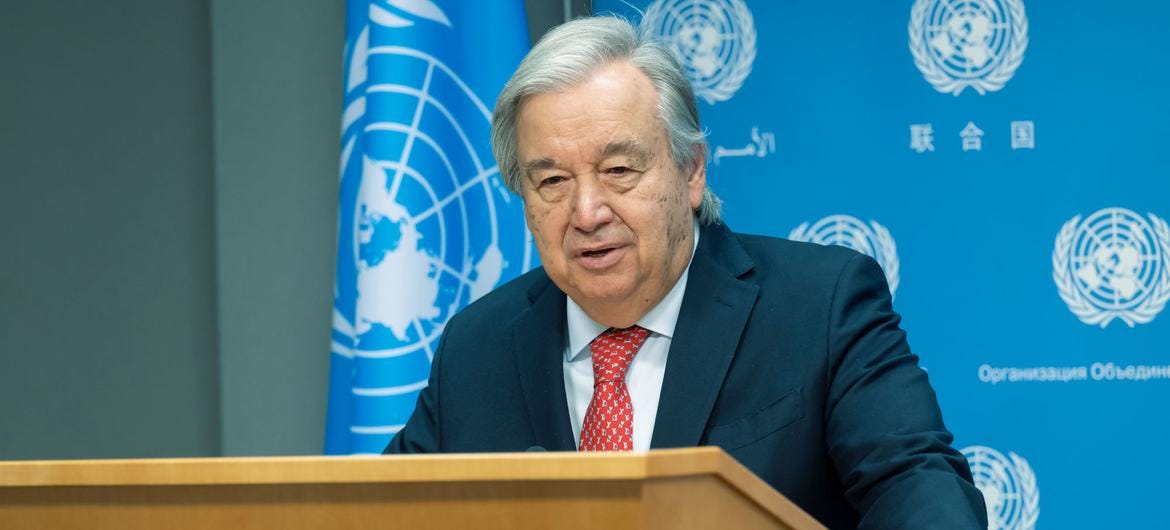
Addressing the UN Security Council, Guterres said it was imperative to avoid further escalation in a conflict that had already exacted a devastating toll on civilians. He said the United Nations condemned attacks on civilians and civilian infrastructure wherever they occurred.
Russia also urged foreign citizens and diplomats to leave Kyiv as soon as possible ahead of possible future strikes. European officials rejected the warning, with EU Ambassador to Ukraine Katarina Mathernova saying the bloc would remain in Kyiv and continue supporting Ukraine despite the threats.
Sources: Reuters, Kyiv Post
Restacking or sharing this publication means more people can read it. Commenting extends the conversation. Liking shows your appreciation.

Huawei said it had developed a chip design breakthrough that could let its high-end processors reach transistor density equivalent to a 1.4-nanometre process by 2031, potentially narrowing China’s gap with global semiconductor leaders.
The company said its Tau Scaling Law and LogicFolding approach would stack circuits vertically rather than relying only on shrinking transistors, a route that could reduce dependence on extreme ultraviolet lithography machines blocked by US-led sanctions. He Tingbo, president of Huawei’s semiconductor business, said cutting-edge EUV tools would no longer be necessary for advanced nodes, although analysts warned the claim still needed practical testing and faced cost, power, heat and integration challenges.

The announcement strengthens Beijing’s semiconductor self-sufficiency push as Washington and Beijing compete over artificial intelligence. Analysts said it could reduce US export-control leverage and increase confidence in China’s domestic chip ecosystem.
Sources: South China Morning Post, NBC News

China is restricting overseas travel for senior artificial intelligence professionals at private firms including Alibaba and DeepSeek, extending controls previously associated with state firms, researchers and sensitive sectors into one of its most strategically important technology fields.
People involved in advanced AI work and assessed as important to the country must now seek approval from relevant authorities before travelling abroad, according to people familiar with the matter. The restrictions affect a mix of startup founders, researchers and executives, though the full scope, seniority level and roles covered remain unclear.
The move reflects Beijing’s view that elite AI engineers are strategic assets as China tries to close the gap with the United States. It may also complicate recruitment and retention at private AI firms, while forcing engineers with global ambitions to decide earlier whether to build careers inside China or overseas.
Sources: Japan Times, Reuters

Britain and Poland are set to sign a new defence and security treaty in London to strengthen cooperation against hostile threats across Europe, following similar UK agreements with France and Germany.
The deal, to be signed by UK Prime Minister Keir Starmer and Polish Prime Minister Donald Tusk, will cover defence cooperation, border security, organised crime and closer work with the European Union. The leaders are expected to discuss hybrid attacks, including Russian-ordered arson attacks in East London, cargo fires in Birmingham and Europe, cyber-attacks and espionage.
The treaty will also support joint development of complex weapons, including next-generation air defence effectors and a medium-range air defence missile. Poland has become a key European security partner because of its support for Ukraine and its role on Nato’s eastern flank, while Britain is seeking closer European defence ties.
Sources: Reuters, Bloomberg, UK Government

The United States government has selected five companies for advanced talks on using Cold War-era surplus plutonium from dismantled nuclear warheads as fuel for advanced reactors, reversing a previous plan to dilute and bury much of the material.
The Energy Department said Oklo, Standard Nuclear, Exodys Energy, SHINE Technologies and Flibe Energy were chosen under the Surplus Plutonium Utilization Program. Oklo plans to work with Newcleo, which says the material could help address a shortage of nuclear fuel and bring more reactors online sooner.
Supporters argue the plan could broaden domestic fuel supplies and reduce nuclear liabilities. Critics, including some Democrats and nonproliferation experts, warn that weapons-usable plutonium requires strict safeguards and raises proliferation concerns. The material is highly toxic if inhaled, has a half-life of 24,000 years and is held at heavily guarded federal facilities.
Sources: Al Jazeera, New York Times

US President Donald Trump’s administration has proposed a government-wide non-disclosure agreement that would bar federal workers from sharing a broad range of confidential government information without authorisation.
The draft notice, posted by the Office of Personnel Management, would cover non-public, proprietary, sensitive, pre-decisional or deliberative material not currently public and not legally disclosable. Agencies could decide whether to adopt the rule, but workers who refuse to sign could face removal from federal service or potential debarment.
The proposal includes a carve-out for whistleblower protections and other lawful disclosures, but critics warned it could chill speech and weaken public accountability. Esha Bhandari, director of the American Civil Liberties Union’s Speech, Privacy and Technology Project, said broad gag orders would leave the public in the dark about how government works.
Sources: Al Jazeera, Washington Post
Restacking this post will help it reach more readers interested in the world.
On this day …
On this day in 1994, Nelson Mandela was inaugurated as South Africa’s first Black president, marking the formal end of apartheid after decades of racial segregation and minority rule.
Mandela’s election followed the country’s first fully democratic national vote and became one of the defining political transitions of the late twentieth century. His presidency sought to balance reconciliation with institutional change, while South Africa faced the long-term social and economic consequences of apartheid.
The transition was closely watched around the world as a test of whether negotiated political settlements could prevent wider conflict in deeply divided societies.