


Iran Proposes Strait Deal Before Nuclear Talks
Trump Unhurt After Press Dinner Shooting
Israel Lebanon Ceasefire Comes Under Strain
Bennett And Lapid Unite Against Netanyahu
Ukraine Strikes Revive Chernobyl Warnings
Mali Minister Killed In Coordinated Attacks
Colombia Highway Bomb Kills 20 Before Vote
Military Spending Rises As Insecurity Spreads
Syria Opens First Assad-Era Public Trial
China Develops Coal Fuel Cell With Near-Zero Emissions

Iran has proposed reopening the Strait of Hormuz and extending the ceasefire before resuming nuclear negotiations, according to officials familiar with the plan delivered via Pakistani mediators to Washington. The proposal aims to break a diplomatic stalemate by separating maritime access from enrichment demands, even as President Donald Trump signalled he intends to maintain the naval blockade restricting Iranian oil exports.
The disruption has sharply reduced traffic through the chokepoint, with daily transits falling from about 135 before the conflict to near zero and roughly a fifth of global oil flows affected.
American forces have already turned back 38 ships under the blockade. Trump is expected to review the proposal with national security advisers in the Situation Room as markets reacted positively to signs talks could resume.
Sources: Axios, Bloomberg

Donald Trump said he was not worried while being evacuated from the White House Correspondents’ Dinner after a gunman attempted to storm the ballroom at a Washington hotel. Police arrested Cole Tomas Allen, 31, after saying he opened fire near a security checkpoint during Saturday night’s event.
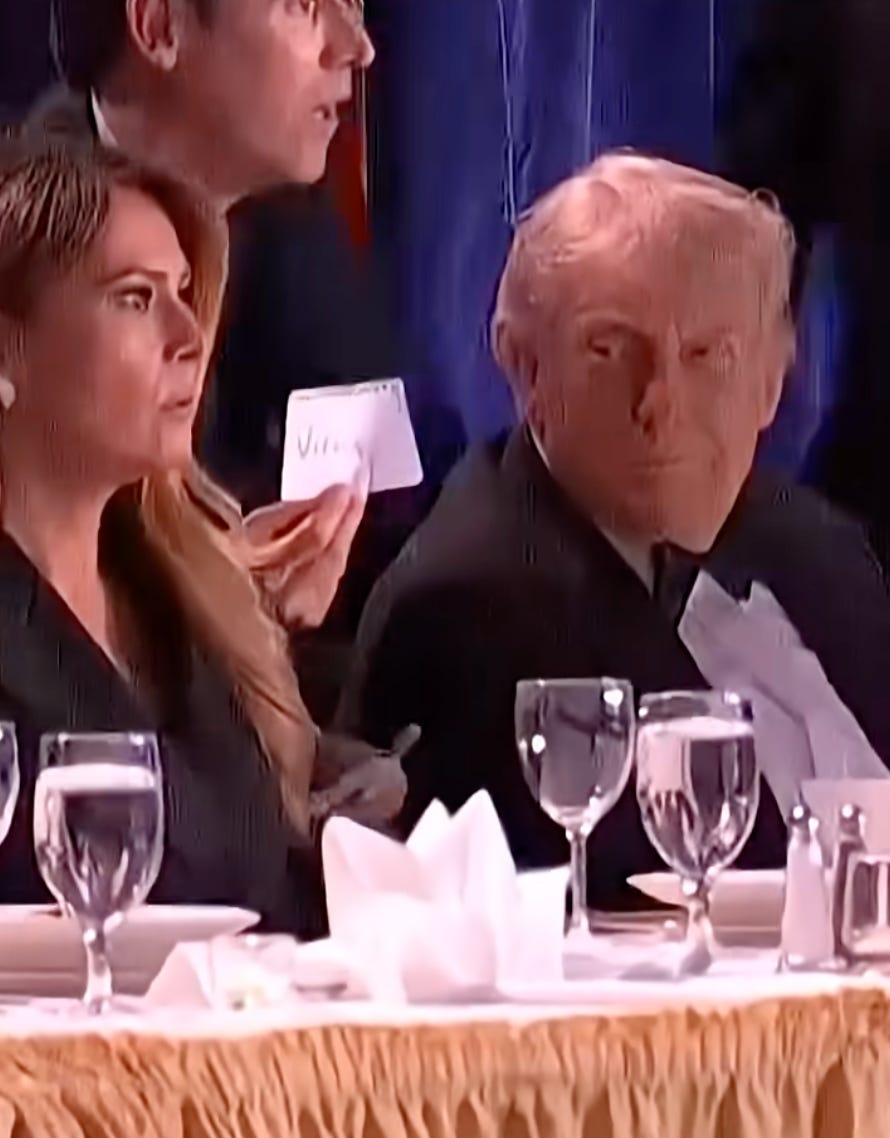
The FBI’s criminal investigation and terrorism task force are investigating, while Attorney General Todd Blanche said preliminary findings suggested the suspect was likely targeting senior White House officials. Trump, Melania Trump and JD Vance were rushed out by security, and an officer shot during the incident was later discharged from hospital.
Officials said Allen was carrying two guns and knives and will be charged in federal court with assault of a federal officer and using a firearm during a crime of violence.
The attack drew condemnation from former President Barack Obama and foreign leaders.
Sources: BBC, PBS

Israeli strikes killed 14 people and wounded 37 in southern Lebanon on Sunday, the deadliest day since the U.S.-mediated ceasefire between Israel and Hezbollah began on April 16. Lebanon’s health ministry said the dead included two women and two children, while Israel said one soldier was also killed.
The Israeli military warned residents to leave seven towns north of the Litani River, beyond the buffer zone it occupied before the ceasefire, and said it had struck Hezbollah fighters, rocket launchers and a weapons depot. Benjamin Netanyahu said Israel was acting according to rules agreed with the United States and Lebanon.
Hezbollah said it would continue attacks on Israeli troops inside Lebanon and towns in northern Israel while Israel continued what it called ceasefire violations, exposing how the truce has reduced hostilities without ending the conflict.
More than 2,500 people have been killed in Israeli strikes since the war between Hezbollah and Israel began on 2nd March.
Sources: Reuters, The Guardian

Naftali Bennett and Yair Lapid, two former Israeli prime ministers and leading rivals of Benjamin Netanyahu, have announced a merger of their parties ahead of Israel’s election expected later this year. The new party will be called Together, with Bennett as leader.
The alliance brings a right-wing former premier and a centrist former premier into one opposition bloc aimed at ousting Netanyahu’s coalition government. Lapid said the move was intended to end internal divisions and focus efforts on winning the upcoming election, while Bennett said Israel must “open a new chapter”.
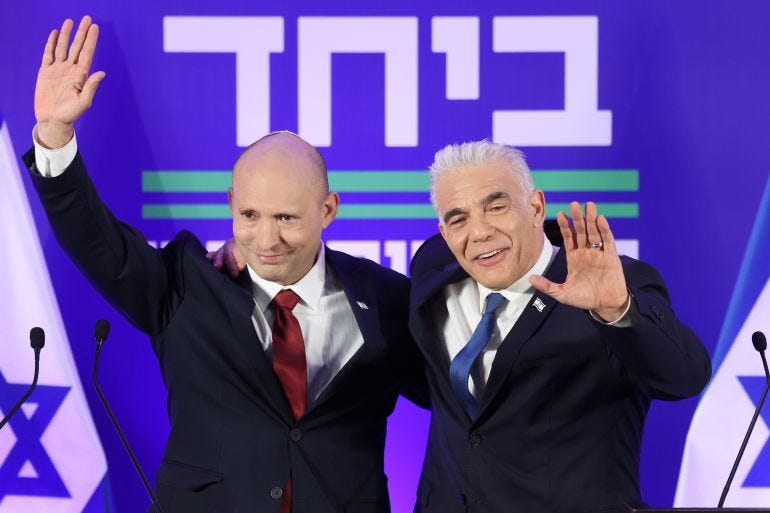
The pair have joined forces before, ending Netanyahu’s 12-year tenure in 2021 before leading a coalition that lasted barely 18 months. Polling cited in the sources found Bennett trailing Netanyahu’s Likud, while Lapid’s party has fallen sharply from its current seat count.
Sources: Al Jazeera, Reuters

Strikes across Ukraine, Russian-occupied territory and Russia killed at least 16 people as the 40th anniversary of the Chernobyl nuclear disaster prompted renewed warnings over attacks near the plant. Russian drone and missile strikes on Dnipro killed at least nine, while authorities also reported deaths in Sevastopol, Luhansk and Russia’s Belgorod region.
Volodymyr Zelenskyy said Russian attacks risked repeating history, warning that Russian-Iranian Shahed drones regularly fly over the plant and that one struck the confinement last year. Rafael Grossi, Director General of the International Atomic Energy Agency said repairs to the damaged outer protective shell must begin immediately.
The warnings came as Ukraine said it struck an oil refinery in Yaroslavl, deep inside Russia, sparking fires at a facility that produces fuel for the Russian military. The latest attacks underscored how the war is still expanding across military, energy and nuclear-risk fronts.
Sources: CBS News, PBS

Mali’s defence minister, Sadio Camara, was killed after a suicide attacker drove a vehicle packed with explosives into his residence in Kati, near Bamako, during coordinated insurgent attacks across the country. Government spokesperson Issa Ousmane Coulibaly said Camara was wounded after exchanging fire with attackers and later died in hospital.
The assaults involved jihadist militants and separatists, with attacks reported near Bamako airport and in Gao, Kidal, Sevare and Mopti. Analysts described the operation as one of Mali’s largest coordinated attacks in years, while the government did not provide a national death toll.
The violence exposed the continuing reach of armed groups despite Mali’s military government promising greater security. It also raised pressure on Russia’s role in the country, after Russian personnel were reported responding alongside Malian forces.
Sources: BBC, The Guardian

A bomb attack on the Pan-American Highway in Colombia’s Cauca region killed 20 people and injured 36 others, including minors, one month before the country’s presidential election. Videos from the scene showed damaged vehicles and debris across the road, while local officials reported upturned vehicles, craters and extensive damage.
Gustavo Petro blamed the attack on rebels linked to dissident factions of the Revolutionary Armed Forces of Colombia, and called those responsible “terrorists, fascists and drug traffickers”. Governor Octavio Guzman described the bombing as indiscriminate and the most brutal attack against civilians in decades.
The attack followed a spate of smaller incidents in Cauca, including one targeting a military base in Cali that injured two people. Security is already a central issue in the election campaign, with violence rising in the southwest.
Sources: BBC, DW

Global military spending rose 2.9 percent in 2025 to $2.89 trillion, marking an 11th consecutive annual increase and pushing the worldwide military burden to 2.5 percent of GDP, its highest level since 2009. The three largest spenders, the United States, mainland China and Russia, accounted for just over half the total.
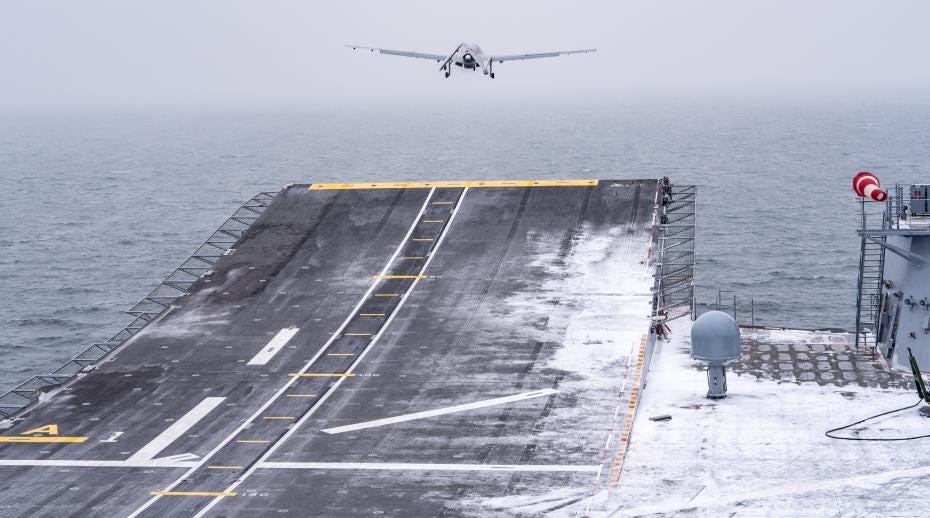
The increase came despite a 7.5 percent fall in US spending to $954 billion, linked to Washington not approving new military aid for Ukraine. Spending outside the US rose 9.2 percent, with Europe driving much of the increase after a 14 percent surge to $864 billion, shaped by the war in Ukraine and decreased US engagement with Europe.
Asia and Oceania spending reached $681 billion, its fastest rise since 2009. China spent $336 billion, while Japan and Taiwan raised expenditure amid regional tensions and uncertainty over US support.
Sources: France 24, South China Morning Post, SIPRI

Syria opened its first public trial of officials linked to former President Bashar Assad’s rule, with Atef Najib appearing in a Damascus courtroom to face charges related to crimes against the Syrian people. Najib, a former army brigadier general and Assad cousin, headed political security in Daraa province during the 2011 uprising.
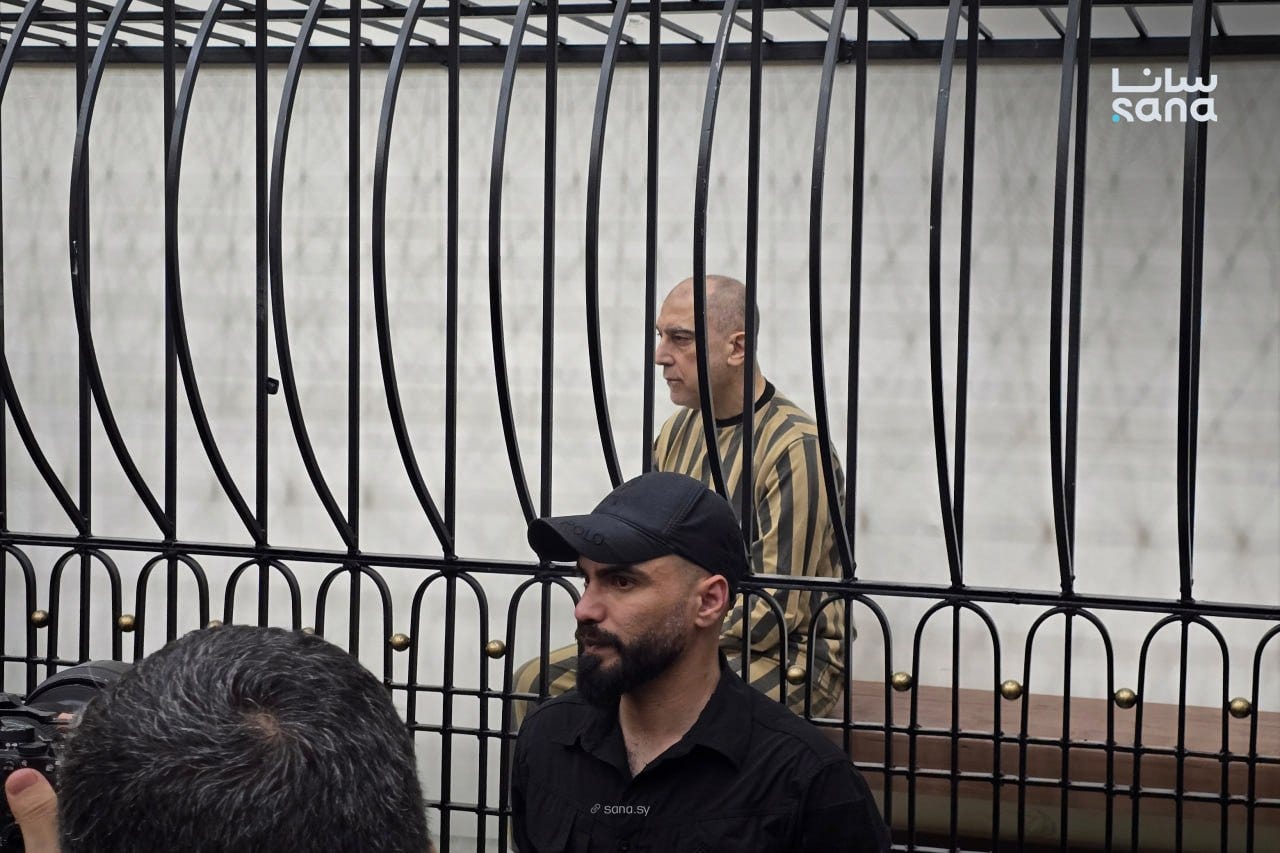
The case reaches back to the arrest and torture of teenagers who had written anti-government graffiti on a school wall in Daraa, an episode that became a catalyst for mass protests. Those protests were met by a brutal government crackdown and spiralled into a 14-year civil war that ended with Assad’s ouster in December 2024.
Assad, his brother Maher and other former senior security officials were charged in absentia. The interim government has faced criticism over delays to transitional justice, but authorities now appear to be prosecuting Assad-linked officials more aggressively.
Sources: Al Jazeera, Associated Press

Chinese researchers have developed what they describe as the first zero-carbon-emission direct coal fuel cell, designed to generate electricity from coal without combustion, steam turbines or a conventional power cycle. The system, led by Xie Heping at Shenzhen University, pulverises, cleans and pre-treats coal before feeding it into a cell where electrochemical oxidation produces electricity directly.
The carbon dioxide produced by the reaction is captured inside the system and converted into chemical feedstocks or mineralised compounds such as sodium bicarbonate. Xie said avoiding combustion and thermal engines could enable substantially higher theoretical efficiency than conventional coal plants.
The technology remains at laboratory scale, and commercial deployment is distant. Wei Zhijiang said coal power still supplied nearly 60 percent of China’s electricity by the end of 2025, while the new system was unlikely to become cost-competitive before 2045.
Sources: South China Morning Post, VN Express
On this day …
On this day in 2005, the Airbus A380 completed its maiden flight from Toulouse, marking the debut of the world’s largest passenger airliner.
The aircraft challenged the long-standing dominance of the Boeing 747 and signalled Europe’s arrival as a full competitor to the United States in the strategic top tier of long-haul civil aviation manufacturing.
Although later shifts in airline economics favoured smaller long-range aircraft over very large hub-to-hub designs, the A380 remained a powerful symbol of industrial coordination across Europe and of changing balances inside the global aerospace sector.
What did the A380 reveal about how technological leadership in aviation was beginning to shift? The A380 required immense collaboration and innovation across the Eurozone - could this be replicated today?
Good morning